
The best hiking routes in Serre del Burano
Discover the best walks in Serre del Burano. 7 routes on the map, with descriptions, photos and GPX.
Managed by UM del Catria e Nerone
About Serre del Burano
Serre del Burano occupies a quiet, sandstone ridge system along the Umbria-Marche border, offering a landscape of dense oak woods, scrub, and upland pastures. Unlike the limestone massifs nearby, this area is defined by gentler, rounded ridges and acidic soils that support extensive chestnut groves and broom. The terrain lacks dramatic gorges or high rocky peaks, presenting instead a continuous network of rolling hills and deep, wooded valleys that feel self-contained and isolated.
Read more
About Serre del Burano
Serre del Burano occupies a quiet, sandstone ridge system along the Umbria-Marche border, offering a landscape of dense oak woods, scrub, and upland pastures. Unlike the limestone massifs nearby, this area is defined by gentler, rounded ridges and acidic soils that support extensive chestnut groves and broom. The terrain lacks dramatic gorges or high rocky peaks, presenting instead a continuous network of rolling hills and deep, wooded valleys that feel self-contained and isolated.
Read moreSerre del Burano occupies a quiet, sandstone ridge system along the Umbria-Marche border, offering a landscape of dense oak woods, scrub, and upland pastures. Unlike the limestone massifs nearby, this area is defined by gentler, rounded ridges and acidic soils that support extensive chestnut groves and broom. The terrain lacks dramatic gorges or high rocky peaks, presenting instead a continuous network of rolling hills and deep, wooded valleys that feel self-contained and isolated.
Underfoot, the paths are predominantly dirt tracks and forestry rides, which can become muddy clay after autumn rains or dusty and hard-packed in the dry summer months of July and August. Walkers will notice how the vegetation changes sharply between the humid, north-facing slopes dominated by beech and turkey oak, and the drier, south-facing ridges where low shrubs and wild herbs take over. The area is managed for forestry, so you will frequently pass active woodlots and clearings.
This reserve is generally much quieter than the neighboring high peaks of the Apennines. Signposting exists but can be sparse away from the main ridge trail, meaning basic navigation skills are useful. It is a destination suited for those who prefer steady, undulating climbs through working woodland over dramatic ridge walks.
Hiking routes in Serre del Burano (7)

#1. Bosco di Tecchie - Itinerario classico
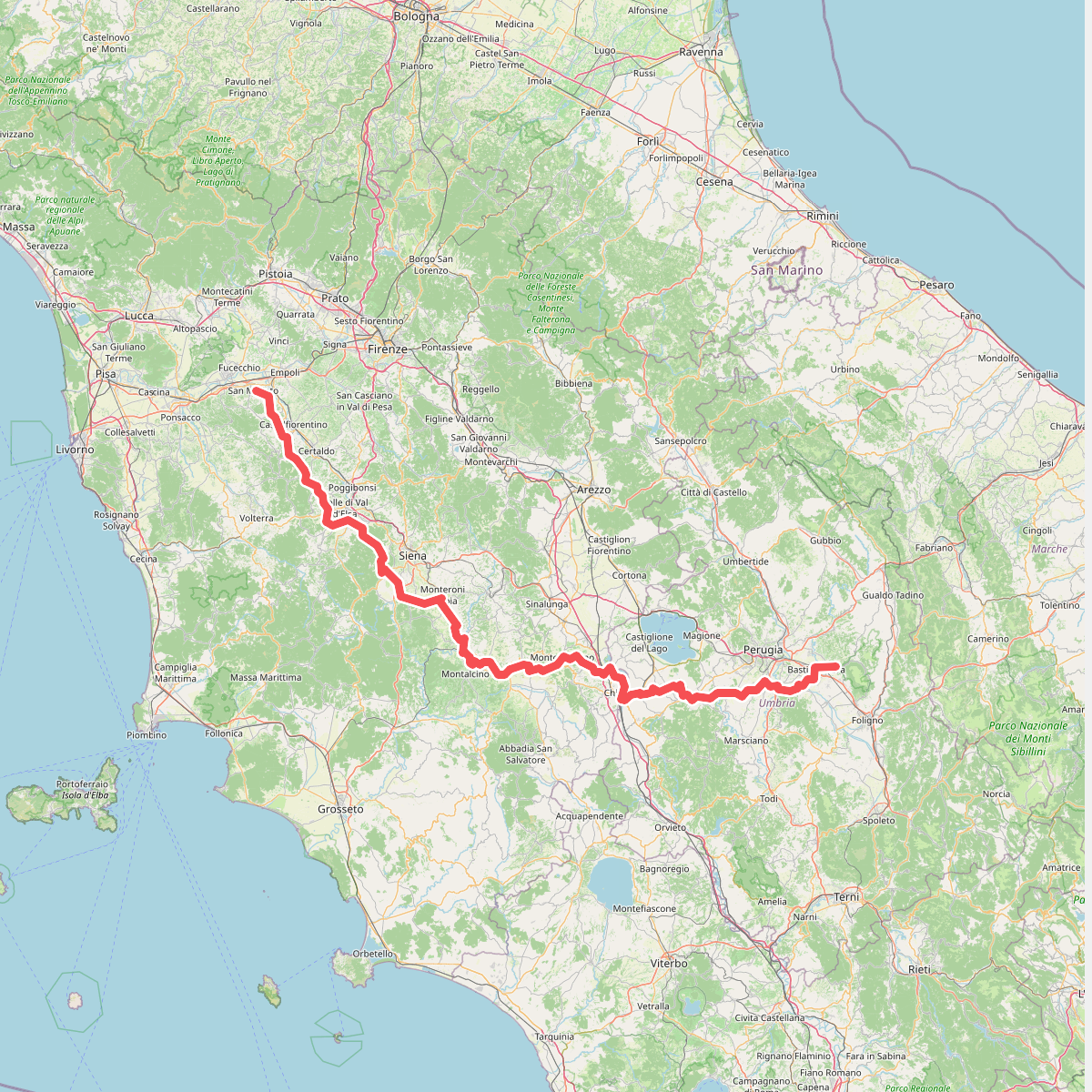
#2. Cammino d'Assisi, San Miniato - Assisi

#3. Sentiero del Cerro 276A

#4. Sentiero del Faggio 276B
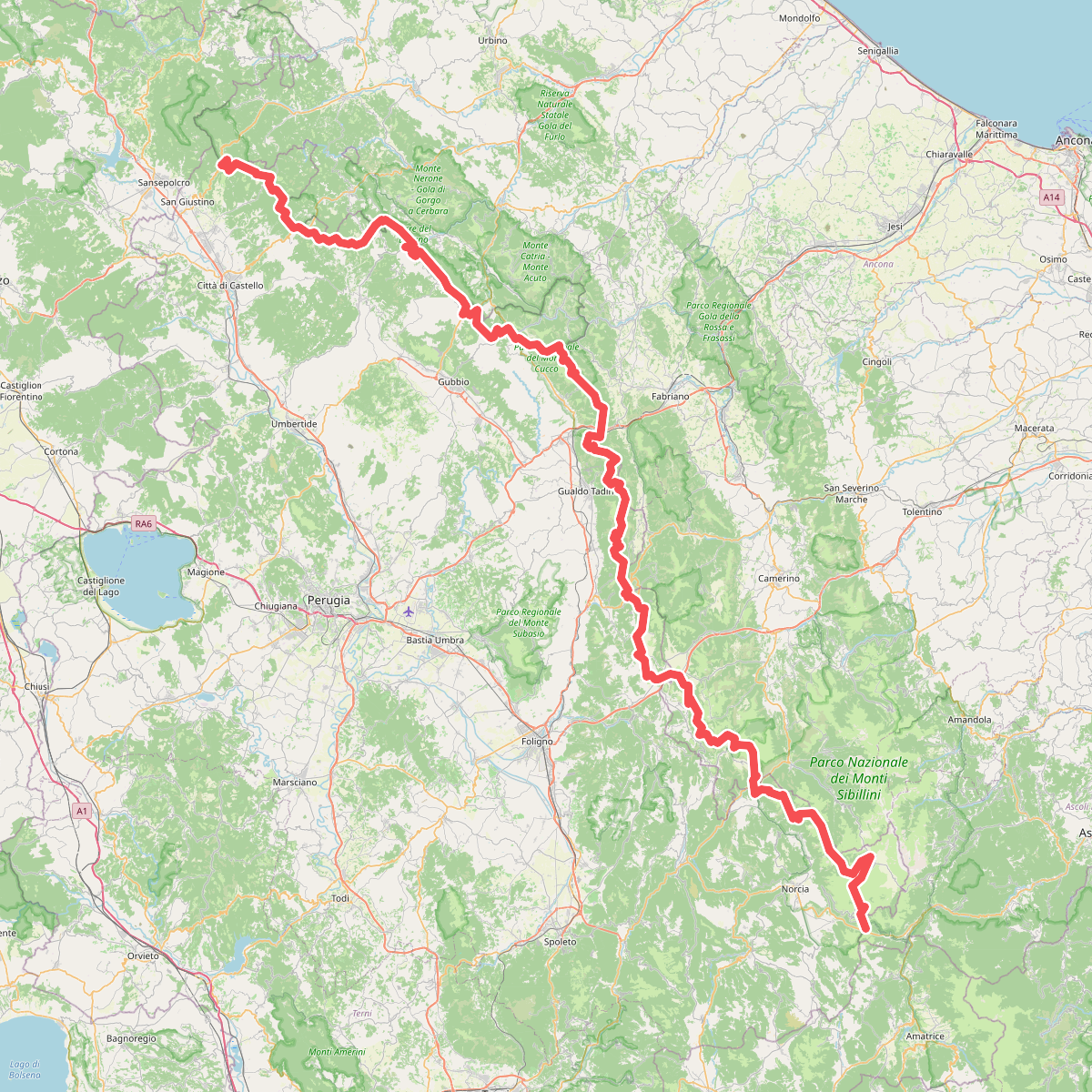
#5. Sentiero europeo E1, Italia - Umbria/Marche

#6. Sentiero Italia - Umbria/Marche N00 · SI