
The best hiking routes in Parc Natural de la Serra d'Espadà
Discover the best walks in Parc Natural de la Serra d'Espadà. 9 routes on the map, with descriptions, photos and GPX.
About Parc Natural de la Serra d'Espadà
Parc Natural de la Serra d'Espadà stands out from the surrounding Mediterranean limestone ranges due to its extensive outcrops of red sandstone, known locally as rodeno. This geological shift creates a landscape of sharp, rust-colored cliffs and acidic soils that support dense forests of cork oak, a stark contrast to the pale limestone and scrubby pine woods typical of the wider Valencian region. Walkers will notice how the vegetation changes abruptly where the soil transitions, with ferns and heather appearing in the shaded ravines of the sandstone sectors.
Read more
About Parc Natural de la Serra d'Espadà
Parc Natural de la Serra d'Espadà stands out from the surrounding Mediterranean limestone ranges due to its extensive outcrops of red sandstone, known locally as rodeno. This geological shift creates a landscape of sharp, rust-colored cliffs and acidic soils that support dense forests of cork oak, a stark contrast to the pale limestone and scrubby pine woods typical of the wider Valencian region. Walkers will notice how the vegetation changes abruptly where the soil transitions, with ferns and heather appearing in the shaded ravines of the sandstone sectors.
Read moreParc Natural de la Serra d'Espadà stands out from the surrounding Mediterranean limestone ranges due to its extensive outcrops of red sandstone, known locally as rodeno. This geological shift creates a landscape of sharp, rust-colored cliffs and acidic soils that support dense forests of cork oak, a stark contrast to the pale limestone and scrubby pine woods typical of the wider Valencian region. Walkers will notice how the vegetation changes abruptly where the soil transitions, with ferns and heather appearing in the shaded ravines of the sandstone sectors.
Underfoot, the trails vary between soft, pine-needle-covered earth in the forested valleys and rough, stony tracks over weathered red rock on the ridges. The terrain is characterized by steep, short climbs and narrow ravines rather than high alpine peaks, meaning paths are often winding and require careful footing on loose scree. While the lower valleys feature terraced olive and almond groves near the stone-built villages, the higher ridges remain densely wooded and feel remarkably enclosed.
Water is a key feature of the park, with numerous natural springs feeding small streams that run through the deeper barrancos, keeping these ravines greener and cooler than the exposed ridges. The well-known spots near the villages can be busier on weekends, but the deeper forest tracks remain quiet. In February, the flowering almond trees on the lower terraces provide a bright contrast to the dark green cork oaks and red cliffs.
Hiking routes in Parc Natural de la Serra d'Espadà (9)
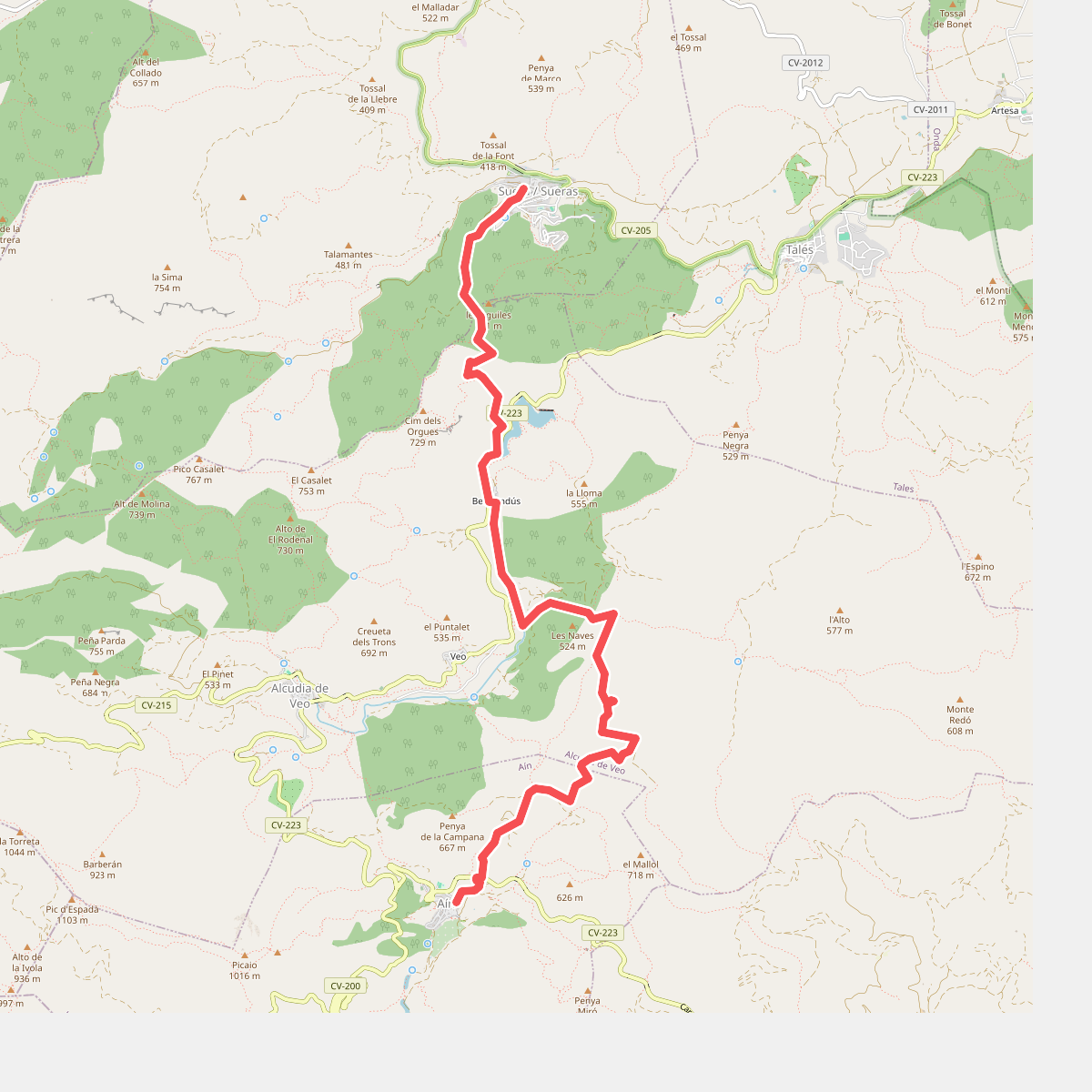
#1. Aín - Suera, per Benitandús
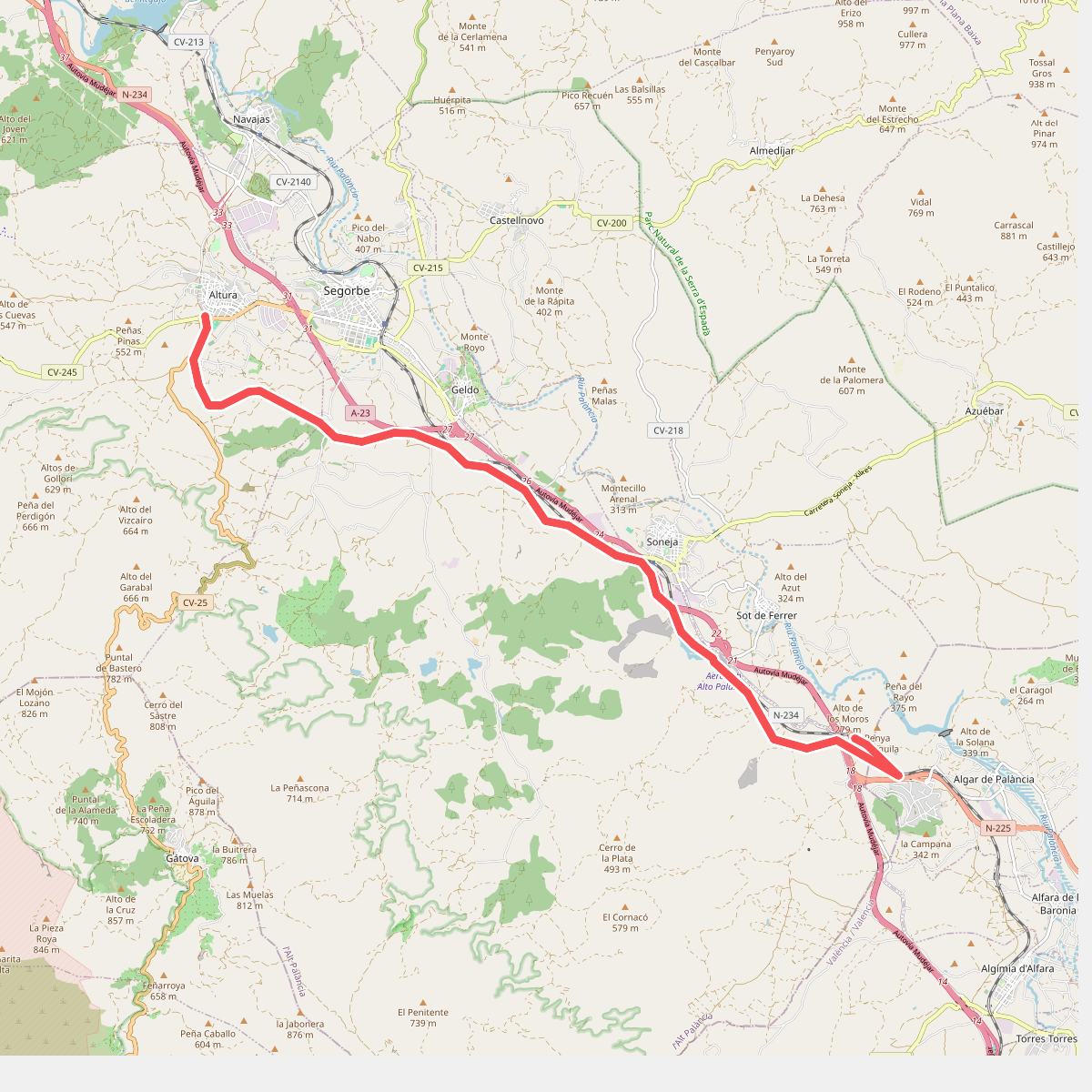
#2. Camino del Cid (La Conquista de Valencia E09)
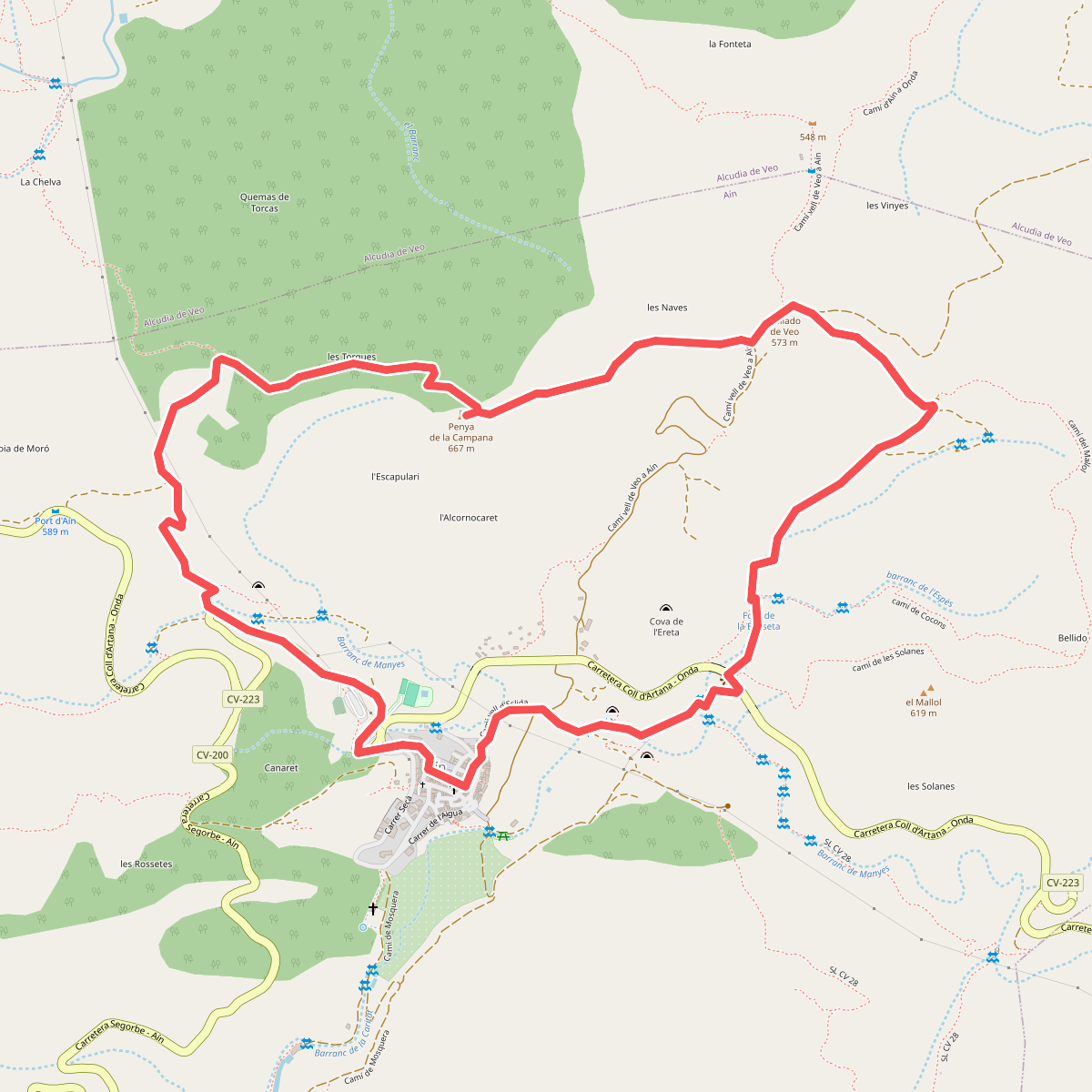
#3. Cap al Massís Campana-Torques
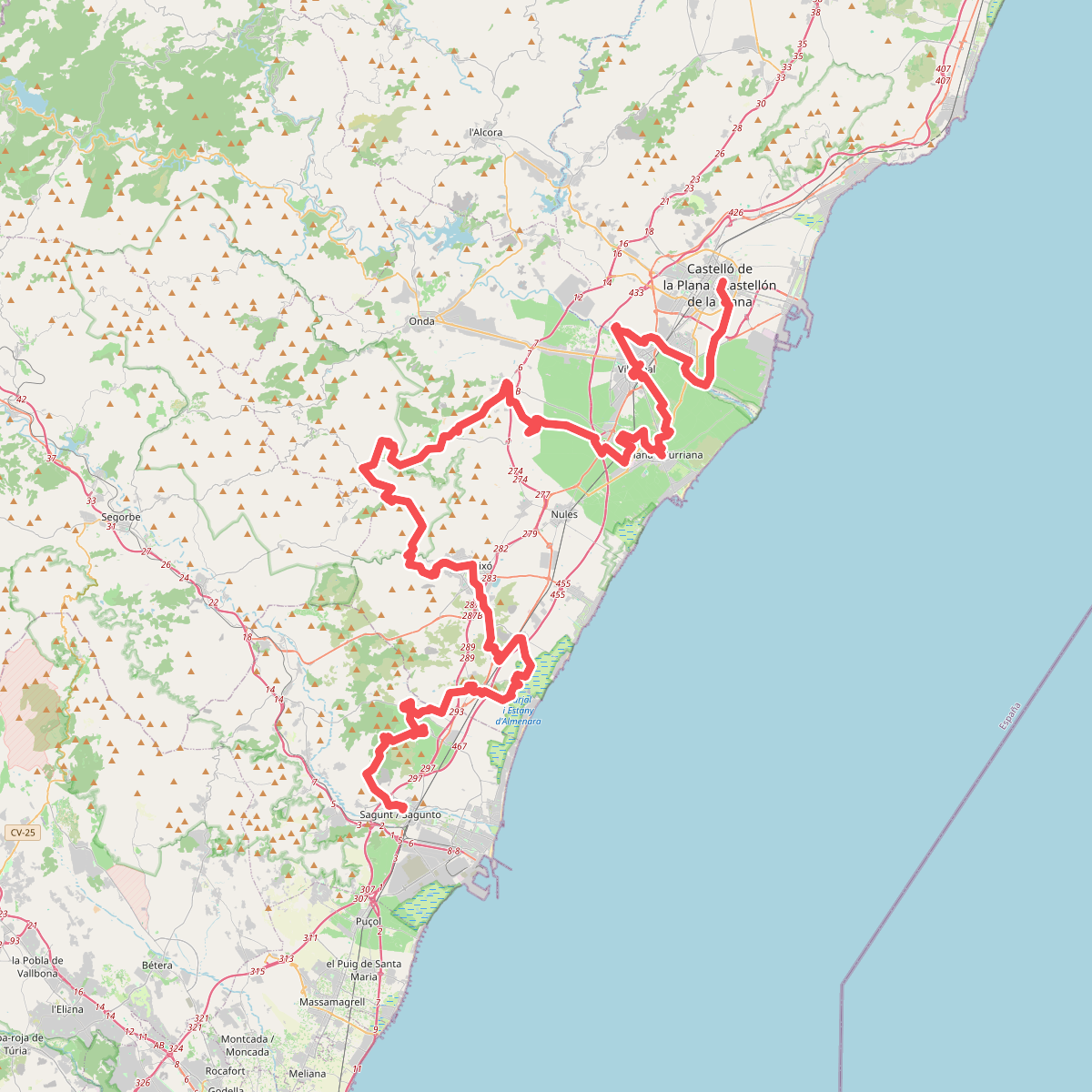
#4. El Camí IT5TR8 El Camí del Sud: de Dénia a Castelló de la Plana
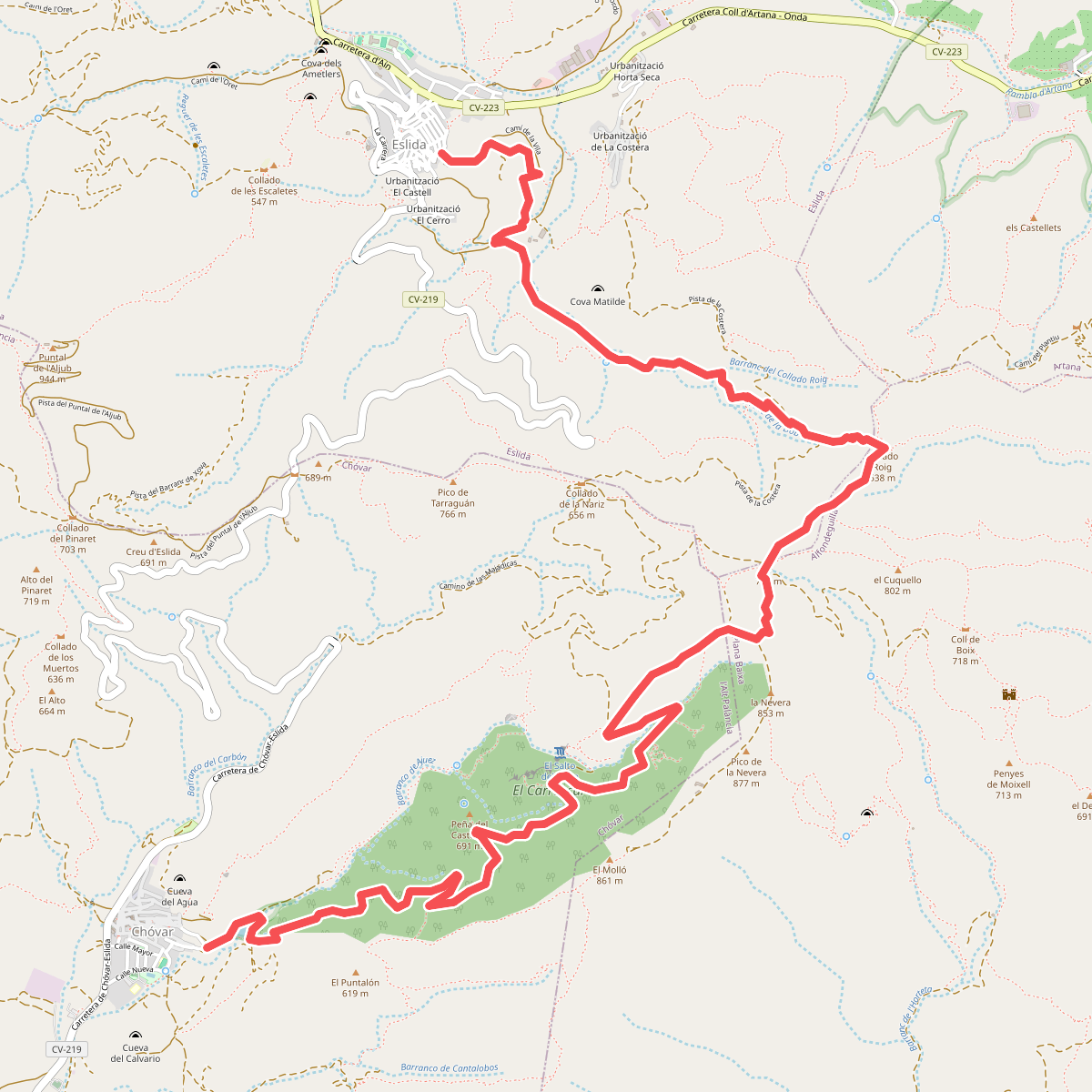
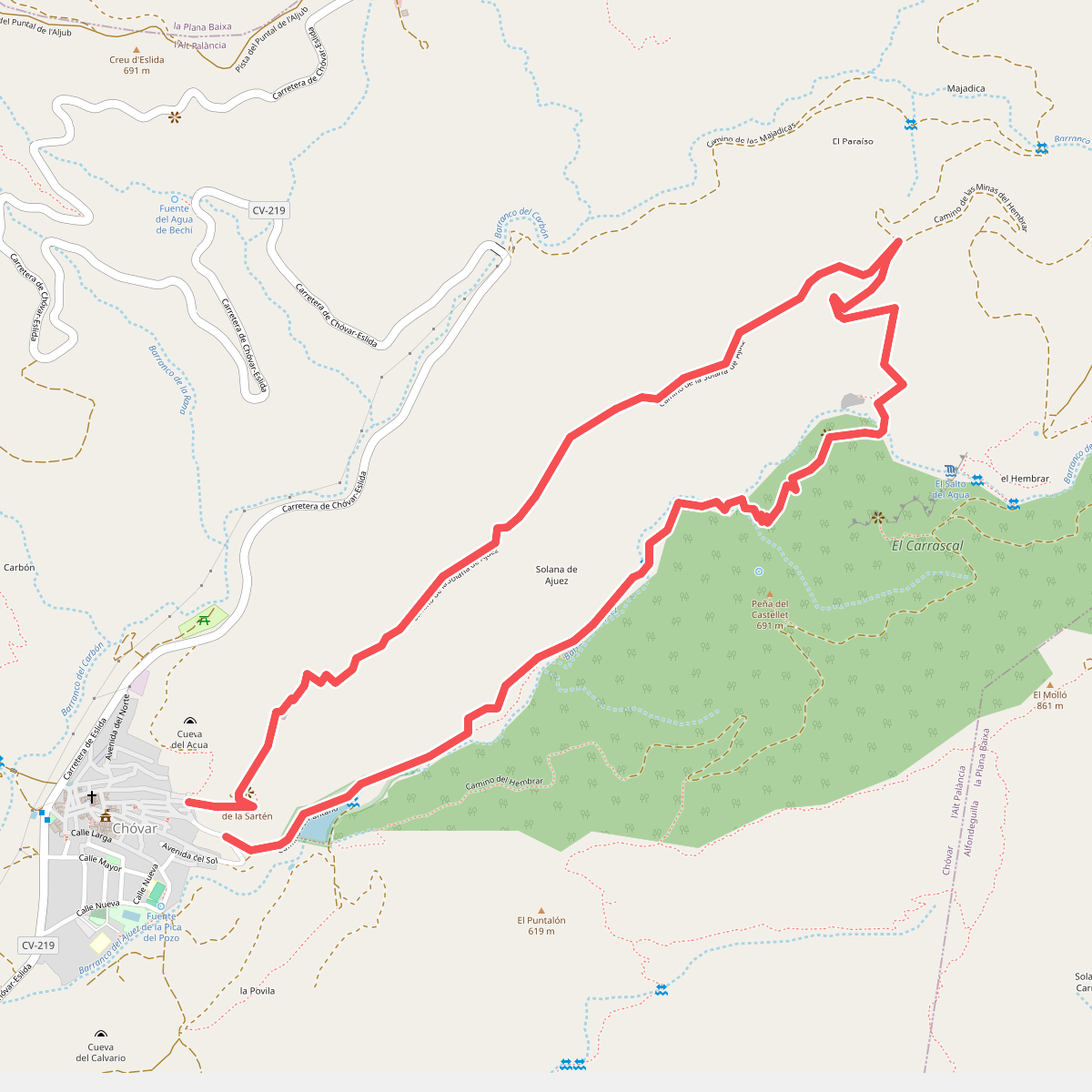
#5. Eslida a Chóvar
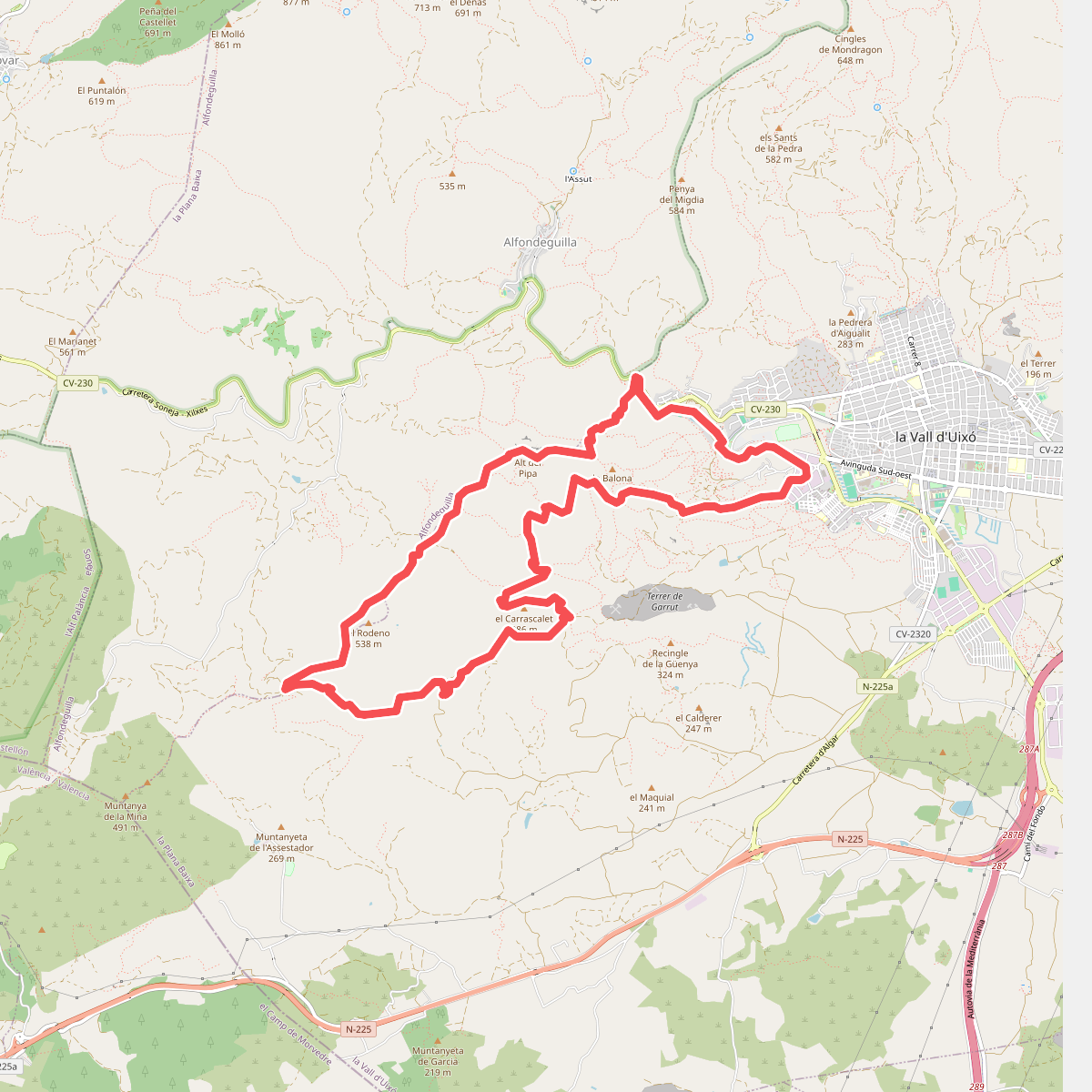
#6. Font del Nogueret - Font de Cabres
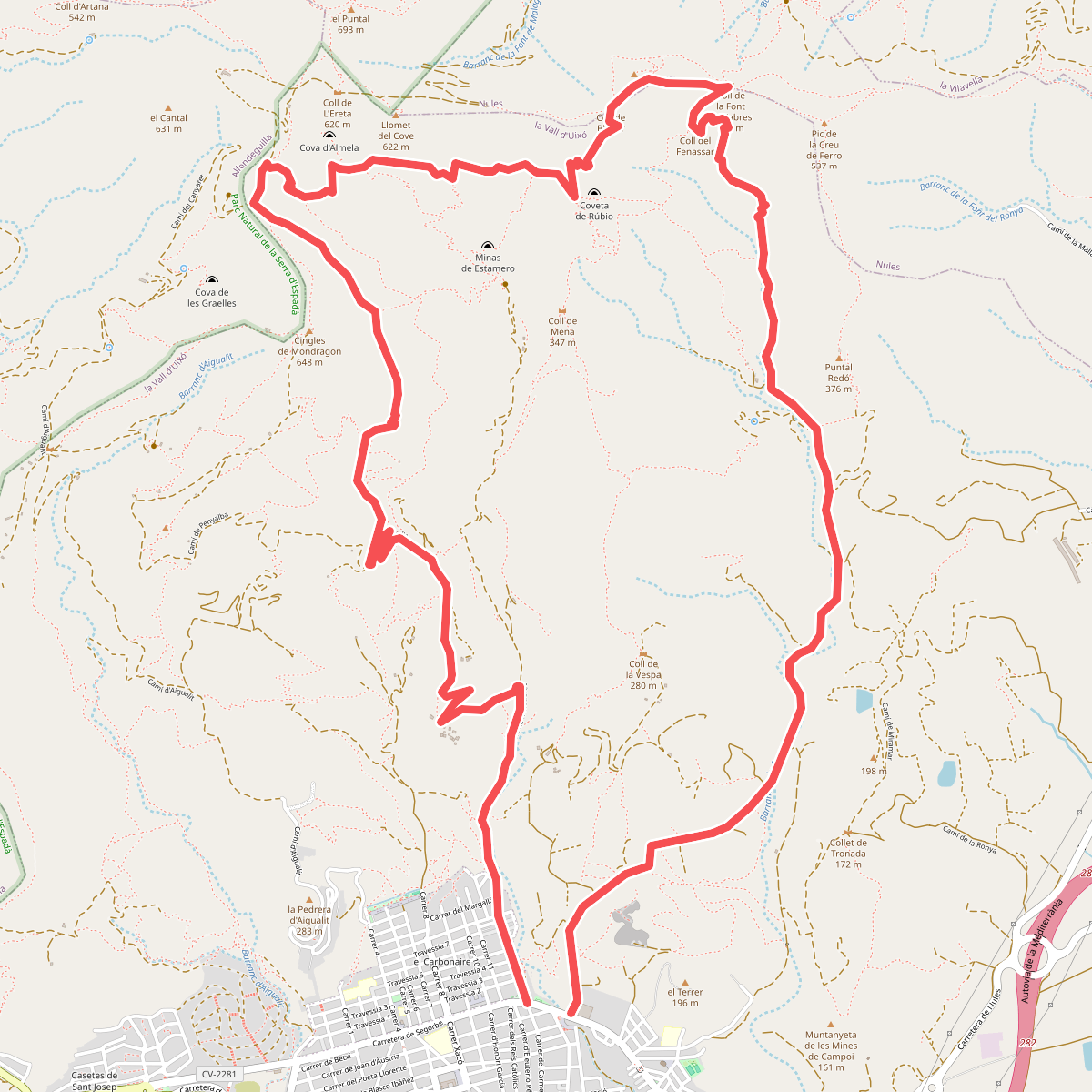
#7. Font del Nogueret - Font de Cabres
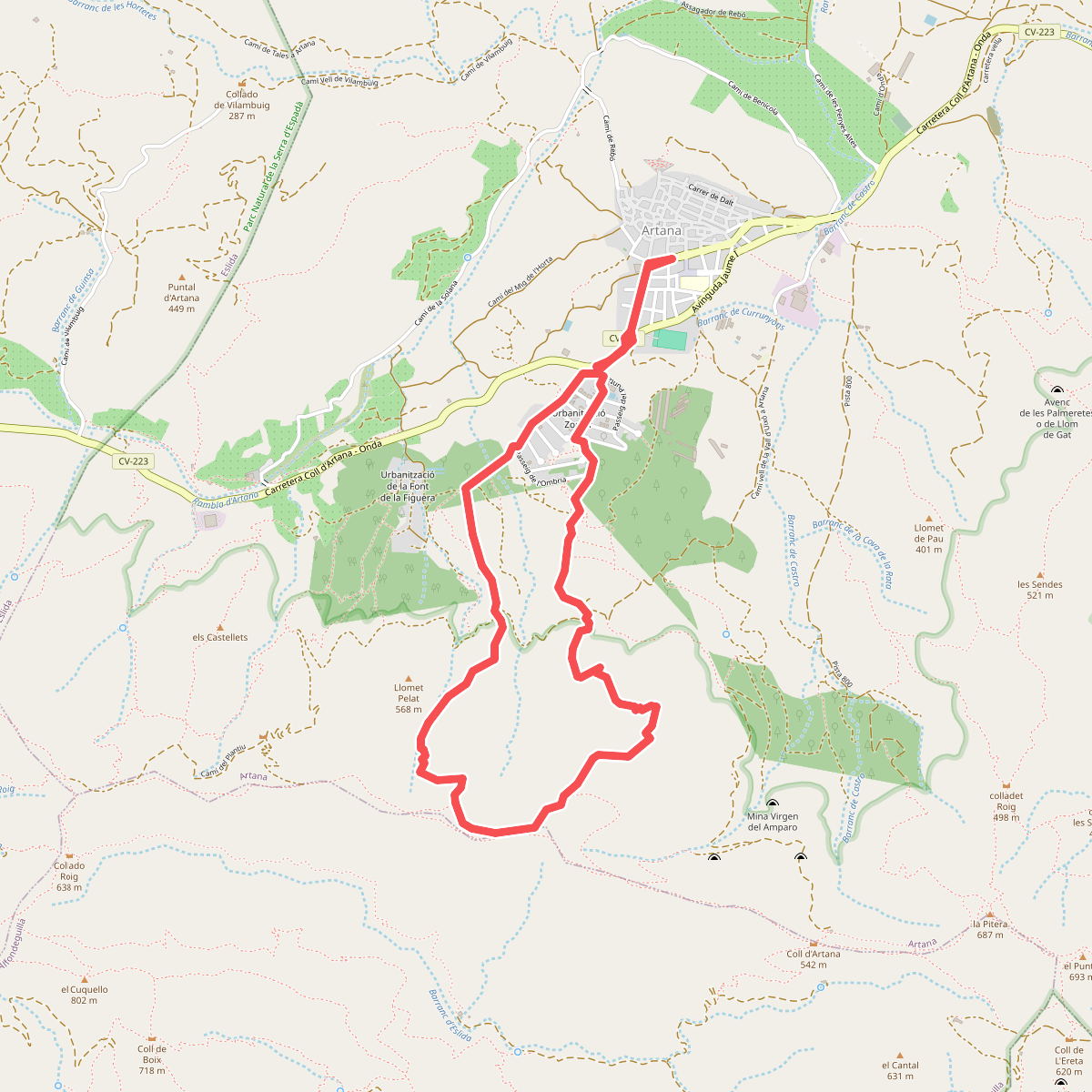
#8. Gamelló - Penyes Blanques