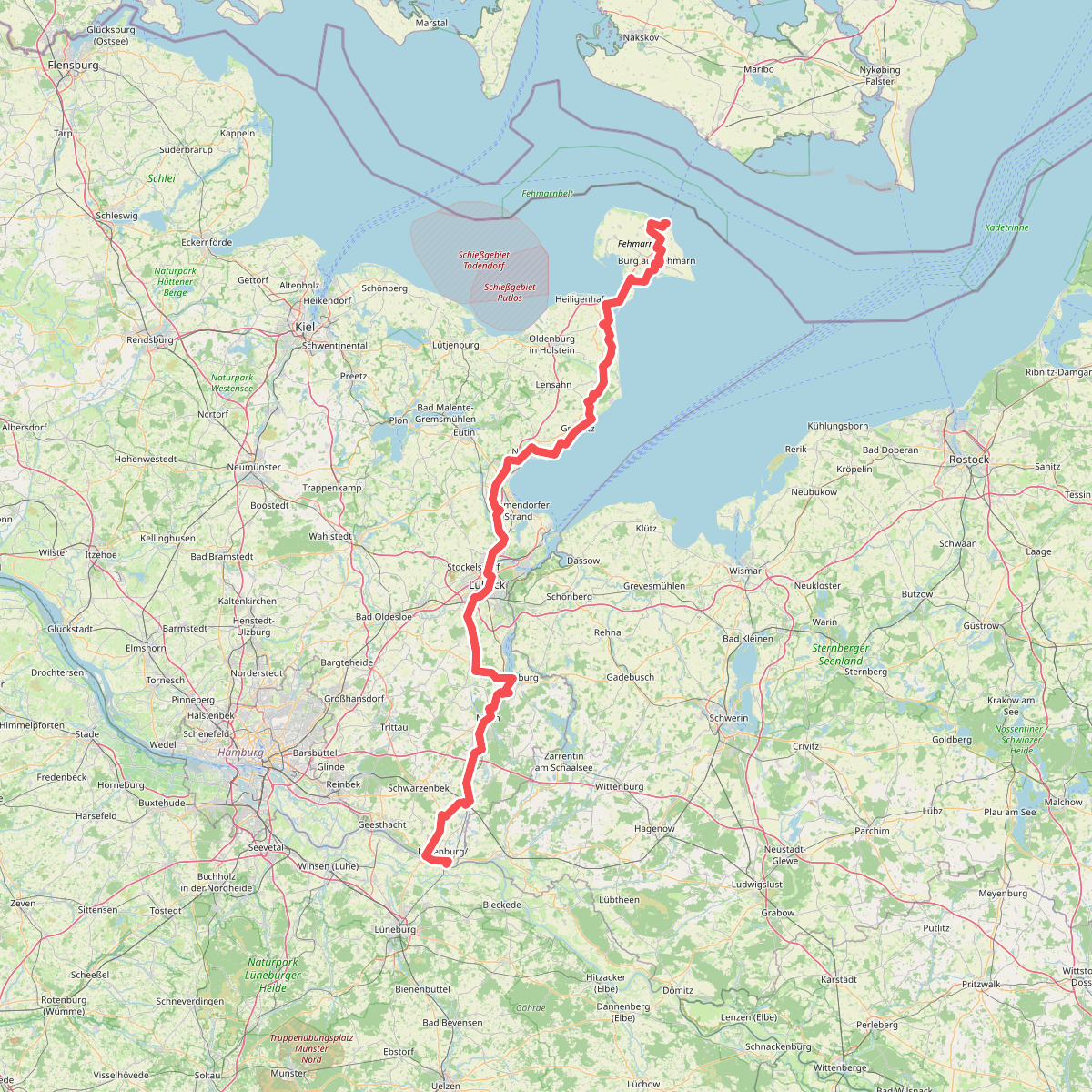

The best hiking routes in Ostseeküste zwischen Stakendorfer Strand und Hohenfelde und Umgebung
Discover the best walks in Ostseeküste zwischen Stakendorfer Strand und Hohenfelde und Umgebung. 1 routes on the map, with descriptions, photos and GPX.
About Ostseeküste zwischen Stakendorfer Strand und Hohenfelde und Umgebung
The Ostseeküste zwischen Stakendorfer Strand und Hohenfelde und Umgebung is a low-lying coastal strip along the Baltic Sea, defined by a mix of active shingle beaches, low clay cliffs, and damp backshore meadows. Unlike the sandy dune systems further west, this stretch features a stony shoreline where the sea constantly reshapes the gravel banks. Behind the narrow beach, a protective dyke and a series of drainage ditches keep the low-lying pastures from flooding, creating a flat, open landscape shaped by coastal defense and agriculture.
Read more
About Ostseeküste zwischen Stakendorfer Strand und Hohenfelde und Umgebung
The Ostseeküste zwischen Stakendorfer Strand und Hohenfelde und Umgebung is a low-lying coastal strip along the Baltic Sea, defined by a mix of active shingle beaches, low clay cliffs, and damp backshore meadows. Unlike the sandy dune systems further west, this stretch features a stony shoreline where the sea constantly reshapes the gravel banks. Behind the narrow beach, a protective dyke and a series of drainage ditches keep the low-lying pastures from flooding, creating a flat, open landscape shaped by coastal defense and agriculture.
Read moreThe Ostseeküste zwischen Stakendorfer Strand und Hohenfelde und Umgebung is a low-lying coastal strip along the Baltic Sea, defined by a mix of active shingle beaches, low clay cliffs, and damp backshore meadows. Unlike the sandy dune systems further west, this stretch features a stony shoreline where the sea constantly reshapes the gravel banks. Behind the narrow beach, a protective dyke and a series of drainage ditches keep the low-lying pastures from flooding, creating a flat, open landscape shaped by coastal defense and agriculture.
Underfoot, walkers will encounter a distinct contrast between the loose, shifting shingle of the beach and the firm, gravelled utility tracks running along the dyke. The coastal path is level and straightforward, offering no steep climbs or deep valleys, but the stony beach sections require sturdy footwear and steady footing. In late spring, around May, the yellow blooms of gorse and broom stand out against the grey gravel and the green grazing land.
This area is less about deep woodland and more about the transition from saltwater to managed pasture. It is generally quieter than the nearby resort beaches, though the paved dyke path is shared with cyclists. Walkers should expect an open, exposed environment with little shelter from the elements, where the main features are the sound of rolling stones in the surf and the steady line of the sea wall.