
The best hiking routes in Vadvetjåkka nationalpark
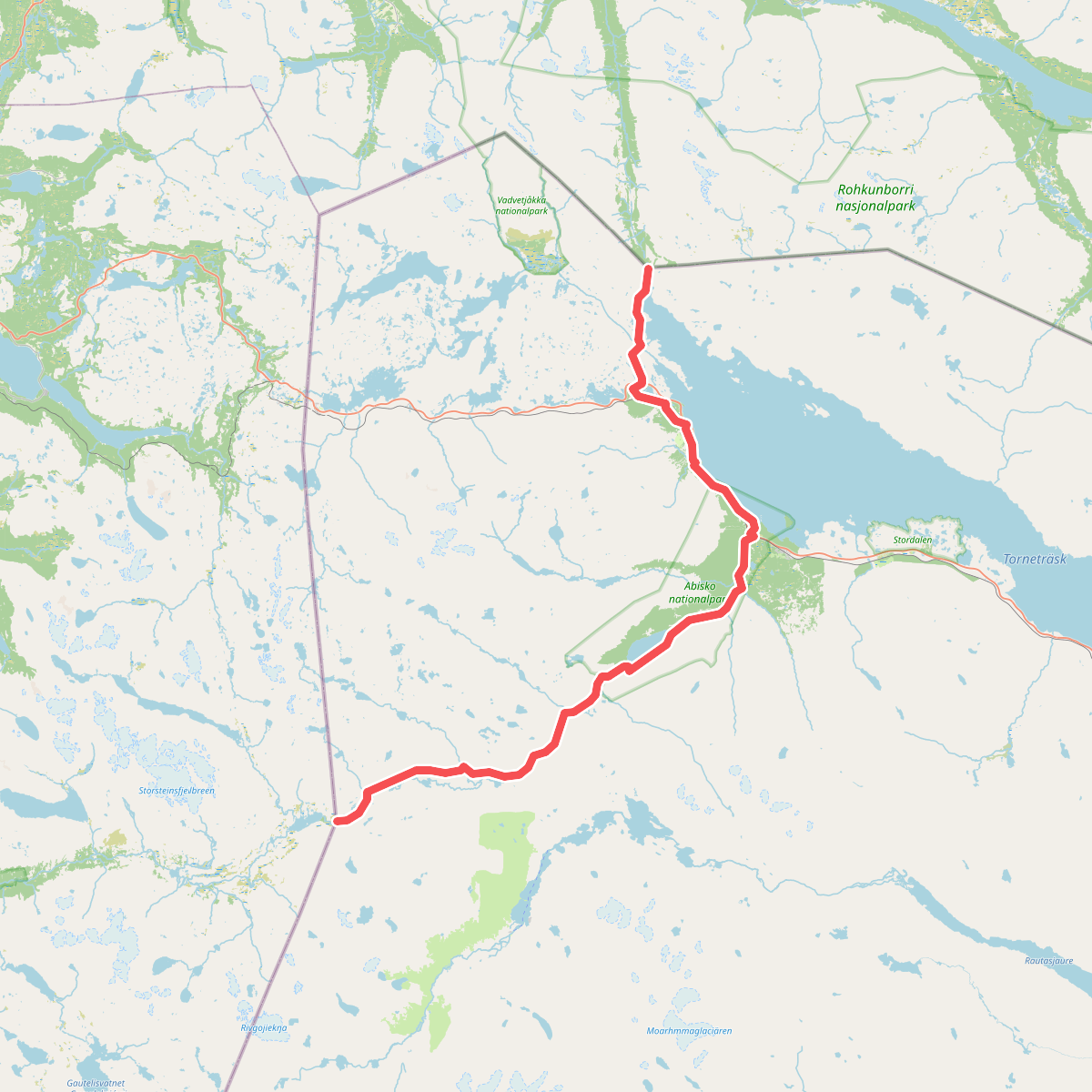
Discover the best walks in Vadvetjåkka nationalpark. 1 routes on the map, with descriptions, photos and GPX.
About Vadvetjåkka nationalpark
Vadvetjåkka nationalpark is a remote, northernmost wilderness dominated by a single limestone mountain ridge running north to south. Unlike the dry, granite-based fells nearby, this park is defined by its rich limestone bedrock, which supports lush, green vegetation and dense willow mires in the valley bottoms. The terrain is divided into three distinct zones: the wet, boggy valley of the Njuoraätno river, the steep birch-covered slopes, and the bare, rocky limestone plateau at the summit.
Read more
About Vadvetjåkka nationalpark
Vadvetjåkka nationalpark is a remote, northernmost wilderness dominated by a single limestone mountain ridge running north to south. Unlike the dry, granite-based fells nearby, this park is defined by its rich limestone bedrock, which supports lush, green vegetation and dense willow mires in the valley bottoms. The terrain is divided into three distinct zones: the wet, boggy valley of the Njuoraätno river, the steep birch-covered slopes, and the bare, rocky limestone plateau at the summit.
Read moreVadvetjåkka nationalpark is a remote, northernmost wilderness dominated by a single limestone mountain ridge running north to south. Unlike the dry, granite-based fells nearby, this park is defined by its rich limestone bedrock, which supports lush, green vegetation and dense willow mires in the valley bottoms. The terrain is divided into three distinct zones: the wet, boggy valley of the Njuoraätno river, the steep birch-covered slopes, and the bare, rocky limestone plateau at the summit.
Walkers will find no marked trails, bridges, or cabins within the park boundaries. Underfoot, the ground transitions from soft, marshy peat and dense willow thickets in the lowlands to loose limestone scree and bare rock on the higher slopes. Wading across cold, fast-flowing meltwater streams is a necessity to navigate the valley floor, as there are no boardwalks to keep boots dry.
In July and August, the limestone soils produce a remarkably diverse alpine flora, with carpets of mountain avens and rare orchids covering the lower ridges. The landscape is also shaped by active karst geology, meaning you will encounter deep sinkholes, underground streams, and limestone caves rather than the typical solid granite formations of northern Sweden.