
The best hiking routes in Parque Natural de la Puebla de San Miguel
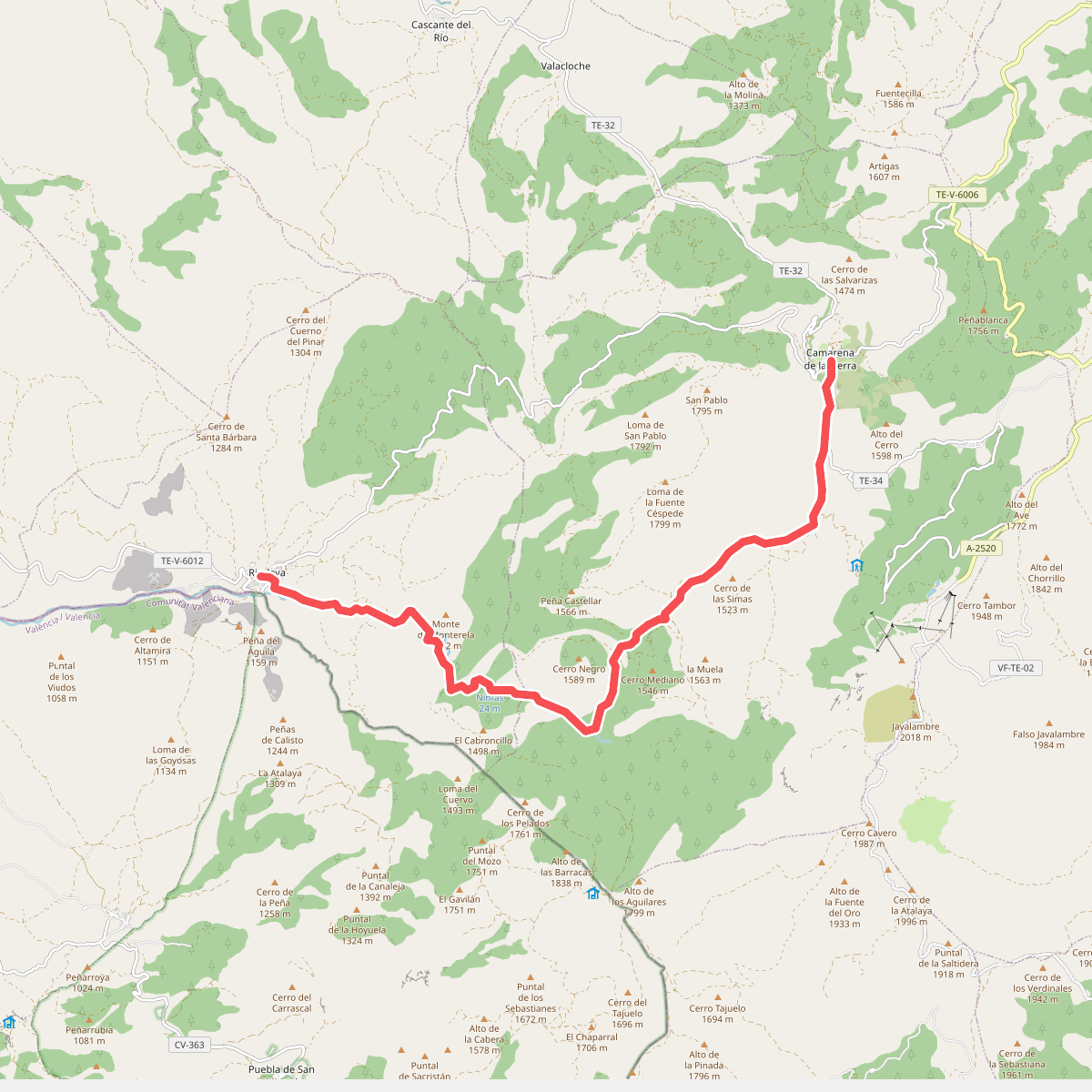
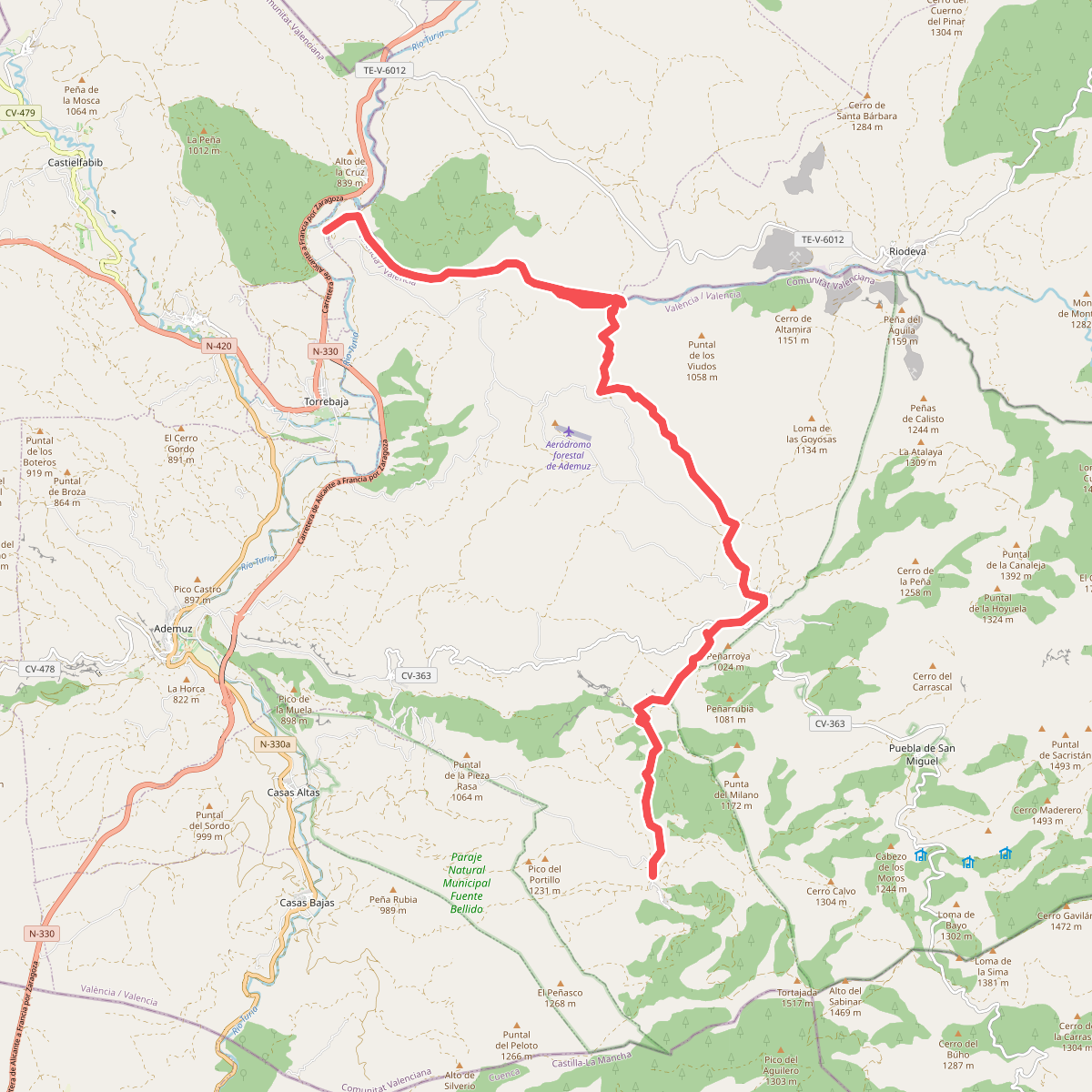
Discover the best walks in Parque Natural de la Puebla de San Miguel. 2 routes on the map, with descriptions, photos and GPX.
About Parque Natural de la Puebla de San Miguel
Parque Natural de la Puebla de San Miguel occupies a high-altitude, mountainous corner of the Valencian Community, defined by limestone geology and a harsh continental climate. Unlike the damp coastal valleys nearby, this park is characterized by dry, rocky terrain, open juniper woodlands, and stands of ancient Scots pine. The landscape is not one of dramatic, jagged peaks or deep gorges, but rather a series of high, wind-swept limestone plateaus and rolling summits, including the Alto de las Barracas, the highest point in the region.
Read more
About Parque Natural de la Puebla de San Miguel
Parque Natural de la Puebla de San Miguel occupies a high-altitude, mountainous corner of the Valencian Community, defined by limestone geology and a harsh continental climate. Unlike the damp coastal valleys nearby, this park is characterized by dry, rocky terrain, open juniper woodlands, and stands of ancient Scots pine. The landscape is not one of dramatic, jagged peaks or deep gorges, but rather a series of high, wind-swept limestone plateaus and rolling summits, including the Alto de las Barracas, the highest point in the region.
Read moreParque Natural de la Puebla de San Miguel occupies a high-altitude, mountainous corner of the Valencian Community, defined by limestone geology and a harsh continental climate. Unlike the damp coastal valleys nearby, this park is characterized by dry, rocky terrain, open juniper woodlands, and stands of ancient Scots pine. The landscape is not one of dramatic, jagged peaks or deep gorges, but rather a series of high, wind-swept limestone plateaus and rolling summits, including the Alto de las Barracas, the highest point in the region.
Walking here means navigating a mix of stony forest tracks, rough limestone paths, and dry barrancos. Underfoot, the ground is predominantly loose gravel, exposed bedrock, and dry clay, requiring sturdy footwear with good sole protection. The vegetation is highly specialized; you will pass monumental, centuries-old Spanish juniper trees (sabinas albar) that have grown slowly in response to the poor soil and cold winters. These ancient trees, with their twisted trunks and dense, low canopy, are the defining feature of the higher slopes.
In late spring, particularly around May, the undergrowth under the pines shows a brief flush of mountain wildflowers, while autumn brings subtle color changes to the deciduous scrub in the ravines. The park is remote and lacks the developed tourist infrastructure of coastal reserves, meaning you will find fewer signposts and no paved promenades. It is a destination suited for those who prefer self-reliant hiking among quiet, high-altitude pine forests and limestone scrub rather than lush green valleys or dramatic water features.