The best hiking routes in Naturpark Holsteinische Schweiz
Discover the best walks in Naturpark Holsteinische Schweiz. 5 routes on the map, with descriptions, photos and GPX.
Managed by Naturpark Holsteinische Schweiz e.V.
About Naturpark Holsteinische Schweiz
Naturpark Holsteinische Schweiz is characterized by a dense mosaic of post-glacial landforms, where low, rounded hills formed by terminal moraines alternate with a network of over two hundred lakes. Unlike flat coastal marshes, this terrain is constantly undulating, though it lacks any steep climbs or dramatic gorges. Walkers will find a landscape shaped by the last ice age, where beech forests grow on clay-rich soils and transition abruptly into damp alder carrs near the water edges.
Read more
About Naturpark Holsteinische Schweiz
Naturpark Holsteinische Schweiz is characterized by a dense mosaic of post-glacial landforms, where low, rounded hills formed by terminal moraines alternate with a network of over two hundred lakes. Unlike flat coastal marshes, this terrain is constantly undulating, though it lacks any steep climbs or dramatic gorges. Walkers will find a landscape shaped by the last ice age, where beech forests grow on clay-rich soils and transition abruptly into damp alder carrs near the water edges.
Read moreNaturpark Holsteinische Schweiz is characterized by a dense mosaic of post-glacial landforms, where low, rounded hills formed by terminal moraines alternate with a network of over two hundred lakes. Unlike flat coastal marshes, this terrain is constantly undulating, though it lacks any steep climbs or dramatic gorges. Walkers will find a landscape shaped by the last ice age, where beech forests grow on clay-rich soils and transition abruptly into damp alder carrs near the water edges.
Underfoot, the paths vary from firm, packed dirt and gravel forestry tracks to softer, leaf-littered soil through the woodlands. Some low-lying lakeside sections feature wooden boardwalks to cross wet peat, while other stretches follow sandy paths through open fields. The vegetation changes rapidly over short distances, meaning a single walk often combines deep forest shade with open views across wide lake basins like the Großer Plöner See.
In late May, the fresh green of the beech canopy creates a bright, translucent ceiling over the forest floor before the foliage thickens. The area is well-frequented, particularly around the lakeside towns, but the extensive network of marked paths allows for quieter walking in the interior woodland sections. This is a landscape of gentle gradients, quiet lake shores, and mixed woodlands rather than open heaths or rugged heights.
Hiking routes in Naturpark Holsteinische Schweiz (5)
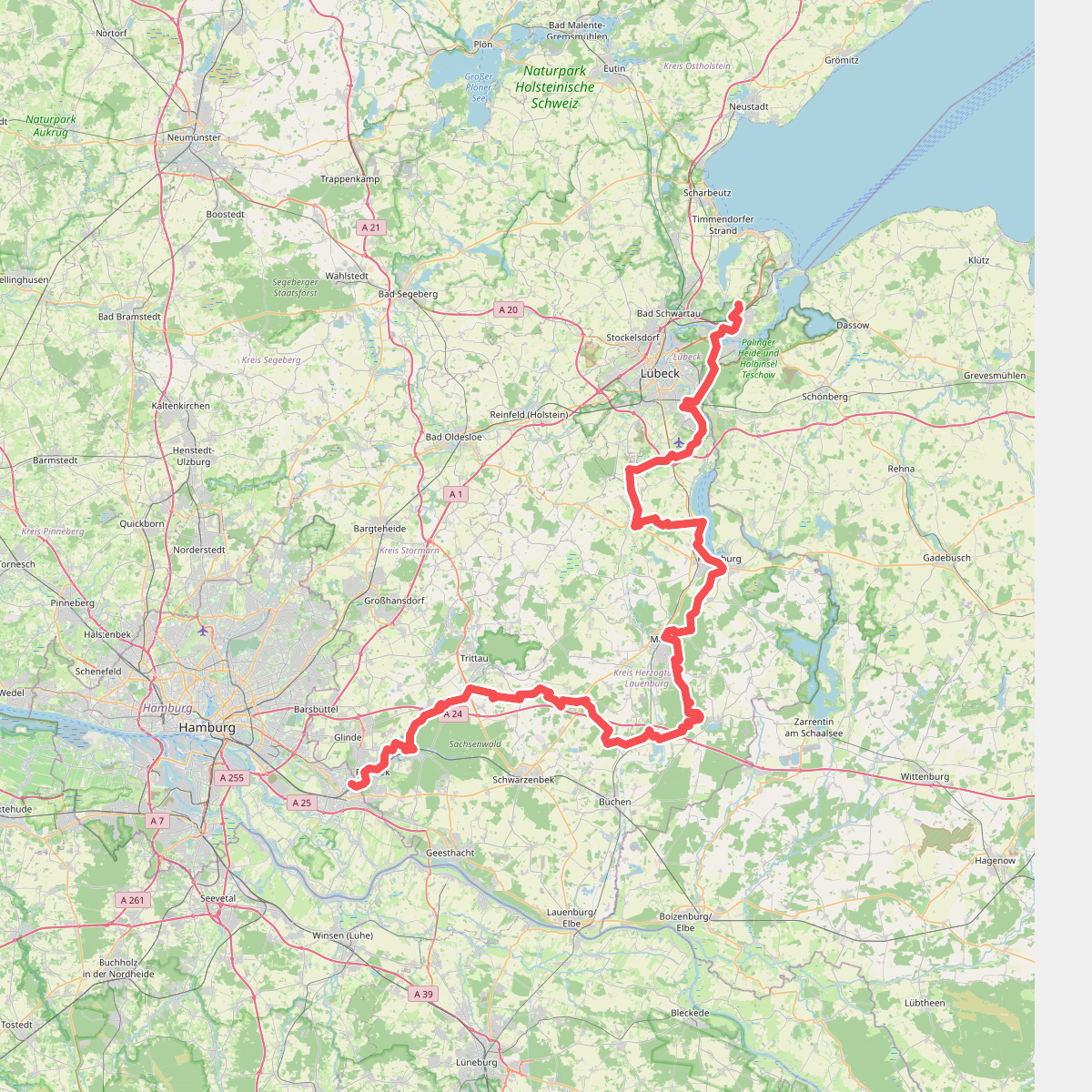
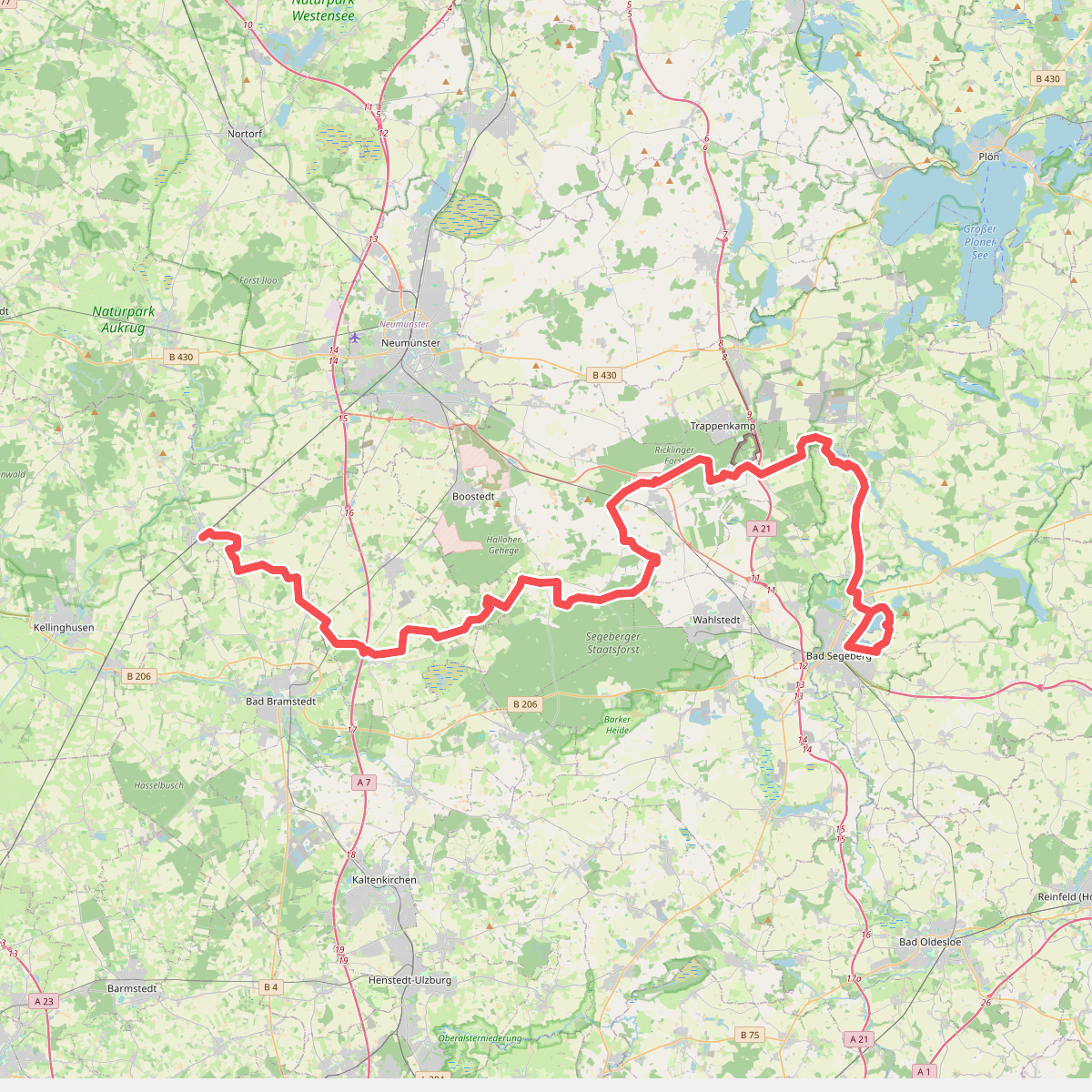
#1. Europäischer Fernwanderweg E9, Deutschland, Schleswig-Holstein (Ost)
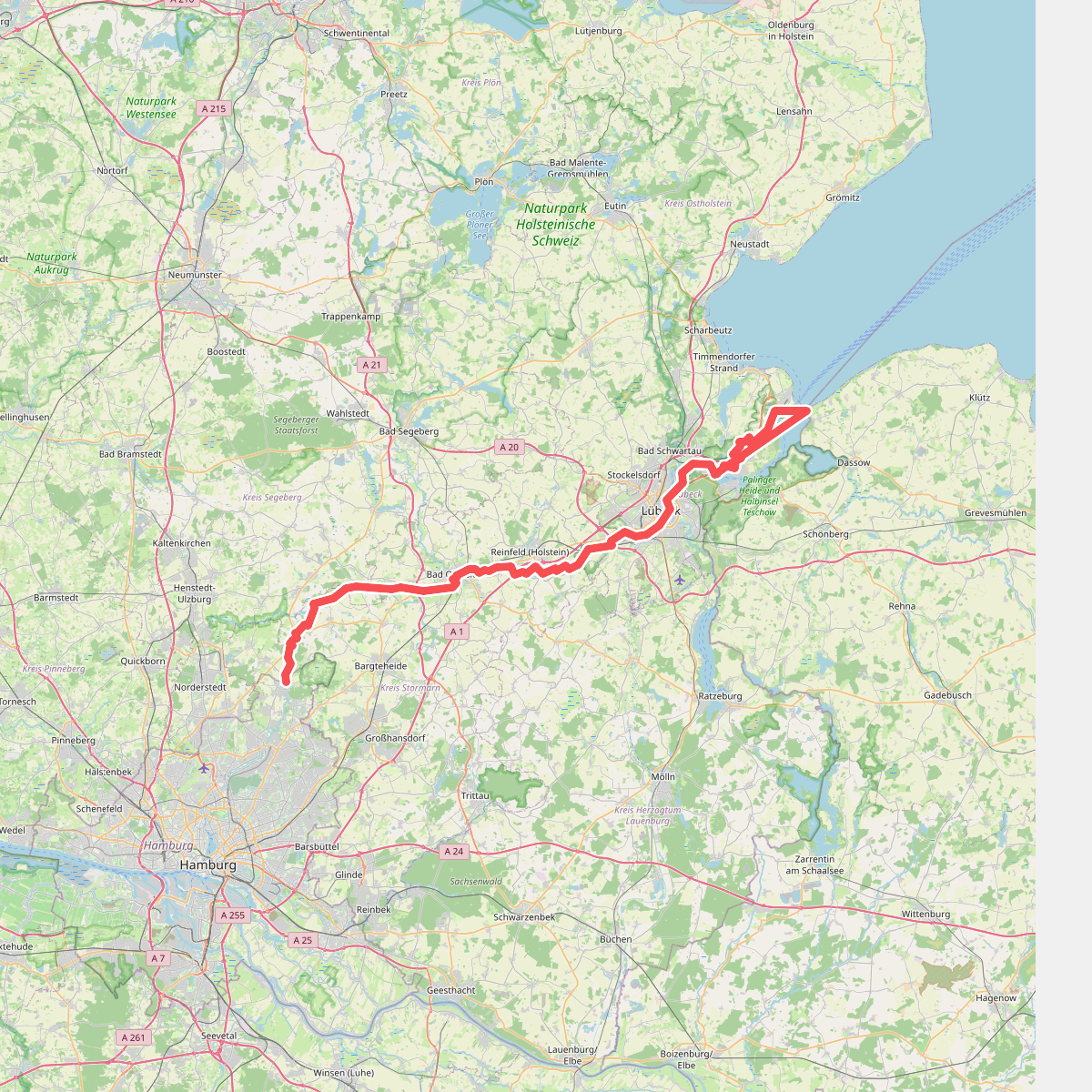
#2. Hanseatenweg - Abschnitt Schleswig-Holstein
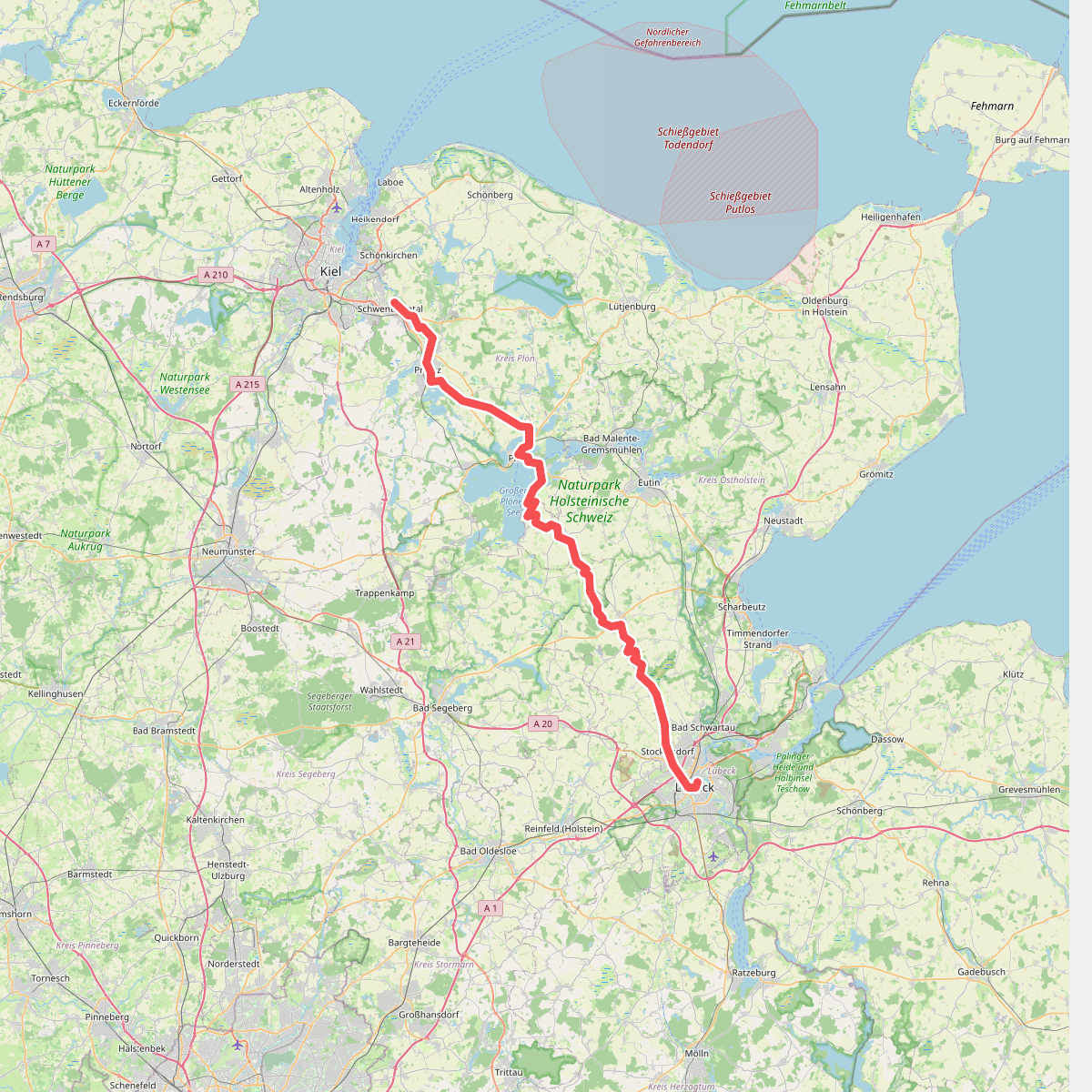
#3. Jakobsweg - Via Jutlandica - Schleswig-Holstein (via Lübeck) Süd
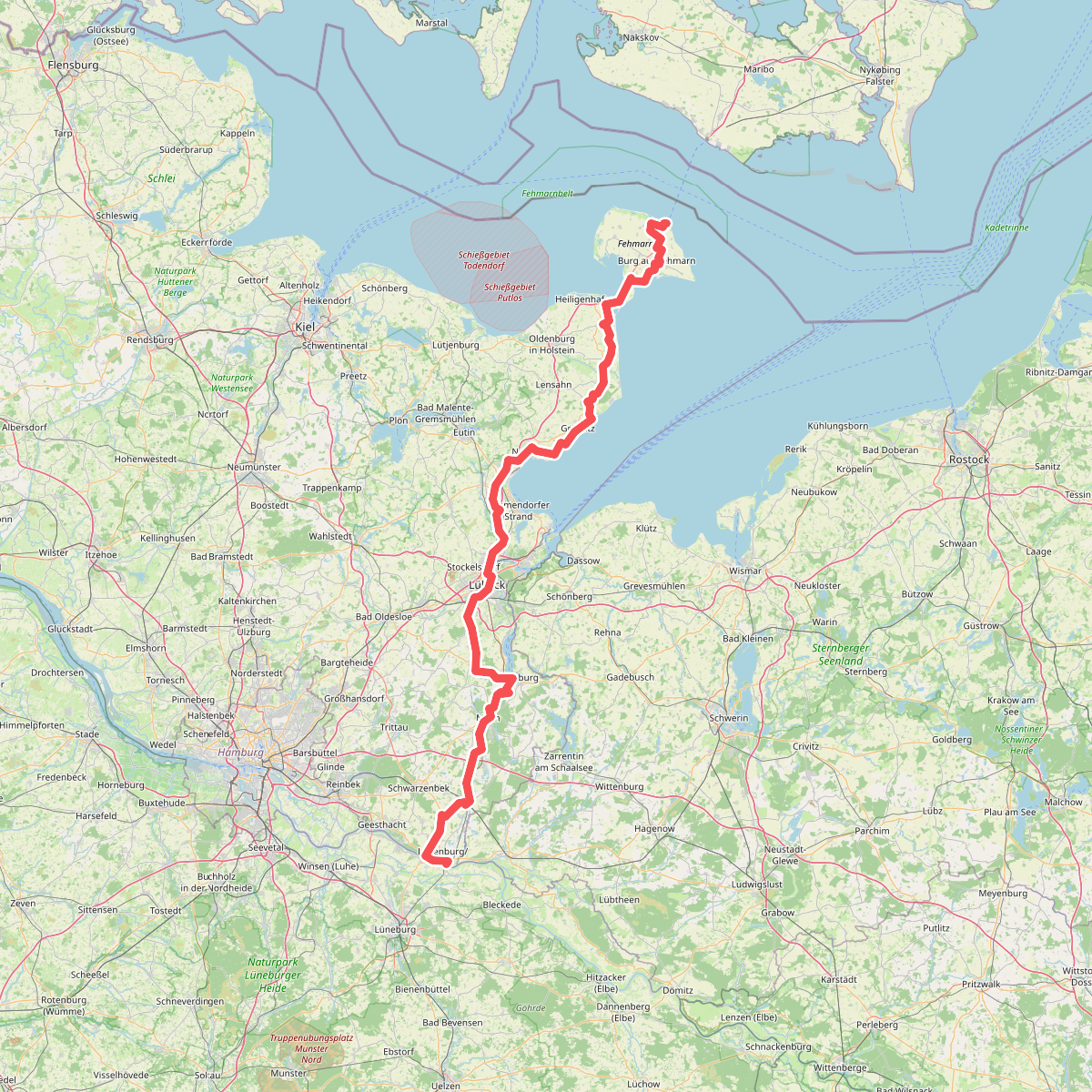
#4. Jakobsweg Via Scandinavica, Schleswig-Holstein