
The best hiking routes in Femundsmarka nasjonalpark
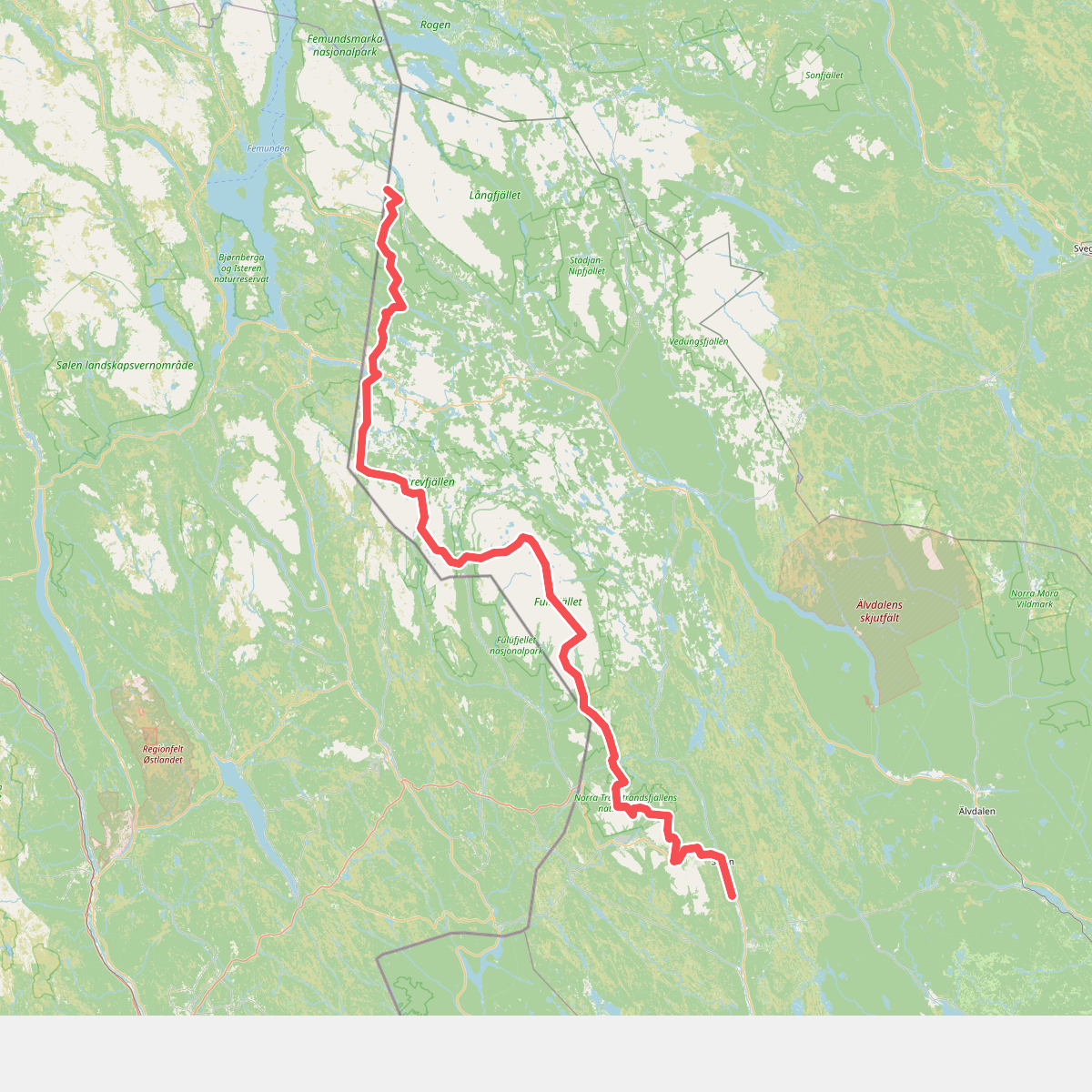
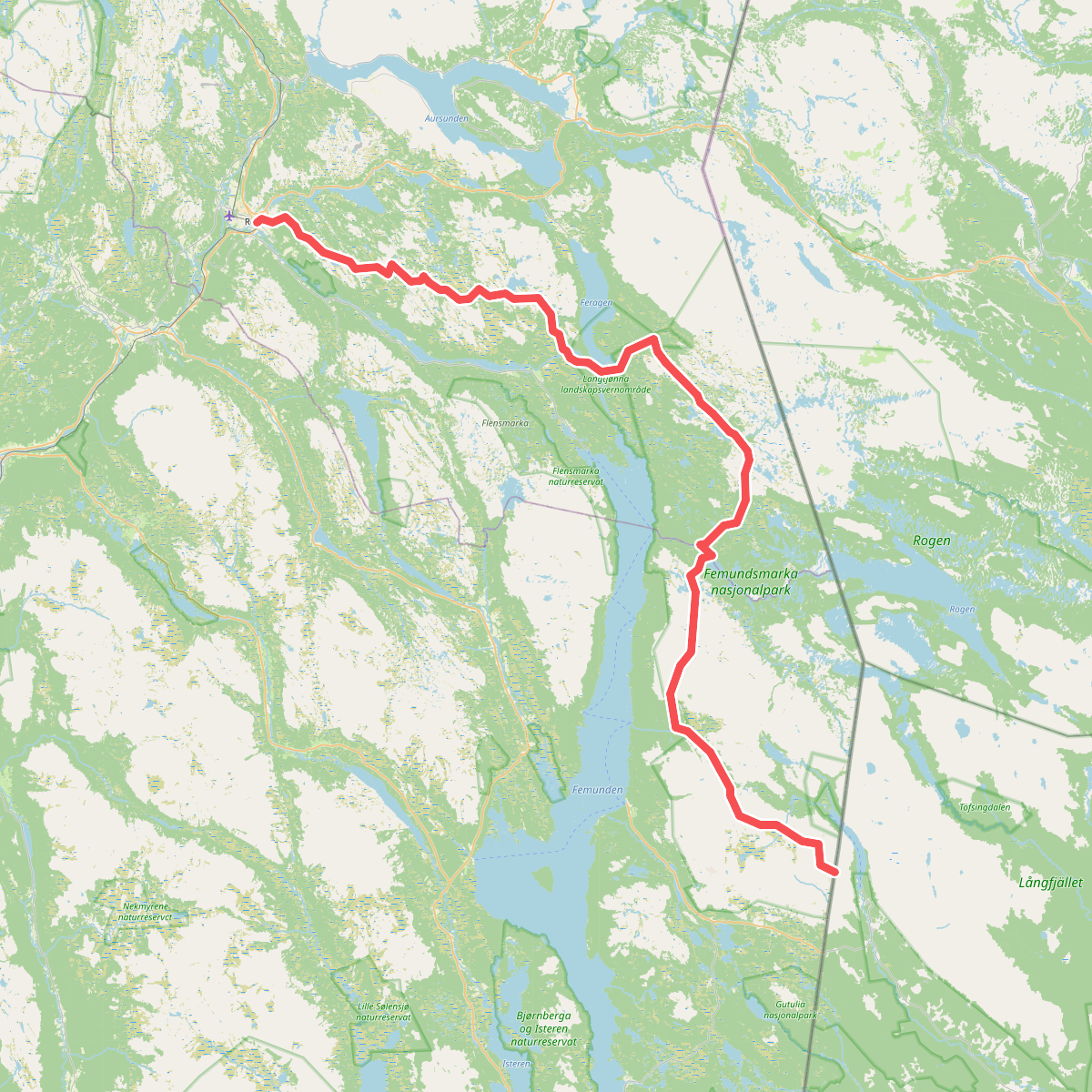
Discover the best walks in Femundsmarka nasjonalpark. 2 routes on the map, with descriptions, photos and GPX.
Managed by Nasjonalparkstyre for Femundsmarka og Gutulia
About Femundsmarka nasjonalpark
Femundsmarka nasjonalpark offers a distinct landscape dominated by block fields, ancient pine forests, and a dense network of lakes and tarns. Unlike the high, jagged peaks found in other parts of Norway, this park consists of a gently rolling plateau shaped by the last ice age. The retreating glaciers left behind vast deposits of moraine, resulting in a terrain strewn with boulders of all sizes that require constant attention to footing. Walking here means navigating these stony fields, where the path often disappears into fields of grey rock.
Read more
About Femundsmarka nasjonalpark
Femundsmarka nasjonalpark offers a distinct landscape dominated by block fields, ancient pine forests, and a dense network of lakes and tarns. Unlike the high, jagged peaks found in other parts of Norway, this park consists of a gently rolling plateau shaped by the last ice age. The retreating glaciers left behind vast deposits of moraine, resulting in a terrain strewn with boulders of all sizes that require constant attention to footing. Walking here means navigating these stony fields, where the path often disappears into fields of grey rock.
Read moreFemundsmarka nasjonalpark offers a distinct landscape dominated by block fields, ancient pine forests, and a dense network of lakes and tarns. Unlike the high, jagged peaks found in other parts of Norway, this park consists of a gently rolling plateau shaped by the last ice age. The retreating glaciers left behind vast deposits of moraine, resulting in a terrain strewn with boulders of all sizes that require constant attention to footing. Walking here means navigating these stony fields, where the path often disappears into fields of grey rock.
Underfoot, the terrain alternates between dry, lichen-covered pine barrens and wet peat bogs. While some of the most frequented routes feature wooden boardwalks over the wettest mires, many paths remain rough, requiring walkers to step over exposed tree roots and scramble across boulder screens. The soil is sandy and acidic, supporting a sparse vegetation of dwarf birch, heather, and reindeer lichen rather than lush meadows. Water is a constant presence, with countless interconnected lakes forcing paths to wind indirectly through the landscape.
This park is best suited for those who appreciate a slow, methodical pace rather than rapid altitude gains. Navigating the boulder-strewn terrain can be physically demanding, and progress is often slower than on typical mountain trails. In late summer, usually around August, the dwarf shrubs turn deep red and orange, contrasting sharply with the grey stone and the dark water of the tarns.