
The best hiking routes in Connemara National Park
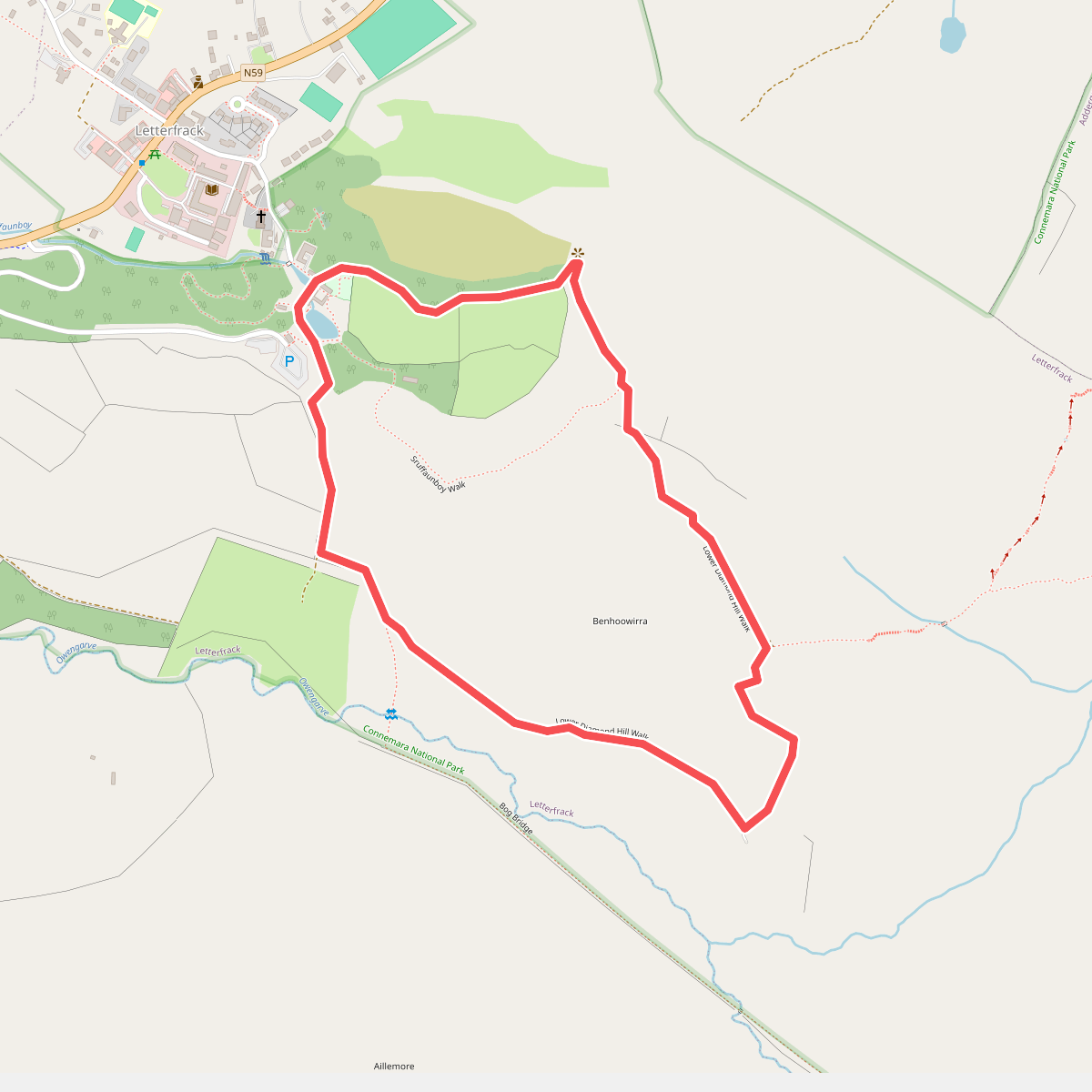
Discover the best walks in Connemara National Park. 1 routes on the map, with descriptions, photos and GPX.
Managed by National Parks and Wildlife Service
About Connemara National Park
Connemara National Park consists of wet heath, blanket bog, and steep quartzite hills. The landscape is dominated by the Twelve Bens mountain range, where the terrain is rocky, steep, and lacks marked trails. For walkers, the park is divided between the low-lying bogland and the climb up Diamond Hill. The lower sections feature gravel paths and wooden boardwalks designed to protect the fragile peat from erosion. As you ascend, the ground transitions to steep, loose scree and stone steps.
Read more
About Connemara National Park
Connemara National Park consists of wet heath, blanket bog, and steep quartzite hills. The landscape is dominated by the Twelve Bens mountain range, where the terrain is rocky, steep, and lacks marked trails. For walkers, the park is divided between the low-lying bogland and the climb up Diamond Hill. The lower sections feature gravel paths and wooden boardwalks designed to protect the fragile peat from erosion. As you ascend, the ground transitions to steep, loose scree and stone steps.
Read moreConnemara National Park consists of wet heath, blanket bog, and steep quartzite hills. The landscape is dominated by the Twelve Bens mountain range, where the terrain is rocky, steep, and lacks marked trails. For walkers, the park is divided between the low-lying bogland and the climb up Diamond Hill. The lower sections feature gravel paths and wooden boardwalks designed to protect the fragile peat from erosion. As you ascend, the ground transitions to steep, loose scree and stone steps.
The vegetation on the lower slopes is dominated by purple moor grass, bog cotton, and heather, which turn deep shades of rust and gold by October. The lack of trees is a direct result of the acidic, waterlogged peat soil, which prevents deep root systems from developing. Walkers will notice how the terrain changes from spongy, wet bog beside the boardwalks to bare, grey quartzite rock on the higher ridges where soil cannot cling.
This park does not offer sheltered woodland walks or gentle grassy meadows. It is an exposed, rocky environment where the main challenge is the steepness of the stone paths on Diamond Hill. The gravel tracks are well-defined, but leaving them means navigating wet, pathless bog. The park is managed by the National Parks and Wildlife Service, and the main routes starting from the visitor centre in Letterfrack are often busier than the open, trackless ridges further inland.