
The best hiking routes in ZEC Monte Maior
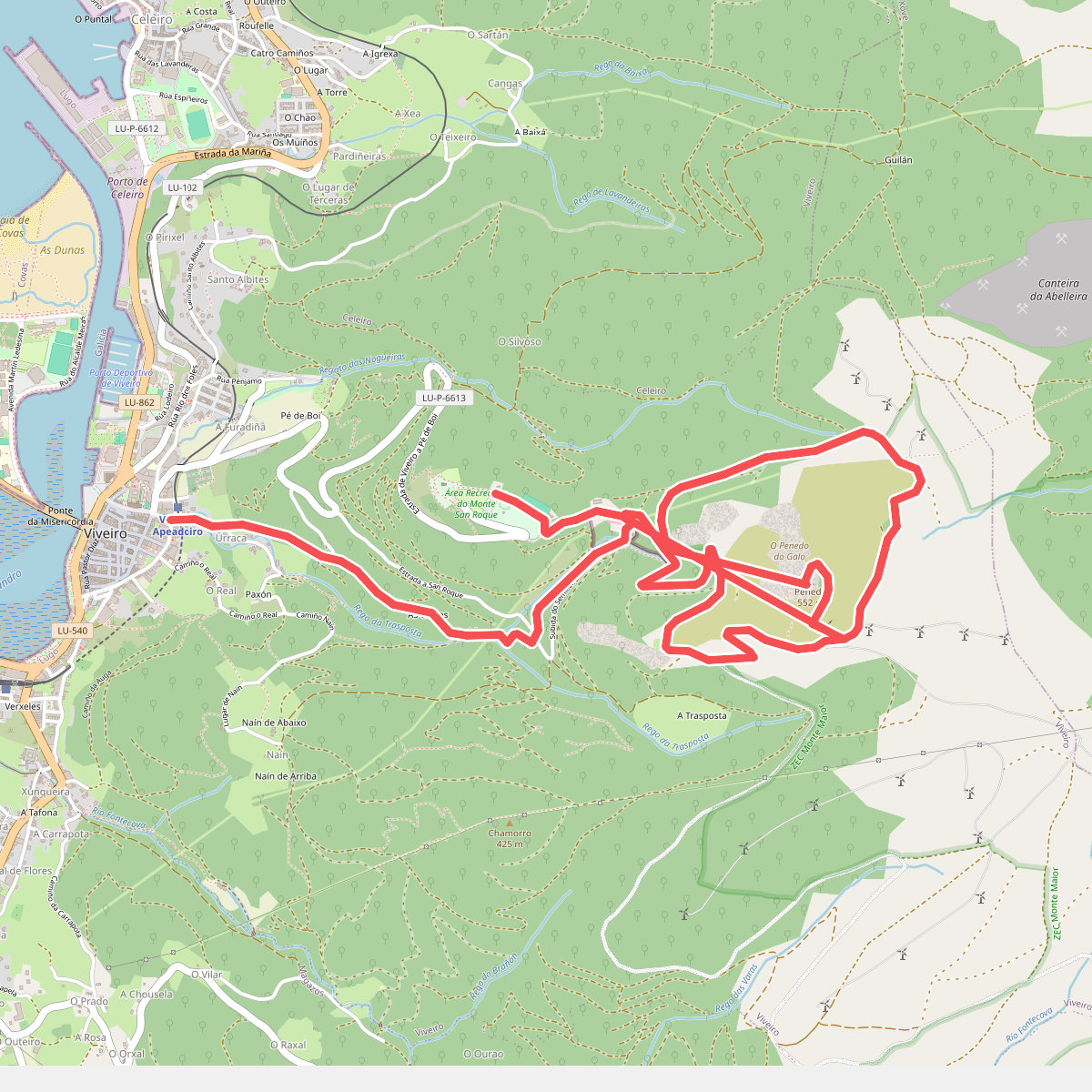
Discover the best walks in ZEC Monte Maior. 1 routes on the map, with descriptions, photos and GPX.
Managed by Xunta de Galicia
About ZEC Monte Maior
ZEC Monte Maior is a low-lying Galician coastal massif characterized by wind-sheared scrub, exposed granite boulders, and wet peat depressions. Unlike the sheltered agricultural valleys nearby, this upland area is dominated by low gorse, heather, and open pasture. Walkers will notice a stark, treeless landscape where the vegetation has been shaped by constant Atlantic exposure, leaving only stunted shrubs and hardy grasses on the higher ridges.
Read more
About ZEC Monte Maior
ZEC Monte Maior is a low-lying Galician coastal massif characterized by wind-sheared scrub, exposed granite boulders, and wet peat depressions. Unlike the sheltered agricultural valleys nearby, this upland area is dominated by low gorse, heather, and open pasture. Walkers will notice a stark, treeless landscape where the vegetation has been shaped by constant Atlantic exposure, leaving only stunted shrubs and hardy grasses on the higher ridges.
Read moreZEC Monte Maior is a low-lying Galician coastal massif characterized by wind-sheared scrub, exposed granite boulders, and wet peat depressions. Unlike the sheltered agricultural valleys nearby, this upland area is dominated by low gorse, heather, and open pasture. Walkers will notice a stark, treeless landscape where the vegetation has been shaped by constant Atlantic exposure, leaving only stunted shrubs and hardy grasses on the higher ridges.
Underfoot, the terrain consists of rough, unpaved dirt tracks and stony paths that can be uneven. There are no boardwalks or manicured gravel ways here; instead, you will follow sandy firebreaks and traditional livestock trails. The higher ground offers clear views of the surrounding coastal lowlands, but the terrain itself remains gently rolling rather than mountainous, lacking the deep gorges or high peaks found further inland.
In late summer, particularly around August, the hillsides turn a deep purple and yellow as the heather and gorse come into full bloom. The area is generally quiet, used mainly by local farmers tending free-roaming cattle and horses. Walkers should expect an exposed, rustic environment with little shade, where the main appeal lies in the simple, open Atlantic scrubland rather than dramatic geological formations.