
The best hiking routes in Steinitzer Alpen
Discover the best walks in Steinitzer Alpen. 1 routes on the map, with descriptions, photos and GPX.
About Steinitzer Alpen
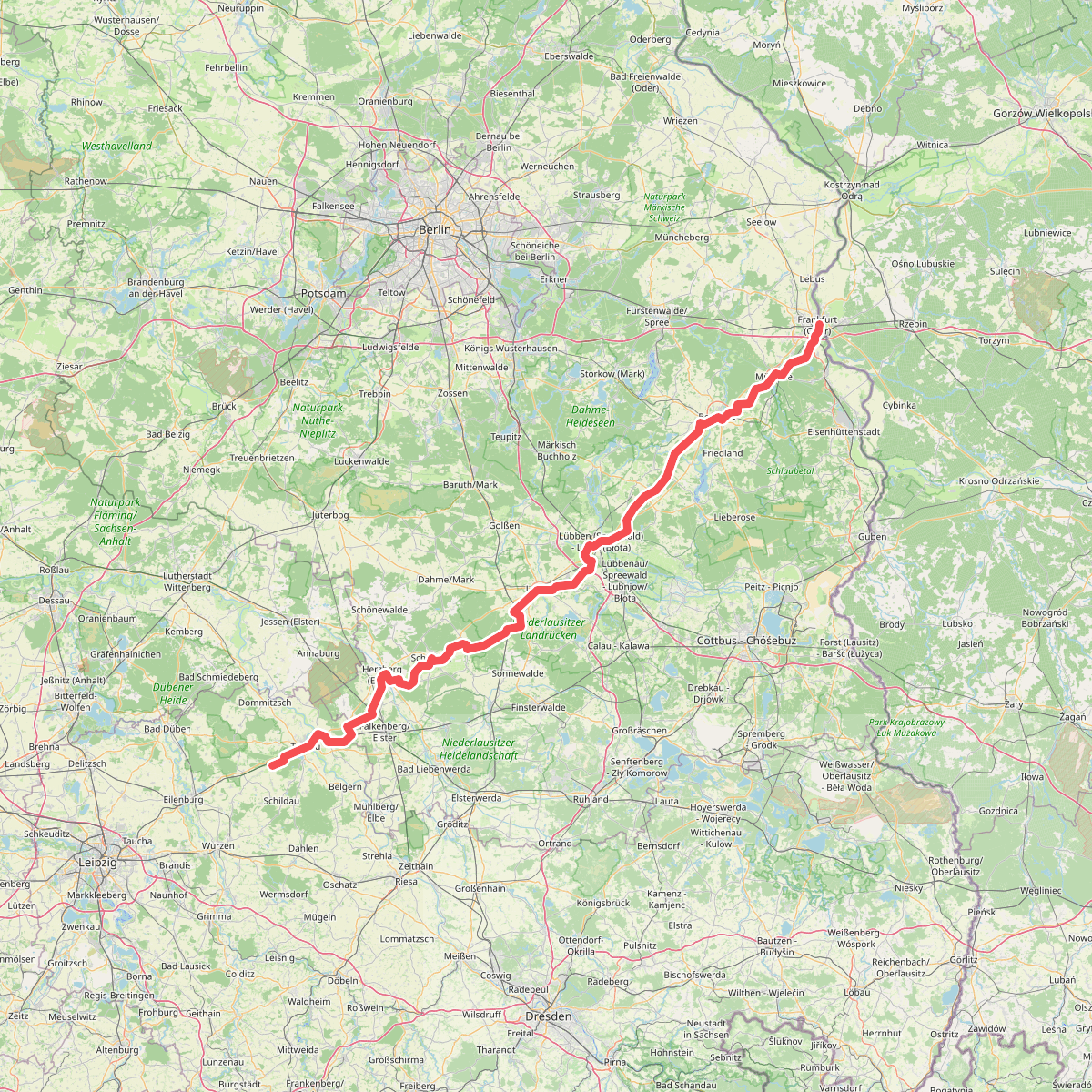
The Steinitzer Alpen, located in the southern part of Brandenburg, is not a range of high mountain peaks but rather a modest ridge of glacial moraines. The terrain consists of gently rolling hills shaped by ice age deposits and subsequently altered by nearby open-cast mining. Walkers will find a landscape where dense deciduous woodland, dominated by beech and oak, transitions into open, sandy clearings and replanted pine stands. The elevation changes are minor but frequent, offering short, steady climbs that differ from the flat plains surrounding the area.
Read more
About Steinitzer Alpen
The Steinitzer Alpen, located in the southern part of Brandenburg, is not a range of high mountain peaks but rather a modest ridge of glacial moraines. The terrain consists of gently rolling hills shaped by ice age deposits and subsequently altered by nearby open-cast mining. Walkers will find a landscape where dense deciduous woodland, dominated by beech and oak, transitions into open, sandy clearings and replanted pine stands. The elevation changes are minor but frequent, offering short, steady climbs that differ from the flat plains surrounding the area.
Read moreThe Steinitzer Alpen, located in the southern part of Brandenburg, is not a range of high mountain peaks but rather a modest ridge of glacial moraines. The terrain consists of gently rolling hills shaped by ice age deposits and subsequently altered by nearby open-cast mining. Walkers will find a landscape where dense deciduous woodland, dominated by beech and oak, transitions into open, sandy clearings and replanted pine stands. The elevation changes are minor but frequent, offering short, steady climbs that differ from the flat plains surrounding the area.
Underfoot, the paths are primarily firm dirt tracks and sandy trails that can become loose in dry summer months, particularly around July. Unlike low-lying marshlands, this area lacks boardwalks or wet peat bogs, relying instead on natural forest floors and gravel paths. A key feature to observe while walking is the contrast between the older, established forest zones and the younger, post-mining reclamation areas where the vegetation is visibly more uniform and the soil composition differs.
This area is generally quieter than the nearby Spreewald, making it a practical choice for those seeking straightforward woodland walking without large crowds. The trails are marked but remain basic, appealing to walkers who prefer a simple, self-guided experience through recovering woodland and moraine hills rather than highly manicured parklands.