
The best hiking routes in Parc naturel régional du Médoc
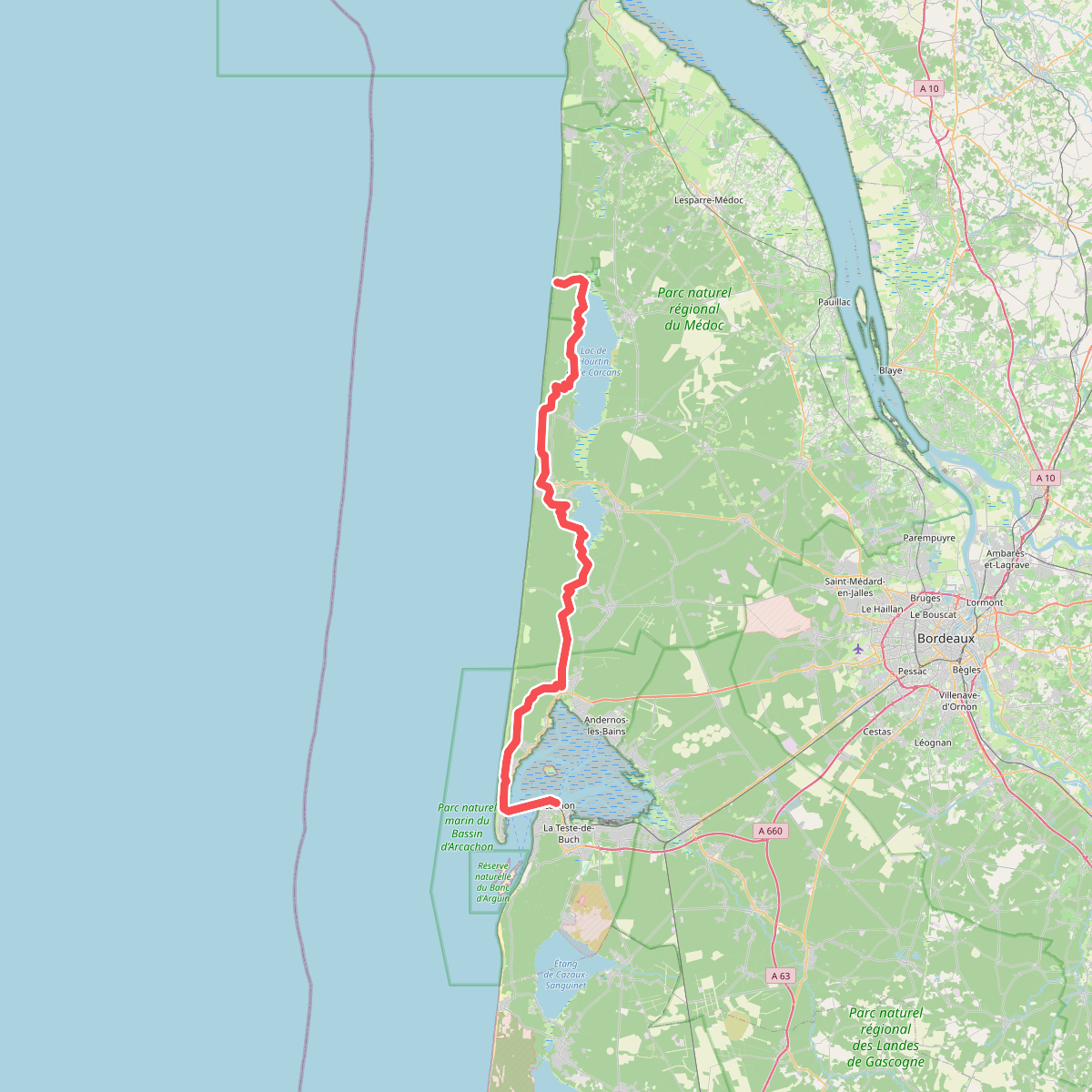
Discover the best walks in Parc naturel régional du Médoc. 1 routes on the map, with descriptions, photos and GPX.
About Parc naturel régional du Médoc
The Parc naturel régional du Médoc offers a landscape defined by the transition from the Gironde estuary to the Atlantic dunes. Walkers will find a distinct contrast between the eastern marshlands, where clay soils and drainage canals shape the flat pastures, and the vast pine forests of the interior. This is not a region of dramatic elevation; the terrain is flat to gently undulating, with the highest points being the coastal sand dunes that block the ocean.
Read more
About Parc naturel régional du Médoc
The Parc naturel régional du Médoc offers a landscape defined by the transition from the Gironde estuary to the Atlantic dunes. Walkers will find a distinct contrast between the eastern marshlands, where clay soils and drainage canals shape the flat pastures, and the vast pine forests of the interior. This is not a region of dramatic elevation; the terrain is flat to gently undulating, with the highest points being the coastal sand dunes that block the ocean.
Read moreThe Parc naturel régional du Médoc offers a landscape defined by the transition from the Gironde estuary to the Atlantic dunes. Walkers will find a distinct contrast between the eastern marshlands, where clay soils and drainage canals shape the flat pastures, and the vast pine forests of the interior. This is not a region of dramatic elevation; the terrain is flat to gently undulating, with the highest points being the coastal sand dunes that block the ocean.
Underfoot, the paths vary significantly depending on which side of the peninsula you explore. The western forest tracks consist mostly of deep, soft sand that requires steady effort, while the paths closer to the estuary follow firmer dirt tracks, dykes, and grassy canal banks. The pine plantations, planted historically to stabilize the shifting sands, provide long, straight firebreaks and forestry tracks that can feel repetitive but offer straightforward navigation.
In late autumn, particularly around November, the deciduous oaks mixed among the pines turn rust-brown, and the damp forest floor becomes rich with mosses and fungi. The lakeside paths around Lac de Carcans-Hourtin provide a different experience, where wooden boardwalks occasionally cross the wetter reed beds to keep you clear of the marshy margins. It is a working landscape of forestry, viticulture, and wetland management, where the paths are shared with local woodcutters and oyster farmers rather than being purely recreational trails.