
The best hiking routes in Tullgarns naturvårdsområde
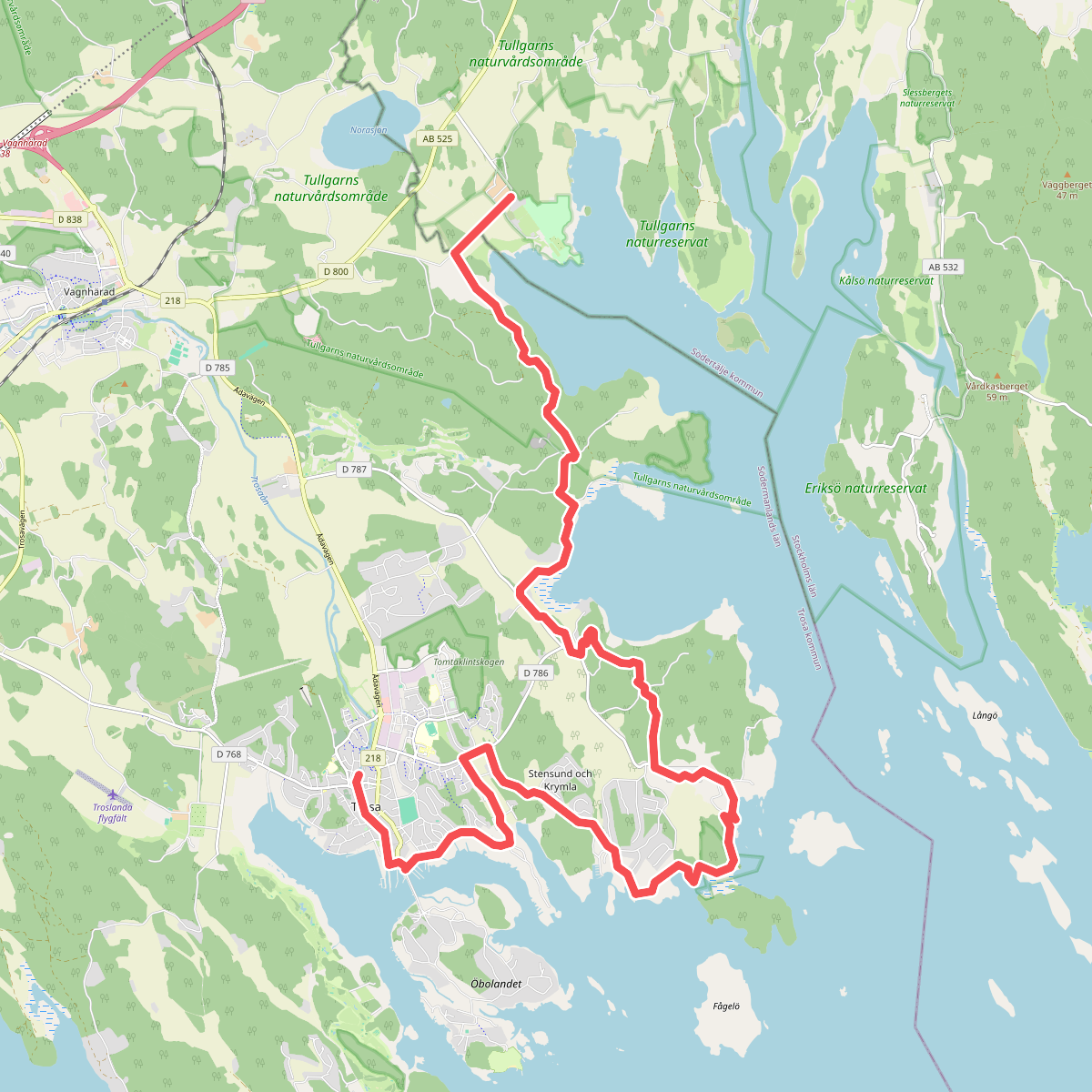
Discover the best walks in Tullgarns naturvårdsområde. 1 routes on the map, with descriptions, photos and GPX.
Managed by AssiDomän AB
About Tullgarns naturvårdsområde
Tullgarns naturvårdsområde is a coastal nature reserve dominated by the grounds of an eighteenth-century royal palace, meaning the landscape transitions sharply from formal, managed parkland to dense Baltic deciduous forests and coastal wetlands. Walkers here will not find rugged mountain trails or deep wilderness valleys; instead, the terrain is flat and gently rolling, characterized by ancient oak groves, damp clay pastures, and reed-fringed bays along the Baltic shore.
Read more
About Tullgarns naturvårdsområde
Tullgarns naturvårdsområde is a coastal nature reserve dominated by the grounds of an eighteenth-century royal palace, meaning the landscape transitions sharply from formal, managed parkland to dense Baltic deciduous forests and coastal wetlands. Walkers here will not find rugged mountain trails or deep wilderness valleys; instead, the terrain is flat and gently rolling, characterized by ancient oak groves, damp clay pastures, and reed-fringed bays along the Baltic shore.
Read moreTullgarns naturvårdsområde is a coastal nature reserve dominated by the grounds of an eighteenth-century royal palace, meaning the landscape transitions sharply from formal, managed parkland to dense Baltic deciduous forests and coastal wetlands. Walkers here will not find rugged mountain trails or deep wilderness valleys; instead, the terrain is flat and gently rolling, characterized by ancient oak groves, damp clay pastures, and reed-fringed bays along the Baltic shore.
Underfoot, the paths vary from wide, gravelled estate roads near the palace to narrow, muddy dirt tracks and wooden boardwalks that cross the wetter marshlands. The southern sections of the reserve lead through older, unmanaged woodlands where fallen trees are left to decay, requiring more careful stepping over roots and damp soil. The shoreline paths offer direct views of the shallow bays, which are key stopovers for migrating waterfowl.
In late May and June, the forest floor near the palace is covered in wild ramsons and spring flowers, while the coastal meadows are grazed by cattle to keep the landscape open. The areas closest to the palace gardens and the main parking lots are often busier with day-trippers, but the longer loops leading out to the forested peninsulas offer a much quieter, more secluded walking experience.