
The best hiking routes in SIC Monte Baracca e Contrada Giarrita
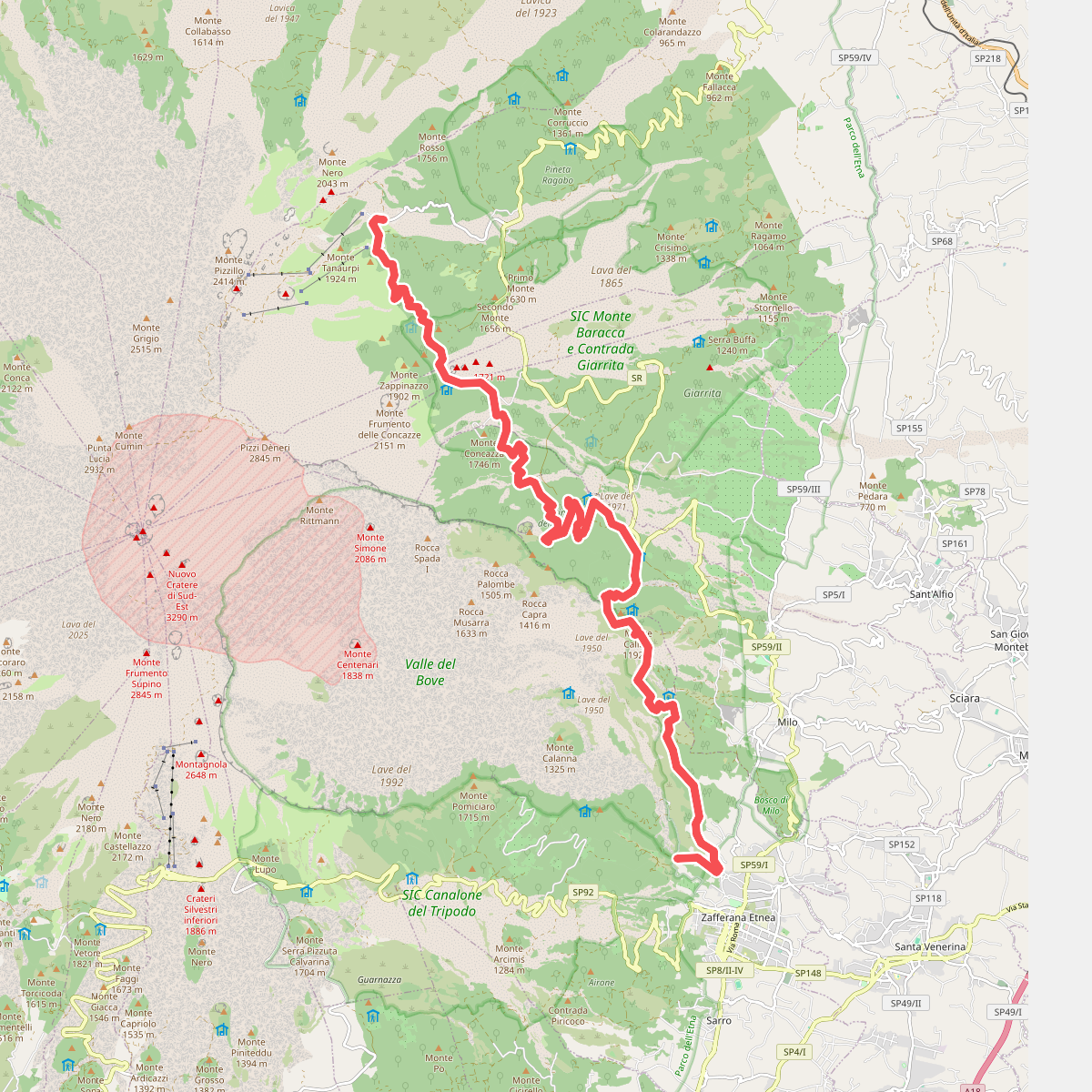
Discover the best walks in SIC Monte Baracca e Contrada Giarrita. 2 routes on the map, with descriptions, photos and GPX.
Managed by Ente Parcodell'Etna
About SIC Monte Baracca e Contrada Giarrita
SIC Monte Baracca e Contrada Giarrita offers a distinct walking experience on the northern slopes of Mount Etna, characterized by its transition from dense woodland to raw volcanic terrain. Unlike the barren lava fields higher up the volcano, this area is defined by its extensive birch forests, specifically the endemic Betula aetnensis, which stand out with their white bark against the dark volcanic soil. The landscape is shaped by historical lava flows, creating a undulating terrain of old craters and reforested slopes rather than steep, jagged peaks.
Read more
About SIC Monte Baracca e Contrada Giarrita
SIC Monte Baracca e Contrada Giarrita offers a distinct walking experience on the northern slopes of Mount Etna, characterized by its transition from dense woodland to raw volcanic terrain. Unlike the barren lava fields higher up the volcano, this area is defined by its extensive birch forests, specifically the endemic Betula aetnensis, which stand out with their white bark against the dark volcanic soil. The landscape is shaped by historical lava flows, creating a undulating terrain of old craters and reforested slopes rather than steep, jagged peaks.
Read moreSIC Monte Baracca e Contrada Giarrita offers a distinct walking experience on the northern slopes of Mount Etna, characterized by its transition from dense woodland to raw volcanic terrain. Unlike the barren lava fields higher up the volcano, this area is defined by its extensive birch forests, specifically the endemic Betula aetnensis, which stand out with their white bark against the dark volcanic soil. The landscape is shaped by historical lava flows, creating a undulating terrain of old craters and reforested slopes rather than steep, jagged peaks.
Underfoot, walkers will encounter a mix of loose volcanic ash, gravel tracks, and forest paths cushioned by leaf litter. The contrast is immediate as you move from the shade of the birch and pine canopy into open stretches where black lava dikes cut through the vegetation. These lava formations serve as a visible record of past eruptions, showing how the forest has gradually reclaimed the cooled flows over decades.
This reserve is generally quieter than the main tourist hubs of the volcano, appealing to those who prefer a self-guided study of volcanic botany. In October, the birch leaves turn a bright yellow, contrasting sharply with the dark ground and the green of the pines. There are no paved promenades or visitor centers here, meaning walkers should expect a rustic, natural environment where the focus is entirely on the geological and botanical transitions of the mountain.