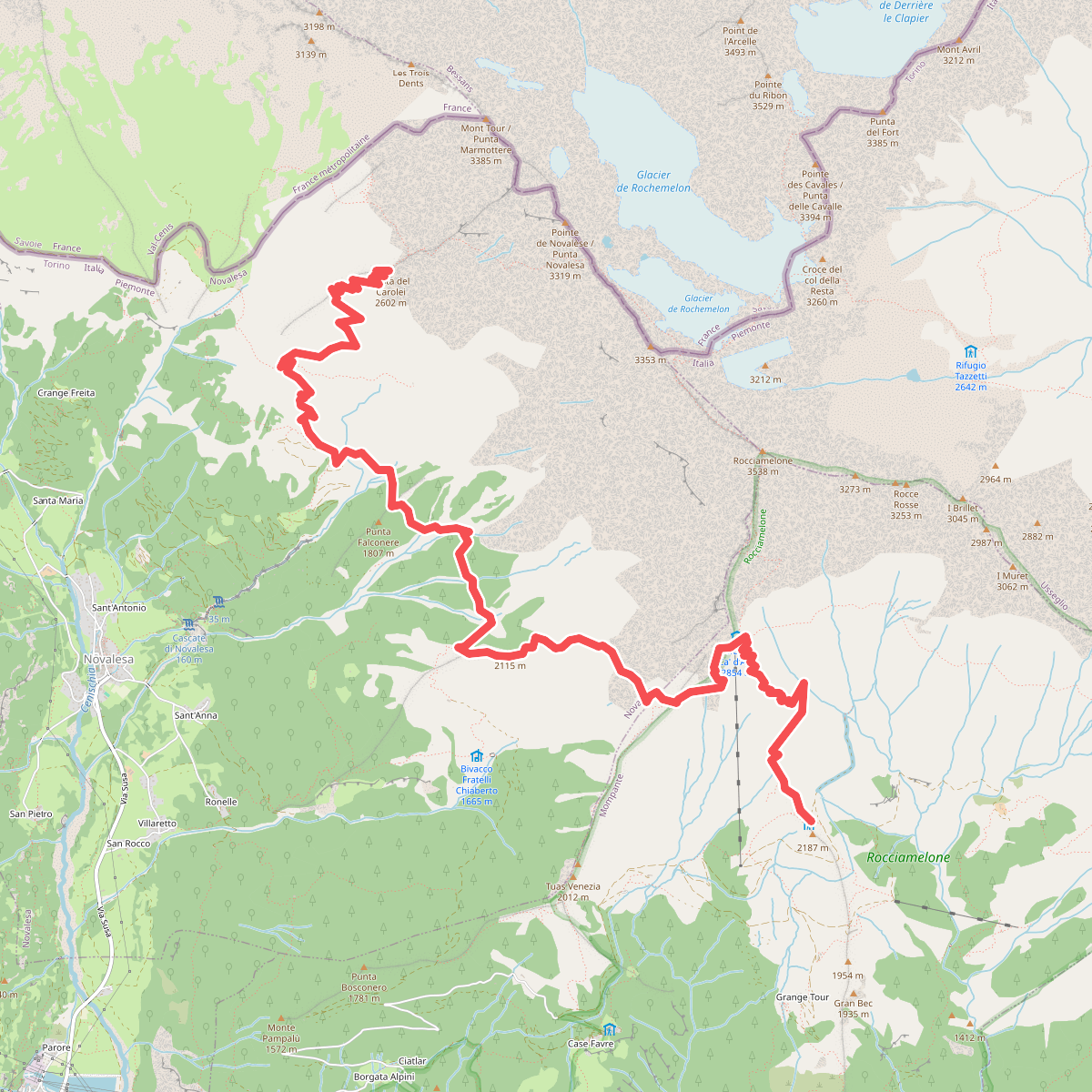

The best hiking routes in Rocciamelone
Discover the best walks in Rocciamelone. 7 routes on the map, with descriptions, photos and GPX.
Managed by Natura 2000
About Rocciamelone
Rocciamelone is a prominent peak in the Graian Alps that rises sharply above the Susa Valley. Unlike the surrounding lower valleys with their deciduous woodlands and terraced pastures, the ascent here is a steep transition through distinct alpine zones. The lower slopes feature larch forests and subalpine meadows, which quickly give way to vast, grey scree fields, bare rock slabs, and patches of permanent snow near the summit.
Read more
About Rocciamelone
Rocciamelone is a prominent peak in the Graian Alps that rises sharply above the Susa Valley. Unlike the surrounding lower valleys with their deciduous woodlands and terraced pastures, the ascent here is a steep transition through distinct alpine zones. The lower slopes feature larch forests and subalpine meadows, which quickly give way to vast, grey scree fields, bare rock slabs, and patches of permanent snow near the summit.
Read moreRocciamelone is a prominent peak in the Graian Alps that rises sharply above the Susa Valley. Unlike the surrounding lower valleys with their deciduous woodlands and terraced pastures, the ascent here is a steep transition through distinct alpine zones. The lower slopes feature larch forests and subalpine meadows, which quickly give way to vast, grey scree fields, bare rock slabs, and patches of permanent snow near the summit.
Underfoot, the path changes from dirt tracks and grassy trails in the lower sections to loose shale, steep stone steps, and exposed rocky ledges higher up. The final stretch to the summit is equipped with fixed ropes to assist walkers on the steep, open rock. The landscape is defined by its sheer verticality, where the vegetation disappears entirely, leaving a stark, high-altitude environment of rock and ice.
This is a demanding mountain walk with significant elevation gain, offering no flat valley strolls or gentle forest loops. While the lower meadows are often grazed by cattle in July, the upper reaches remain a harsh alpine desert well into the summer. Walkers should expect a sustained climb on rough, rocky terrain rather than a casual hill walk.
Hiking routes in Rocciamelone (7)
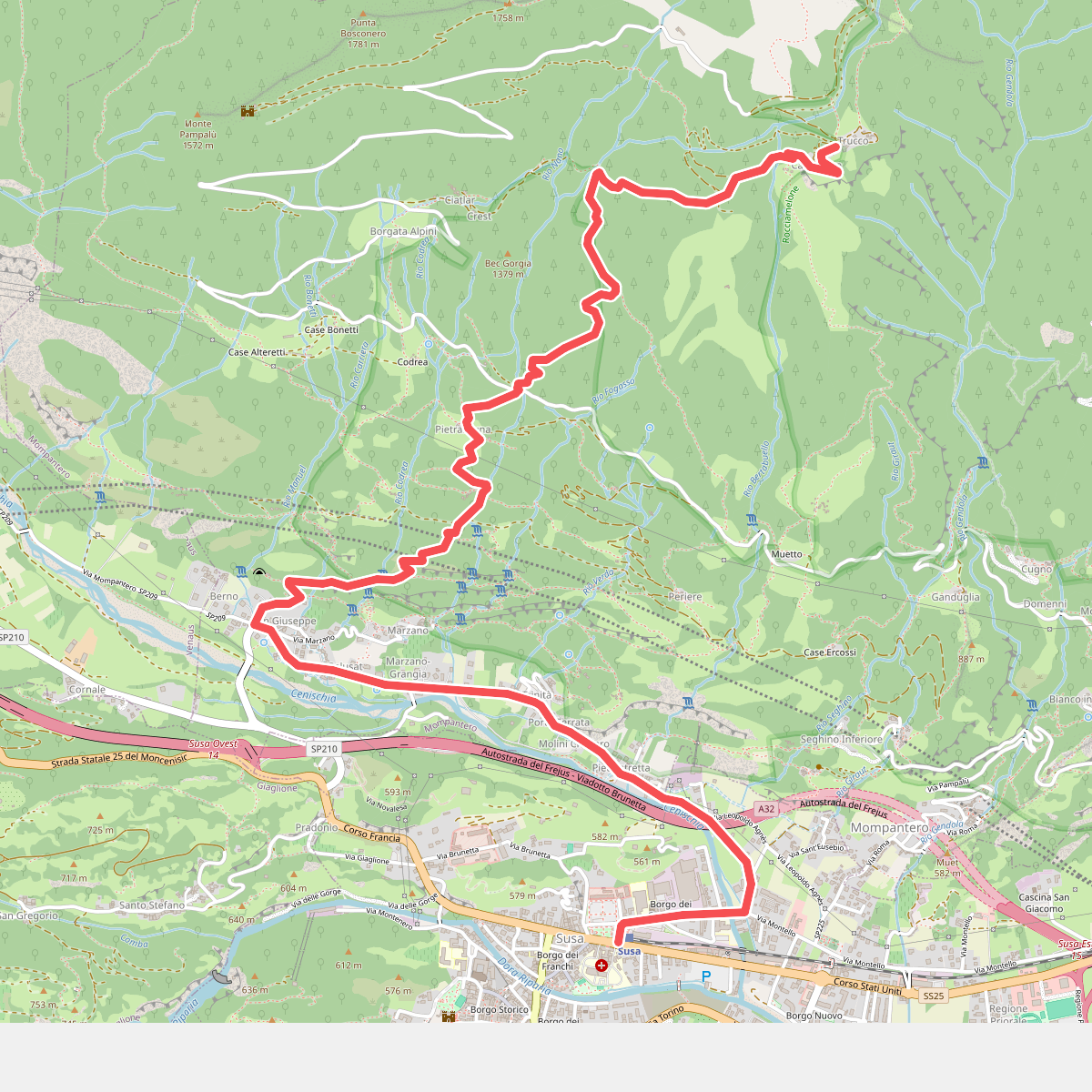
#1. GTA: Il Truc - Susa
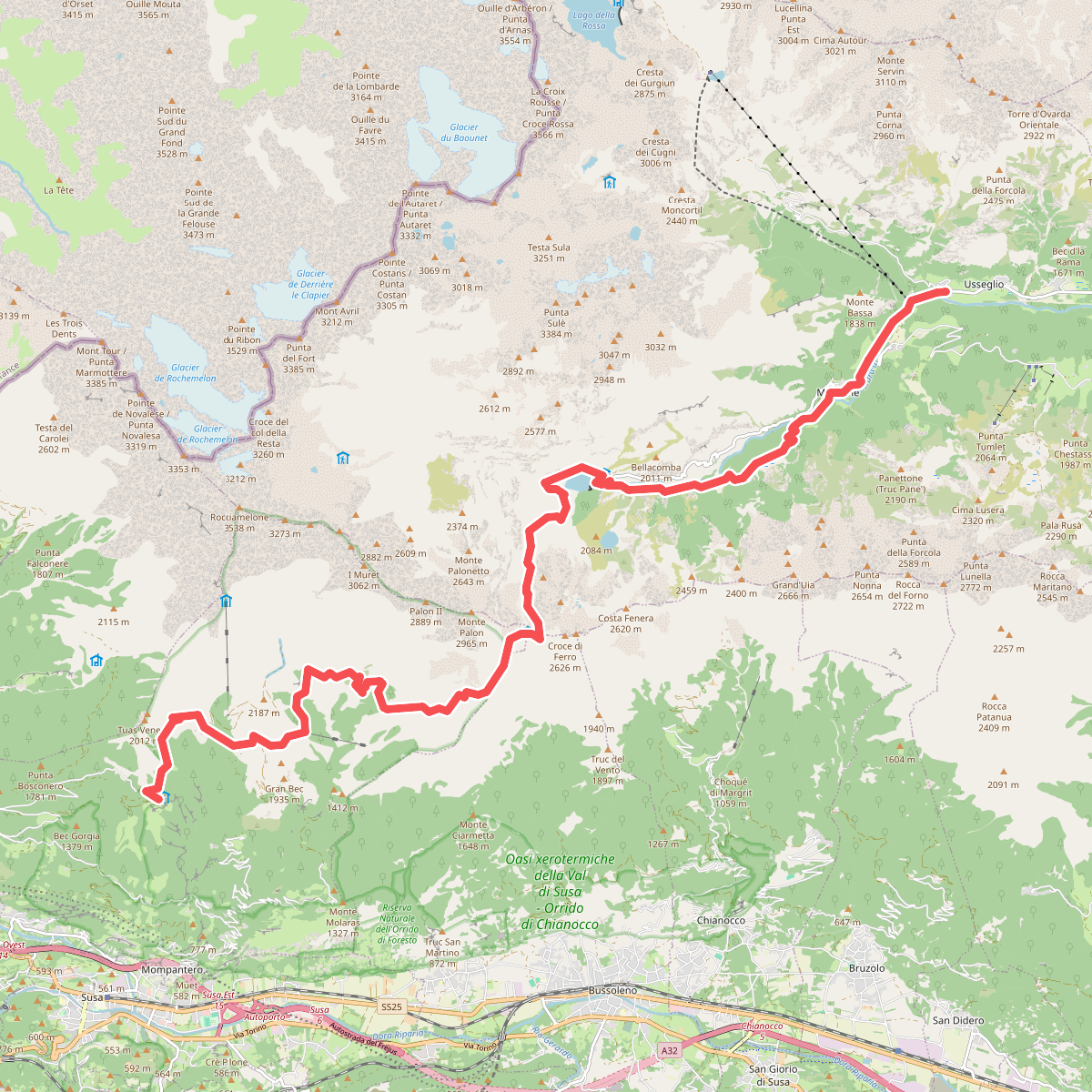
#2. GTA: Usseglio - Il Truc
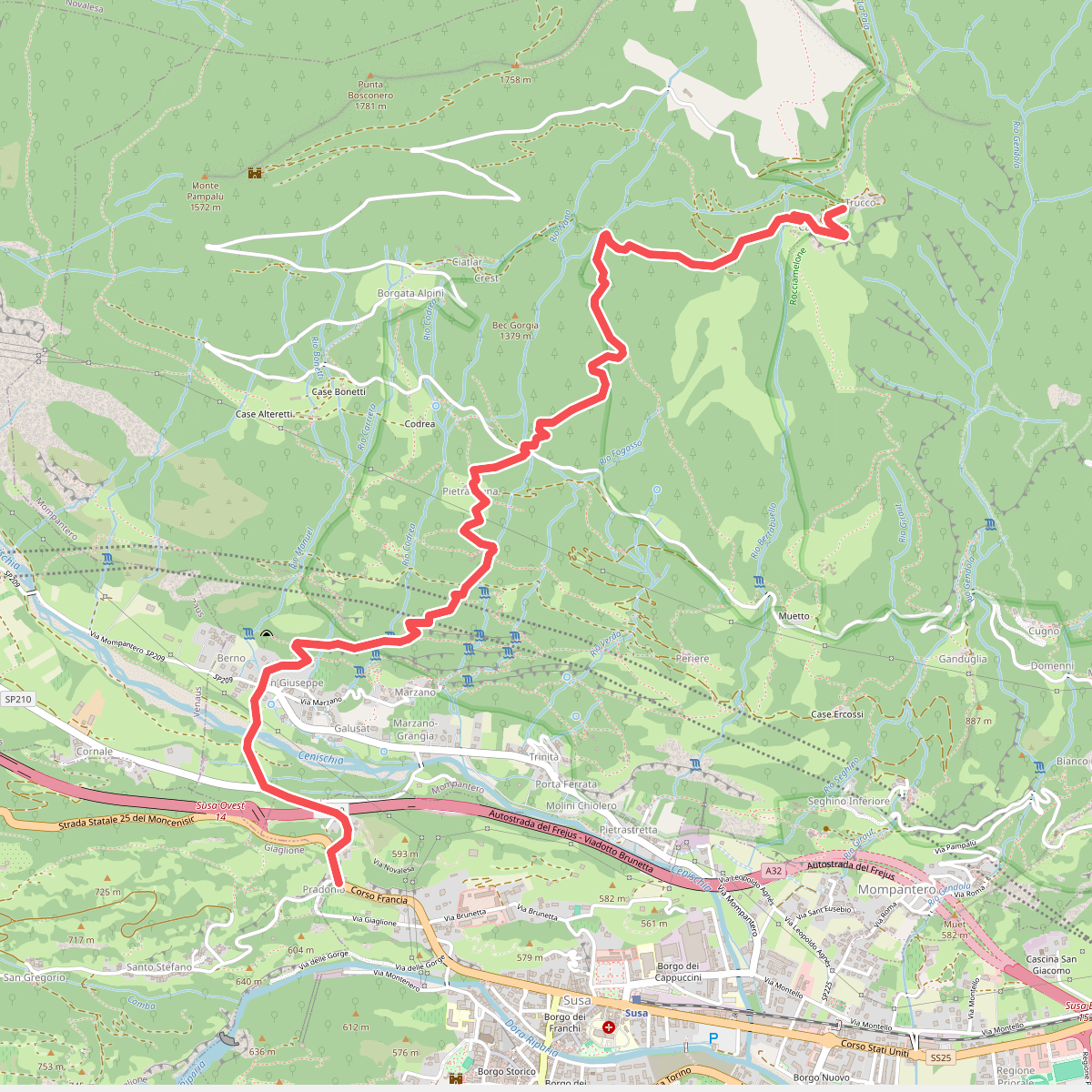
#3. Sentiero Italia - Piemonte E00 · SI
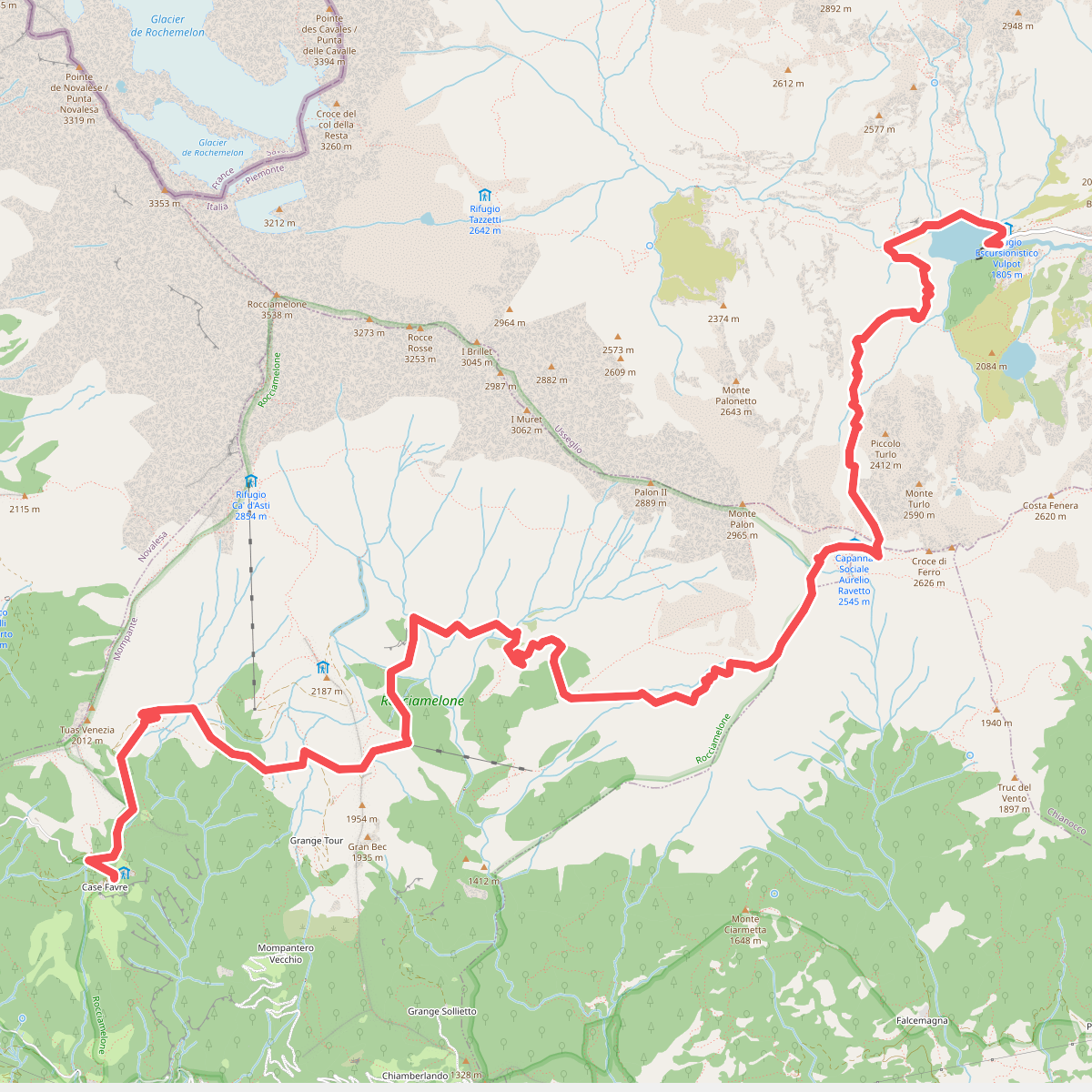
#4. Sentiero Italia - Piemonte E00 · SI
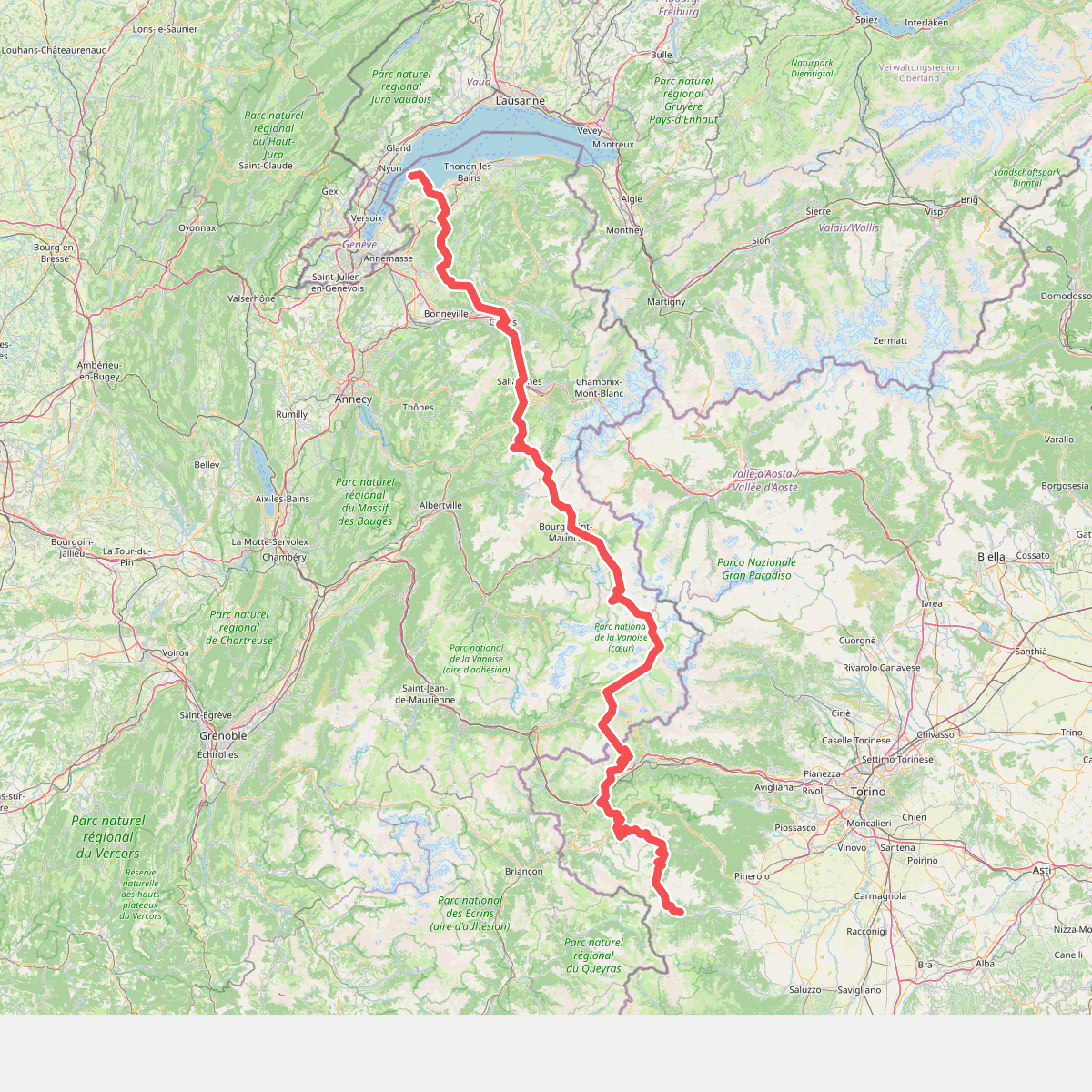
#5. Sulle strade dei valdesi: GRV Glorioso Rimpatrio dei Valdesi
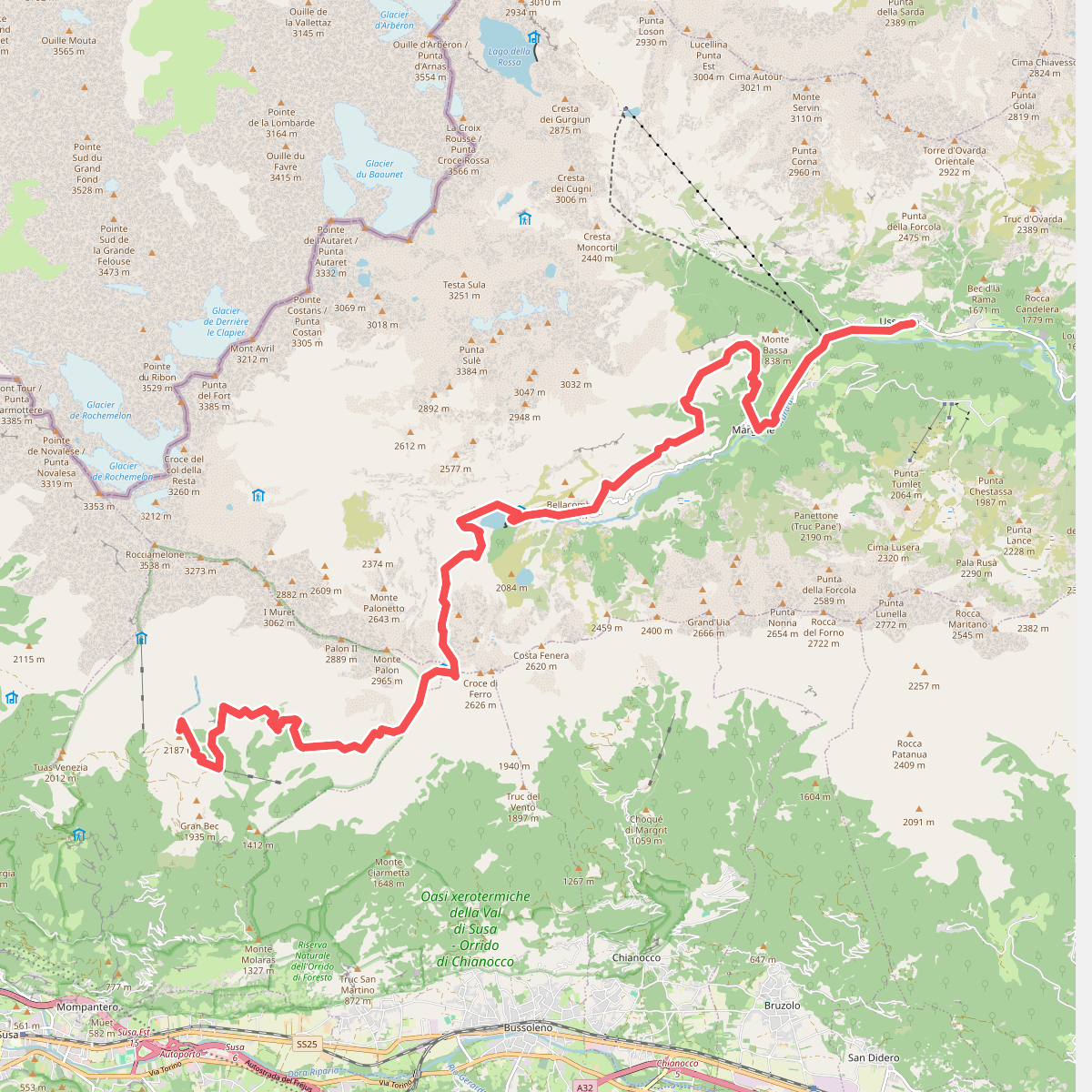
#6. Via Alpina Blue D32