
The best hiking routes in Riserva Naturale Regionale Orientata "Bosco delle Pianelle"
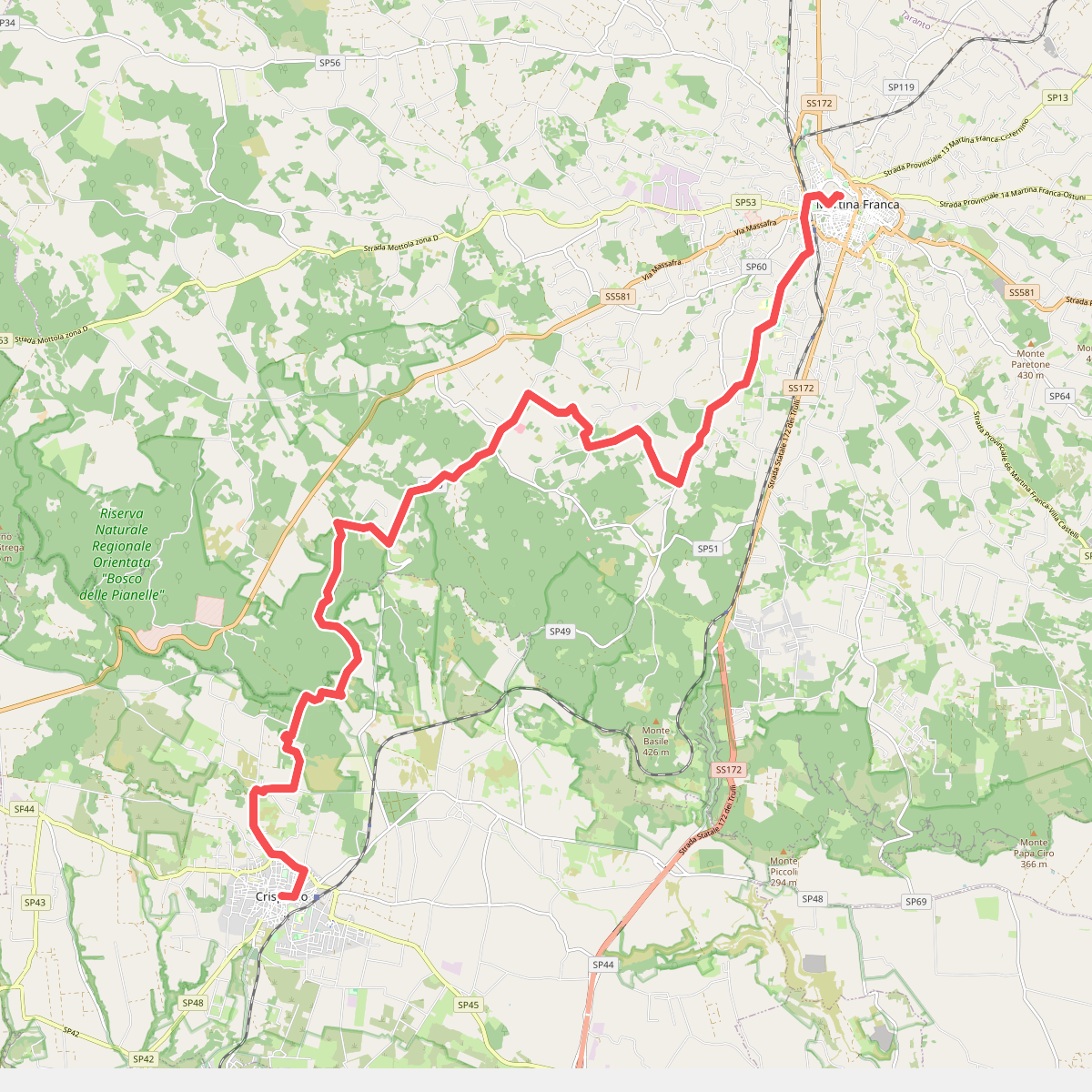
Discover the best walks in Riserva Naturale Regionale Orientata "Bosco delle Pianelle". 1 routes on the map, with descriptions, photos and GPX.
Managed by Comune di Martina Franca
About Riserva Naturale Regionale Orientata "Bosco delle Pianelle"
The Riserva Naturale Regionale Orientata "Bosco delle Pianelle" offers a distinct walking environment in Puglia, characterized by a dense canopy of Macedonian oak, holm oak, and hornbeam. Unlike the surrounding agricultural plains of olive groves, this reserve occupies a rugged limestone ravine system known locally as a gravina. The terrain is gently rolling rather than mountainous, with paths that descend into cooler, shaded sinkholes and climb back up to exposed limestone pavements.
Read more
About Riserva Naturale Regionale Orientata "Bosco delle Pianelle"
The Riserva Naturale Regionale Orientata "Bosco delle Pianelle" offers a distinct walking environment in Puglia, characterized by a dense canopy of Macedonian oak, holm oak, and hornbeam. Unlike the surrounding agricultural plains of olive groves, this reserve occupies a rugged limestone ravine system known locally as a gravina. The terrain is gently rolling rather than mountainous, with paths that descend into cooler, shaded sinkholes and climb back up to exposed limestone pavements.
Read moreThe Riserva Naturale Regionale Orientata "Bosco delle Pianelle" offers a distinct walking environment in Puglia, characterized by a dense canopy of Macedonian oak, holm oak, and hornbeam. Unlike the surrounding agricultural plains of olive groves, this reserve occupies a rugged limestone ravine system known locally as a gravina. The terrain is gently rolling rather than mountainous, with paths that descend into cooler, shaded sinkholes and climb back up to exposed limestone pavements.
Underfoot, walkers will find a mix of stony dirt tracks, loose limestone gravel, and soft leaf litter under the dense tree cover. The forest floor changes character depending on the elevation, with mosses and ferns thriving in the damp microclimate of the deeper gullies, while Mediterranean scrub dominates the sunnier, rocky ridges. In April and May, wild orchids bloom along the edges of the main paths, marking a distinct seasonal shift in the undergrowth.
The reserve is managed with a focus on conservation, meaning walkers should expect a natural forest with fallen timber and minimal modern infrastructure, rather than a manicured park. The main tracks are wide and easy to follow, while the smaller side trails require more attention to navigate the uneven, rocky ground. It is a quiet, shaded alternative to the exposed coastal walks of the region, focusing on woodland ecology and karst geology.