
The best hiking routes in Park Krajobrazowy Sudetów Wałbrzyskich
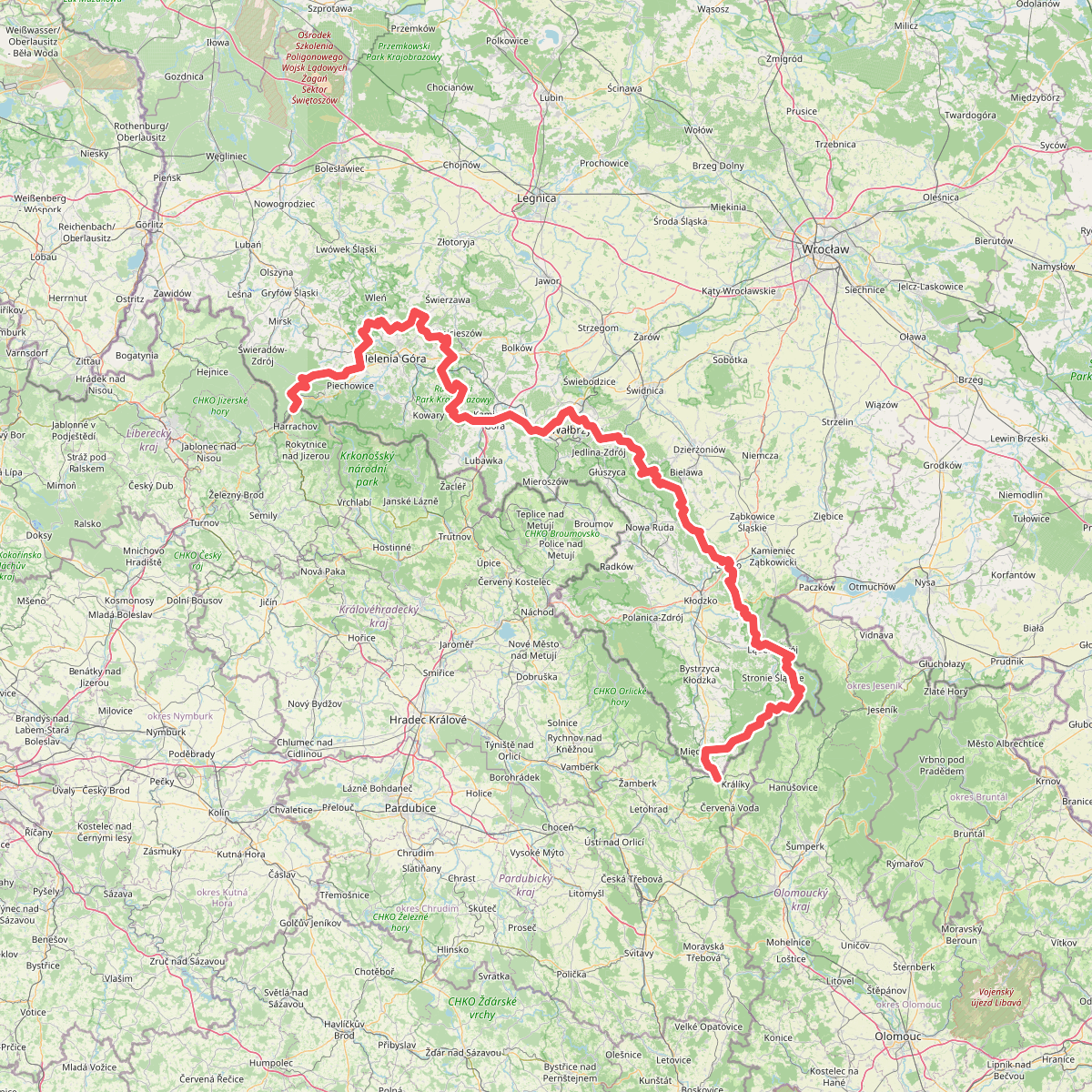
Discover the best walks in Park Krajobrazowy Sudetów Wałbrzyskich. 2 routes on the map, with descriptions, photos and GPX.
Managed by Dolnośląski Zespół Parków Krajobrazowych
About Park Krajobrazowy Sudetów Wałbrzyskich
Park Krajobrazowy Sudetów Wałbrzyskich offers a distinctively steep, volcanic landscape that sets it apart from the gentler rolling hills of neighboring Silesian areas. Walkers here will immediately notice the sharp, conical shapes of ancient volcanic plugs, such as Borowa and Chełmiec, rising abruptly from the valleys. The terrain is characterized by dramatic elevation changes over short distances, meaning paths are often steep, rocky, and uneven, littered with loose rhyolite and melaphyre debris. Underfoot, you will mostly encounter rough stones, exposed tree roots, and dark volcanic soil rather than soft forest loam.
Read more
About Park Krajobrazowy Sudetów Wałbrzyskich
Park Krajobrazowy Sudetów Wałbrzyskich offers a distinctively steep, volcanic landscape that sets it apart from the gentler rolling hills of neighboring Silesian areas. Walkers here will immediately notice the sharp, conical shapes of ancient volcanic plugs, such as Borowa and Chełmiec, rising abruptly from the valleys. The terrain is characterized by dramatic elevation changes over short distances, meaning paths are often steep, rocky, and uneven, littered with loose rhyolite and melaphyre debris. Underfoot, you will mostly encounter rough stones, exposed tree roots, and dark volcanic soil rather than soft forest loam.
Read morePark Krajobrazowy Sudetów Wałbrzyskich offers a distinctively steep, volcanic landscape that sets it apart from the gentler rolling hills of neighboring Silesian areas. Walkers here will immediately notice the sharp, conical shapes of ancient volcanic plugs, such as Borowa and Chełmiec, rising abruptly from the valleys. The terrain is characterized by dramatic elevation changes over short distances, meaning paths are often steep, rocky, and uneven, littered with loose rhyolite and melaphyre debris. Underfoot, you will mostly encounter rough stones, exposed tree roots, and dark volcanic soil rather than soft forest loam.
The dense beech and spruce forests that cover these slopes create a closed, intimate canopy, which opens up only at the rocky summits or near active stone quarries. These quarries are a prominent feature of the landscape, showing how the local stone has been harvested for centuries and leaving sheer rock faces visible from the trail. Because of the steep gradients, water drains quickly, forming fast-flowing mountain streams in the narrow ravines rather than wetlands or bogs.
While the main summits with observation towers attract regular foot traffic, the deeper forested ravines and the quieter trails around the Andrzejówka mountain hut offer a more solitary walking experience. This is a landscape for those who prefer demanding climbs, rocky footing, and the dense, enclosed atmosphere of industrial-adjacent mountain woodlands over wide-open meadows or gentle sandy tracks.