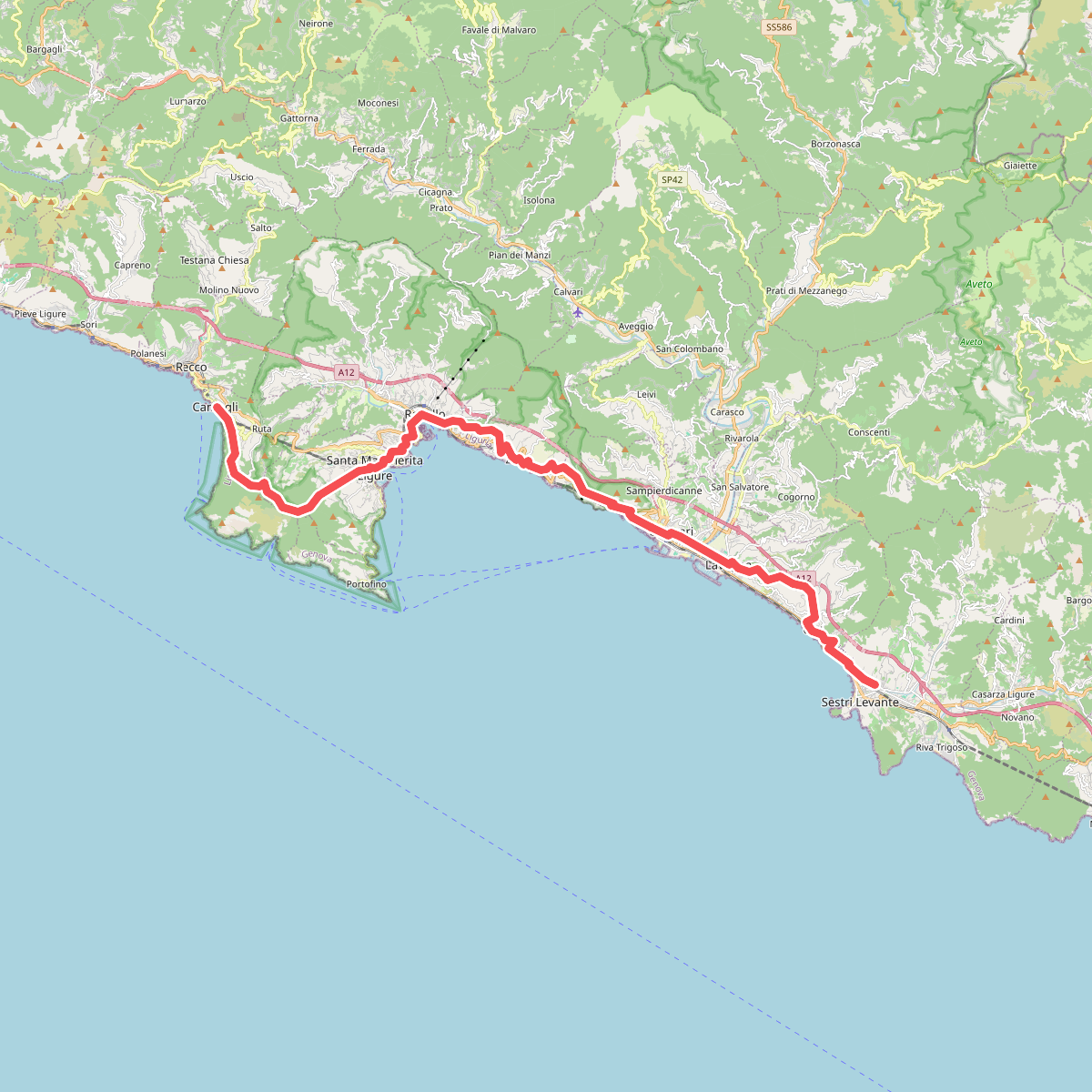

The best hiking routes in Parco Naturale Regionale di Portofino
Discover the best walks in Parco Naturale Regionale di Portofino. 7 routes on the map, with descriptions, photos and GPX.
About Parco Naturale Regionale di Portofino
Parco Naturale Regionale di Portofino occupies a rugged promontory that juts into the Ligurian Sea, offering a distinct contrast between its northern and southern exposures. The northern slopes are dominated by dense, damp woodland where hazel, chestnut, and oak trees grow over a damp underfoot of leaf litter and mossy conglomerate rock. In contrast, the southern cliffs face the sea directly, presenting a dry, sun-baked landscape of Mediterranean macchia, wild herbs, and pine trees clinging to steep conglomerate rock faces.
Read more
About Parco Naturale Regionale di Portofino
Parco Naturale Regionale di Portofino occupies a rugged promontory that juts into the Ligurian Sea, offering a distinct contrast between its northern and southern exposures. The northern slopes are dominated by dense, damp woodland where hazel, chestnut, and oak trees grow over a damp underfoot of leaf litter and mossy conglomerate rock. In contrast, the southern cliffs face the sea directly, presenting a dry, sun-baked landscape of Mediterranean macchia, wild herbs, and pine trees clinging to steep conglomerate rock faces.
Read moreParco Naturale Regionale di Portofino occupies a rugged promontory that juts into the Ligurian Sea, offering a distinct contrast between its northern and southern exposures. The northern slopes are dominated by dense, damp woodland where hazel, chestnut, and oak trees grow over a damp underfoot of leaf litter and mossy conglomerate rock. In contrast, the southern cliffs face the sea directly, presenting a dry, sun-baked landscape of Mediterranean macchia, wild herbs, and pine trees clinging to steep conglomerate rock faces.
Walkers will find a dense network of signposted paths that vary significantly in character. The higher inland tracks are often shaded and cool, running along earth paths and stone steps, while the coastal routes are narrower, more exposed, and require careful footing on uneven rock ledges and steep stone staircases. The underlying conglomerate rock, known locally as puddingstone, is visible everywhere, forming natural steps and dramatic cliffs that drop directly into the water.
This promontory does not offer high alpine peaks or long, flat sandy beaches. Instead, it is a landscape of constant, short elevation changes, where steep climbs are immediately followed by sharp descents. The well-known coastal paths connecting the seaside villages can be busy, particularly around San Fruttuoso, while the higher interior forest tracks towards Pietre Strette are often quieter and offer a cooler, more shaded walking environment.
Hiking routes in Parco Naturale Regionale di Portofino (7)
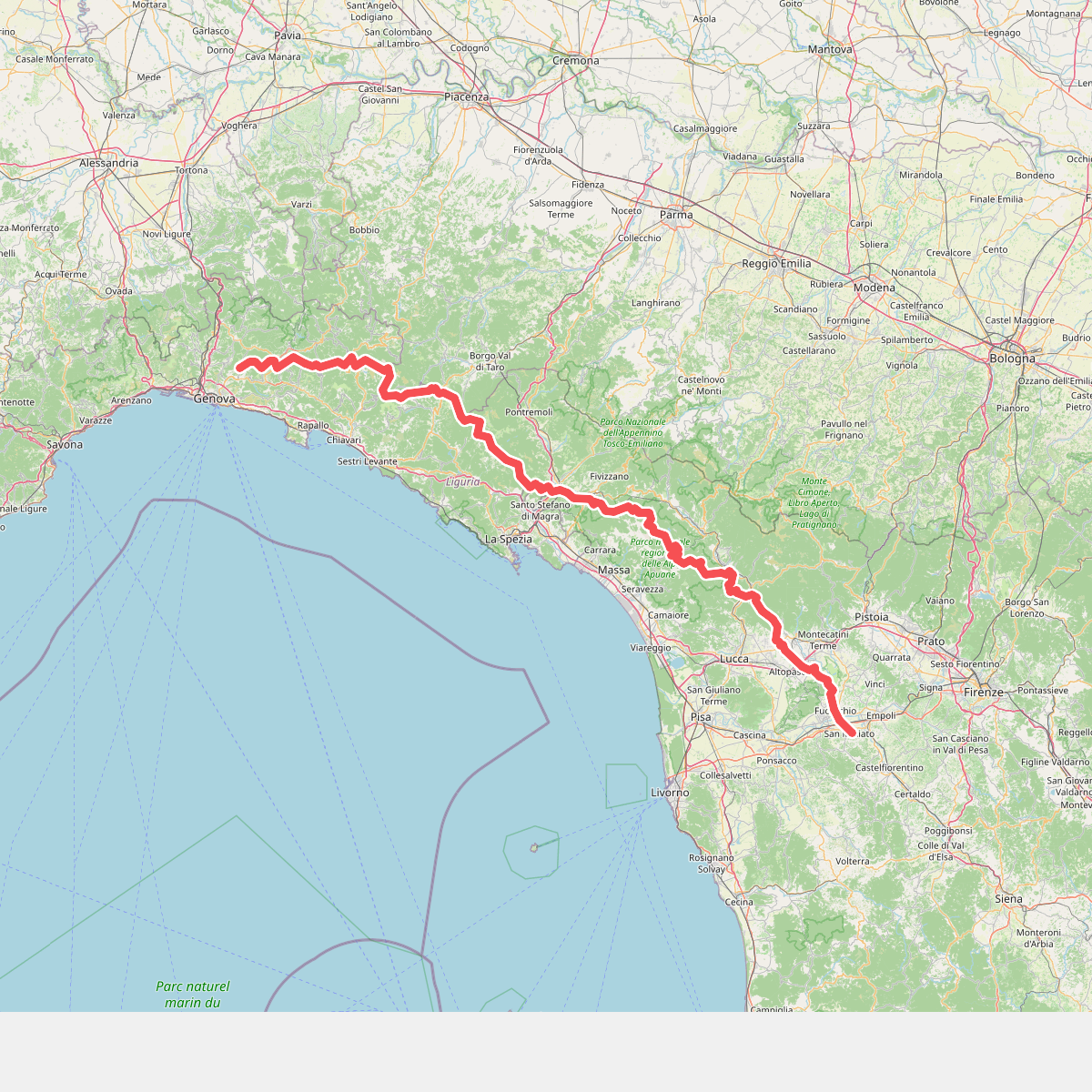
#1. Cammino di Assisi, Genova - San Miniato
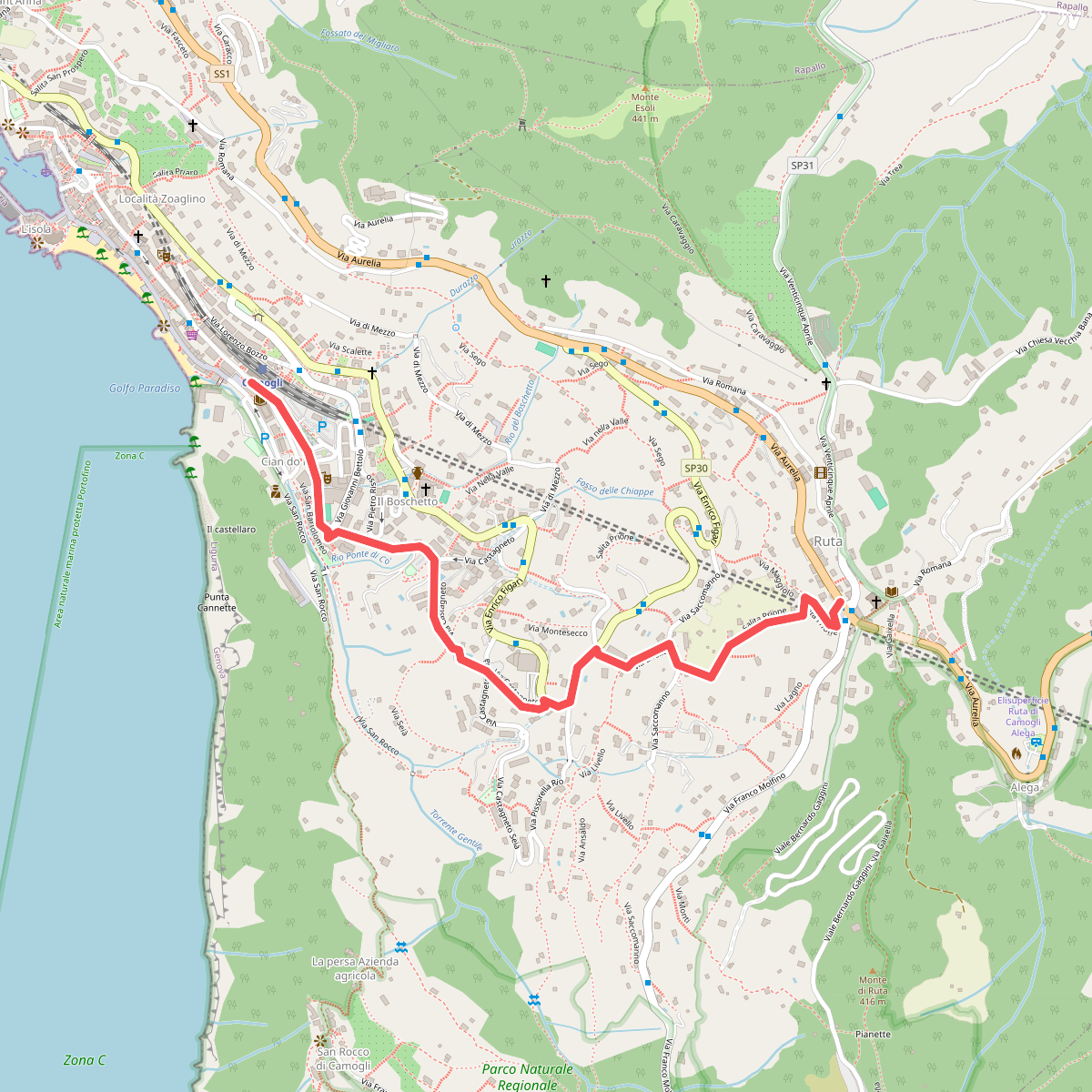
#2. Camogli (FS) - Ruta
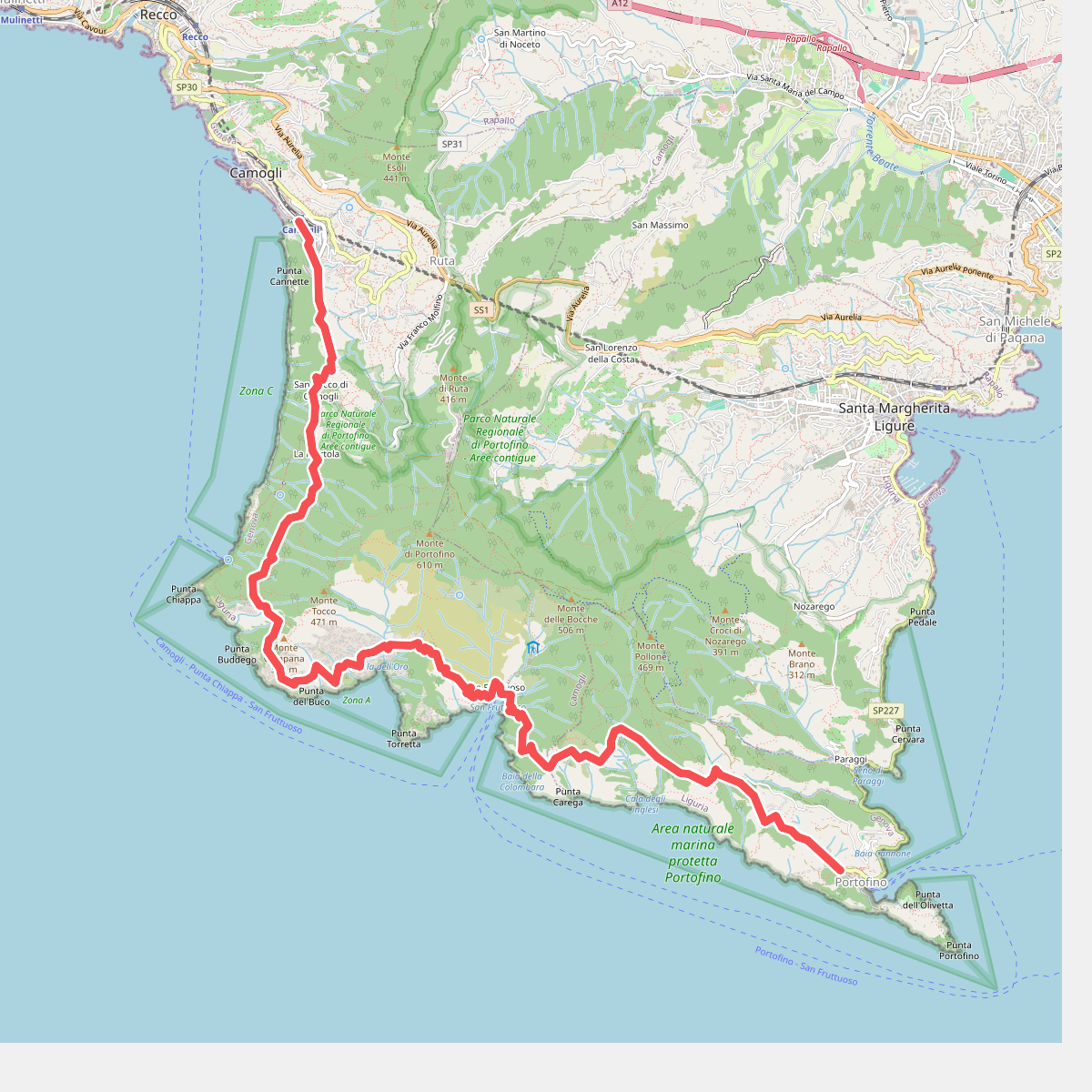
#3. Camogli - San Rocco - Passo del Bacio - San Fruttuoso - Portofino mare
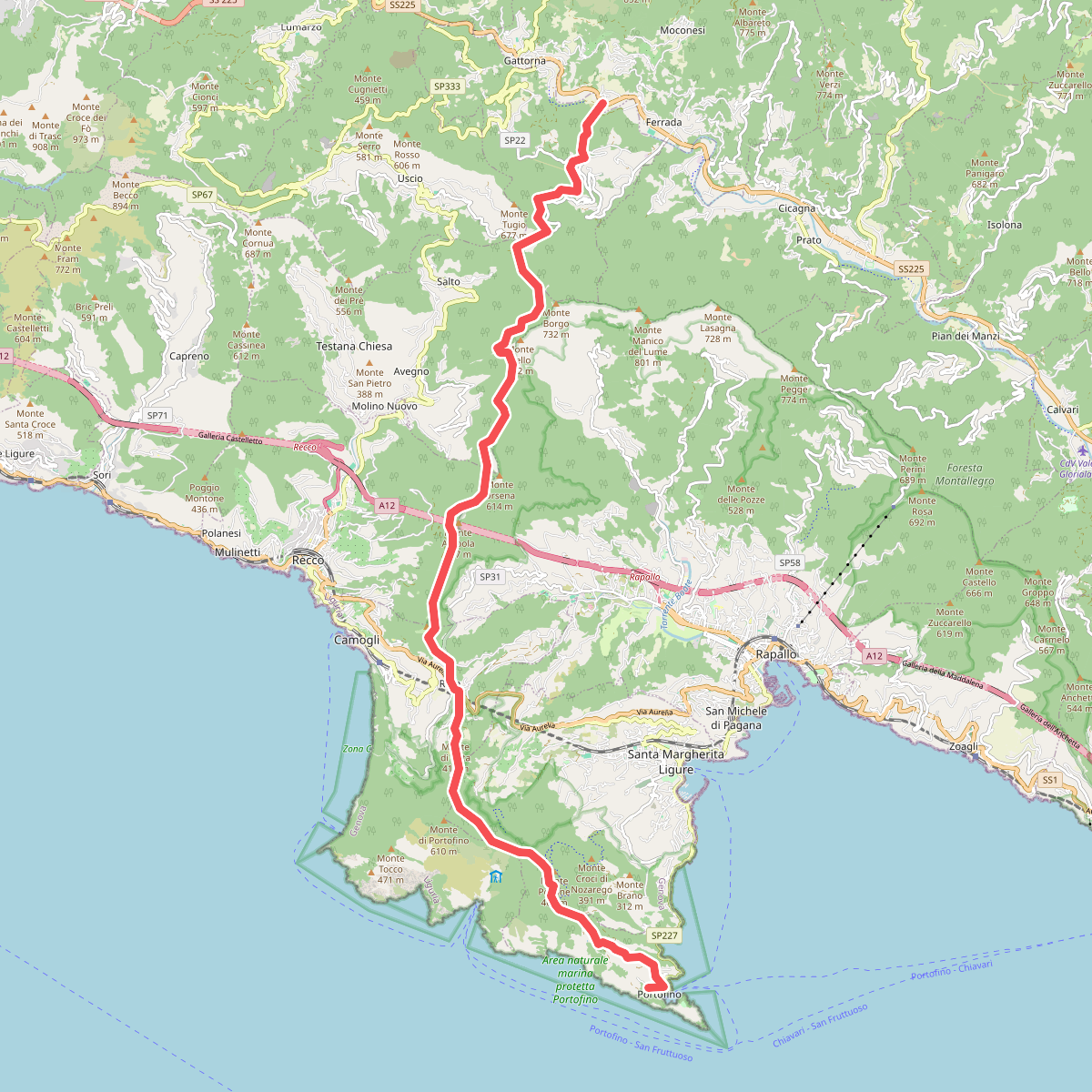
#4. Itinerario dei 2 Golfi
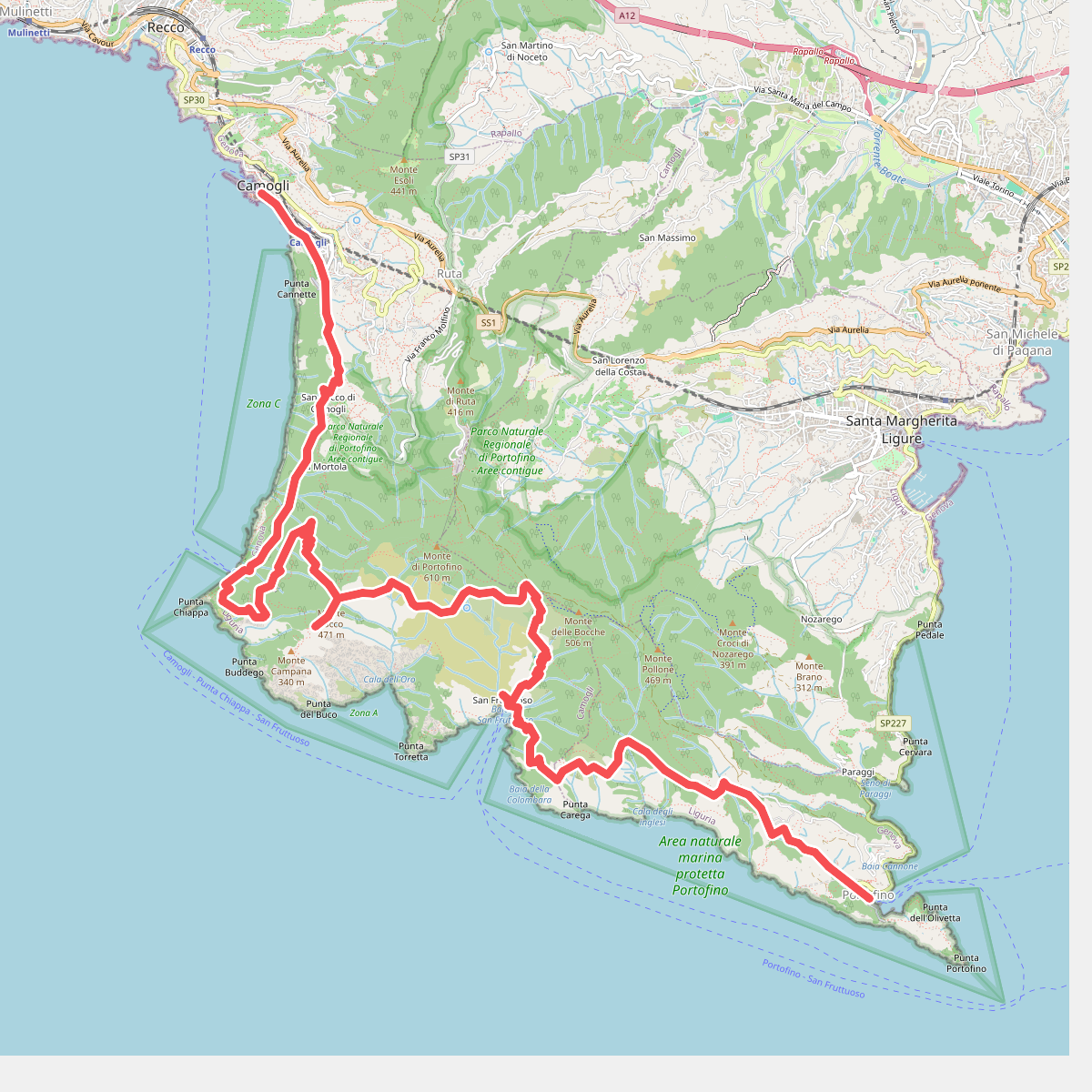
#5. Sentiero Liguria - Tappa 10
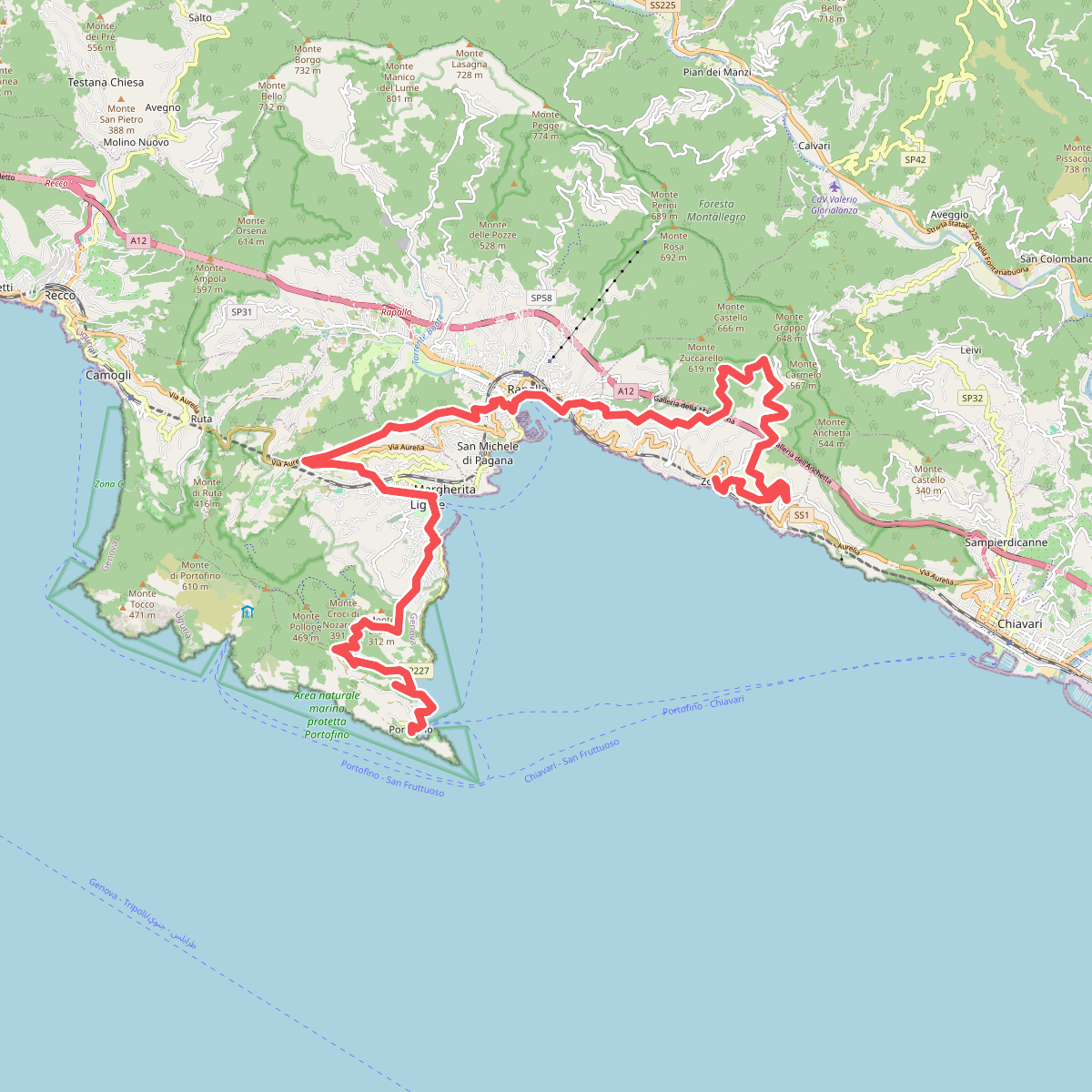
#6. Sentiero Liguria - Tappa 9