The best hiking routes in Parc del Montnegre i el Corredor
Discover the best walks in Parc del Montnegre i el Corredor. 43 routes on the map, with descriptions, photos and GPX.
Managed by Diputació de Barcelona
About Parc del Montnegre i el Corredor
Parc del Montnegre i el Corredor comprises two distinct mountain blocks running parallel to the Catalan coast, separated by the Vallgorguina valley. The western massif, El Corredor, features gentle, rounded summits covered in dense holm oak forests and Mediterranean pines, where the paths underfoot are mostly wide, sandy tracks composed of decomposed granite. In contrast, the eastern Montnegre massif rises more sharply, presenting a darker, more humid environment where cork oaks dominate the lower slopes and give way to temperate chestnut and oak woodlands on the higher, northern faces.
Read more
About Parc del Montnegre i el Corredor
Parc del Montnegre i el Corredor comprises two distinct mountain blocks running parallel to the Catalan coast, separated by the Vallgorguina valley. The western massif, El Corredor, features gentle, rounded summits covered in dense holm oak forests and Mediterranean pines, where the paths underfoot are mostly wide, sandy tracks composed of decomposed granite. In contrast, the eastern Montnegre massif rises more sharply, presenting a darker, more humid environment where cork oaks dominate the lower slopes and give way to temperate chestnut and oak woodlands on the higher, northern faces.
Read moreParc del Montnegre i el Corredor comprises two distinct mountain blocks running parallel to the Catalan coast, separated by the Vallgorguina valley. The western massif, El Corredor, features gentle, rounded summits covered in dense holm oak forests and Mediterranean pines, where the paths underfoot are mostly wide, sandy tracks composed of decomposed granite. In contrast, the eastern Montnegre massif rises more sharply, presenting a darker, more humid environment where cork oaks dominate the lower slopes and give way to temperate chestnut and oak woodlands on the higher, northern faces.
Walkers will notice a sharp ecological transition when crossing from the dry, sun-exposed southern slopes to the damp, shaded northern ravines. The granite bedrock dictates the terrain, crumbling into a coarse, gritty sand that drains quickly, meaning muddy sections are rare even after autumn downpours. This is not a high-alpine landscape of jagged peaks or deep gorges, but rather a continuous canopy of dense woodland where views of the sea or the interior valleys are only occasionally revealed through clearings in the trees.
While the park is easily reached from Barcelona, the interior trails remain relatively quiet, with most visitors gathering around the historic sanctuary of El Corredor or the dolmen of Pedra Gentil. Choosing a route here means committing to long forest walks under a thick canopy, where the interest lies in the subtle shifts from Mediterranean scrub to damp, mossy woodland rather than dramatic rocky scrambles.
Hiking routes in Parc del Montnegre i el Corredor (43)
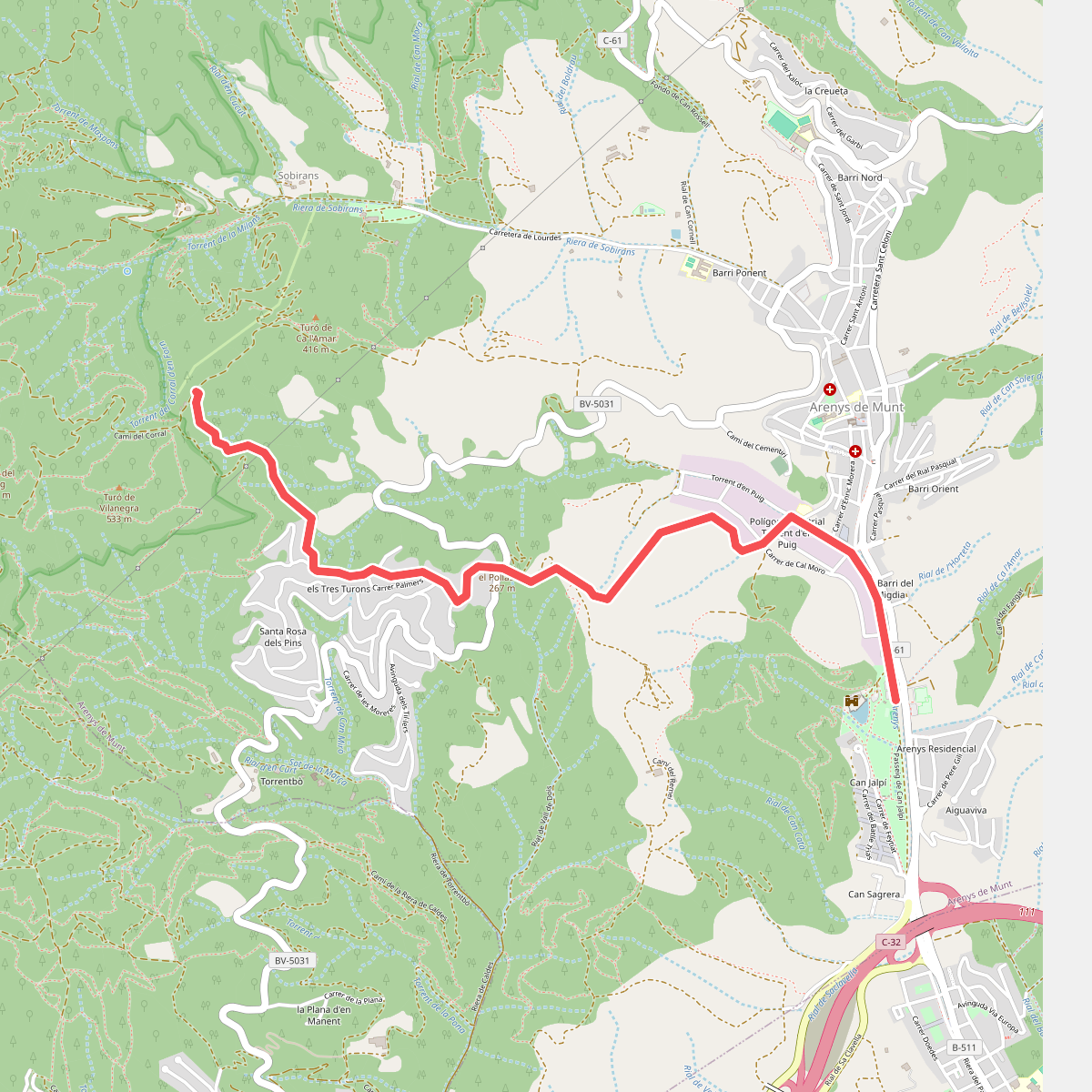
#1. Arenys de Munt-El Corral
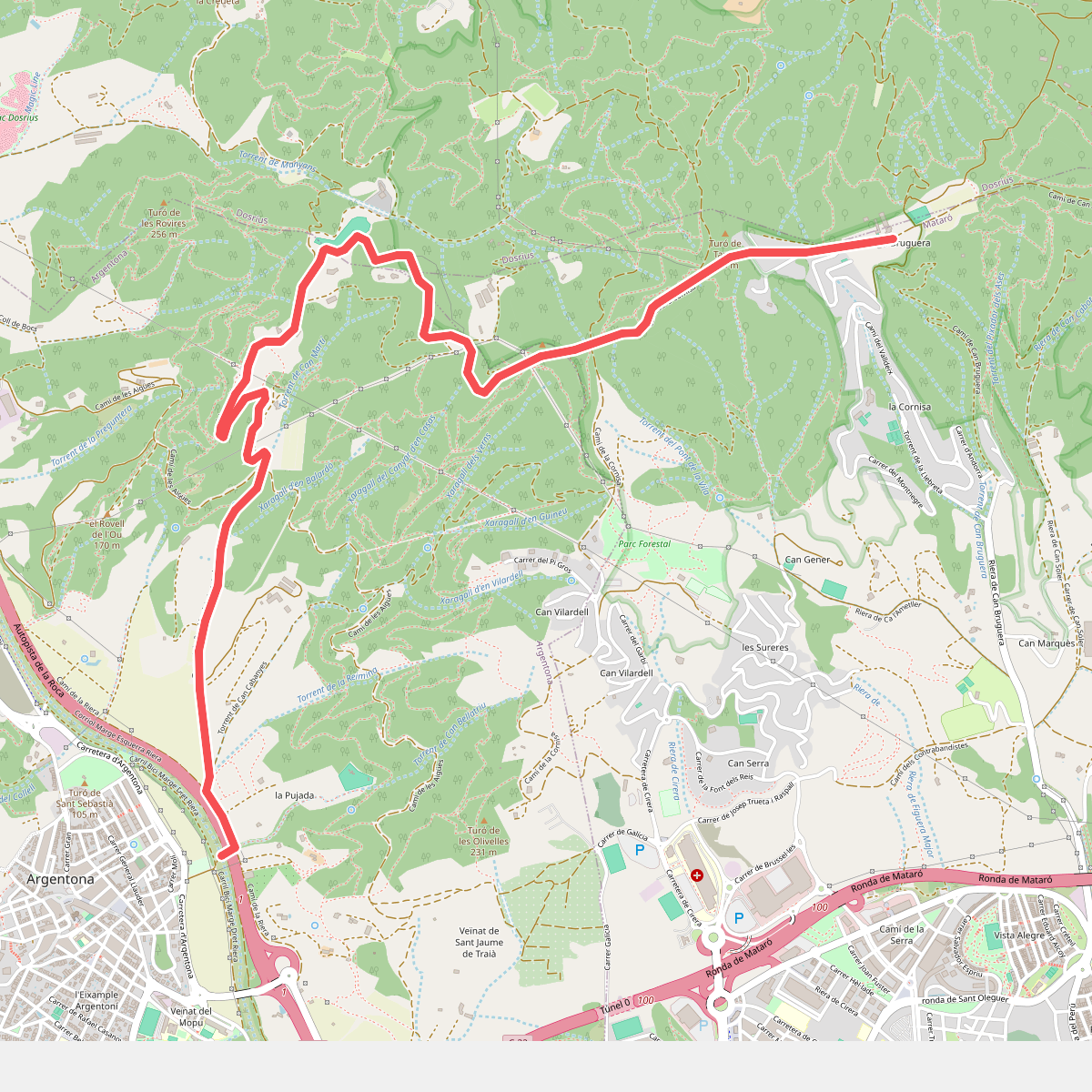
#2. Argentona-Can Bruguera
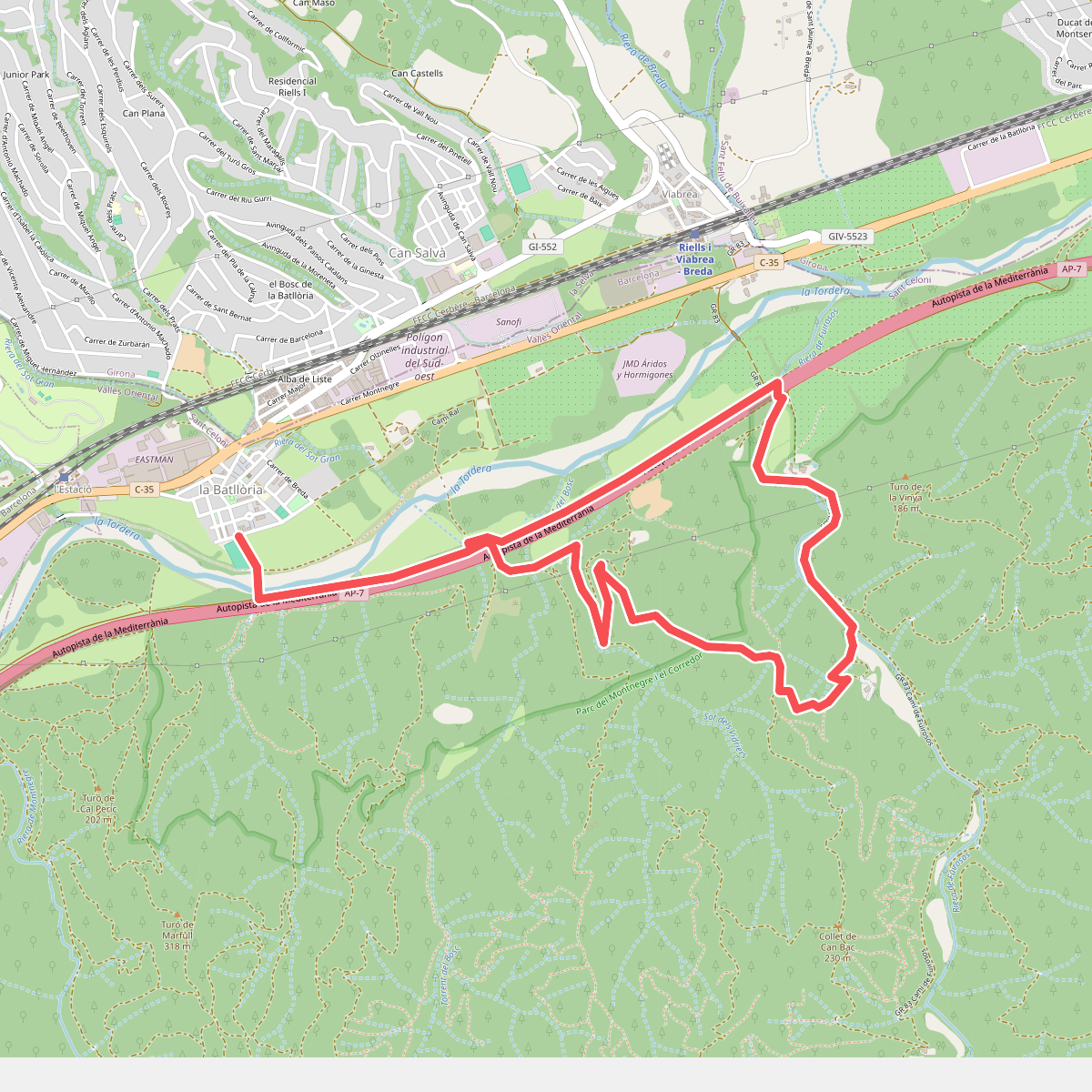
#3. Batllòria-Serra de Can Puig
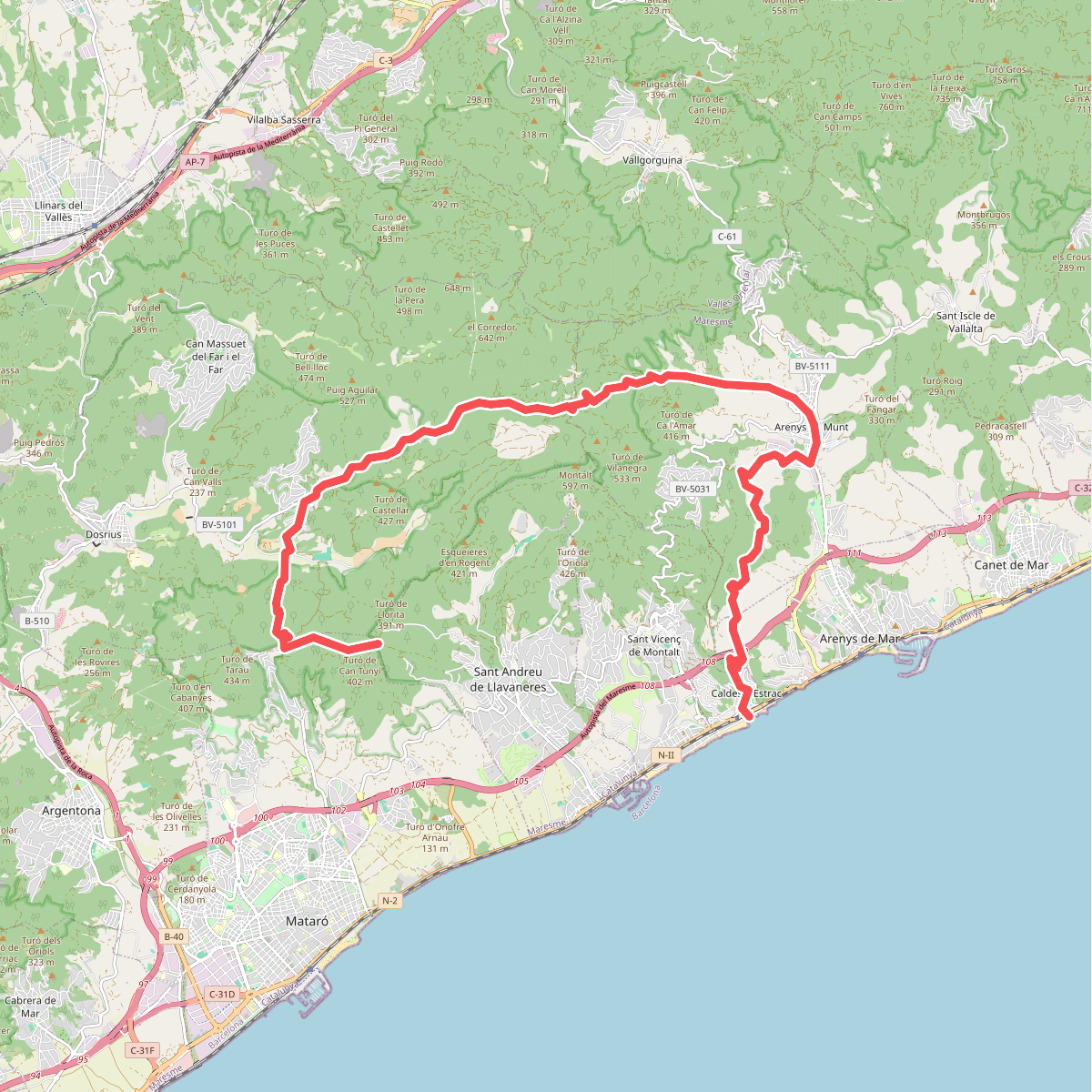
#4. Caldes-Arenys de Munt-Dosrius
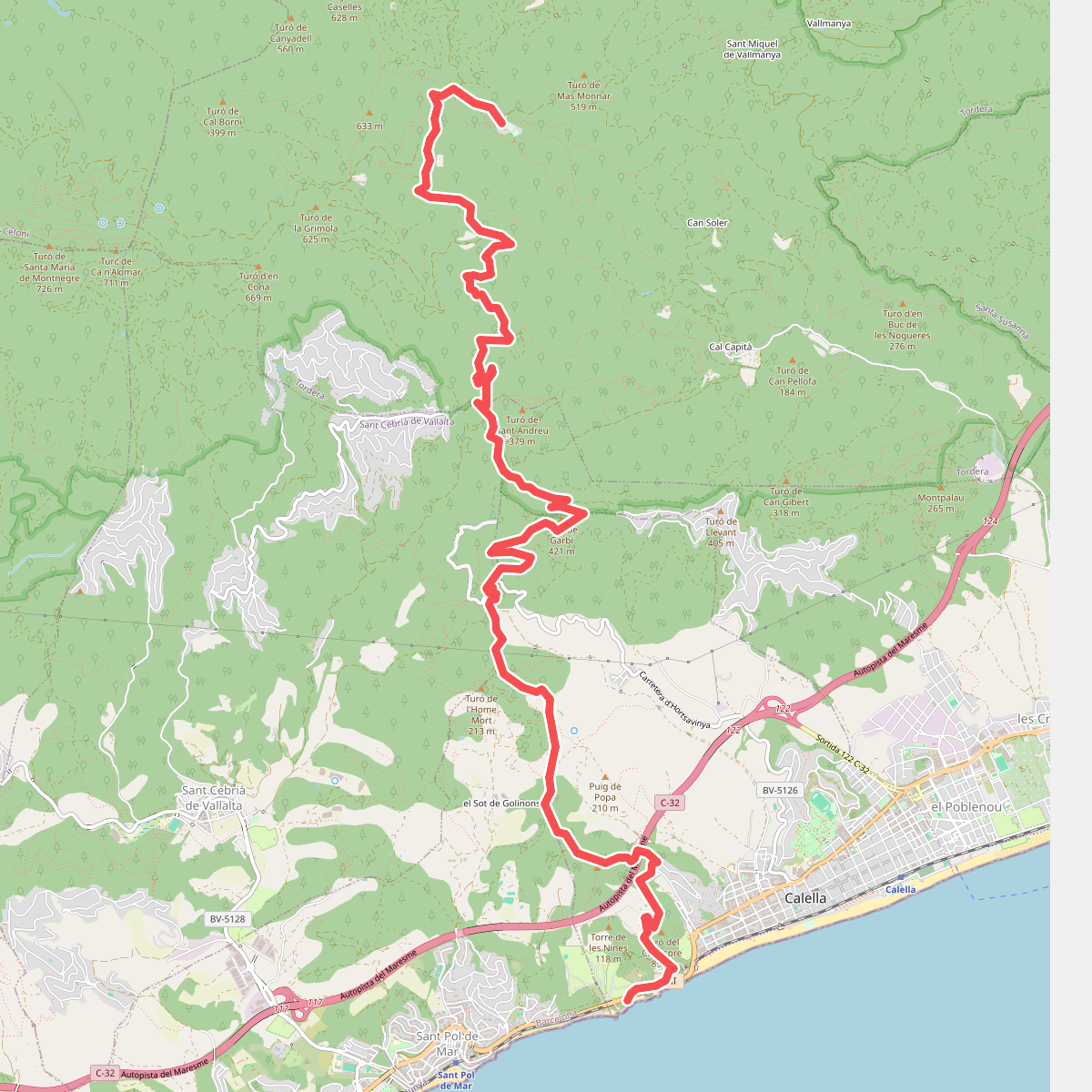
#5. Calella-Hortsavinyà
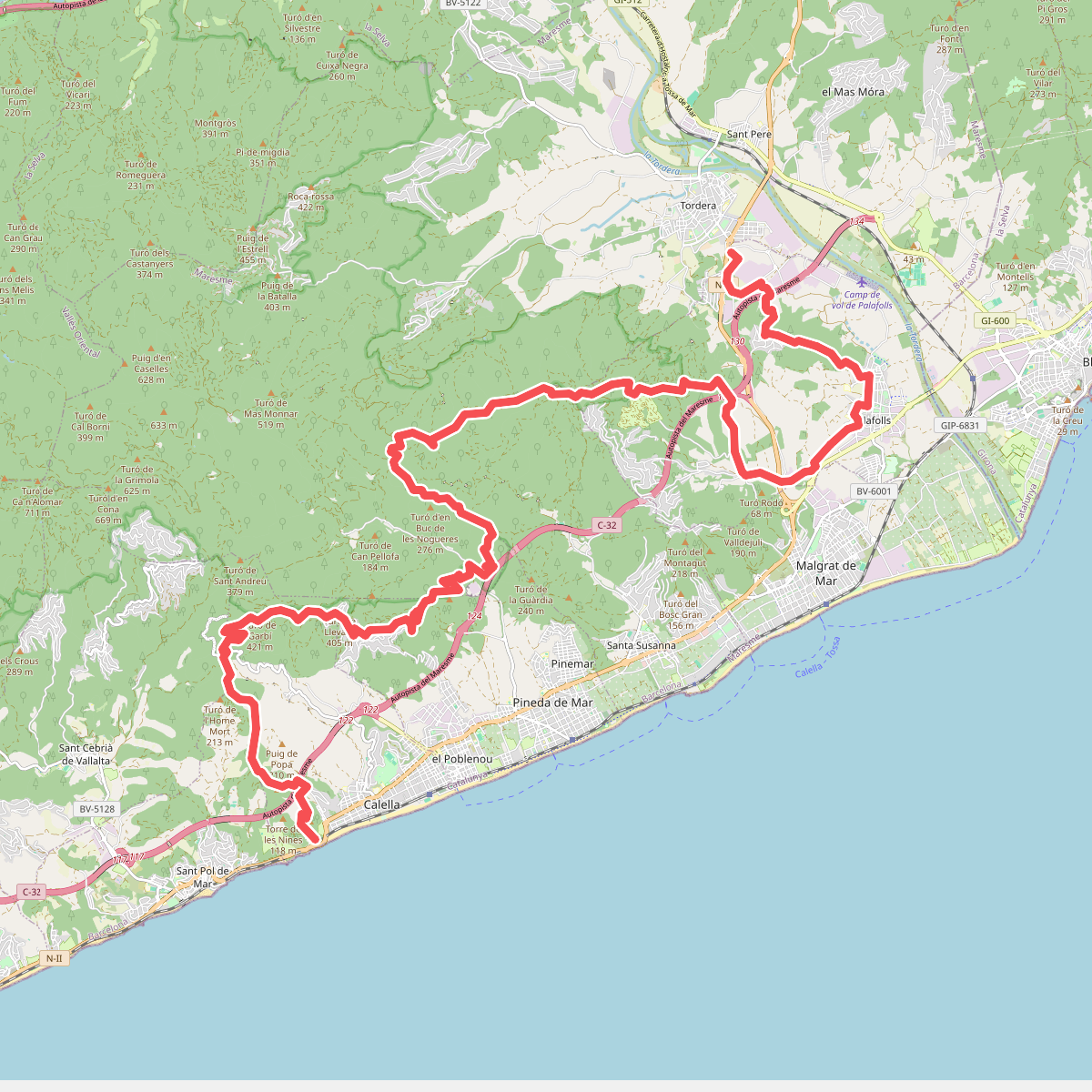
#6. Calella-Tordera
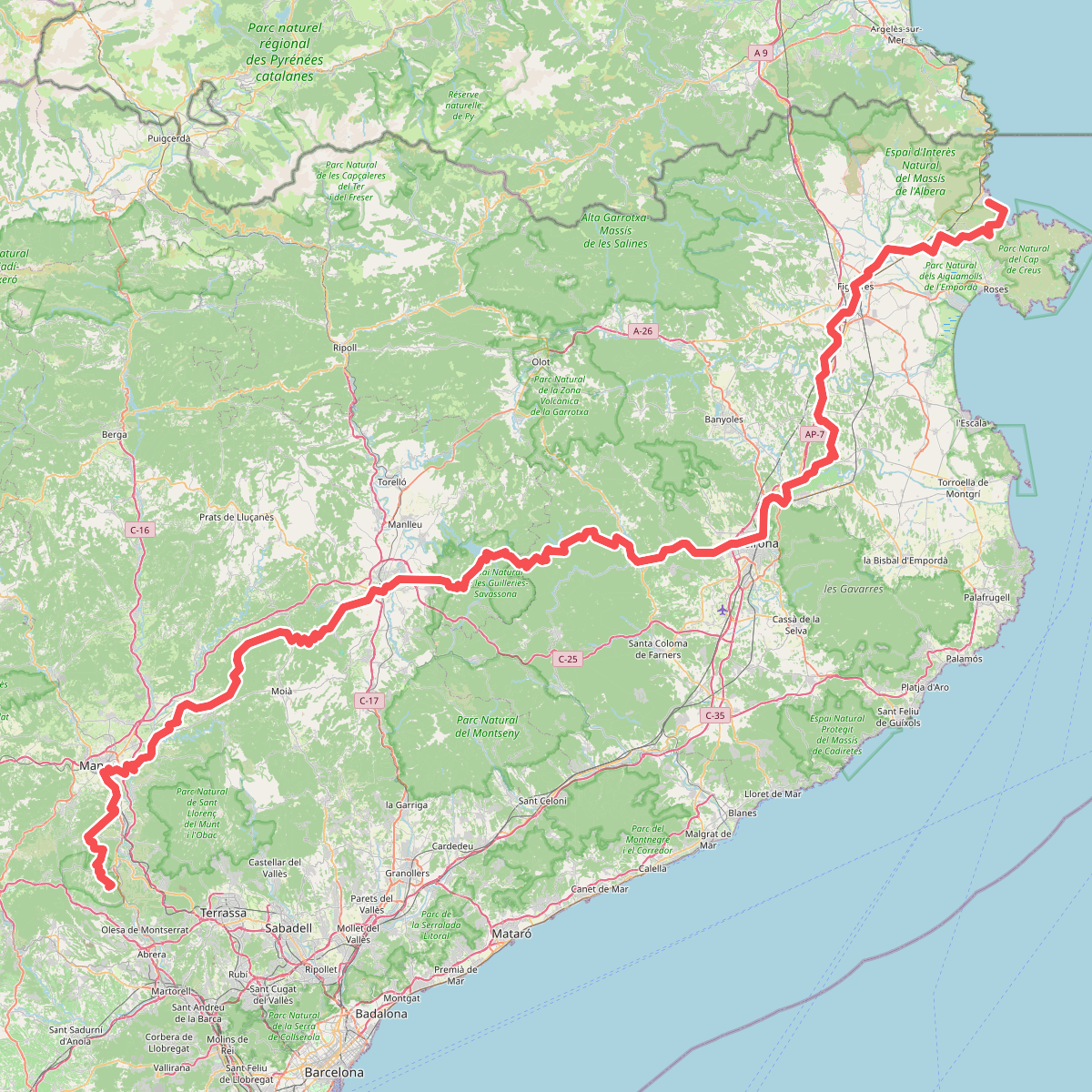
#7. Camí de Sant Jaume (Sant Pere de Rodes - Montserrat)
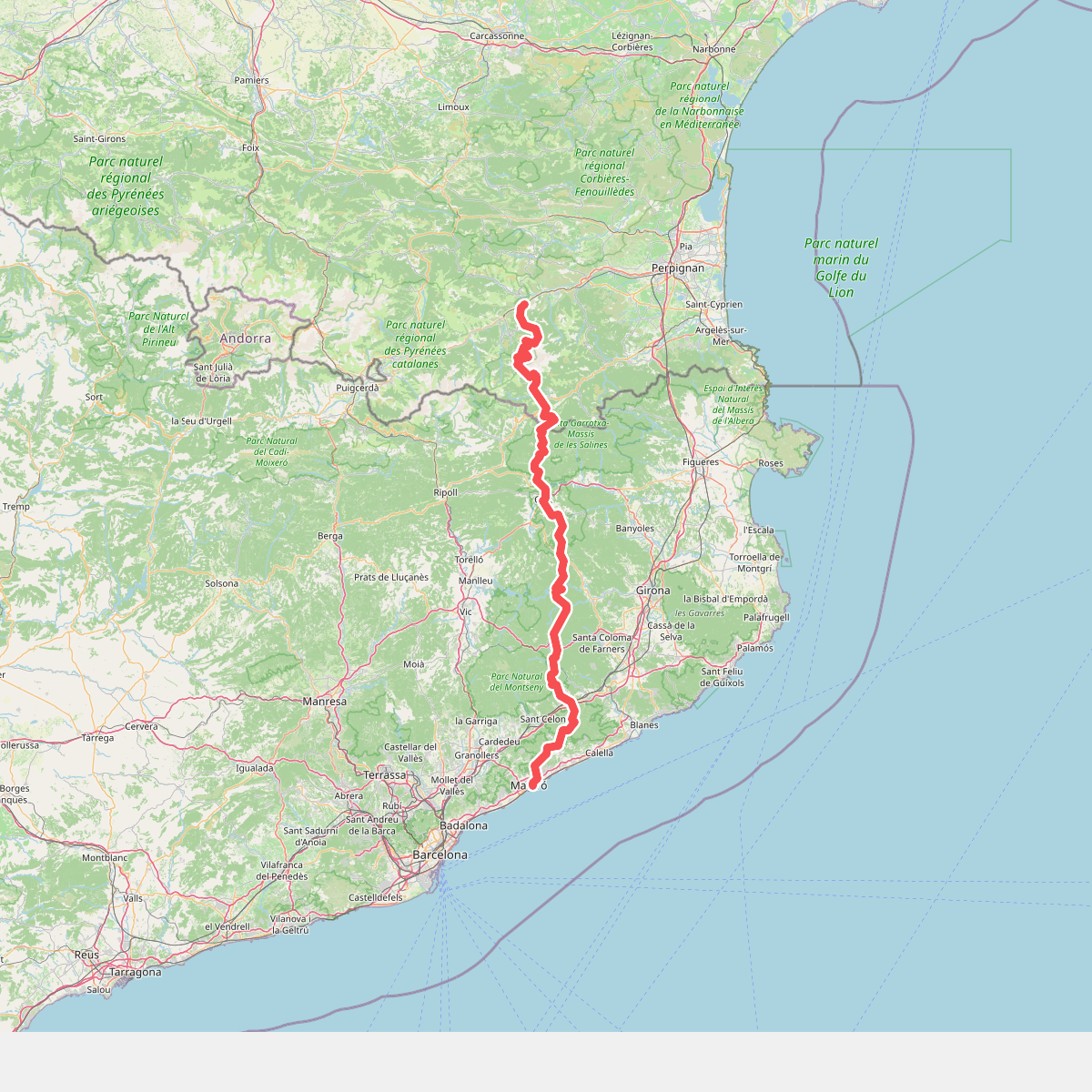
#8. Camí del nord o del Canigó
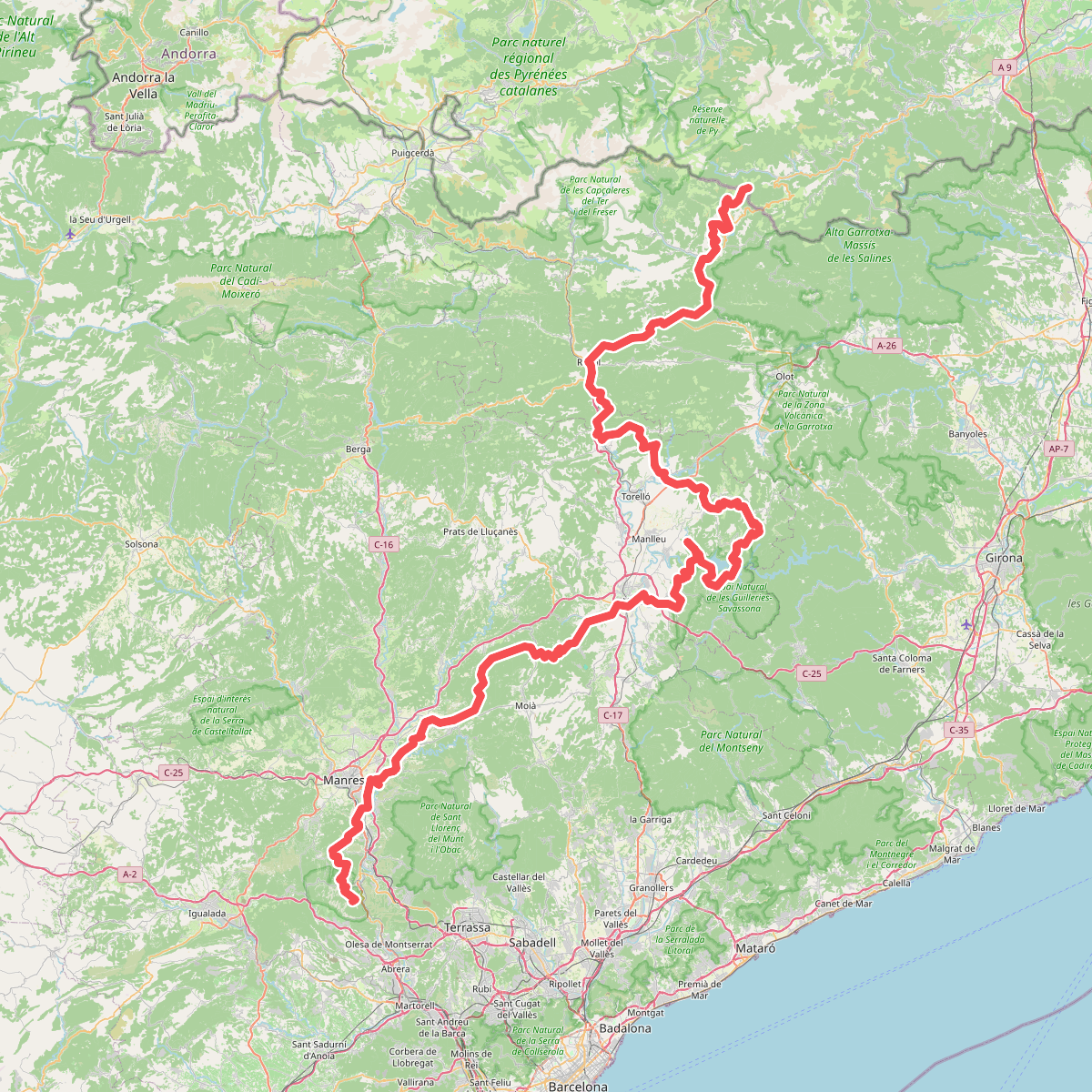
#9. Camí Oliba
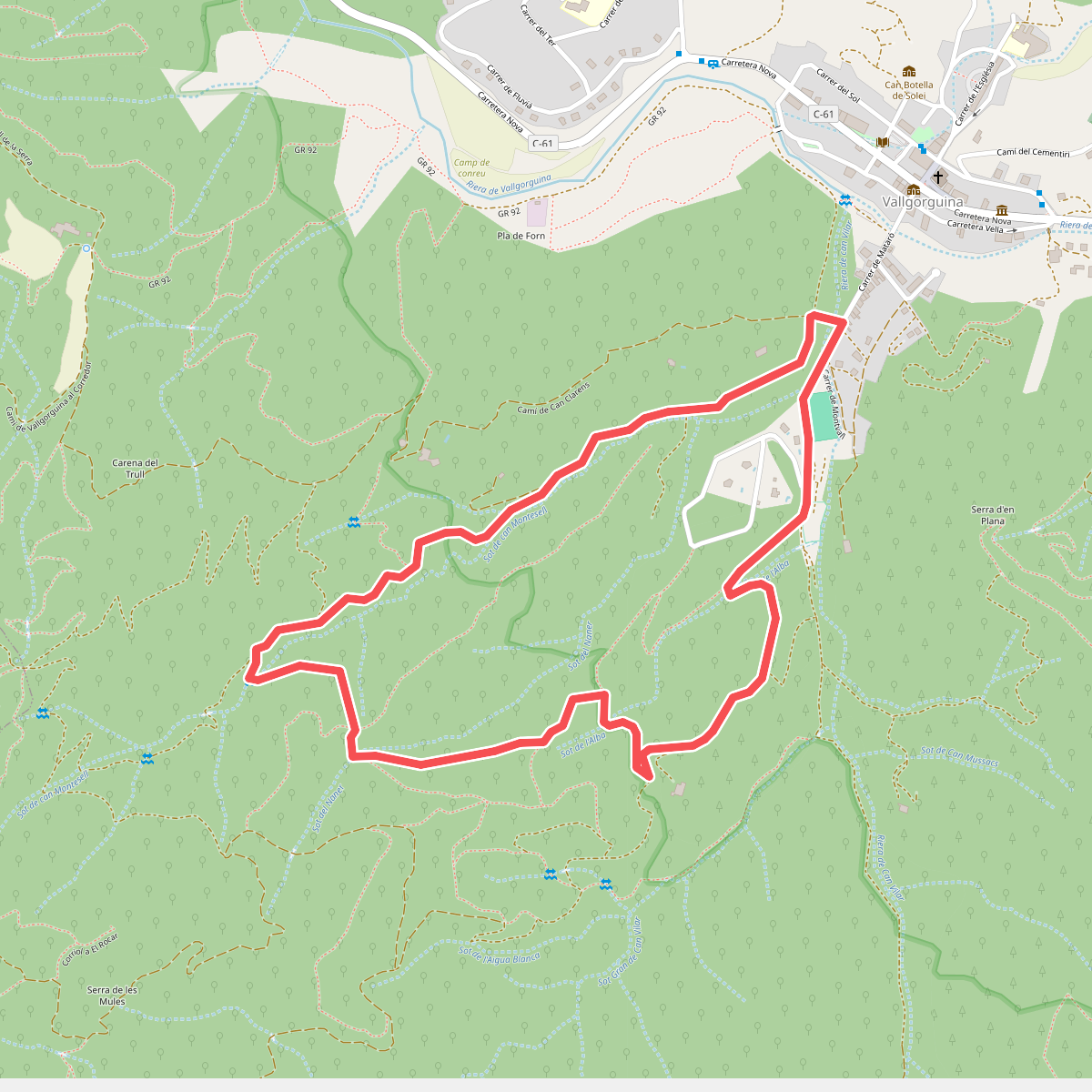
#10. Can Vilar i el sot de Can Montasell
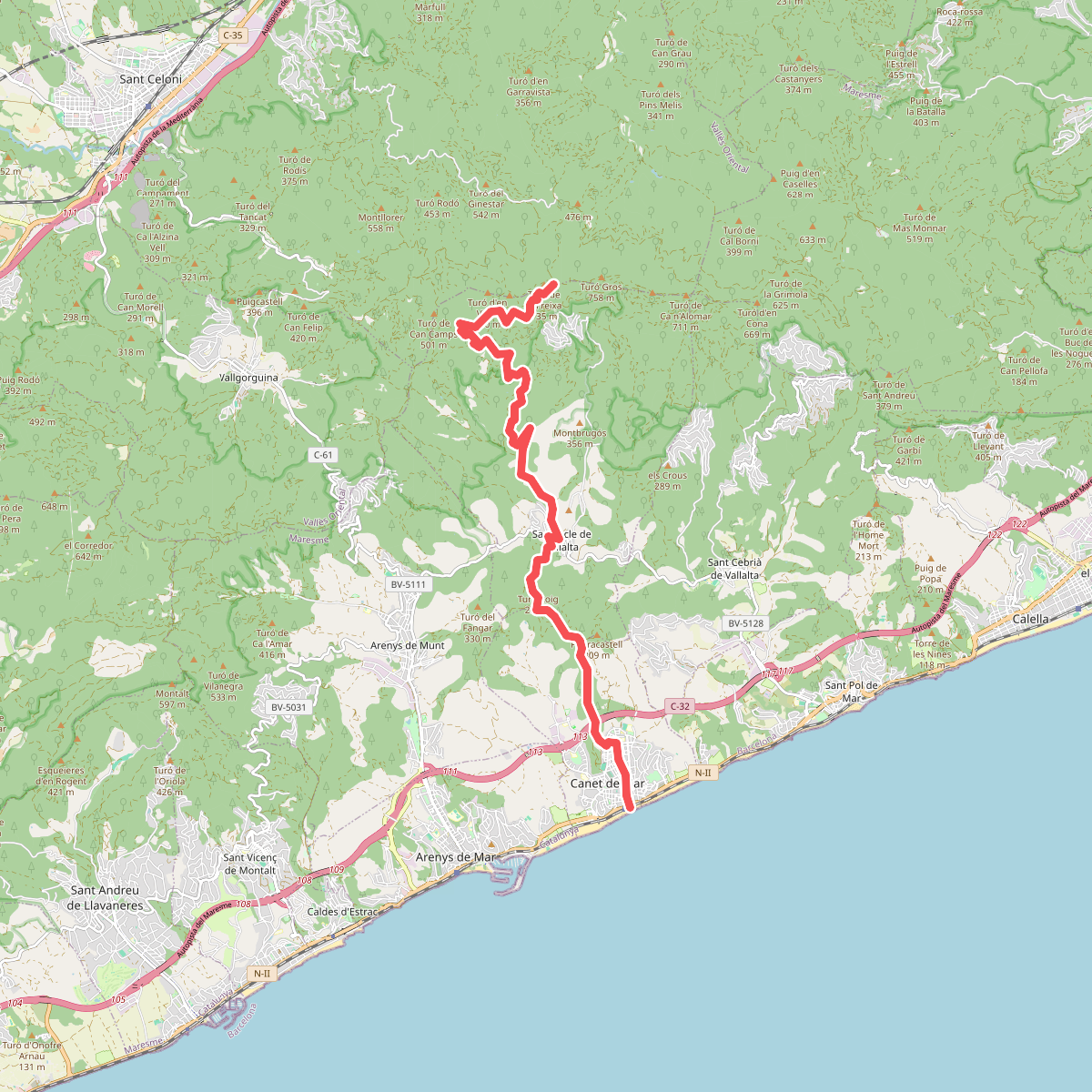
#11. Canet de Mar-Coll de Basses