The best hiking routes in Parc del Garraf
Discover the best walks in Parc del Garraf. 17 routes on the map, with descriptions, photos and GPX.
Managed by Diputació de Barcelona
About Parc del Garraf
Parc del Garraf is a stark, arid limestone massif rising directly behind the coastal strip south of Barcelona. The landscape is defined by white and grey karst rock, scrubby Mediterranean vegetation, and deep sinkholes rather than lush forests or running water. Walkers will find a dry, sun-baked environment where dwarf palms, rosemary, and mastic shrubs cling to the stony ground. Underfoot, the terrain is consistently rough and stony, dominated by loose gravel, jagged limestone tracks, and uneven bedrock that require sturdy footwear.
Read more
About Parc del Garraf
Parc del Garraf is a stark, arid limestone massif rising directly behind the coastal strip south of Barcelona. The landscape is defined by white and grey karst rock, scrubby Mediterranean vegetation, and deep sinkholes rather than lush forests or running water. Walkers will find a dry, sun-baked environment where dwarf palms, rosemary, and mastic shrubs cling to the stony ground. Underfoot, the terrain is consistently rough and stony, dominated by loose gravel, jagged limestone tracks, and uneven bedrock that require sturdy footwear.
Read moreParc del Garraf is a stark, arid limestone massif rising directly behind the coastal strip south of Barcelona. The landscape is defined by white and grey karst rock, scrubby Mediterranean vegetation, and deep sinkholes rather than lush forests or running water. Walkers will find a dry, sun-baked environment where dwarf palms, rosemary, and mastic shrubs cling to the stony ground. Underfoot, the terrain is consistently rough and stony, dominated by loose gravel, jagged limestone tracks, and uneven bedrock that require sturdy footwear.
As you walk through the park, the geological history is visible in the bare rock faces and the absence of surface streams, as rainwater drains immediately into underground cave systems. The lower valleys contain abandoned stone farmhouses and ancient terraces, while the higher ridges offer views of the Mediterranean Sea and the industrial valleys bordering the park. In spring, particularly around April, the scrubland is punctuated by wild orchids and flowering gorse, contrasting with the otherwise grey and dusty summer appearance of the hills.
This is not a park of shady woodland paths or gentle grassy meadows. It is a exposed, rugged plateau where shade is almost non-existent and the paths are demanding on the ankles. While the main tracks near the administrative center at Palau Novella are wide and easy to follow, the smaller trails quickly become steep, rocky scrambles through dense, thorny garrigue brush.
Hiking routes in Parc del Garraf (17)
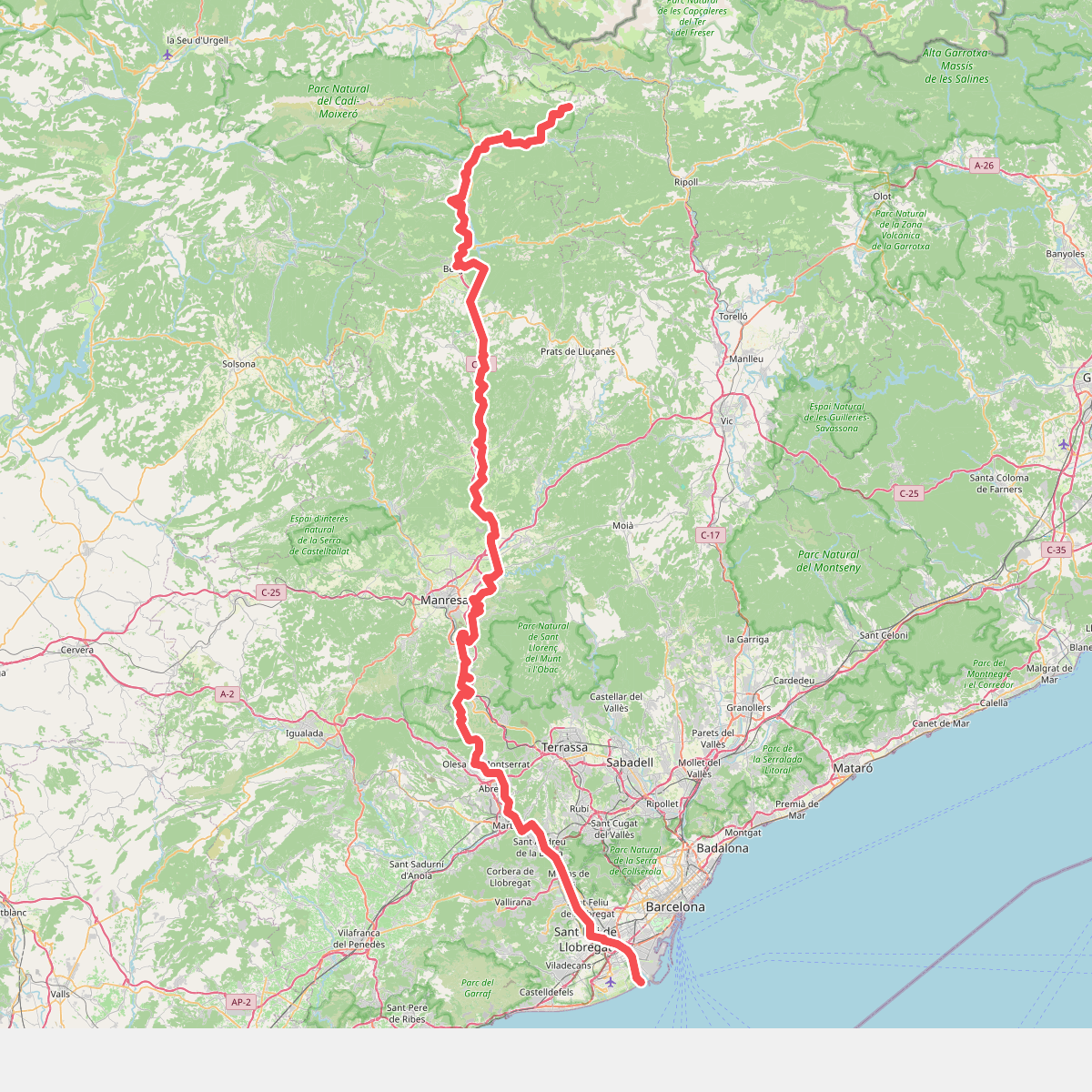
#1. Camí del Llobregat
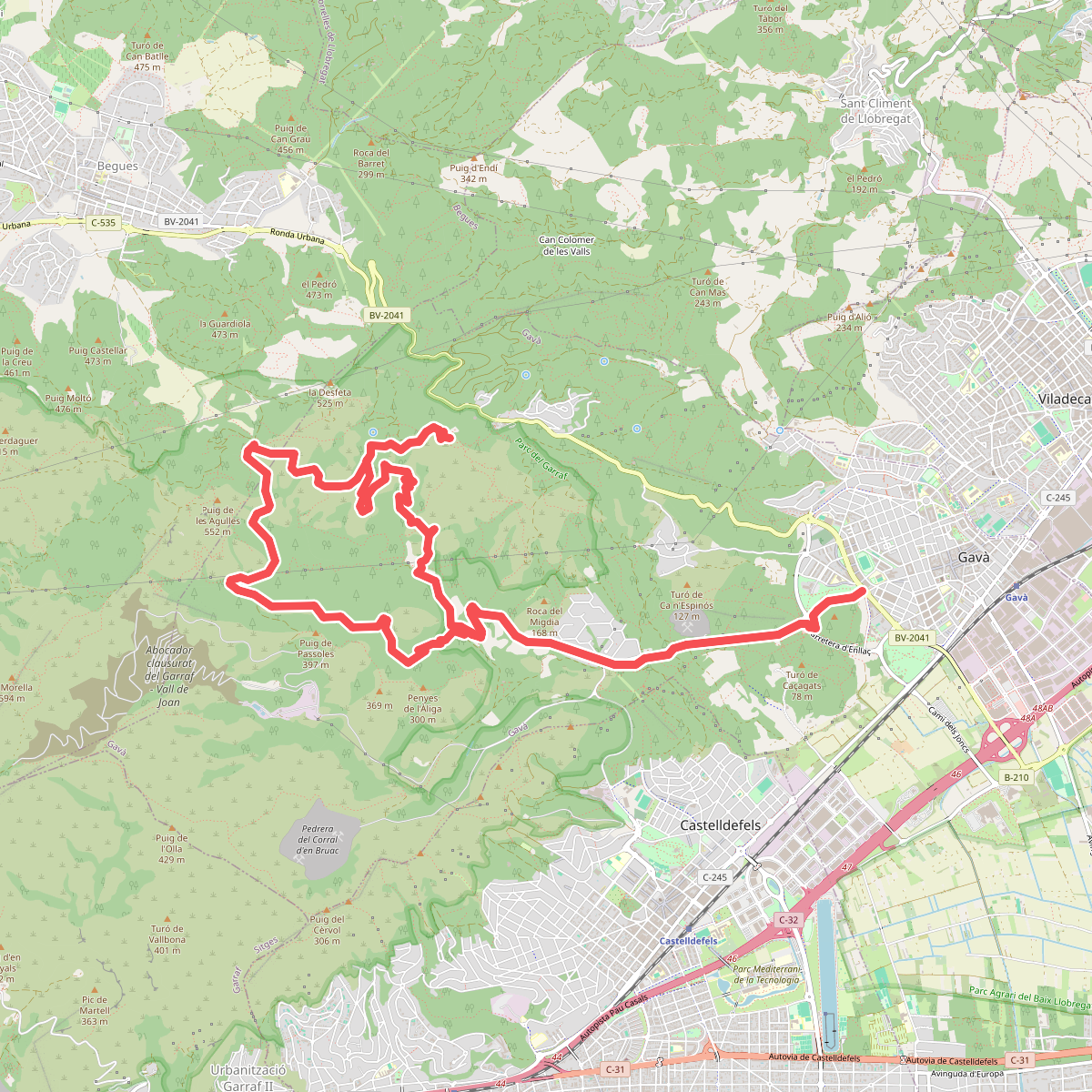
#2. Camí medieval a l'Eramprunya
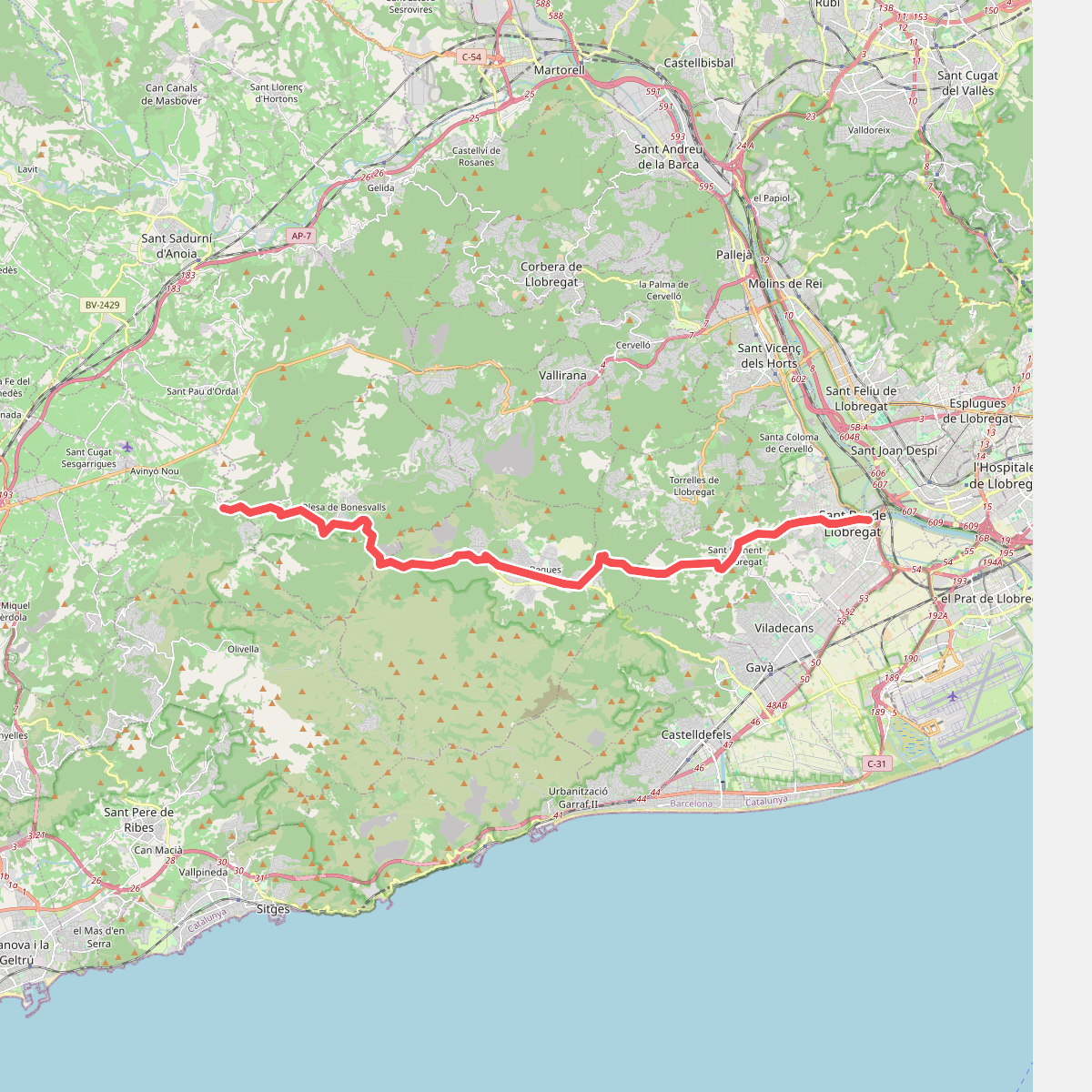
#3. Camí Ral de Barcelona a Vilafranca
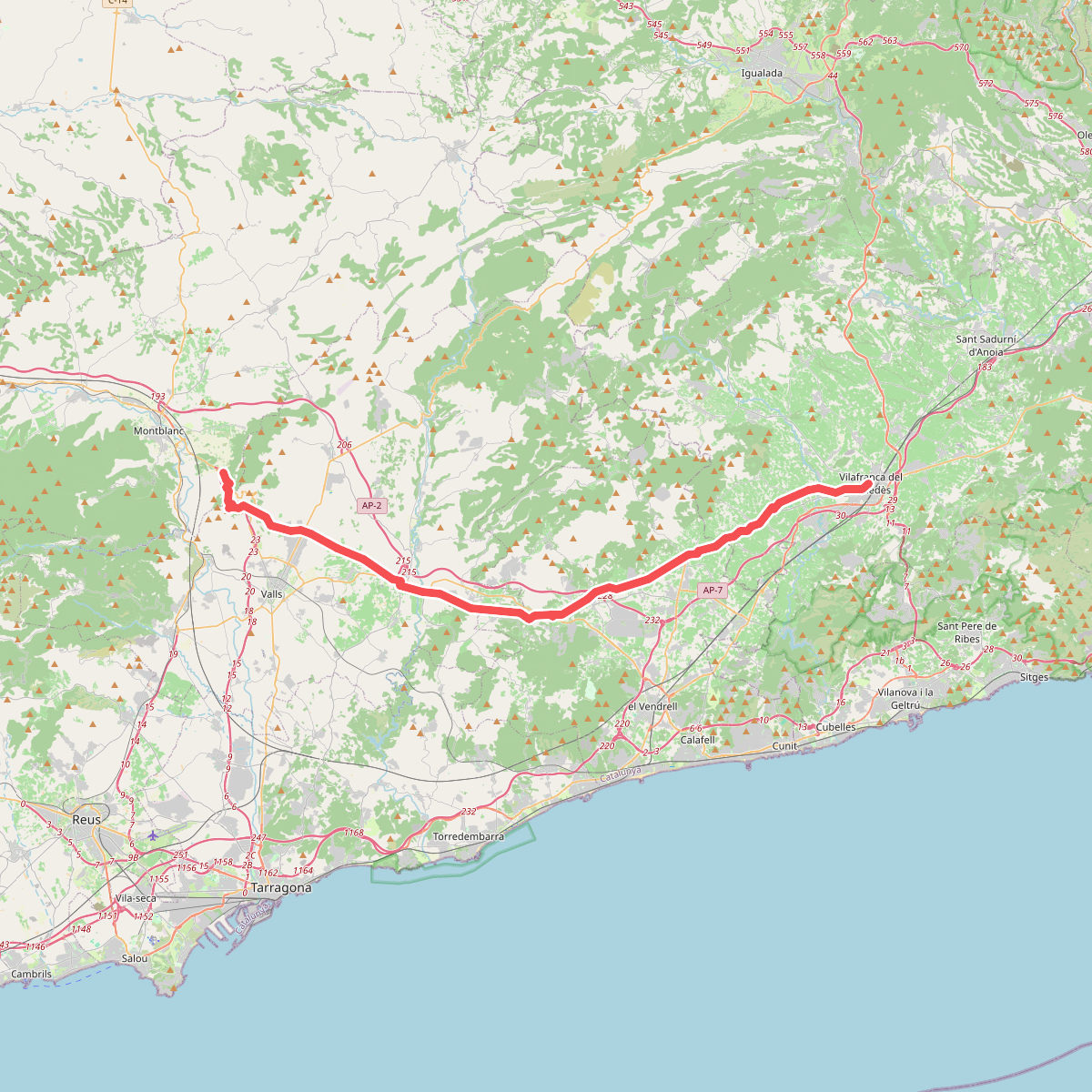
#4. Camí Ral de Vilafranca a Montblanc
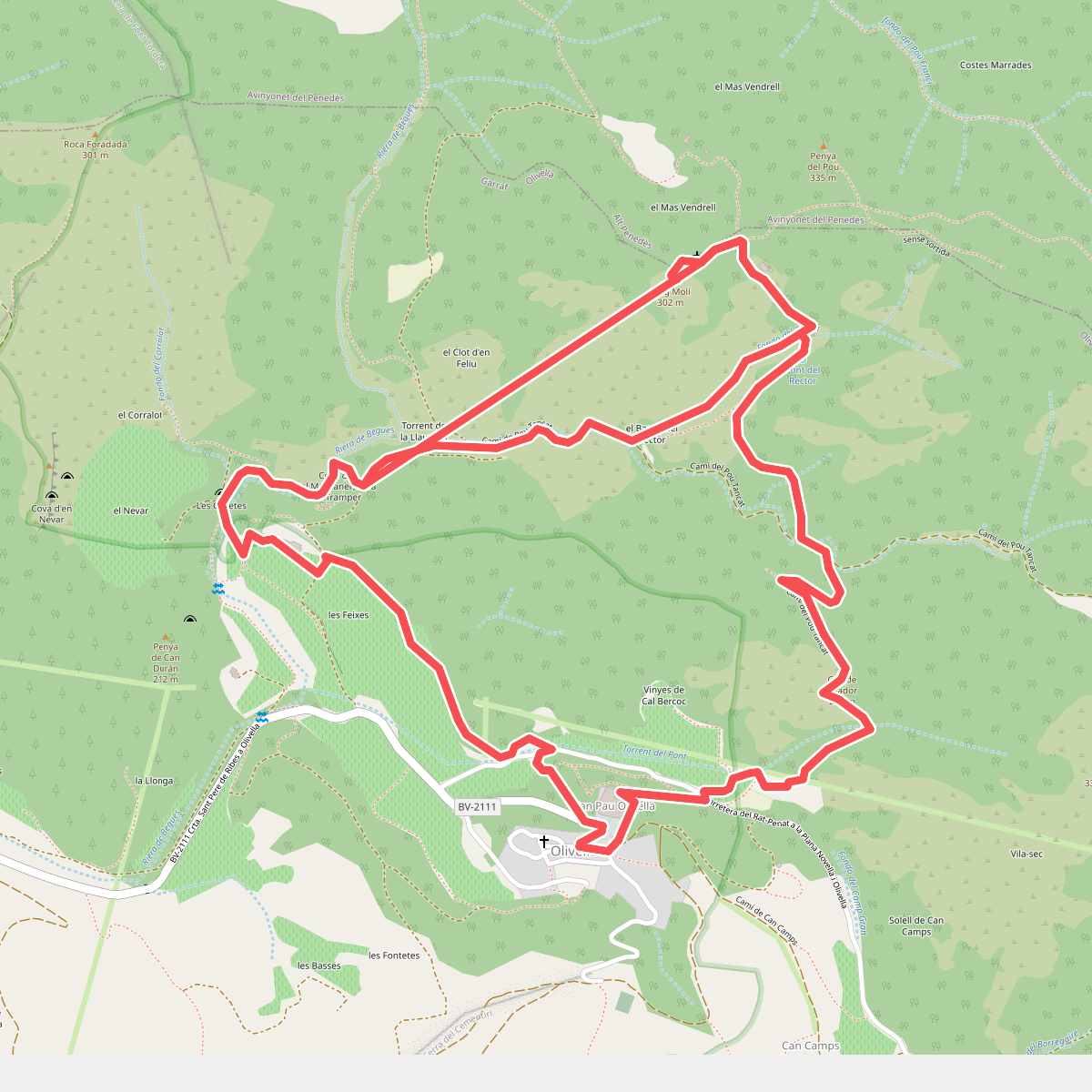
#5. Castell Vell d'Olivella
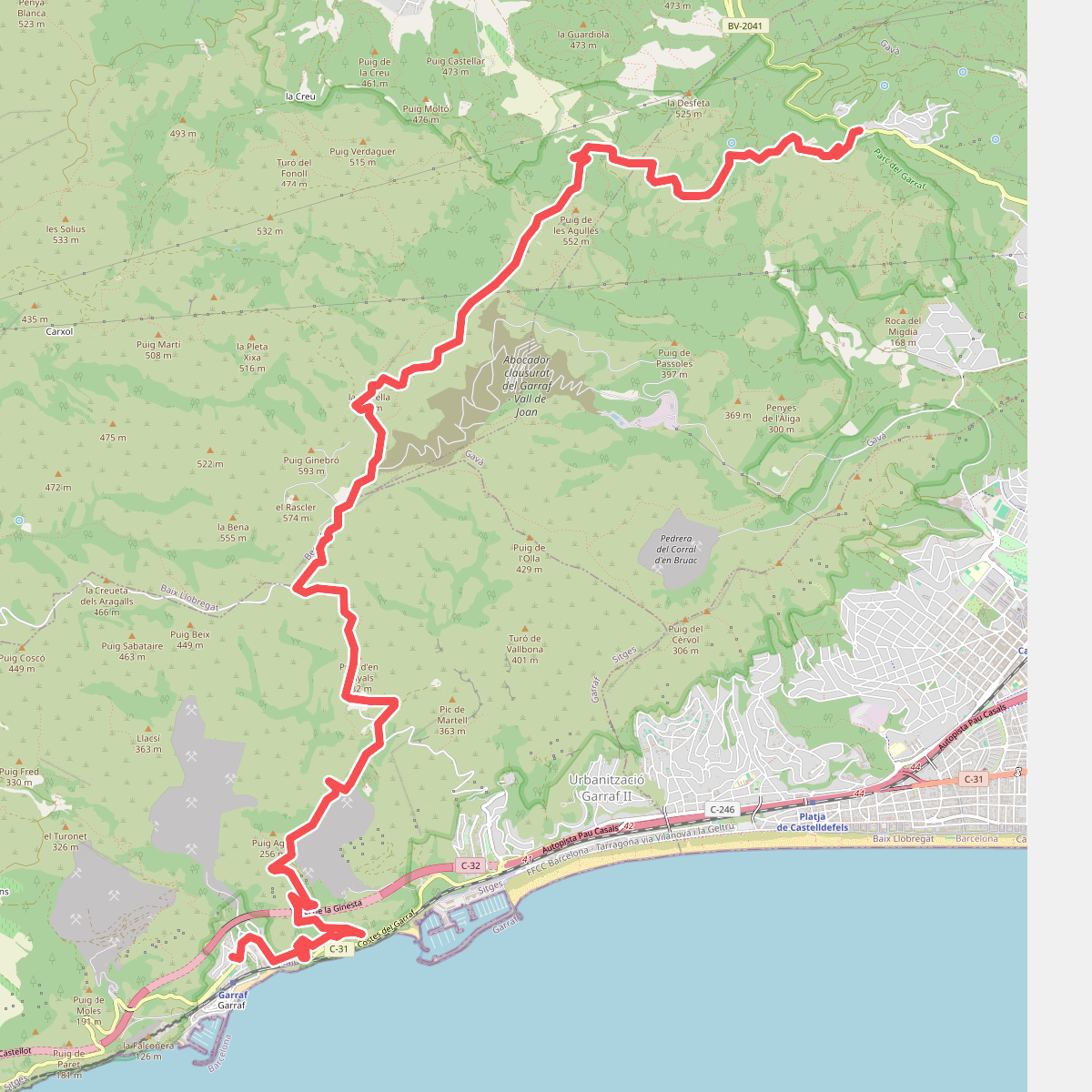
#6. Catalunya E21
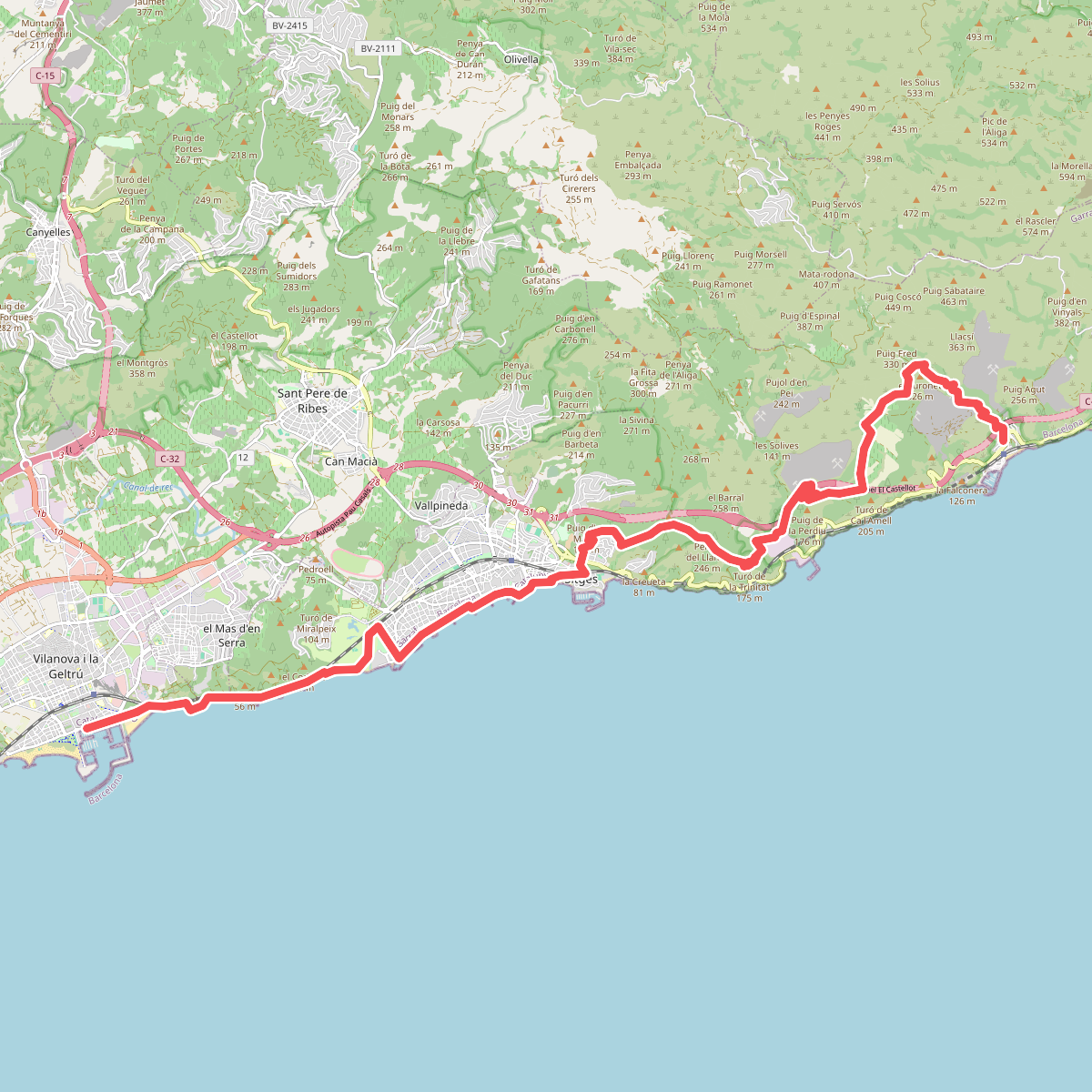
#7. Catalunya E22
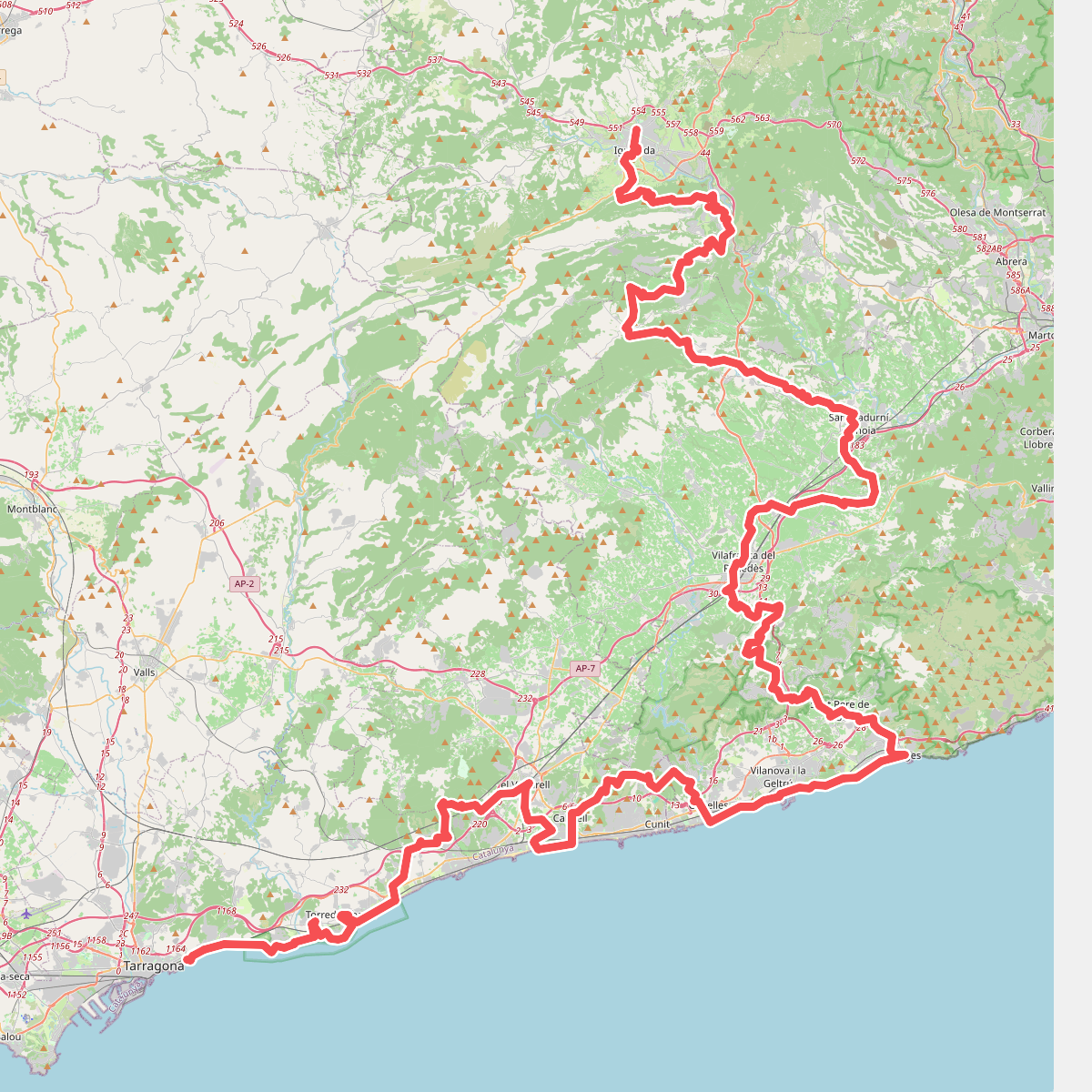
#8. El Camí IT6TR6 El Camí Central: de Castelló de la Plana a Montserrat
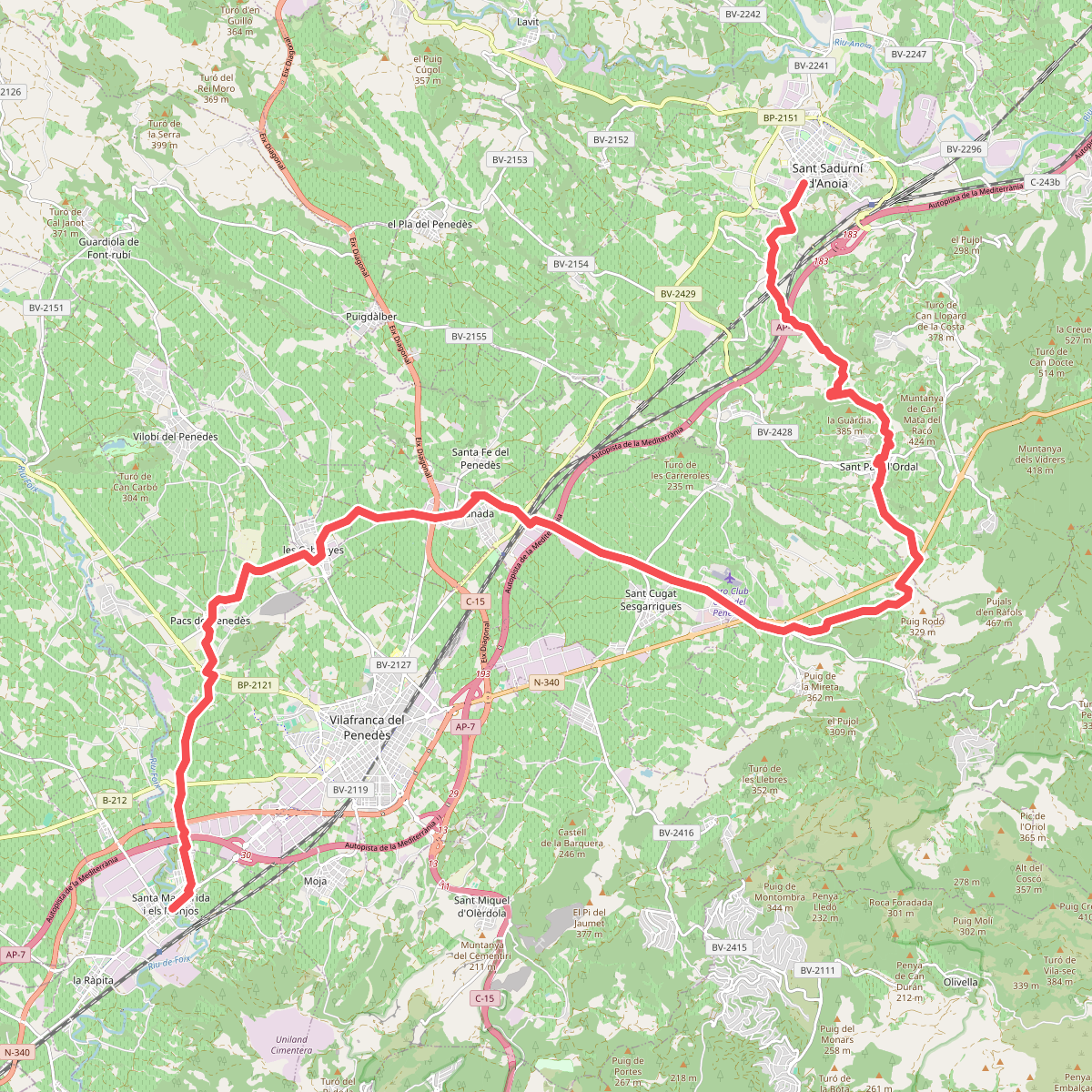
#9. Els Monjos - Sant Sadurní
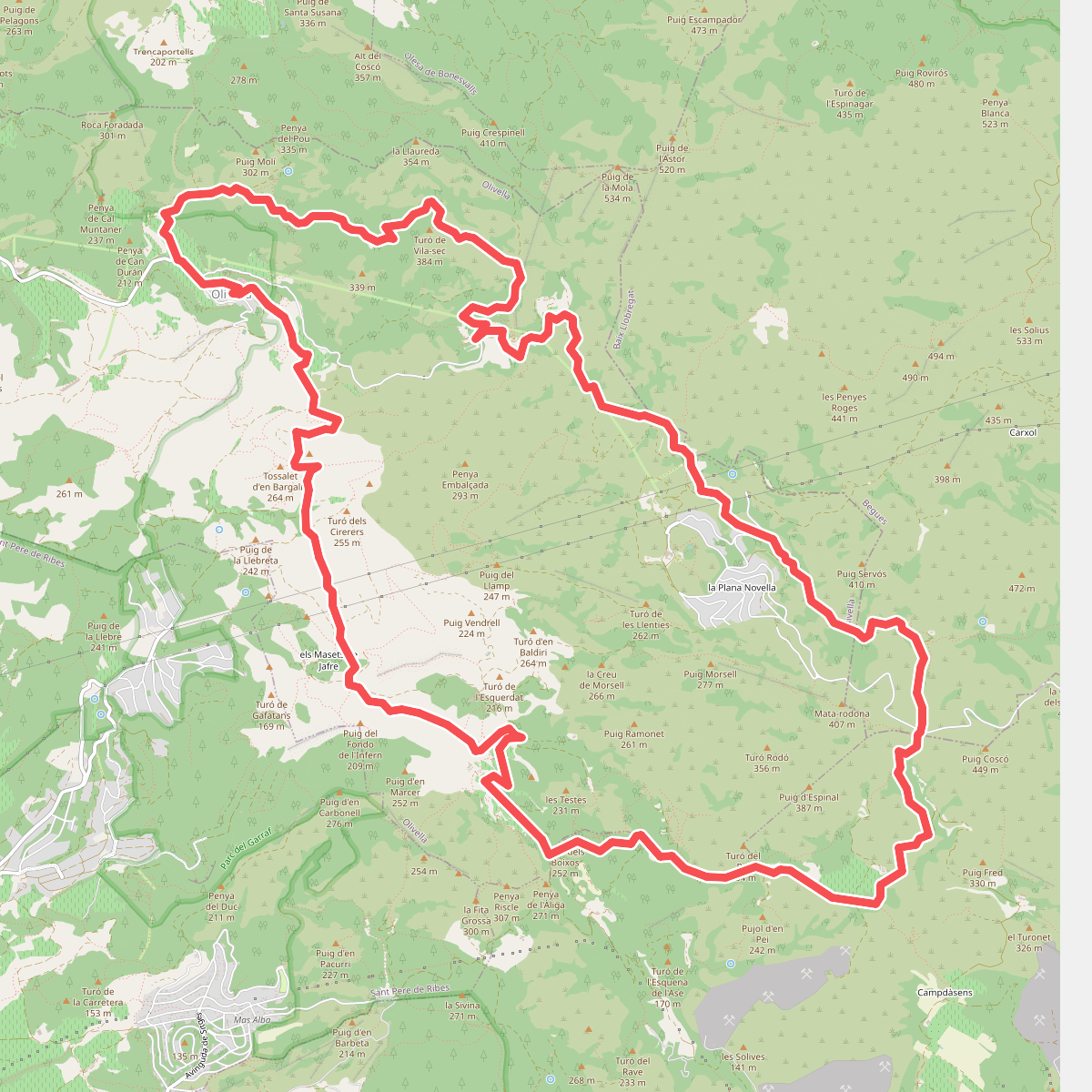
#10. Olivella
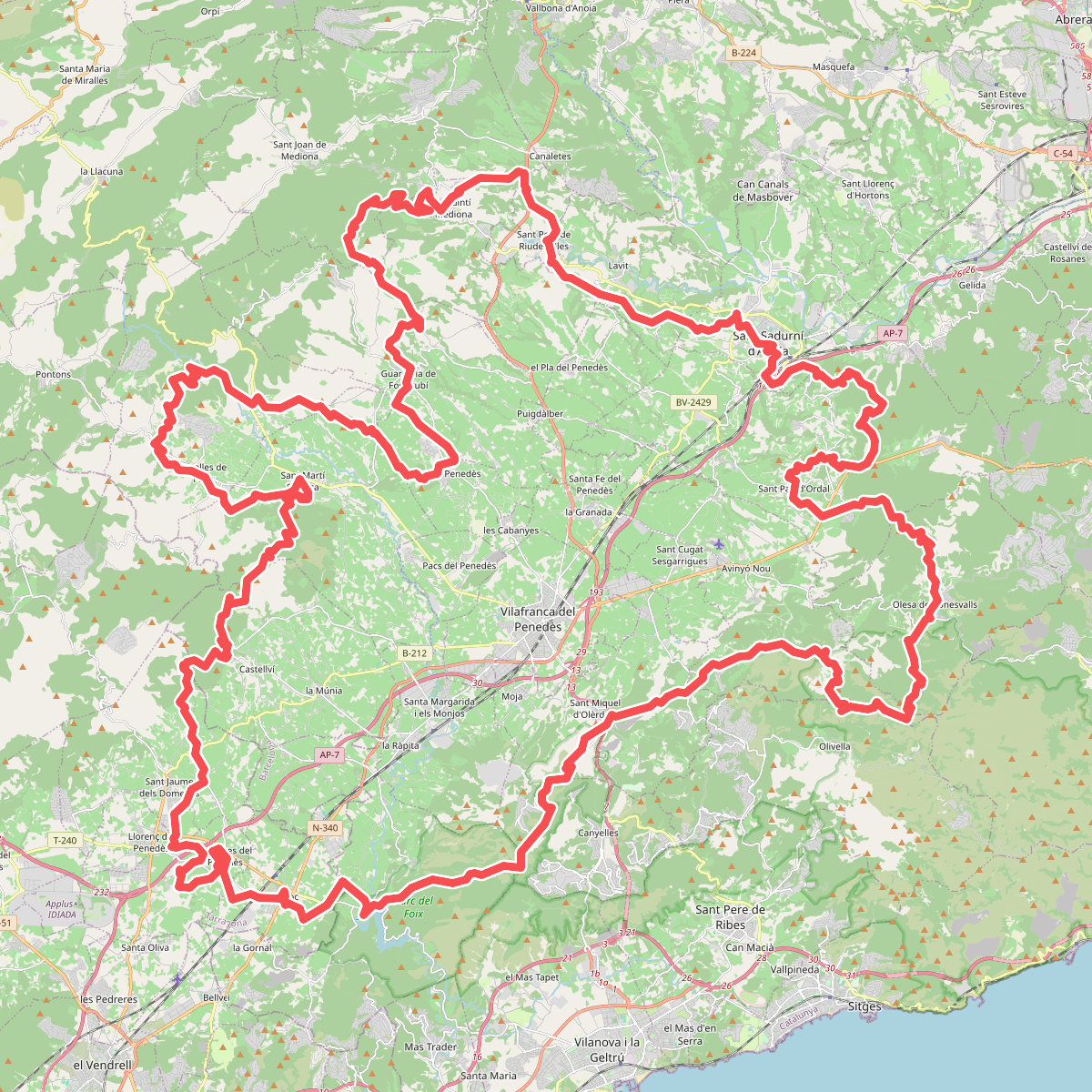
#11. Penedès 360 Trekking