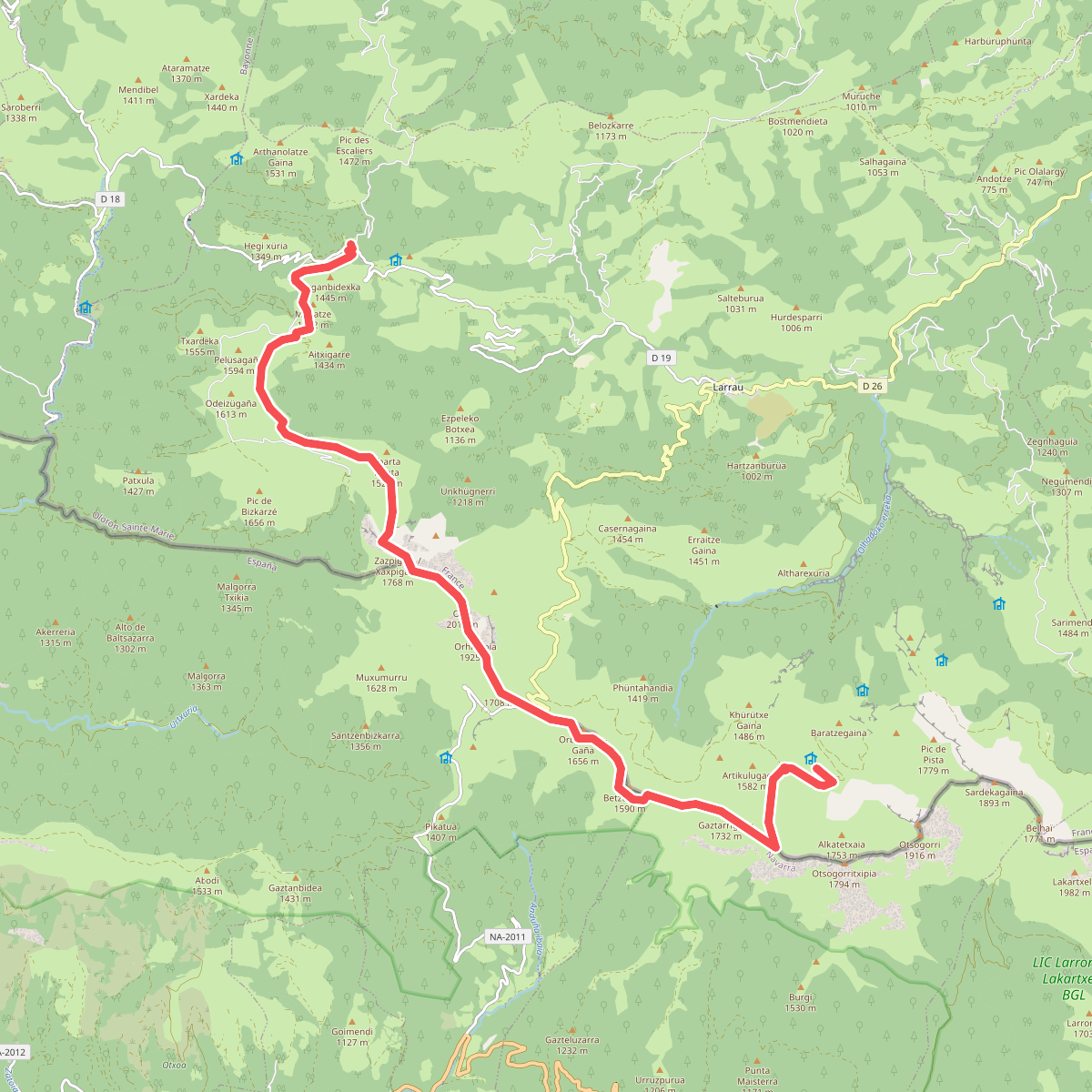

The best hiking routes in Orreaga-Iratiko oihana BBE-KBE
Discover the best walks in Orreaga-Iratiko oihana BBE-KBE. 29 routes on the map, with descriptions, photos and GPX.
About Orreaga-Iratiko oihana BBE-KBE
Orreaga-Iratiko oihana BBE-KBE covers a high-altitude forested landscape dominated by dense beech and silver fir woods, typical of the western Pyrenean foothills. Unlike the rocky, barren peaks of the higher Pyrenees, this area is characterized by a closed canopy, deep leaf litter, and steep, damp valleys carved by mountain streams. Walkers will find a landscape shaped by centuries of forestry and grazing, where open pastures break up the dense woodland on the higher ridges.
Read more
About Orreaga-Iratiko oihana BBE-KBE
Orreaga-Iratiko oihana BBE-KBE covers a high-altitude forested landscape dominated by dense beech and silver fir woods, typical of the western Pyrenean foothills. Unlike the rocky, barren peaks of the higher Pyrenees, this area is characterized by a closed canopy, deep leaf litter, and steep, damp valleys carved by mountain streams. Walkers will find a landscape shaped by centuries of forestry and grazing, where open pastures break up the dense woodland on the higher ridges.
Read moreOrreaga-Iratiko oihana BBE-KBE covers a high-altitude forested landscape dominated by dense beech and silver fir woods, typical of the western Pyrenean foothills. Unlike the rocky, barren peaks of the higher Pyrenees, this area is characterized by a closed canopy, deep leaf litter, and steep, damp valleys carved by mountain streams. Walkers will find a landscape shaped by centuries of forestry and grazing, where open pastures break up the dense woodland on the higher ridges.
Underfoot, the terrain consists mostly of earthen forest tracks, which can be slick with mud and covered in thick layers of beech leaves, alongside some gravel forestry roads. The paths climb steadily through the trees, offering a walk focused on the interior of the forest rather than wide mountain vistas. In late October, the beech canopy turns entirely copper, contrasting with the dark green of the firs, while spring brings a bright green undergrowth of ferns and mosses over the limestone outcrops.
This area is best suited for those who prefer deep woodland shade and moderate, sustained climbs over exposed ridge walking. While the main access points near the historic pass and the reservoir can attract visitors, the deeper forest trails remain quiet, offering a consistent environment of damp earth, moss-covered trunks, and rushing watercourses.
Hiking routes in Orreaga-Iratiko oihana BBE-KBE (29)
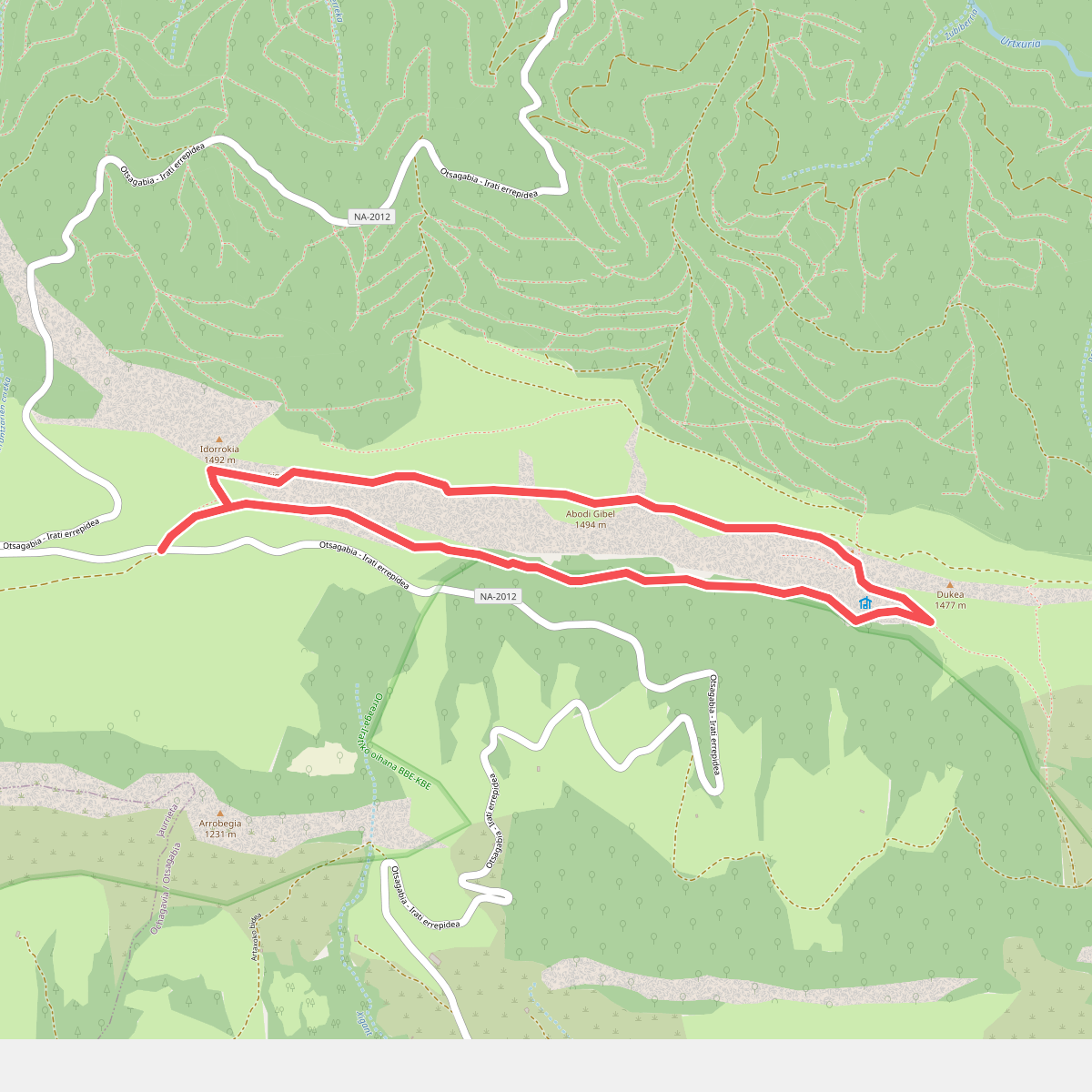
#1. Abodiko gainak
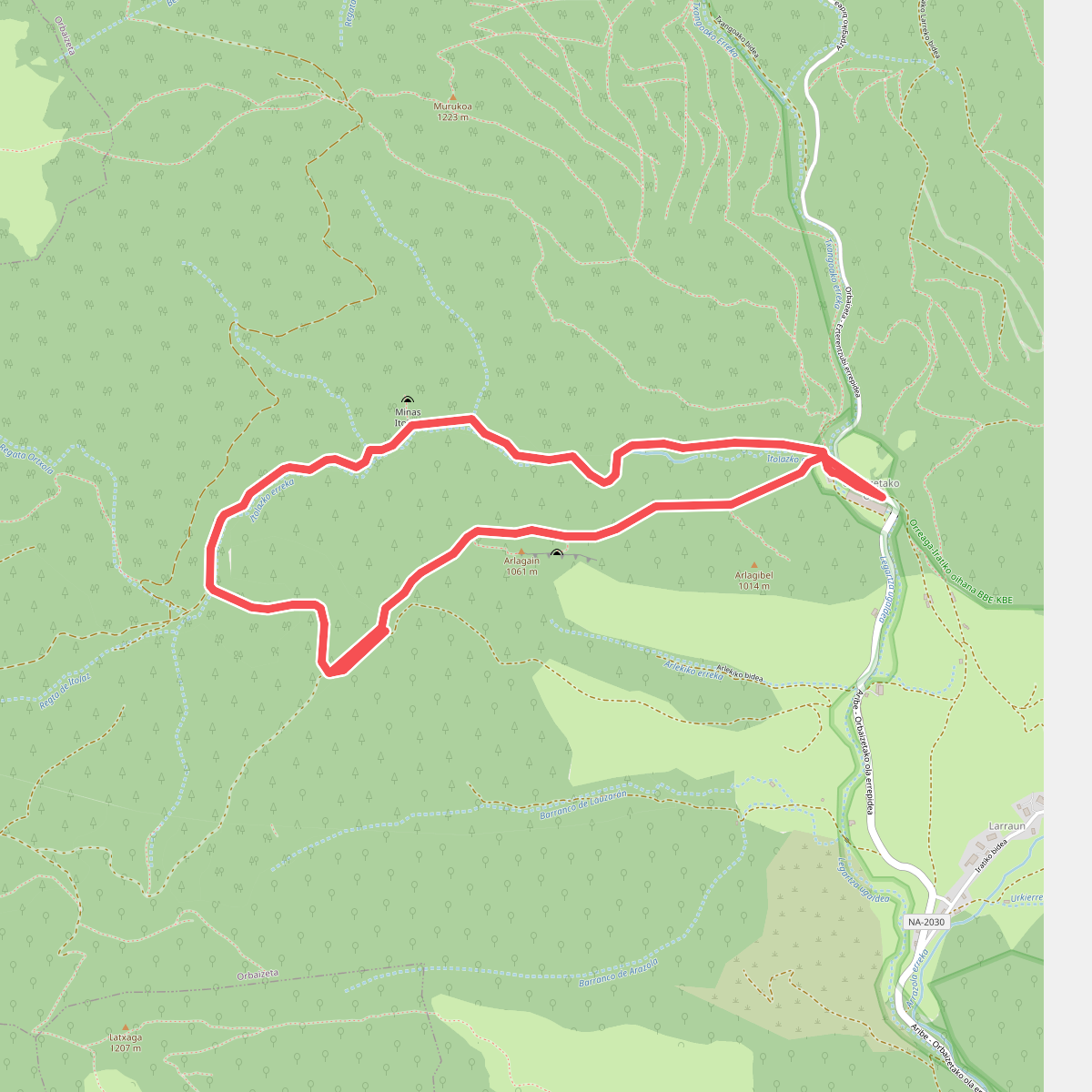
#2. Arlekia-Lauzaran
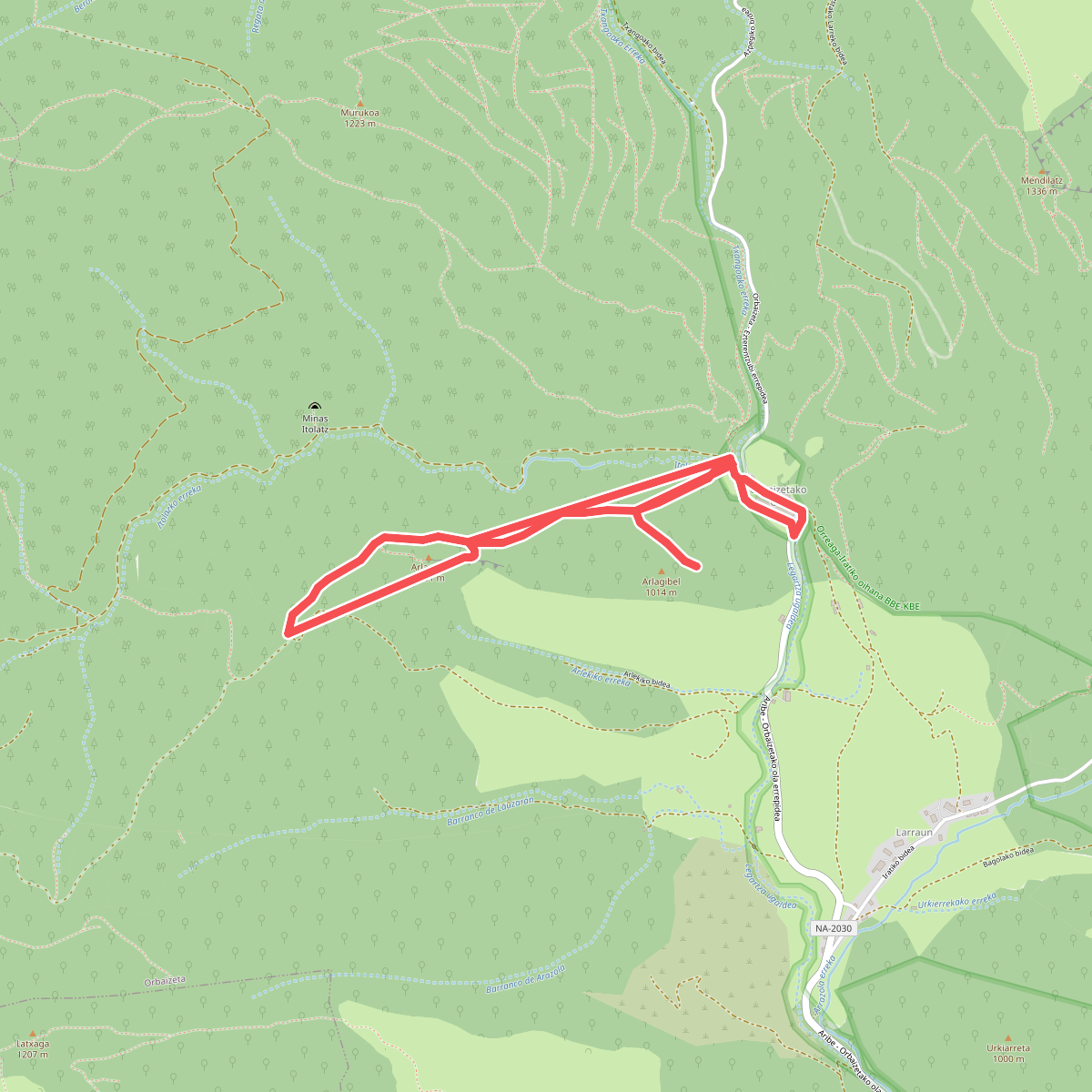
#3. Arlekiko Gaztelua eta Lutoko Haitzuloak
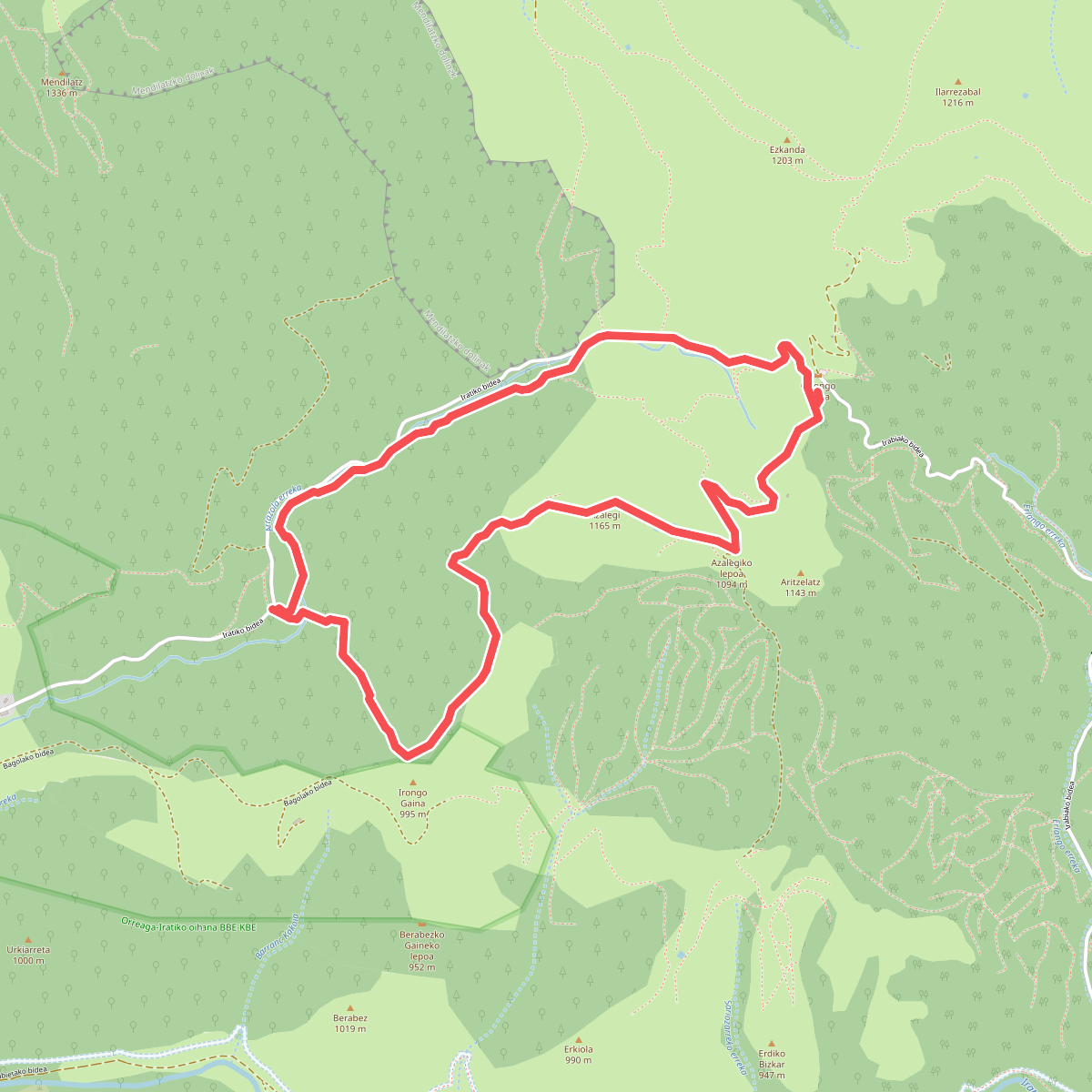
#4. Azalegi-San Esteban ermita
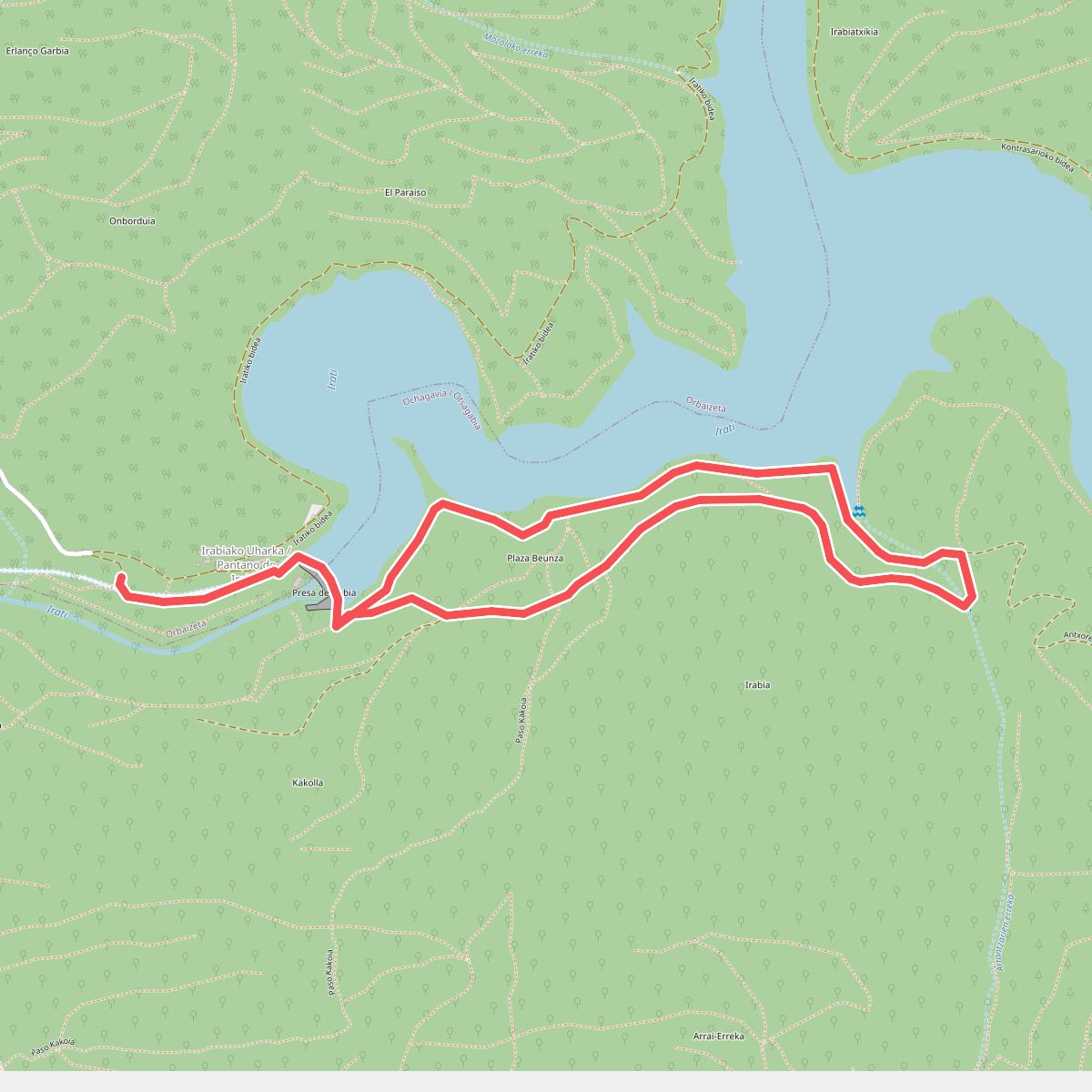
#5. Beuntza Plazako bidea
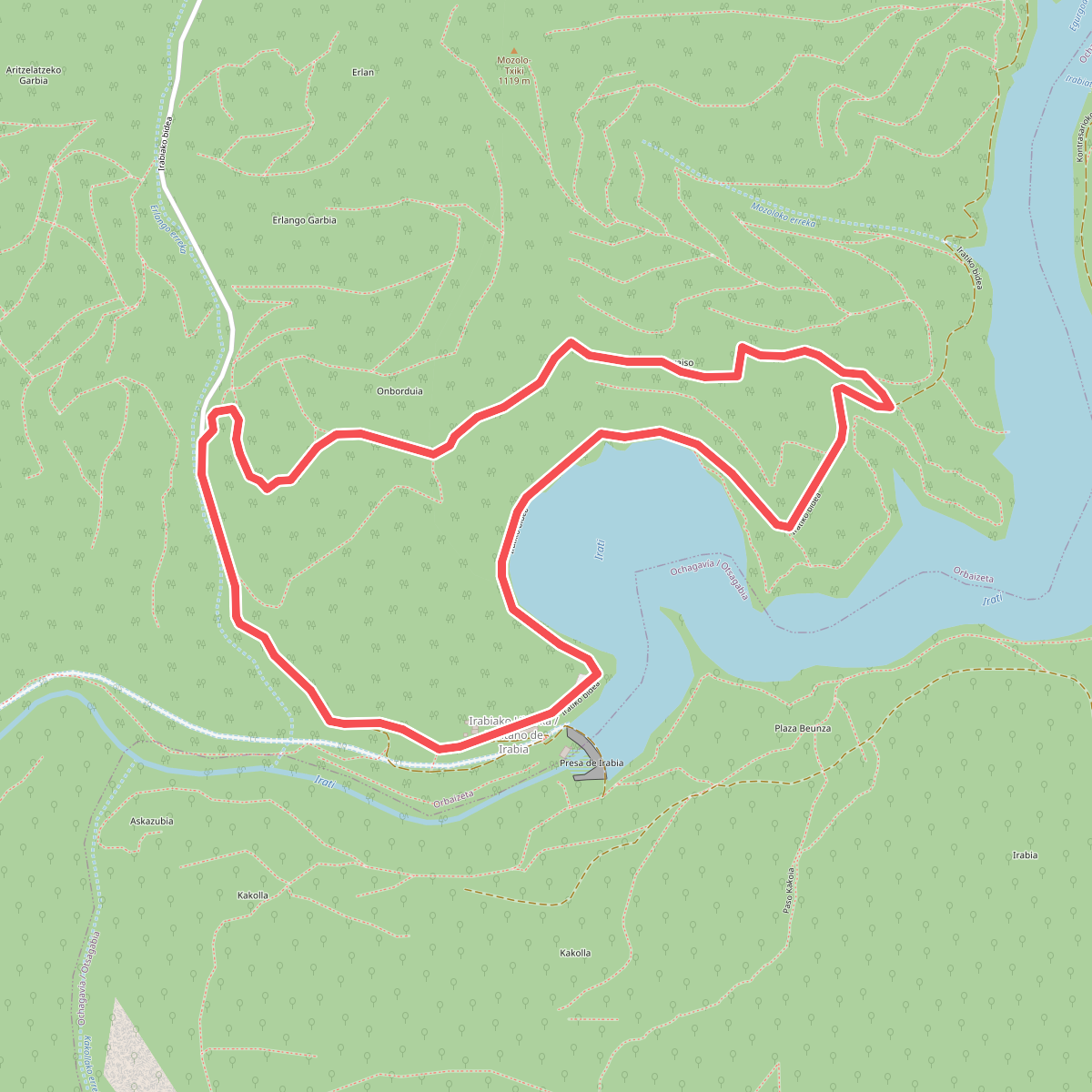
#6. C Paradisuak - Erlan
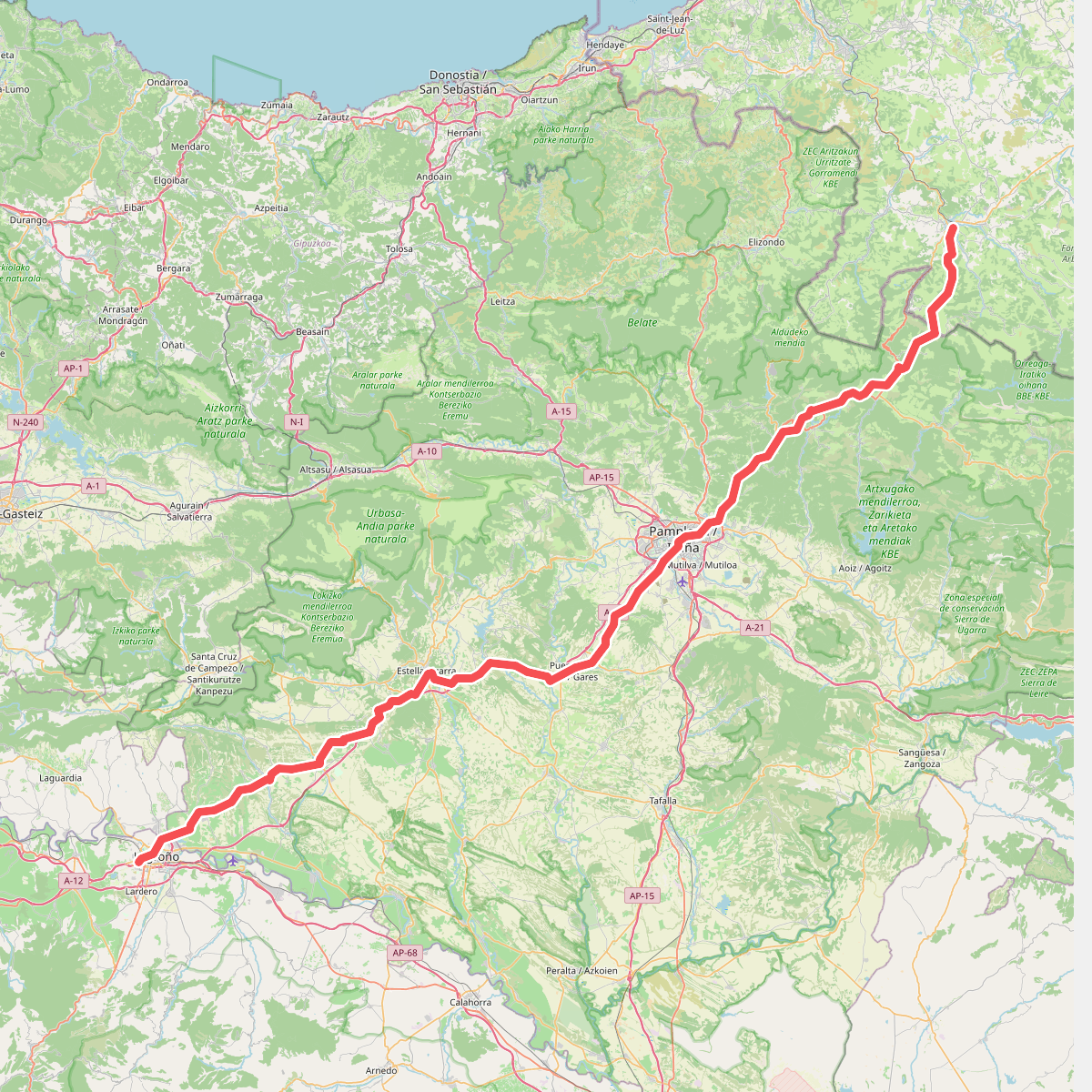
#7. Camino Francés - 01
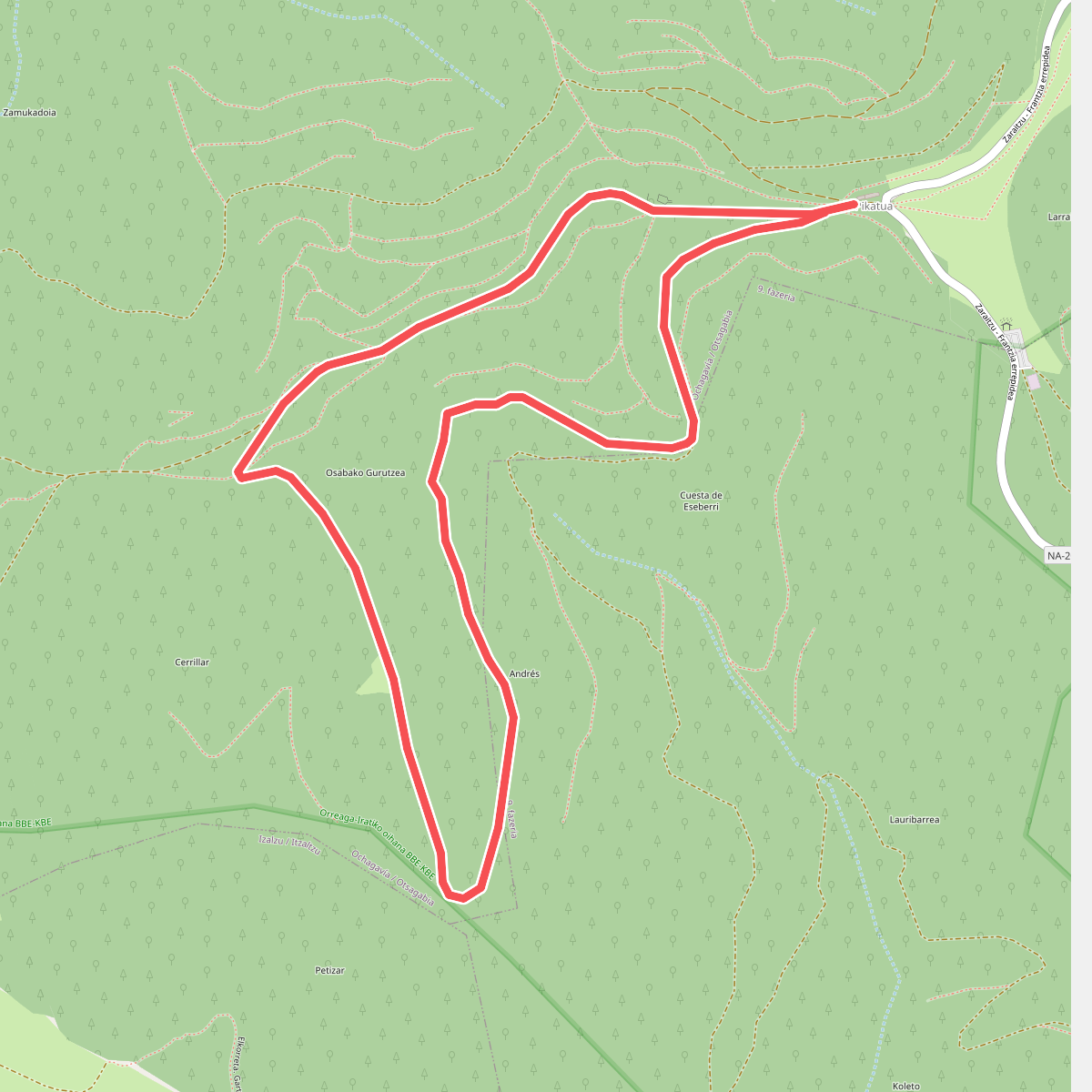
#8. Cerrillar
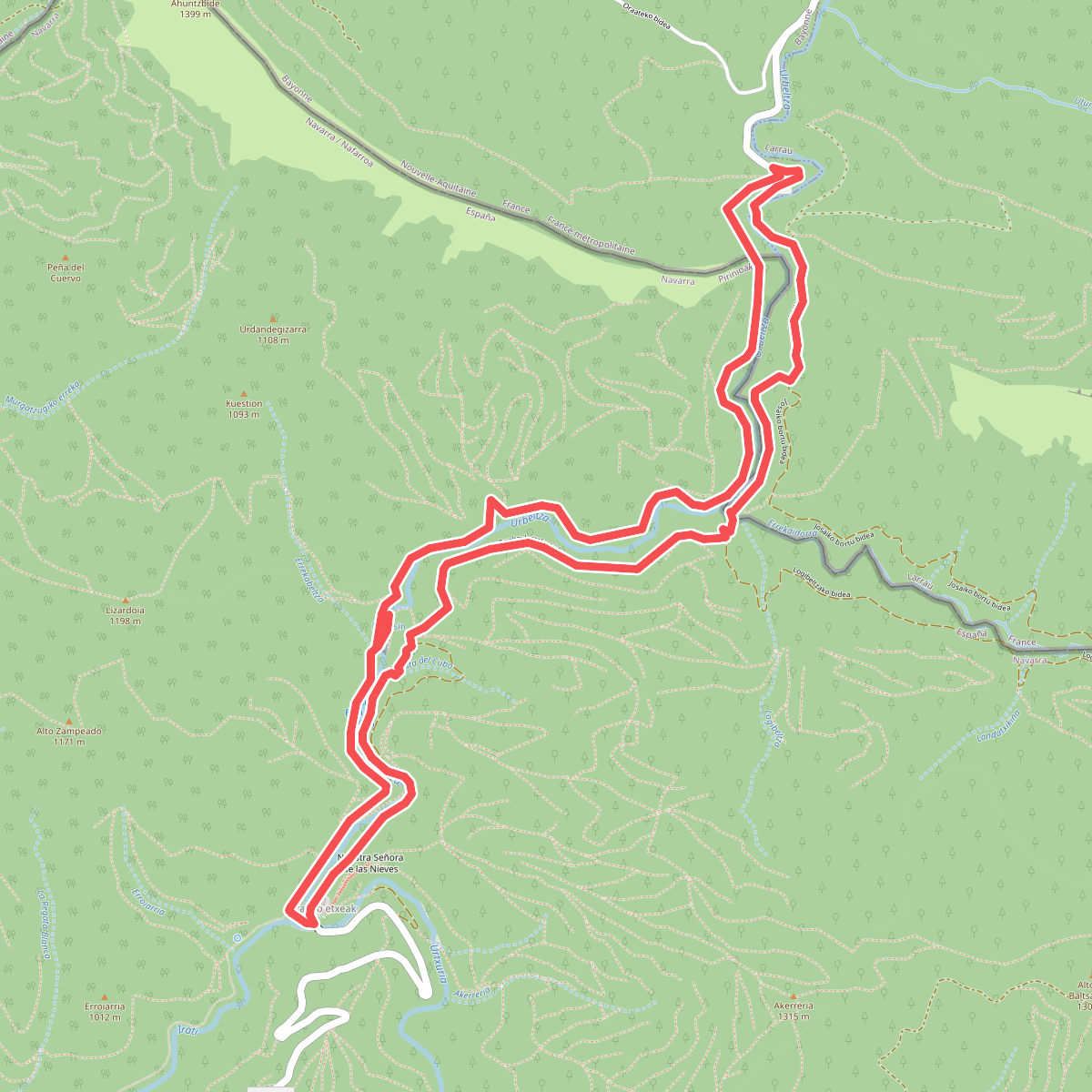
#9. Errekaidorra
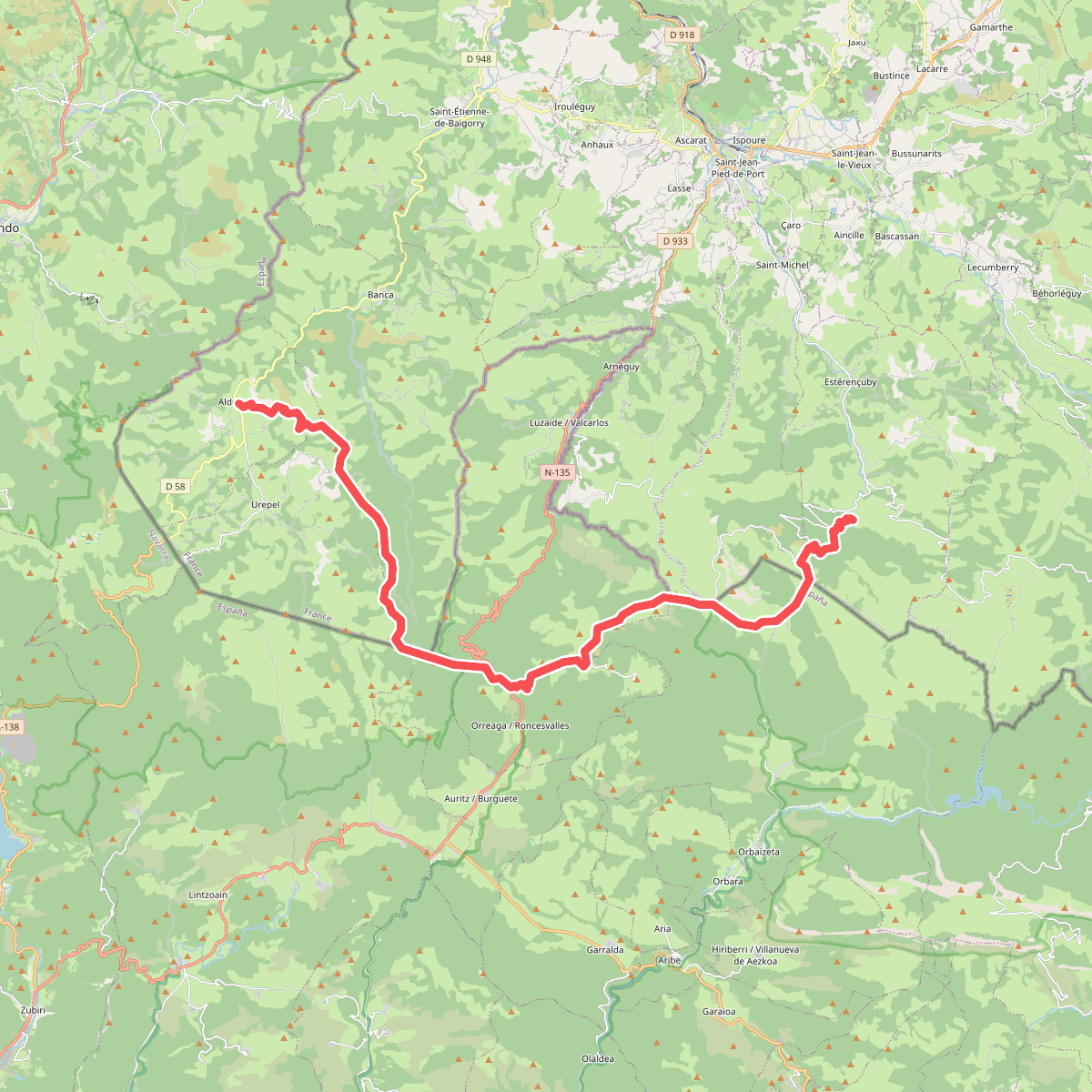
#10. Étape 04
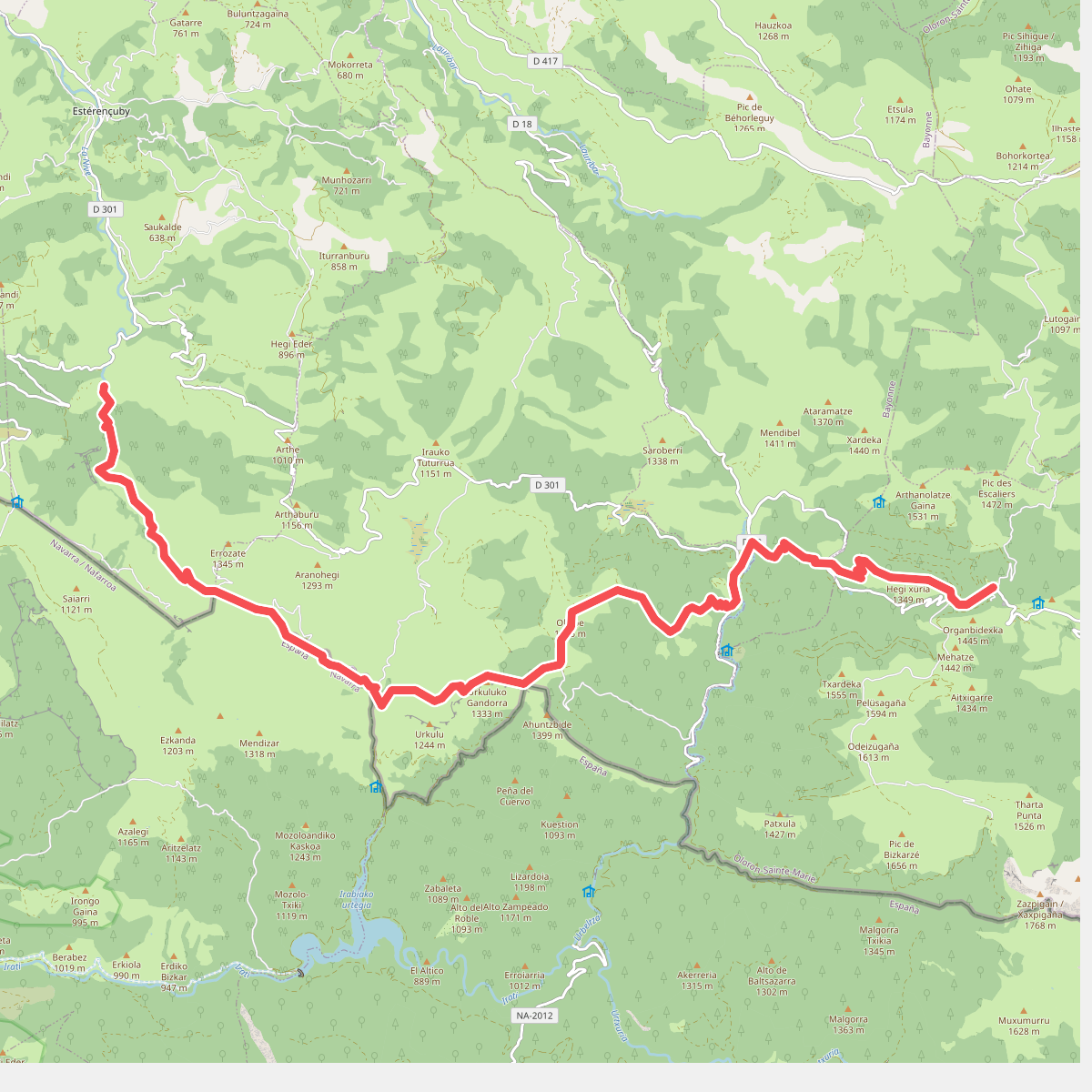
#11. Étape 05