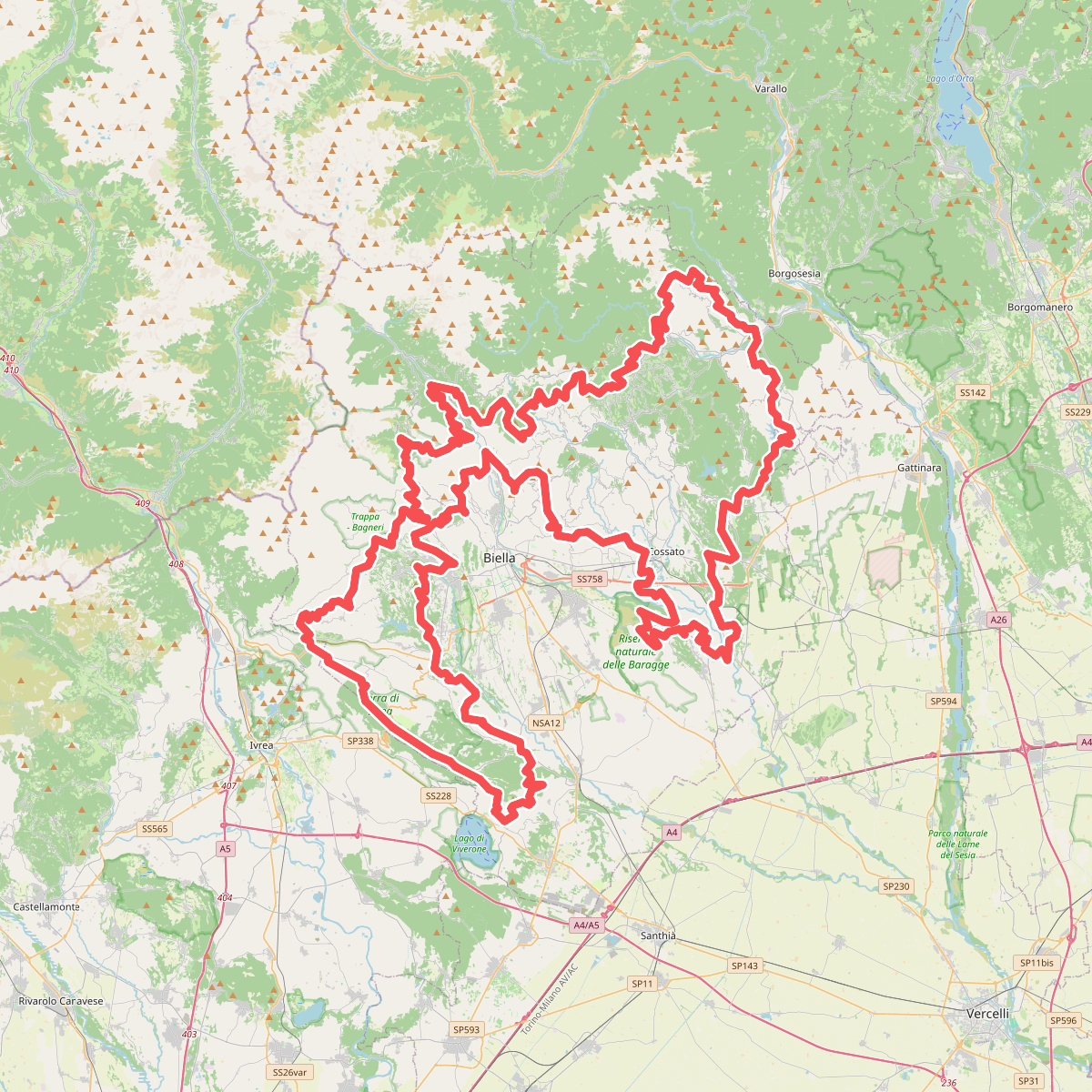

The best hiking routes in Lago di Viverone
Discover the best walks in Lago di Viverone. 5 routes on the map, with descriptions, photos and GPX.
About Lago di Viverone
Lago di Viverone is a glacial lake basin formed by the retreating Ivrea Morainic Amphitheatre. Walkers will find a landscape split between the flat, marshy lake shores and the gently rising morainic hills that frame the water. The terrain underfoot changes quickly from soft, damp soil and grassy paths near the reed beds to firmer, pebbly dirt tracks as you ascend into the surrounding vineyards and deciduous woodlands. There are no steep mountain peaks or deep gorges here, only a rolling terrain that offers a mix of agricultural paths and lakeside trails.
Read more
About Lago di Viverone
Lago di Viverone is a glacial lake basin formed by the retreating Ivrea Morainic Amphitheatre. Walkers will find a landscape split between the flat, marshy lake shores and the gently rising morainic hills that frame the water. The terrain underfoot changes quickly from soft, damp soil and grassy paths near the reed beds to firmer, pebbly dirt tracks as you ascend into the surrounding vineyards and deciduous woodlands. There are no steep mountain peaks or deep gorges here, only a rolling terrain that offers a mix of agricultural paths and lakeside trails.
Read moreLago di Viverone is a glacial lake basin formed by the retreating Ivrea Morainic Amphitheatre. Walkers will find a landscape split between the flat, marshy lake shores and the gently rising morainic hills that frame the water. The terrain underfoot changes quickly from soft, damp soil and grassy paths near the reed beds to firmer, pebbly dirt tracks as you ascend into the surrounding vineyards and deciduous woodlands. There are no steep mountain peaks or deep gorges here, only a rolling terrain that offers a mix of agricultural paths and lakeside trails.
The shoreline paths are dominated by dense cane thickets, willow trees, and damp meadows, where wooden boardwalks occasionally help cross the wettest sections. Further back from the water, the path network leads through rows of Erbaluce vineyards and shaded woods of chestnut and oak. This transition from a humid wetland ecosystem to dry, sun-exposed agricultural slopes is the defining feature of a walk around this basin.
In late autumn, particularly in November, the lakeside deciduous trees drop their leaves, opening up clearer views across the water to the moraine ridges. The flatter lakeside paths near the main piers can be busier with local walkers, while the higher dirt tracks through the vineyards and woods offer a quieter, more solitary walking experience.
Hiking routes in Lago di Viverone (5)
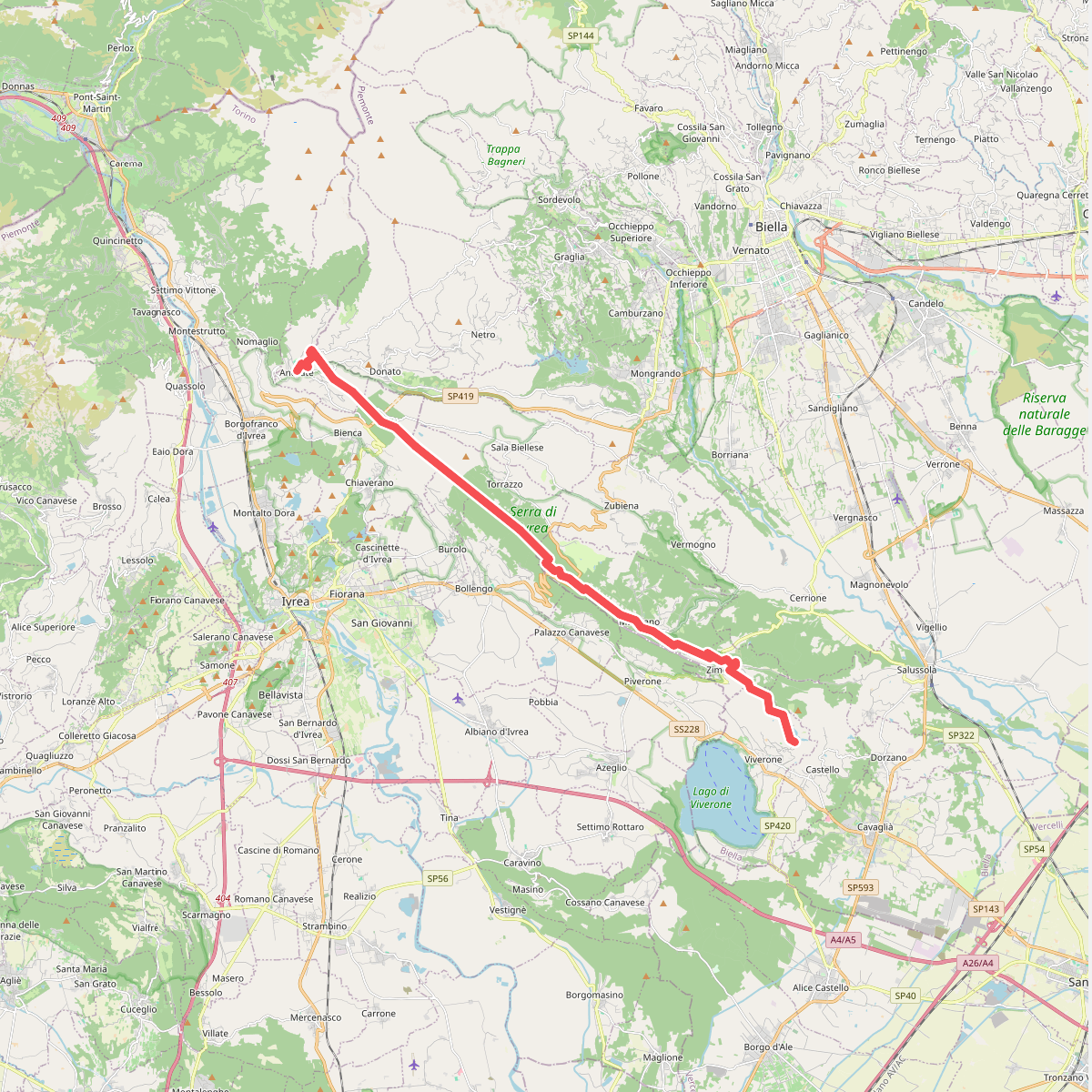
#1. Alta Via dell'Anfiteatro Morenico di Ivrea Tappa 1
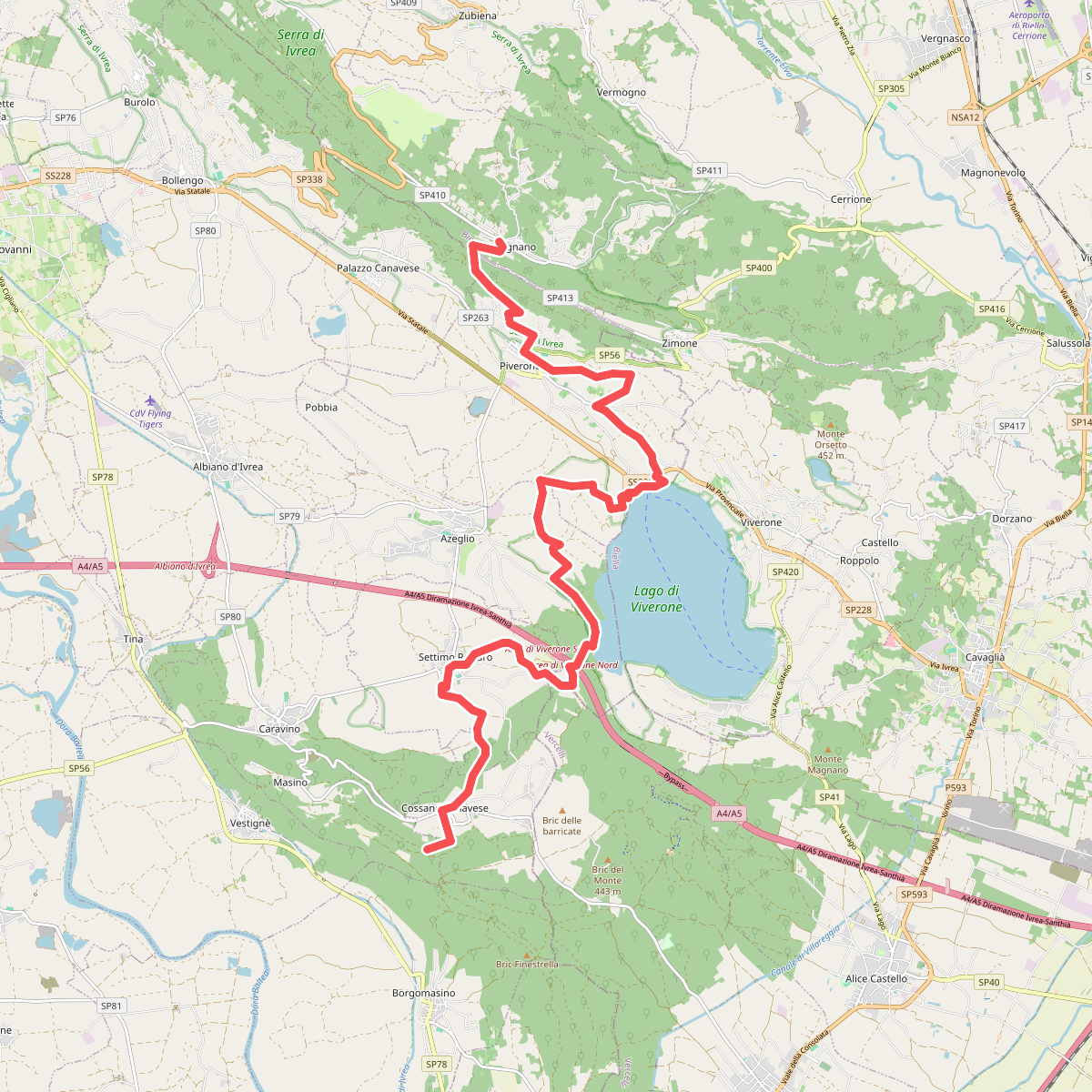
#2. Alta Via dell'Anfiteatro Morenico di Ivrea Tappa 1A
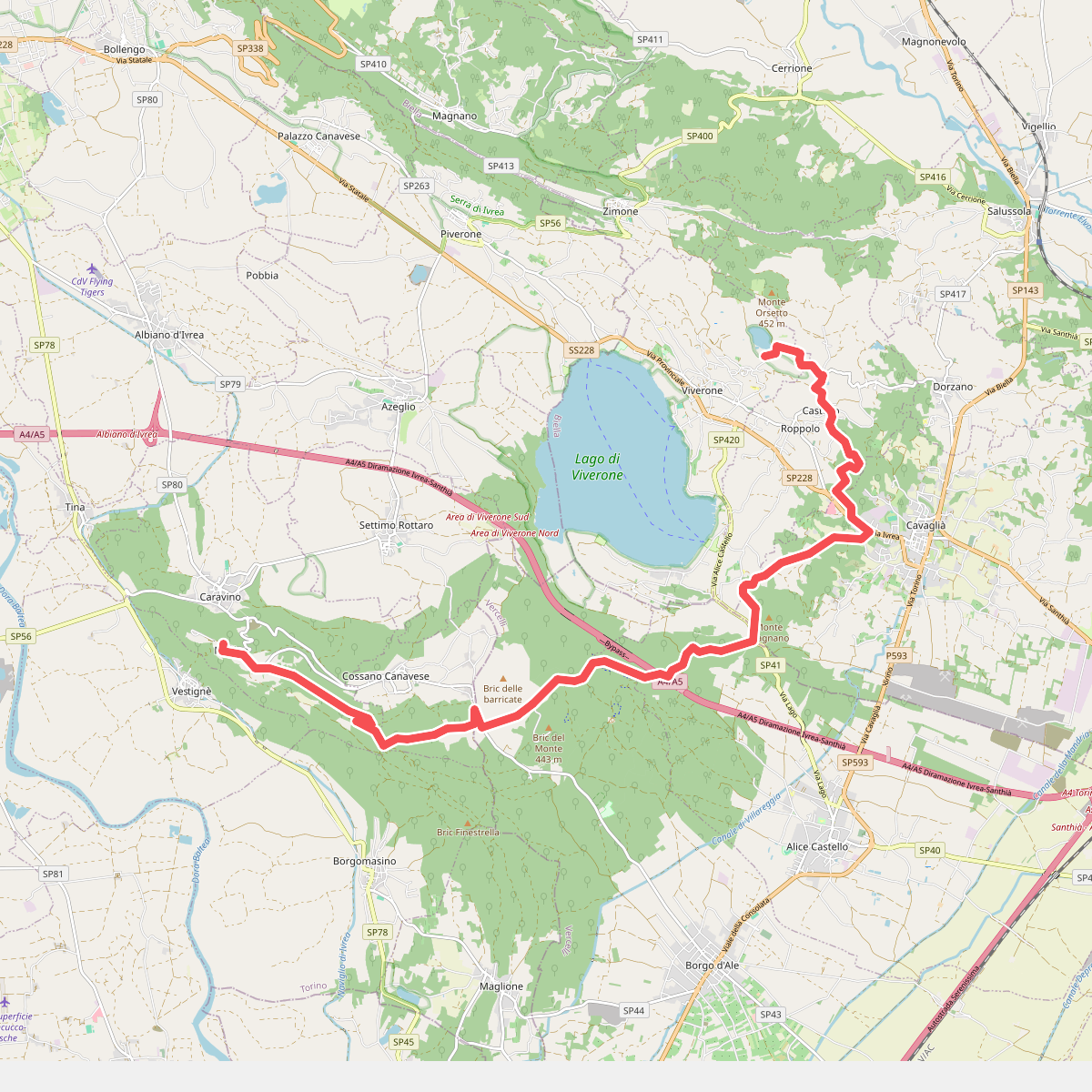
#3. Alta Via dell'Anfiteatro Morenico di Ivrea Tappa 2
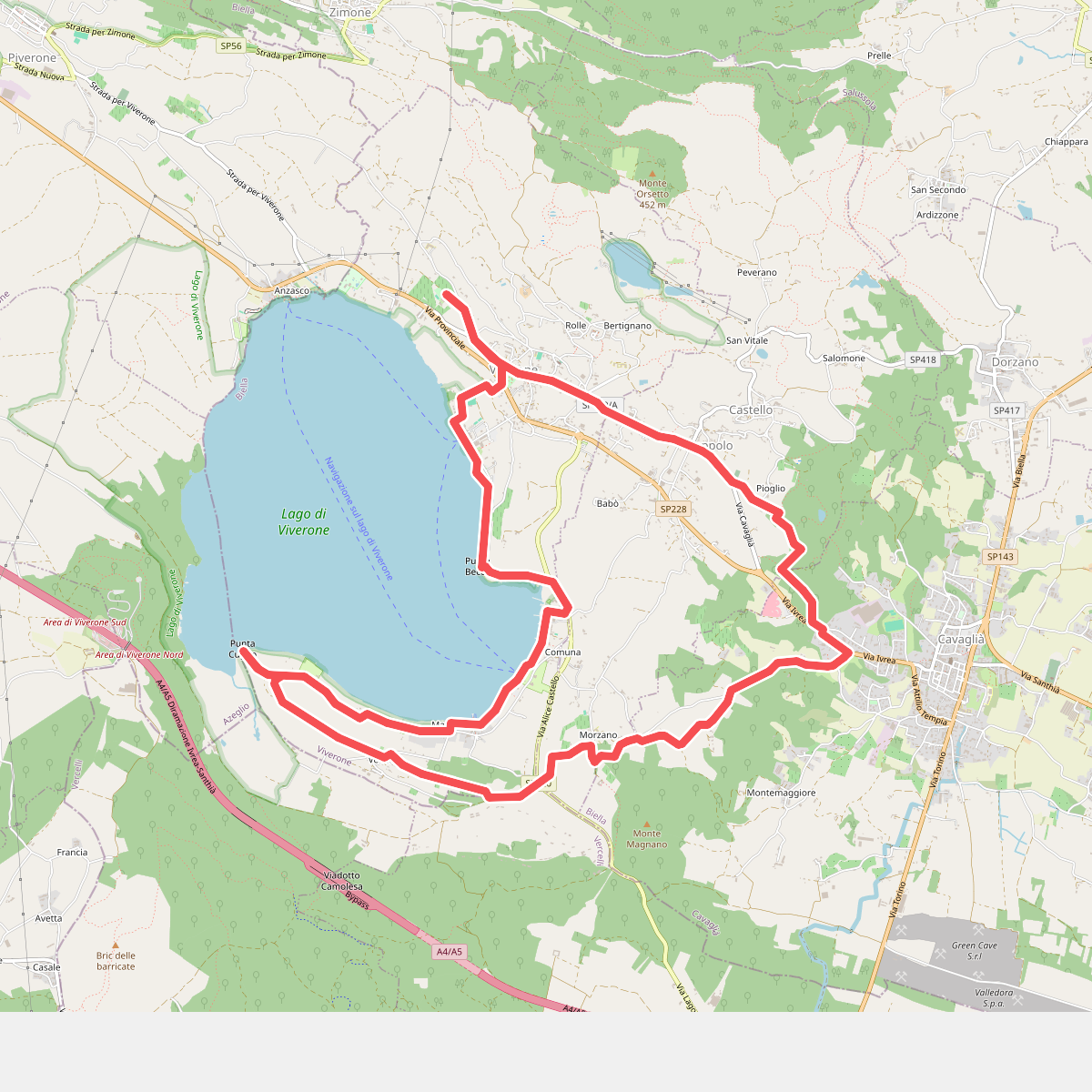
#4. Buon Cammino 2