
The best hiking routes in Gasteizko mendi garaiak KBE
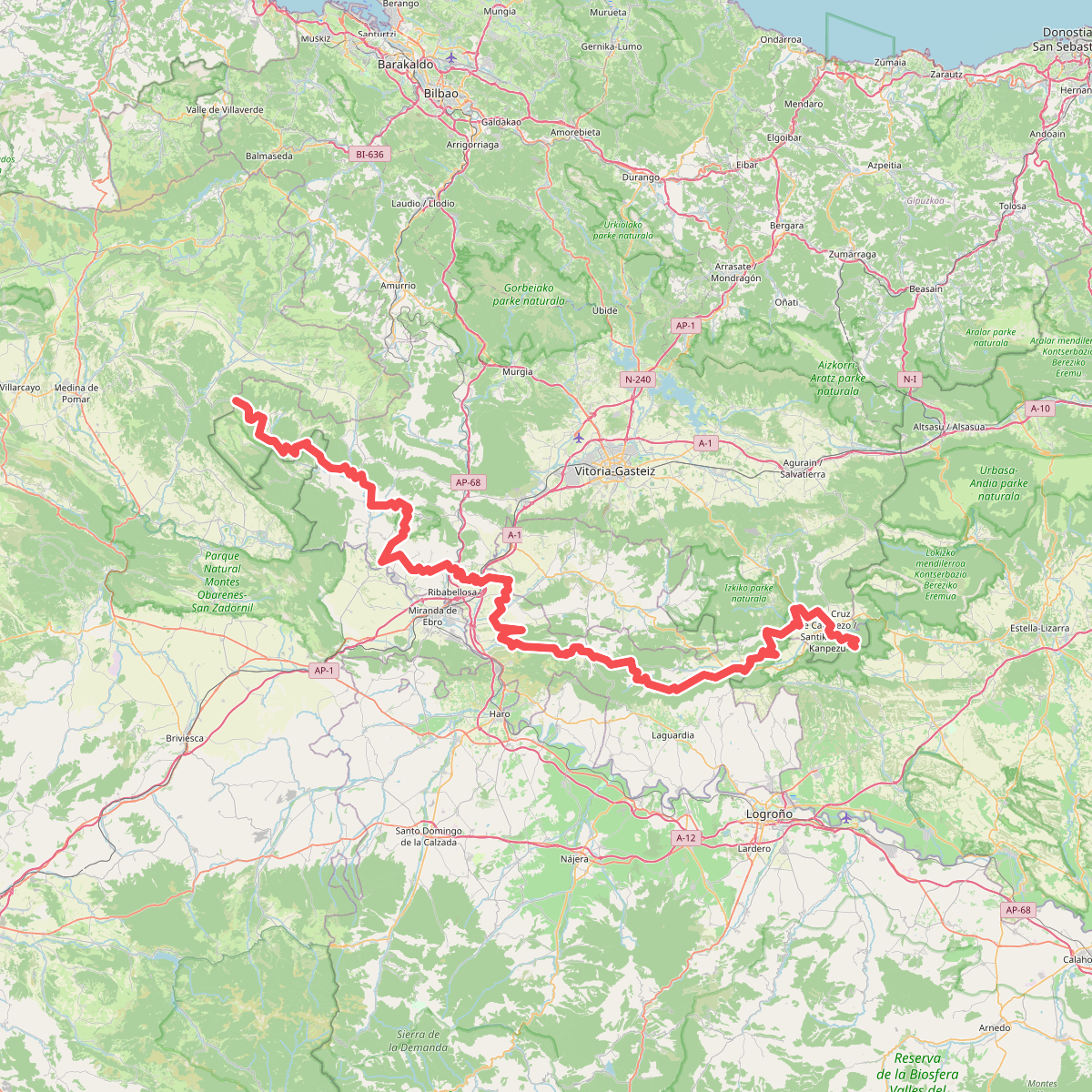
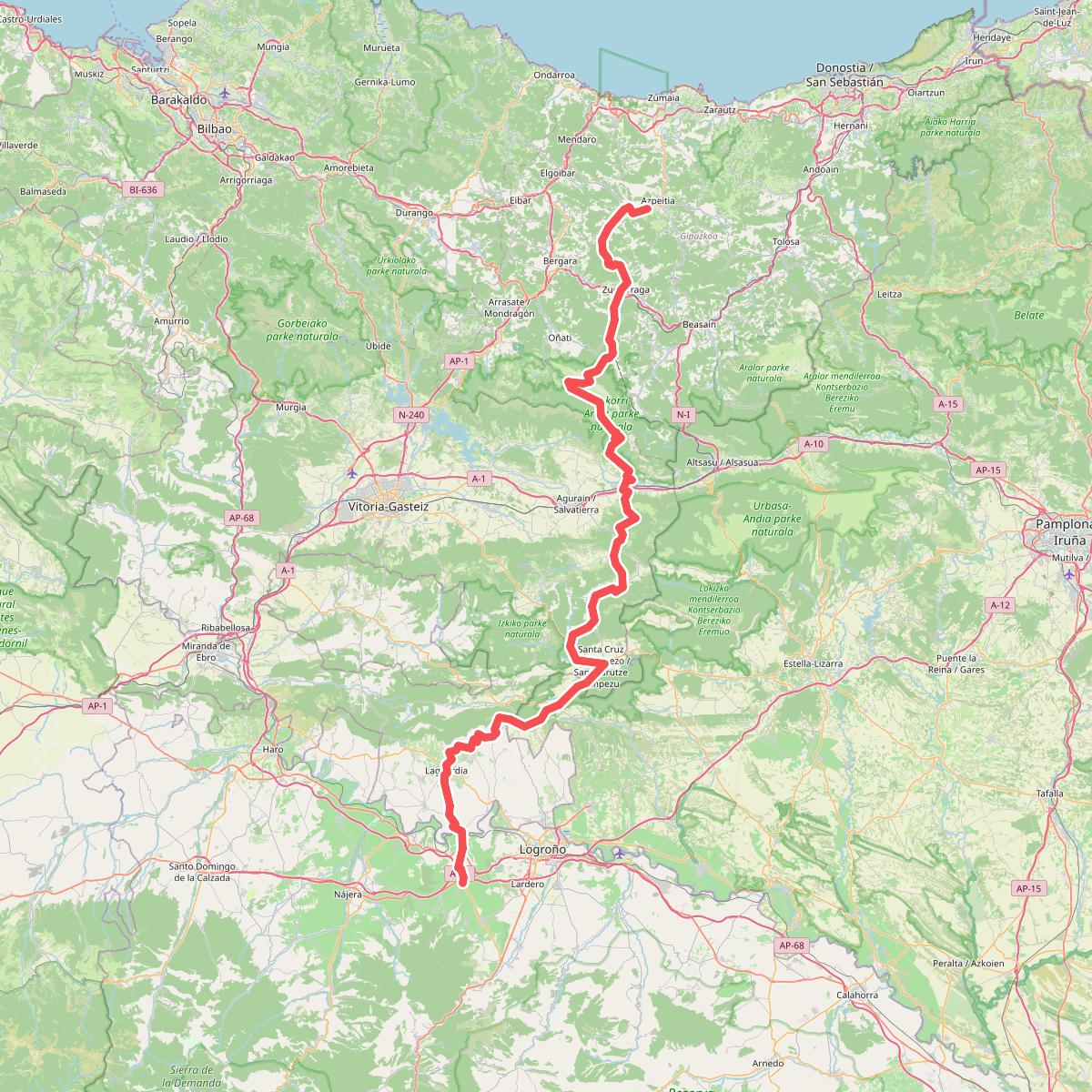
Discover the best walks in Gasteizko mendi garaiak KBE. 7 routes on the map, with descriptions, photos and GPX.
About Gasteizko mendi garaiak KBE
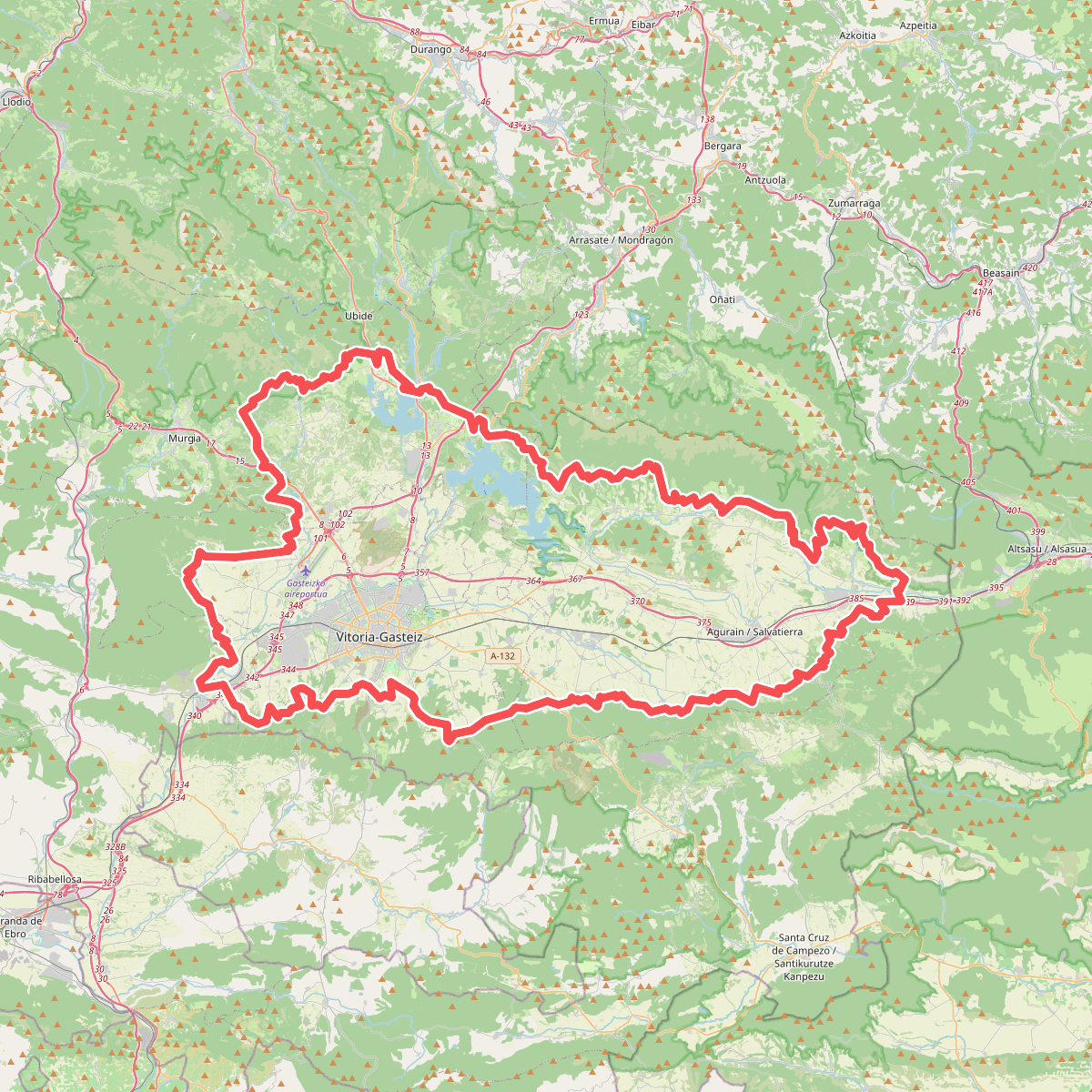
Gasteizko mendi garaiak KBE offers a landscape of limestone ridges, dense beech forests, and high pastures situated directly south of the Vitoria-Gasteiz basin. Unlike the flat agricultural plains nearby, this protected area rises into a series of rounded summits and steep northern escarpments. Walkers will not find jagged alpine peaks or deep canyons here, but rather a continuous, gently undulating upland ridge where open grasslands alternate with dark, shaded woodland.
Read more
About Gasteizko mendi garaiak KBE
Gasteizko mendi garaiak KBE offers a landscape of limestone ridges, dense beech forests, and high pastures situated directly south of the Vitoria-Gasteiz basin. Unlike the flat agricultural plains nearby, this protected area rises into a series of rounded summits and steep northern escarpments. Walkers will not find jagged alpine peaks or deep canyons here, but rather a continuous, gently undulating upland ridge where open grasslands alternate with dark, shaded woodland.
Read moreGasteizko mendi garaiak KBE offers a landscape of limestone ridges, dense beech forests, and high pastures situated directly south of the Vitoria-Gasteiz basin. Unlike the flat agricultural plains nearby, this protected area rises into a series of rounded summits and steep northern escarpments. Walkers will not find jagged alpine peaks or deep canyons here, but rather a continuous, gently undulating upland ridge where open grasslands alternate with dark, shaded woodland.
The underfoot conditions change distinctly with the vegetation. Under the dense canopy of the beech forests, the paths are dominated by deep leaf litter and exposed tree roots, while the open pastures along the crests feature thin soils over limestone bedrock, often resulting in stony, uneven tracks. These high meadows are shaped by centuries of livestock grazing, which keeps the scrub at bay and maintains the clear transition between pasture and forest.
In late autumn, around November, the beech leaves turn a deep copper, contrasting sharply with the grey limestone outcrops that break through the soil. The area is easily accessible from nearby villages, meaning the main ridge trails can be busy with local hikers on weekends, though the steep approach paths through the oak and beech woods remain much quieter.