The best hiking routes in Beskydská oblast tmavé oblohy / Beskydská oblasť tmavej oblohy
Discover the best walks in Beskydská oblast tmavé oblohy / Beskydská oblasť tmavej oblohy. 7 routes on the map, with descriptions, photos and GPX.
About Beskydská oblast tmavé oblohy / Beskydská oblasť tmavej oblohy
Beskydská oblast tmavé oblohy / Beskydská oblasť tmavej oblohy spans the mountainous borderland between the Czech Republic and Slovakia. This transboundary dark sky park is characterized by dense spruce and beech forests, rolling ridges, and small mountain clearings. Unlike lowland parks, the terrain here is defined by steep, forested slopes and deep valleys that trap moisture, creating damp forest floors covered in moss and ferns. The underfoot conditions vary from stony mountain paths and gravel forestry tracks to soft, pine-needle-strewn trails that can become muddy after rainfall.
Read more
About Beskydská oblast tmavé oblohy / Beskydská oblasť tmavej oblohy
Beskydská oblast tmavé oblohy / Beskydská oblasť tmavej oblohy spans the mountainous borderland between the Czech Republic and Slovakia. This transboundary dark sky park is characterized by dense spruce and beech forests, rolling ridges, and small mountain clearings. Unlike lowland parks, the terrain here is defined by steep, forested slopes and deep valleys that trap moisture, creating damp forest floors covered in moss and ferns. The underfoot conditions vary from stony mountain paths and gravel forestry tracks to soft, pine-needle-strewn trails that can become muddy after rainfall.
Read moreBeskydská oblast tmavé oblohy / Beskydská oblasť tmavej oblohy spans the mountainous borderland between the Czech Republic and Slovakia. This transboundary dark sky park is characterized by dense spruce and beech forests, rolling ridges, and small mountain clearings. Unlike lowland parks, the terrain here is defined by steep, forested slopes and deep valleys that trap moisture, creating damp forest floors covered in moss and ferns. The underfoot conditions vary from stony mountain paths and gravel forestry tracks to soft, pine-needle-strewn trails that can become muddy after rainfall.
Walkers will notice a landscape shaped by traditional forestry and mountain farming. The forest canopy is interrupted by occasional mountain meadows, known locally as polany, where wooden cottages and haylofts still stand. These open areas provide clear views of the night sky, which is the primary reason for the area's protected status. The lack of major urban settlements nearby means artificial light pollution is minimal, making evening and night-time walking a distinct option for those carrying headlamps.
In late autumn, particularly around October, the beech forests turn a deep copper color, contrasting sharply with the dark green spruce stands. The trails are often quieter during these cooler months, though popular ridge routes near the border markers see regular foot traffic. While the area lacks alpine peaks or rocky gorges, the constant ascent and descent through dense woodland and open ridges offer a physically demanding walk through a working forest landscape.
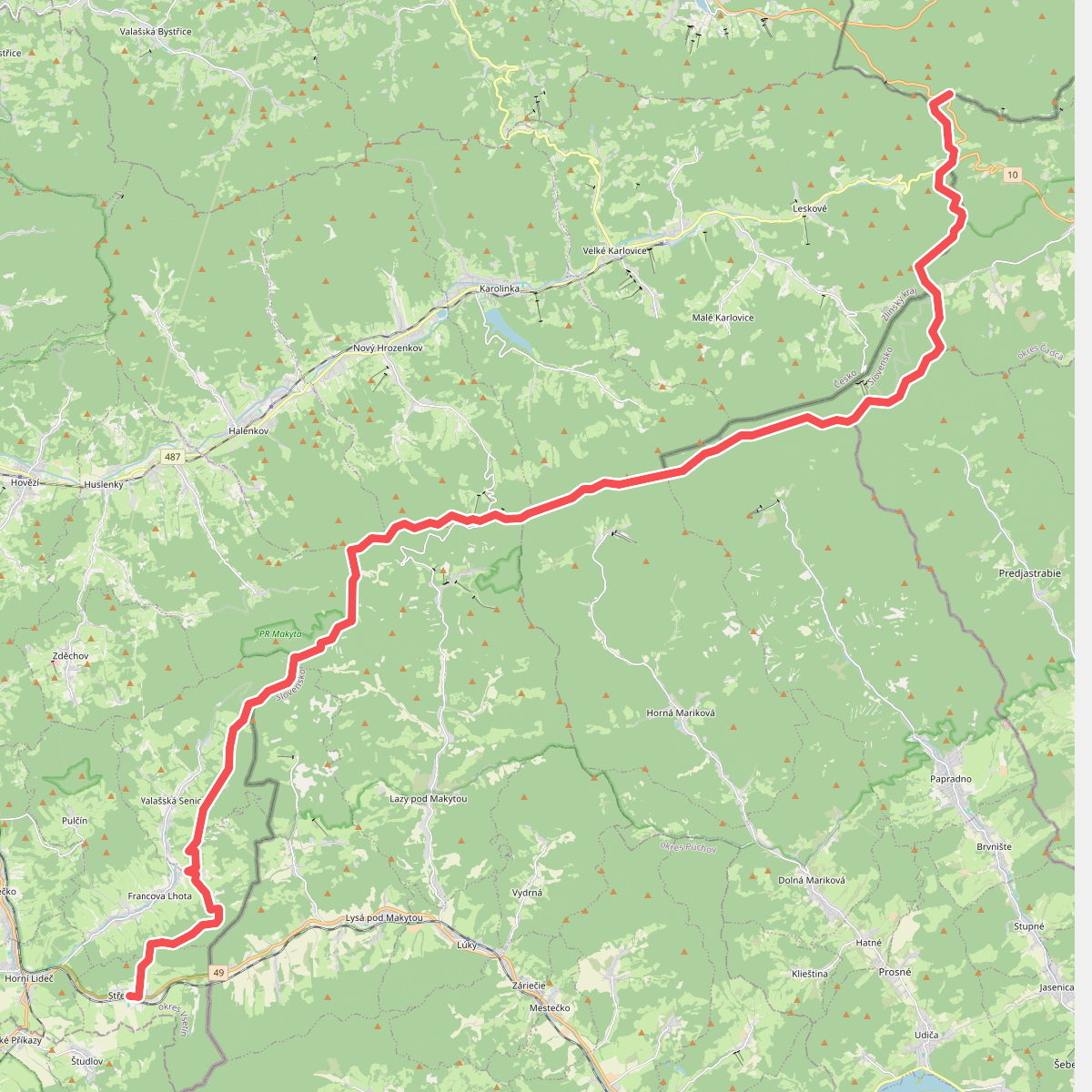
Hiking routes in Beskydská oblast tmavé oblohy / Beskydská oblasť tmavej oblohy (7)
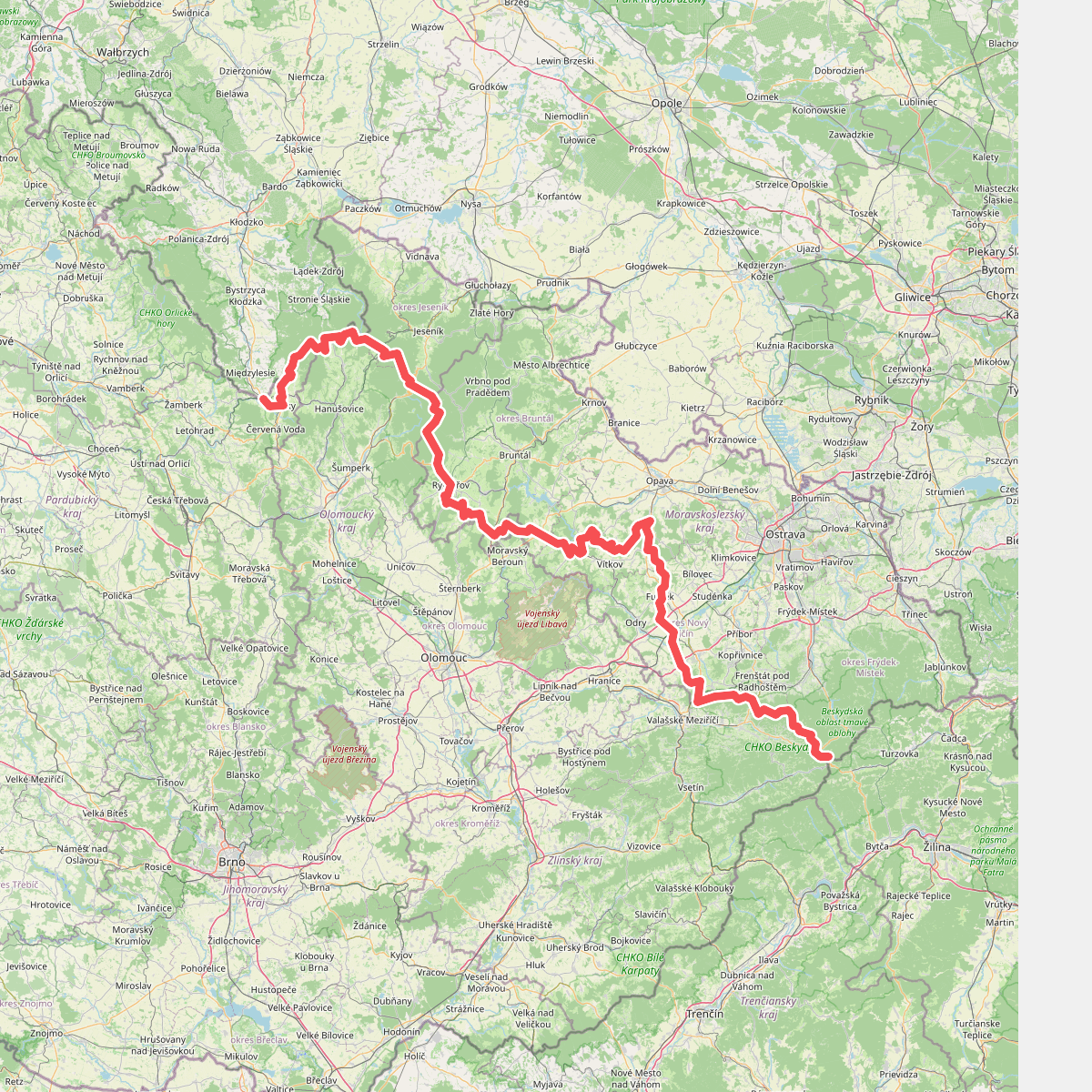
#1. European long distance path E3 - part Czech Republic, Morava
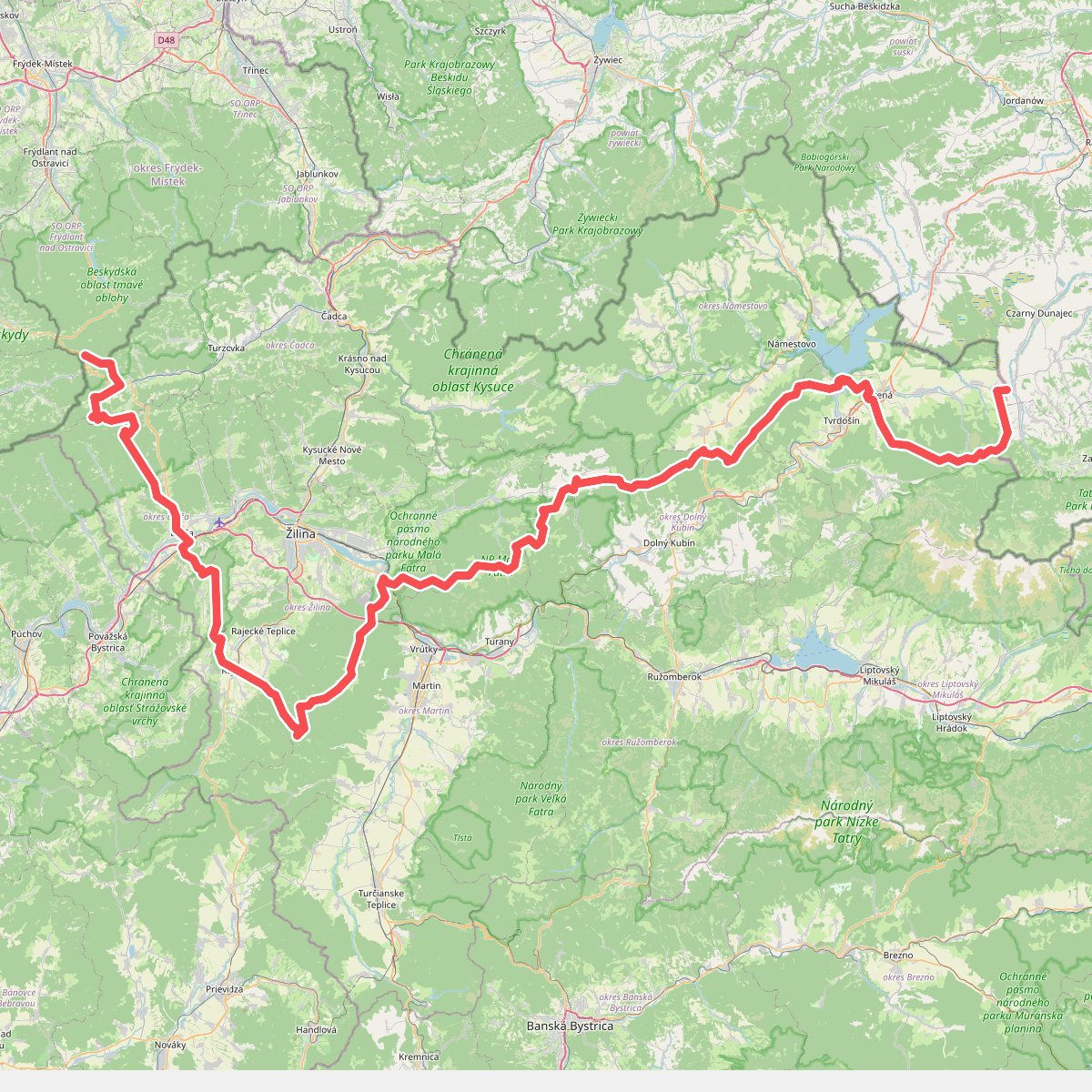
#2. European long distance path E3 - part Slovakia (west)
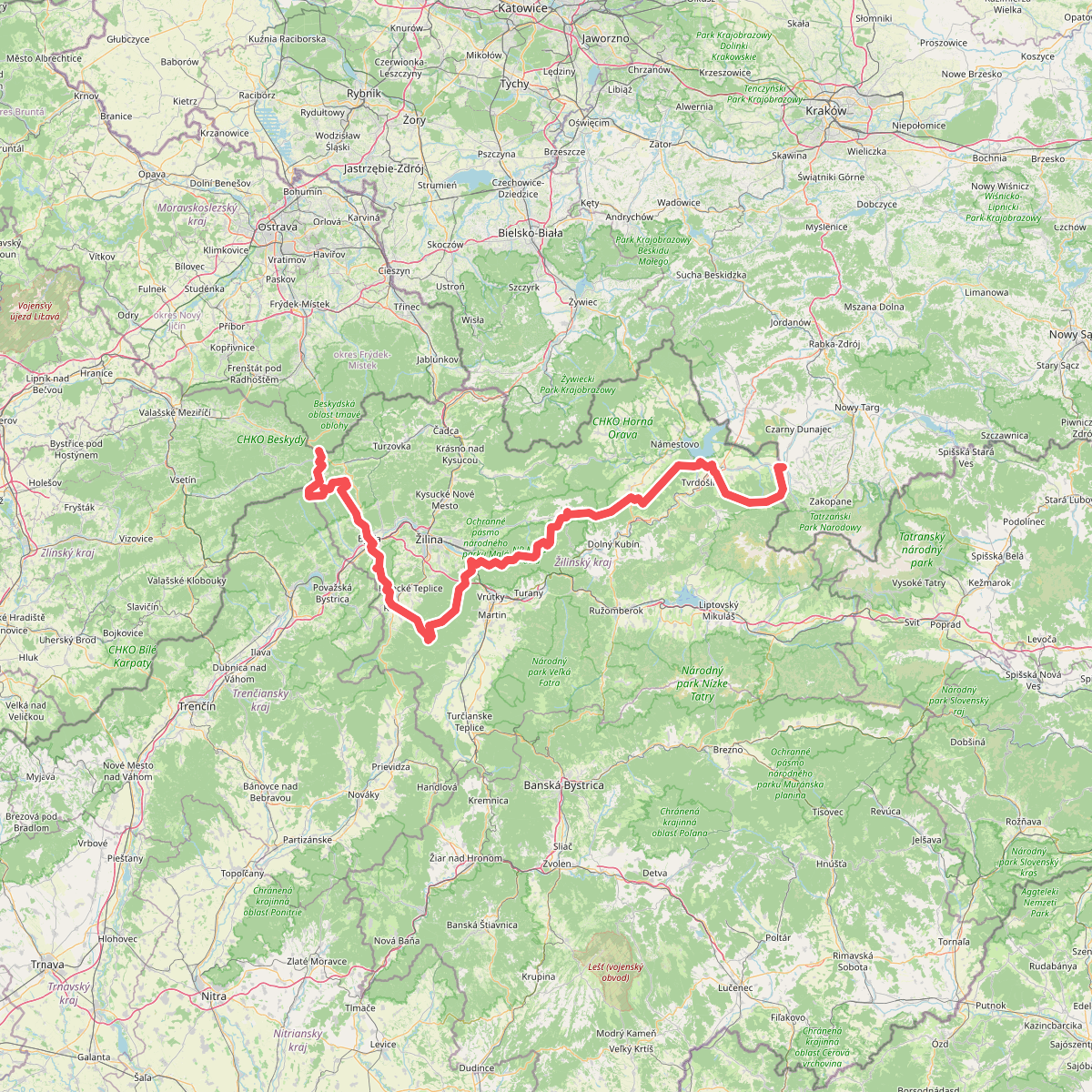
#3. Internationaler Bergwanderweg Eisenach–Budapest (Slowakei West)
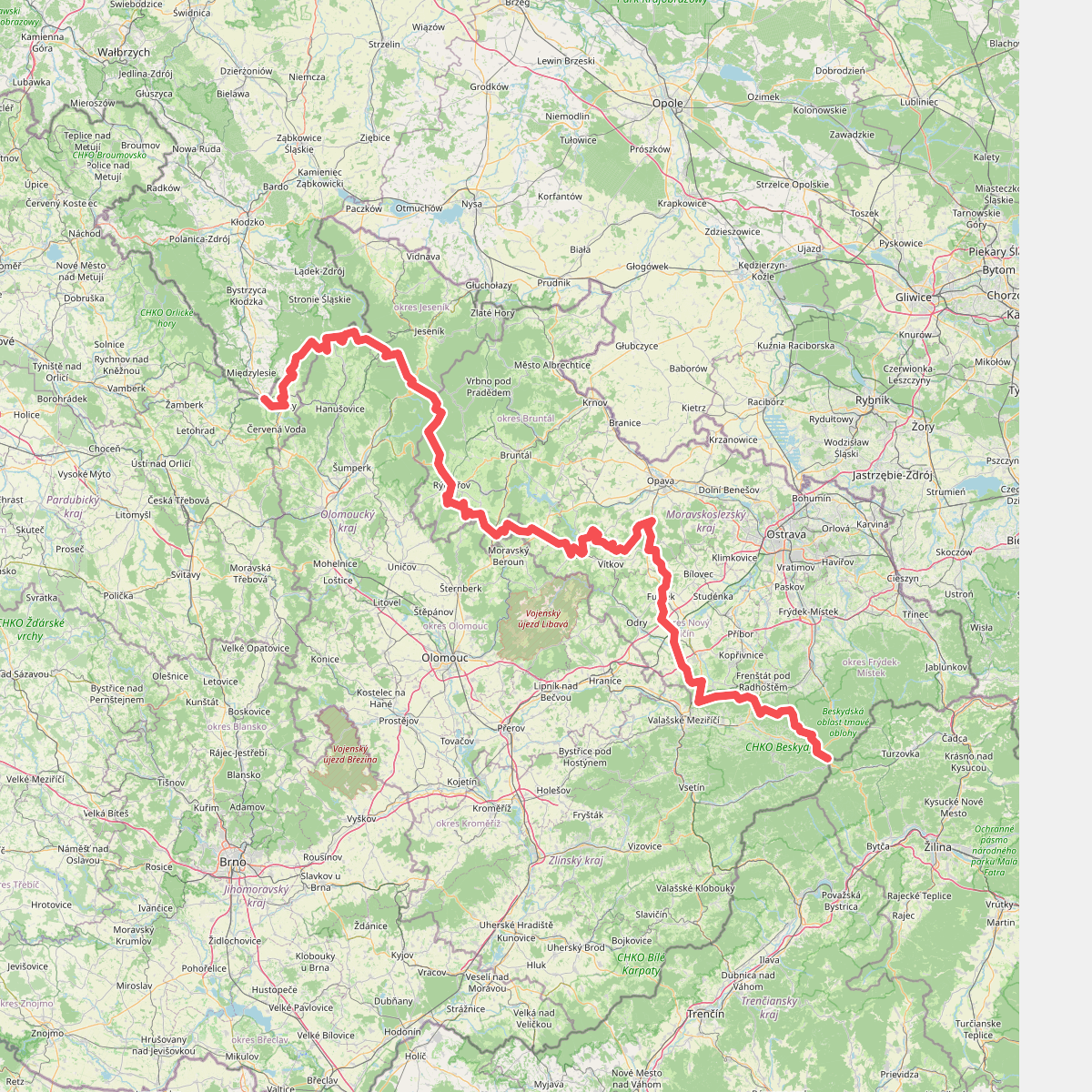
#4. Internationaler Bergwanderweg Eisenach–Budapest (Tschechien Ost)
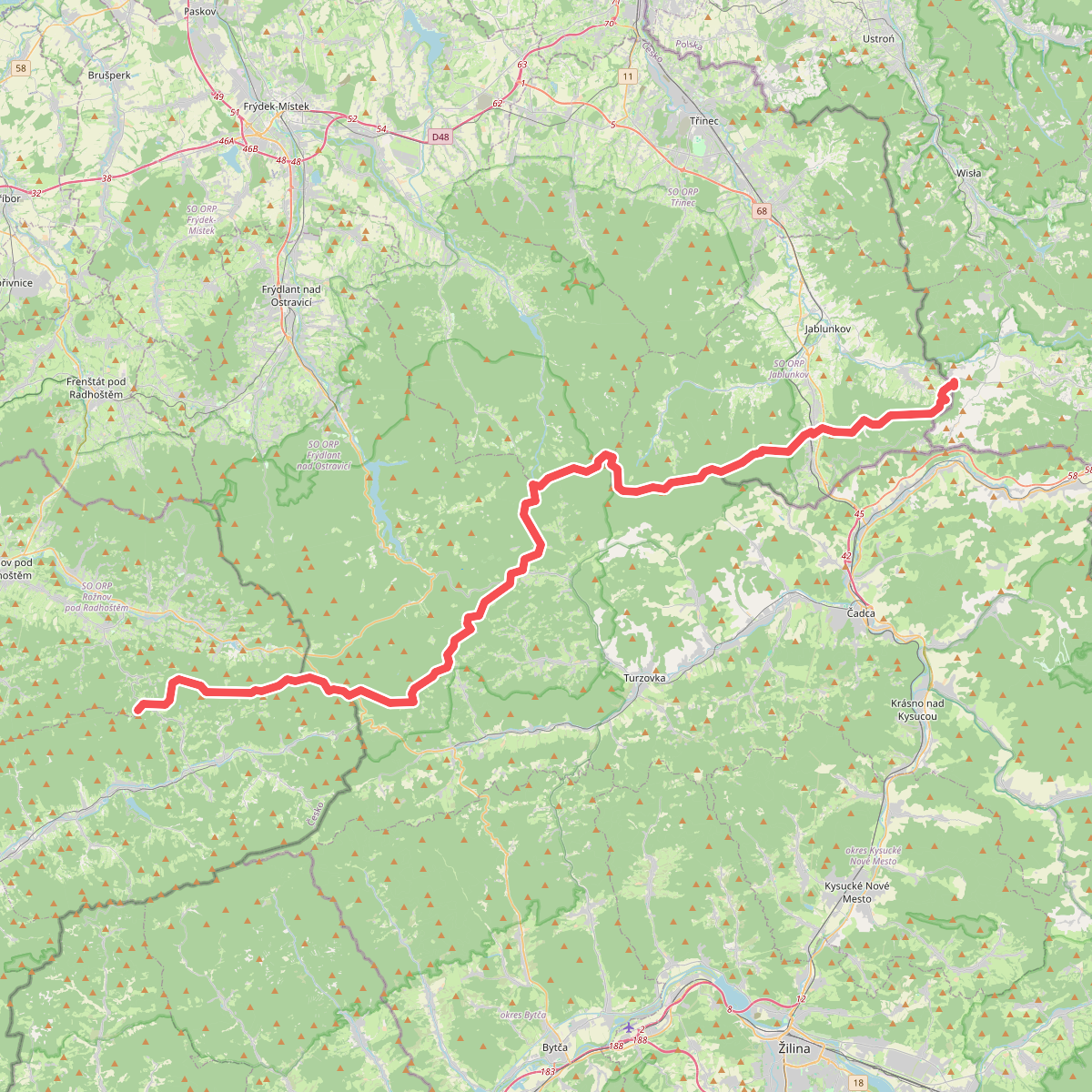
#5. Via Czechia - Centrální (12. Moravskoslezské Beskydy)
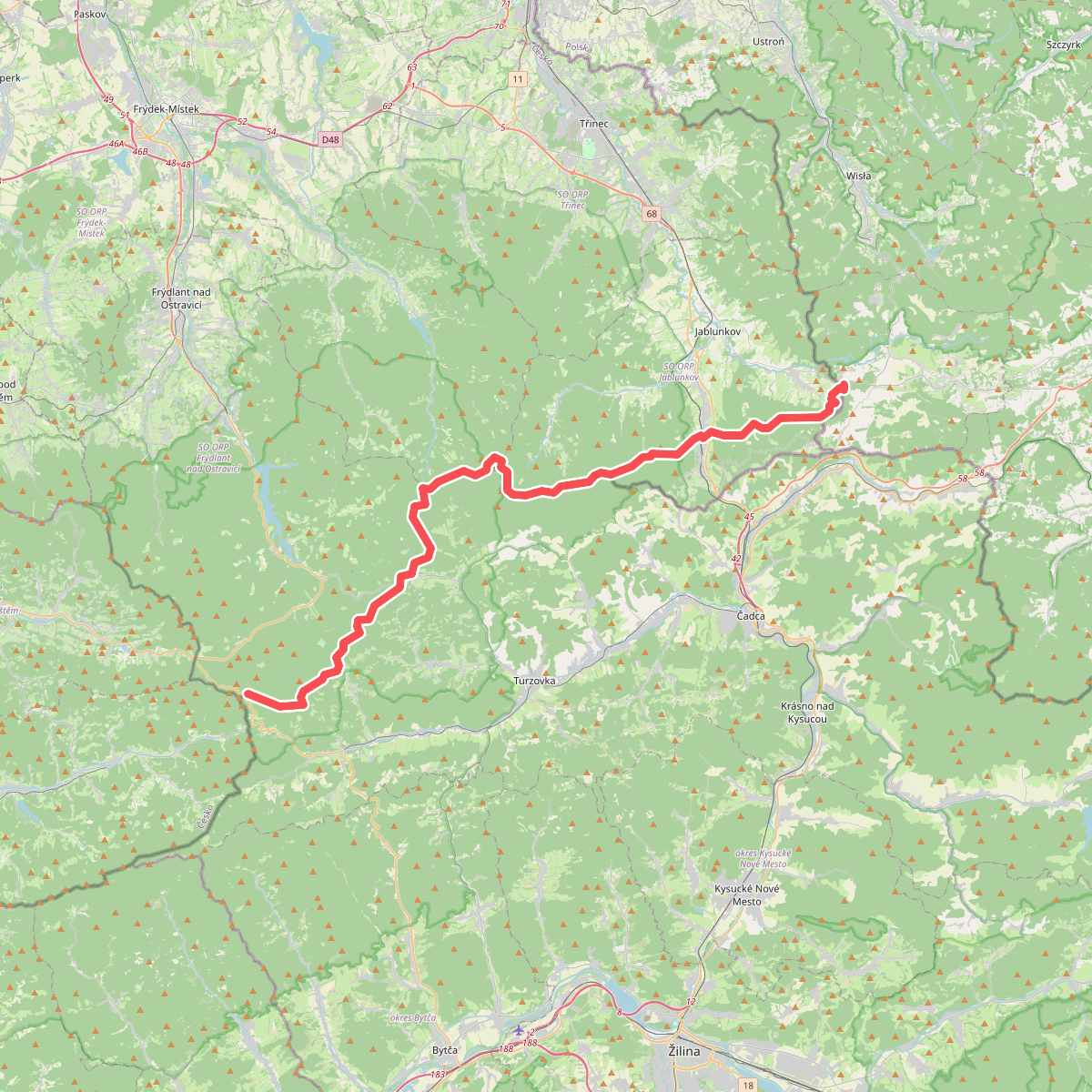
#6. Via Czechia - Jižní (1. Moravskoslezské Beskydy)