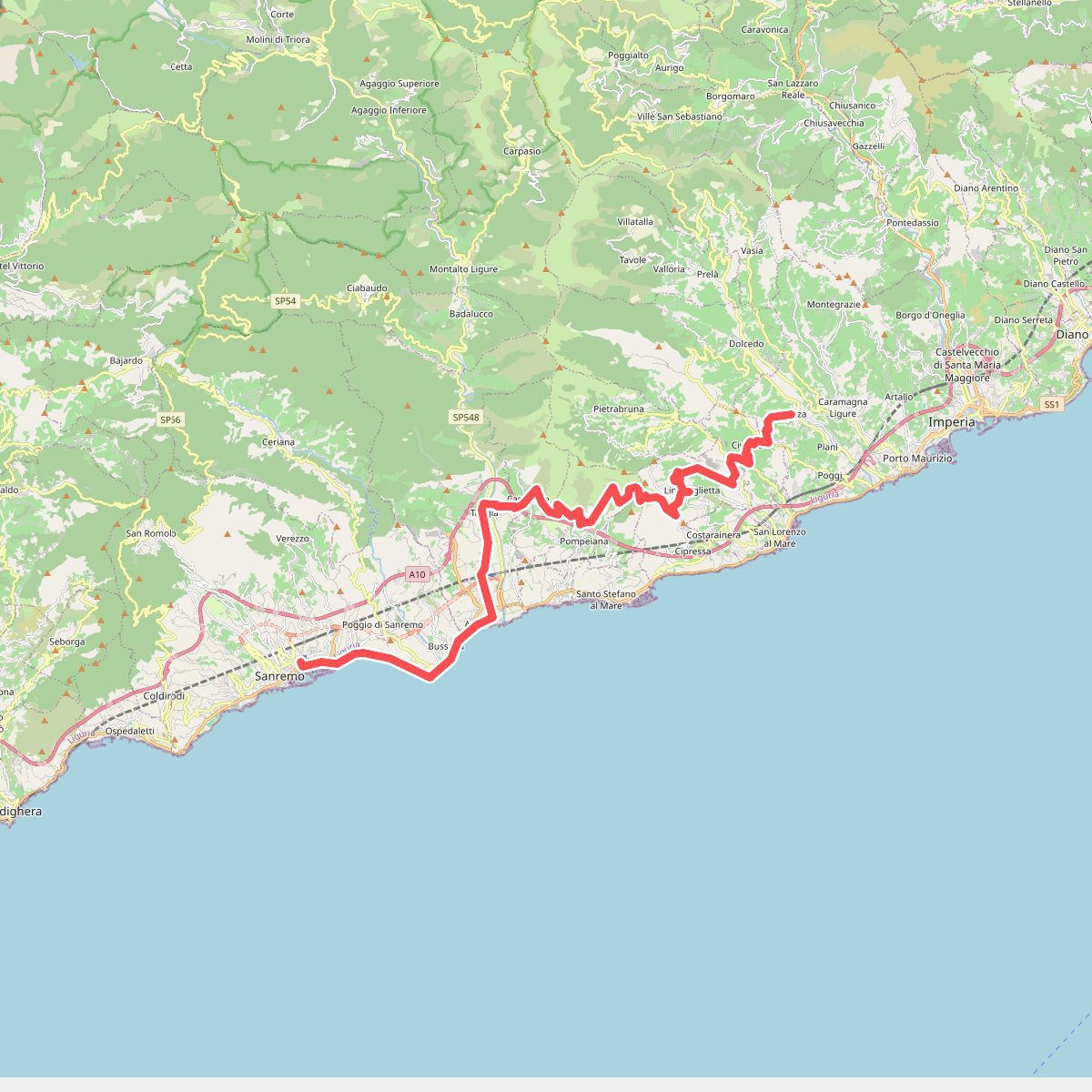

The best hiking routes in Bassa Valle Armea
Discover the best walks in Bassa Valle Armea. 5 routes on the map, with descriptions, photos and GPX.
About Bassa Valle Armea
Bassa Valle Armea offers a transition between the Mediterranean coast and the lower Ligurian hills, characterized by steep, terraced slopes and narrow valley bottoms. Unlike the higher alpine zones further north, this area is defined by olive groves, dense macchia scrubwood, and pockets of oak forest. Walkers will notice how the landscape has been shaped by centuries of traditional cultivation, with dry-stone walls supporting narrow agricultural terraces that run parallel to the contours of the hills.
Read more
About Bassa Valle Armea
Bassa Valle Armea offers a transition between the Mediterranean coast and the lower Ligurian hills, characterized by steep, terraced slopes and narrow valley bottoms. Unlike the higher alpine zones further north, this area is defined by olive groves, dense macchia scrubwood, and pockets of oak forest. Walkers will notice how the landscape has been shaped by centuries of traditional cultivation, with dry-stone walls supporting narrow agricultural terraces that run parallel to the contours of the hills.
Read moreBassa Valle Armea offers a transition between the Mediterranean coast and the lower Ligurian hills, characterized by steep, terraced slopes and narrow valley bottoms. Unlike the higher alpine zones further north, this area is defined by olive groves, dense macchia scrubwood, and pockets of oak forest. Walkers will notice how the landscape has been shaped by centuries of traditional cultivation, with dry-stone walls supporting narrow agricultural terraces that run parallel to the contours of the hills.
Underfoot, the paths are predominantly stony and uneven, consisting of old mule tracks, packed earth, and loose gravel. These trails climb steadily from the valley floor, offering views of small stone villages perched on the ridges. The vegetation changes rapidly as you ascend, shifting from cultivated olive orchards to wilder, aromatic shrubland dominated by rosemary, thyme, and mastic trees.
This is a working landscape rather than a pristine wilderness, where the sound of local agricultural activity is often present. The lower sections can feel enclosed by the valley walls, but climbing higher opens up views of the surrounding hillsides. It is a suitable choice for those who prefer rugged, steep terrain with historical agricultural features over flat, manicured park paths.
Hiking routes in Bassa Valle Armea (5)
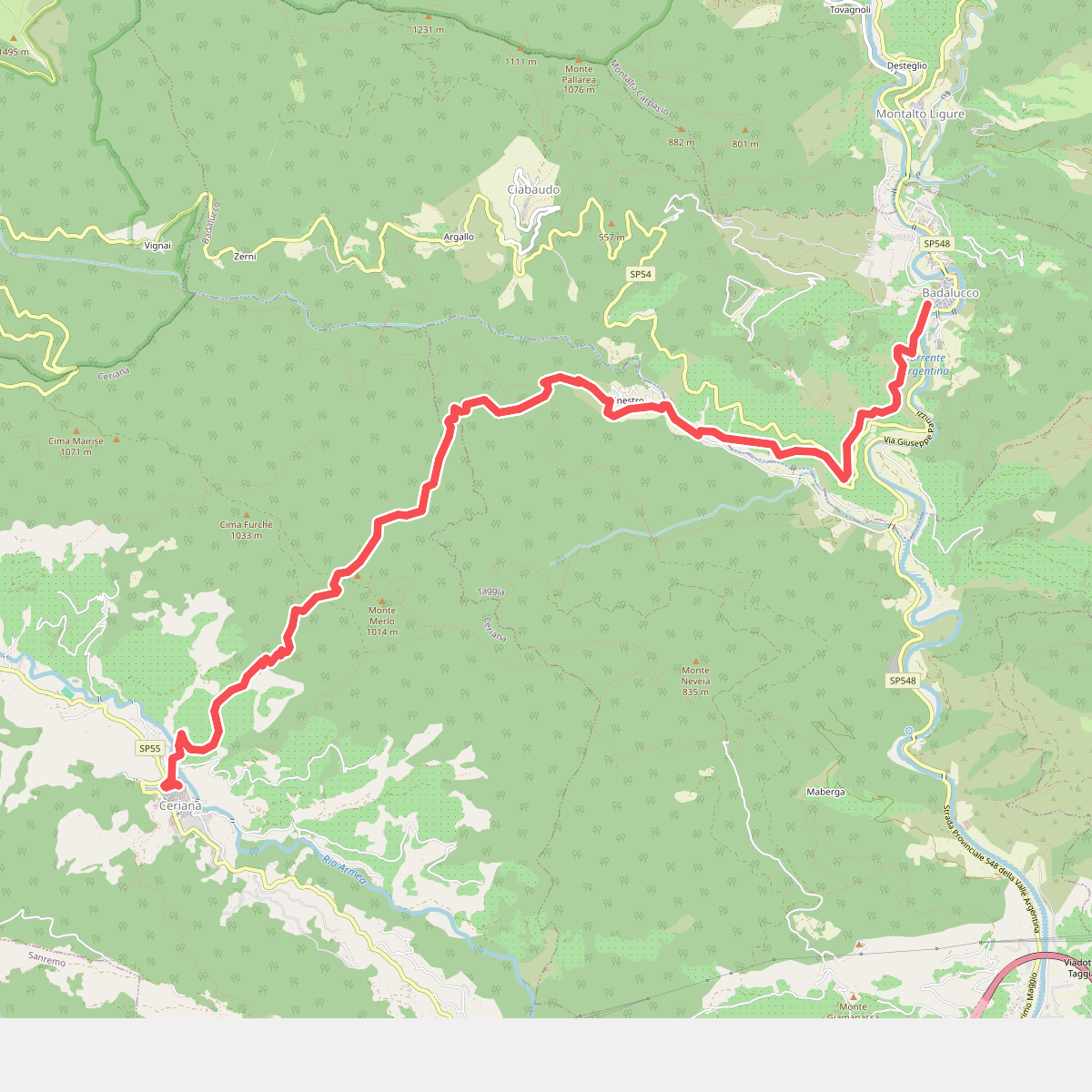
#1. Sentiero Balcone Mediterraneo T4
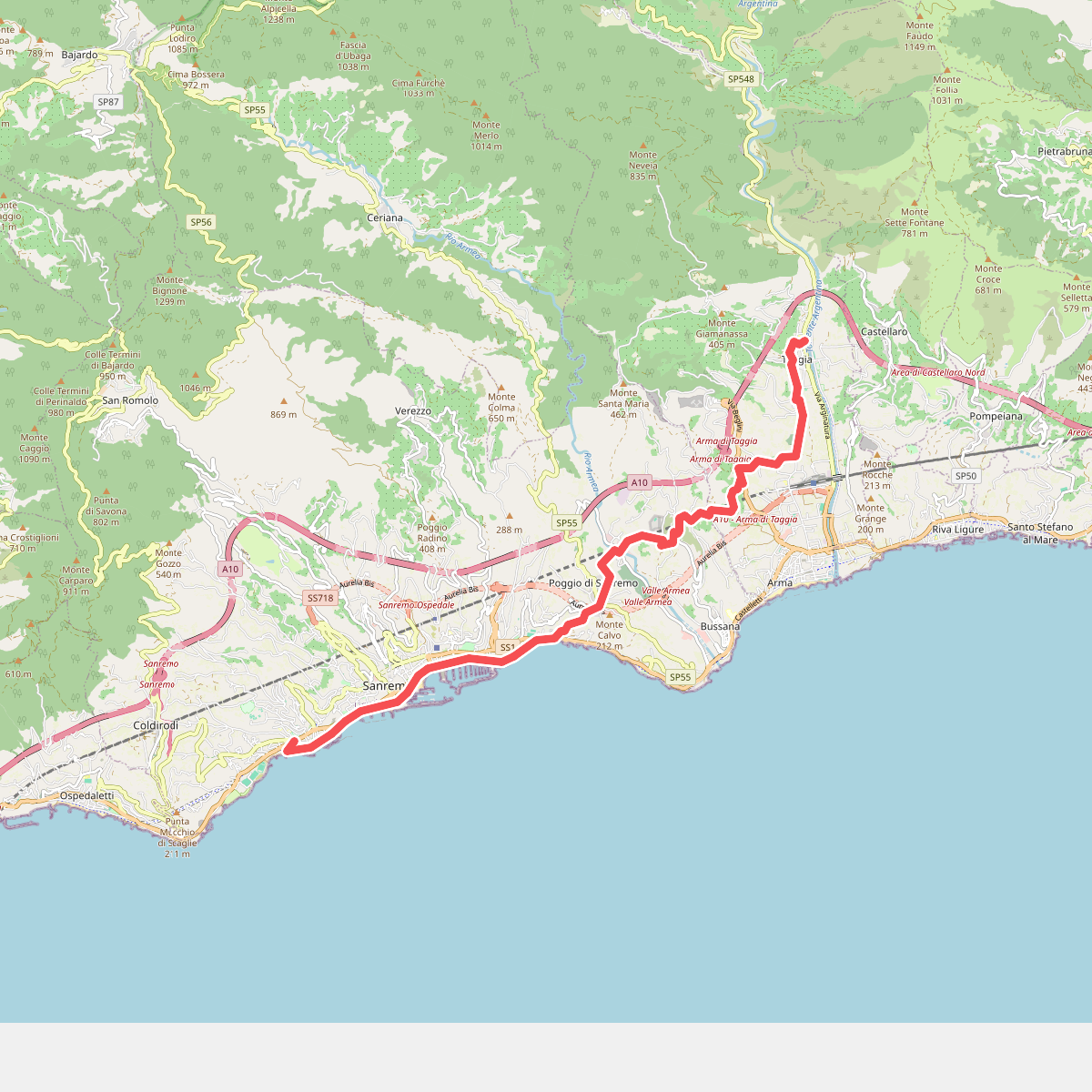
#2. Sentiero Liguria - Tappa 27
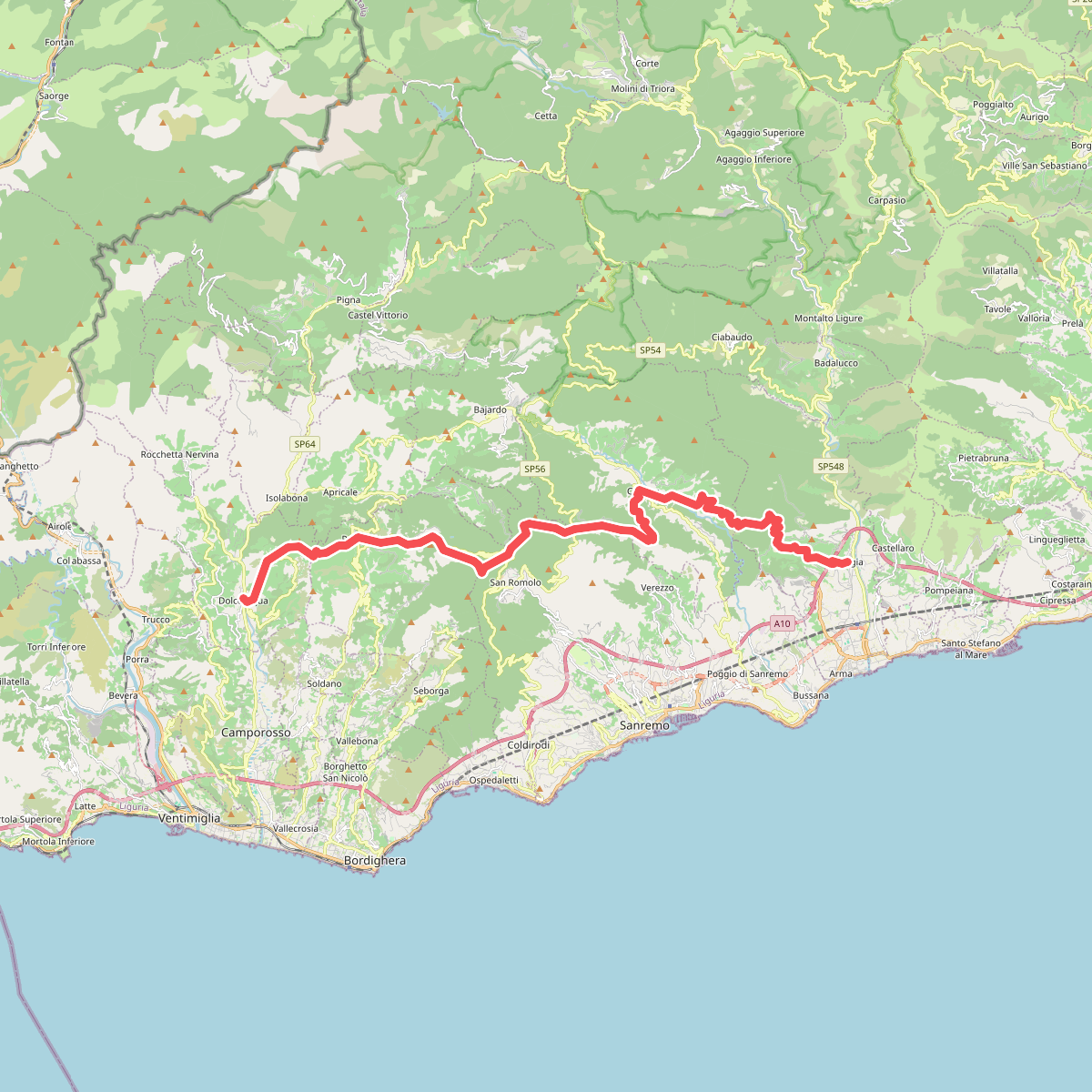
#3. Sentiero Liguria - Tappa 27 - variante 1
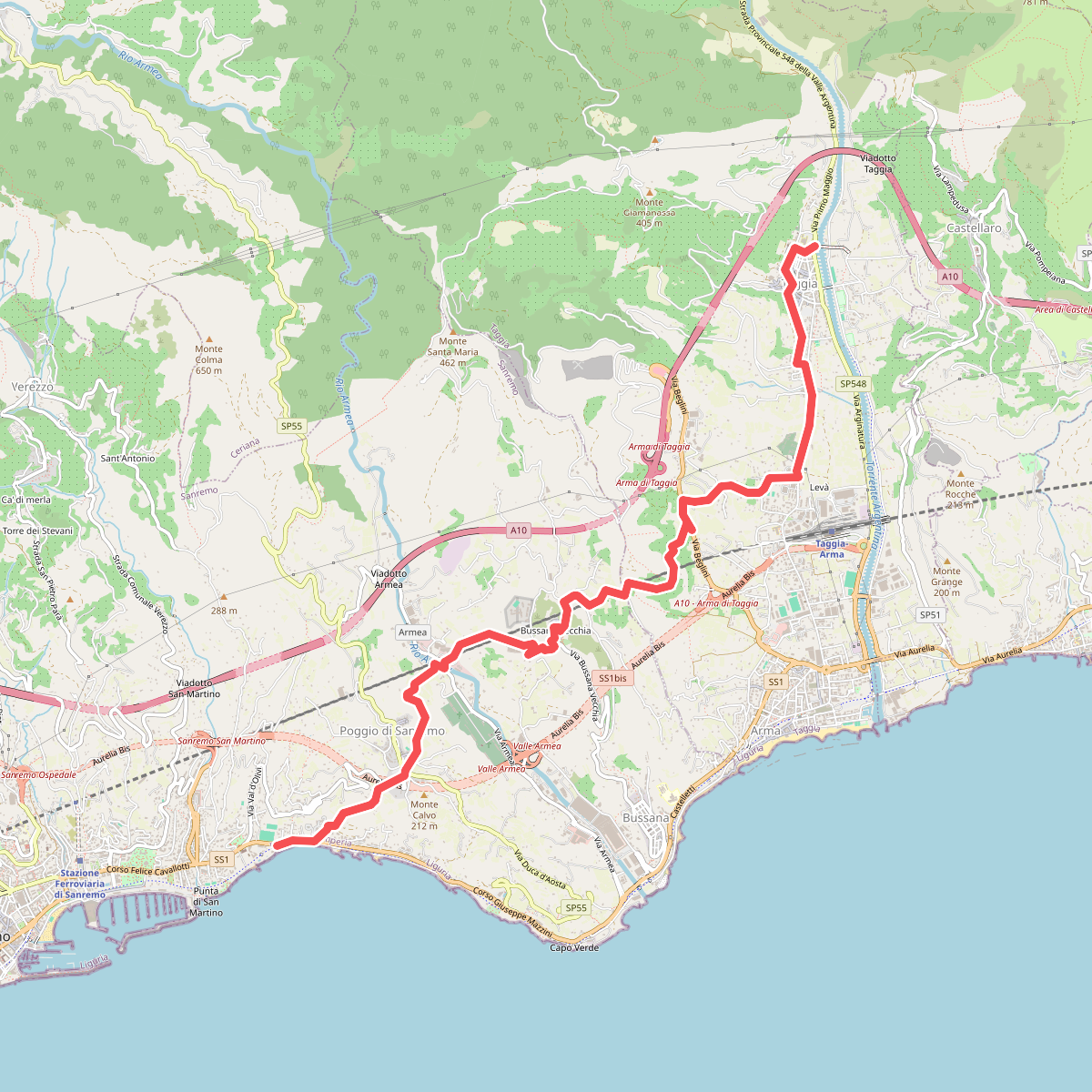
#4. Via della Costa
Sanremo