
The best hiking routes in Area naturale protetta di interesse locale Sasso di Castro Montebeni
Discover the best walks in Area naturale protetta di interesse locale Sasso di Castro Montebeni. 12 routes on the map, with descriptions, photos and GPX.
About Area naturale protetta di interesse locale Sasso di Castro Montebeni
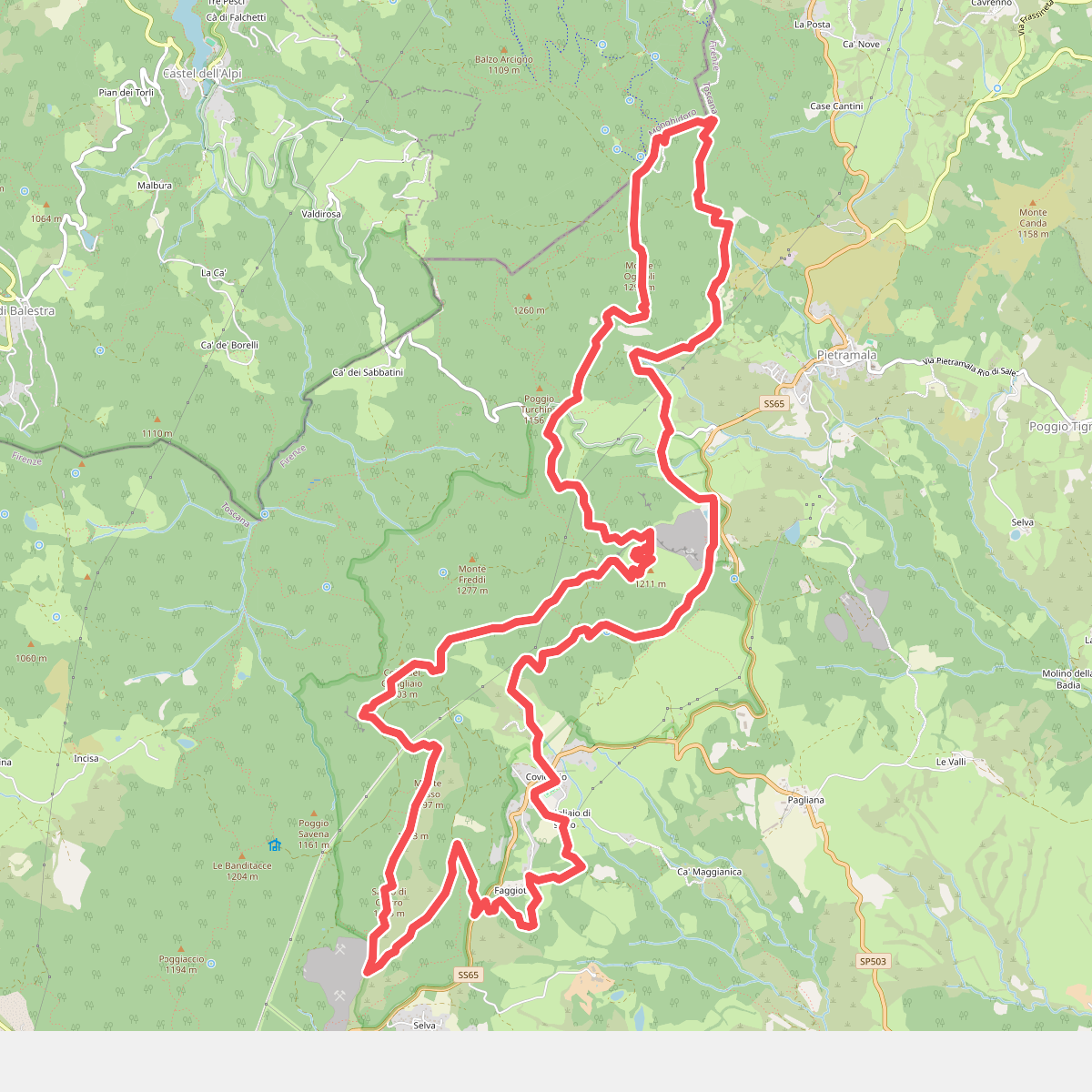
The Area naturale protetta di interesse locale Sasso di Castro Montebeni offers a distinct landscape shaped by its dark, volcanic ophiolite rock formations, which rise sharply out of the surrounding clay and limestone hills of the Tuscan-Emilian Apennines. Walkers will immediately notice the contrast between the dense, shaded beech and oak woodlands and the barren, jagged outcrops of Sasso di Castro and Montebeni. The soil here changes rapidly from soft leaf litter under the tree canopy to hard, stony ground on the exposed ridges.
Read more
About Area naturale protetta di interesse locale Sasso di Castro Montebeni
The Area naturale protetta di interesse locale Sasso di Castro Montebeni offers a distinct landscape shaped by its dark, volcanic ophiolite rock formations, which rise sharply out of the surrounding clay and limestone hills of the Tuscan-Emilian Apennines. Walkers will immediately notice the contrast between the dense, shaded beech and oak woodlands and the barren, jagged outcrops of Sasso di Castro and Montebeni. The soil here changes rapidly from soft leaf litter under the tree canopy to hard, stony ground on the exposed ridges.
Read moreThe Area naturale protetta di interesse locale Sasso di Castro Montebeni offers a distinct landscape shaped by its dark, volcanic ophiolite rock formations, which rise sharply out of the surrounding clay and limestone hills of the Tuscan-Emilian Apennines. Walkers will immediately notice the contrast between the dense, shaded beech and oak woodlands and the barren, jagged outcrops of Sasso di Castro and Montebeni. The soil here changes rapidly from soft leaf litter under the tree canopy to hard, stony ground on the exposed ridges.
Underfoot, the paths are predominantly rocky, with loose stones and steep, uneven steps where the trail climbs toward the summits. The vegetation on these dark rocks is sparse, consisting of specialized, hardy plants that can survive on the mineral-rich, dry stone, while the lower slopes are covered in thick ferns and woodland undergrowth. This is not a place of gentle, rolling meadows; the terrain is rugged, steep in sections, and requires careful footing.
In late spring, particularly around May, the contrast is most visible as wild orchids and rare flowers bloom in the rocky crevices while the beech trees below reach full leaf. The area is generally quieter than the high peaks of the main Apennine ridge nearby, making it a practical choice for those who prefer a shorter, more concentrated hill walk focused on geological features rather than long, open ridge traverses.
Hiking routes in Area naturale protetta di interesse locale Sasso di Castro Montebeni (12)
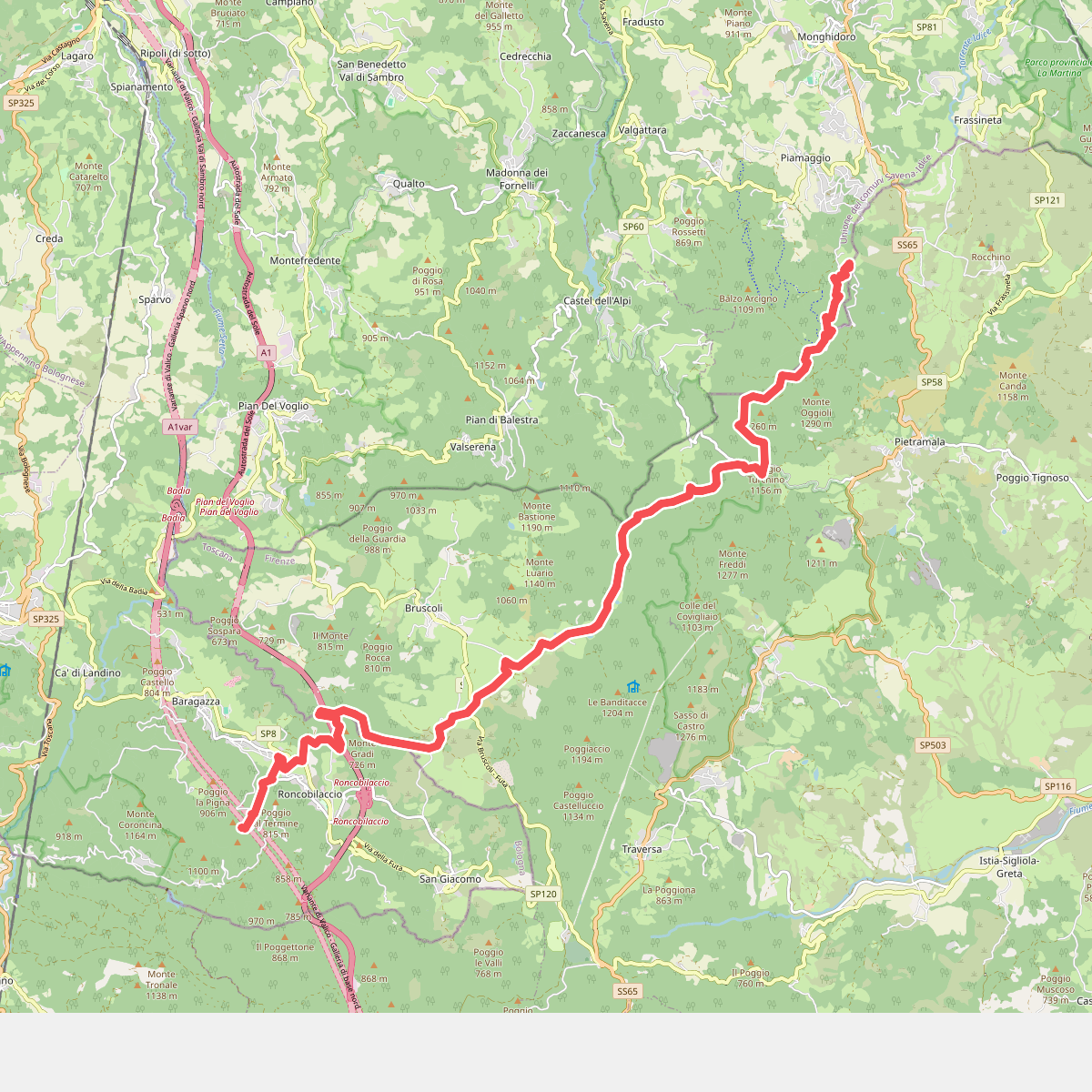
#1. Alta Via dei Parchi: Tappa 13
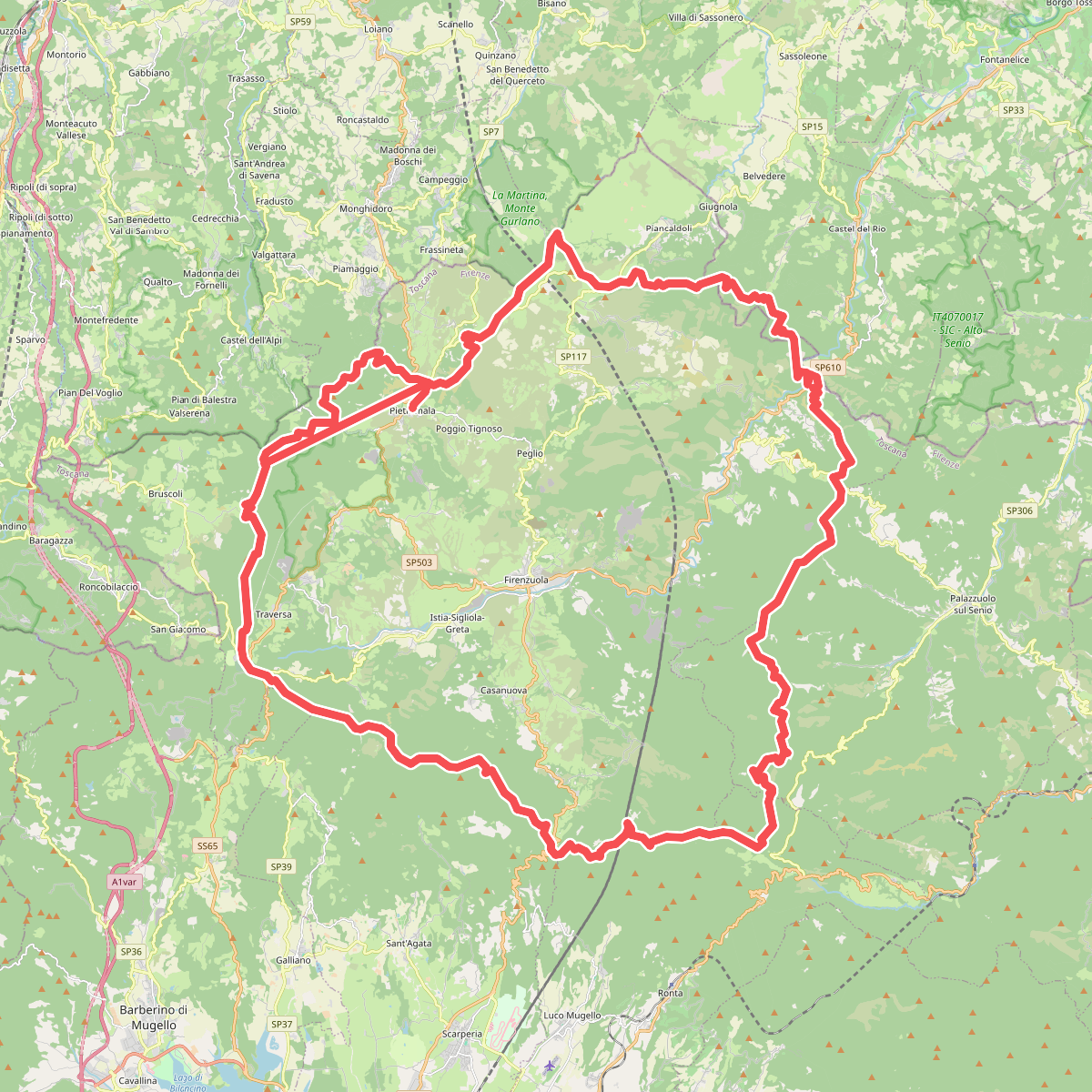
#2. Alte Vie di Firenzuola
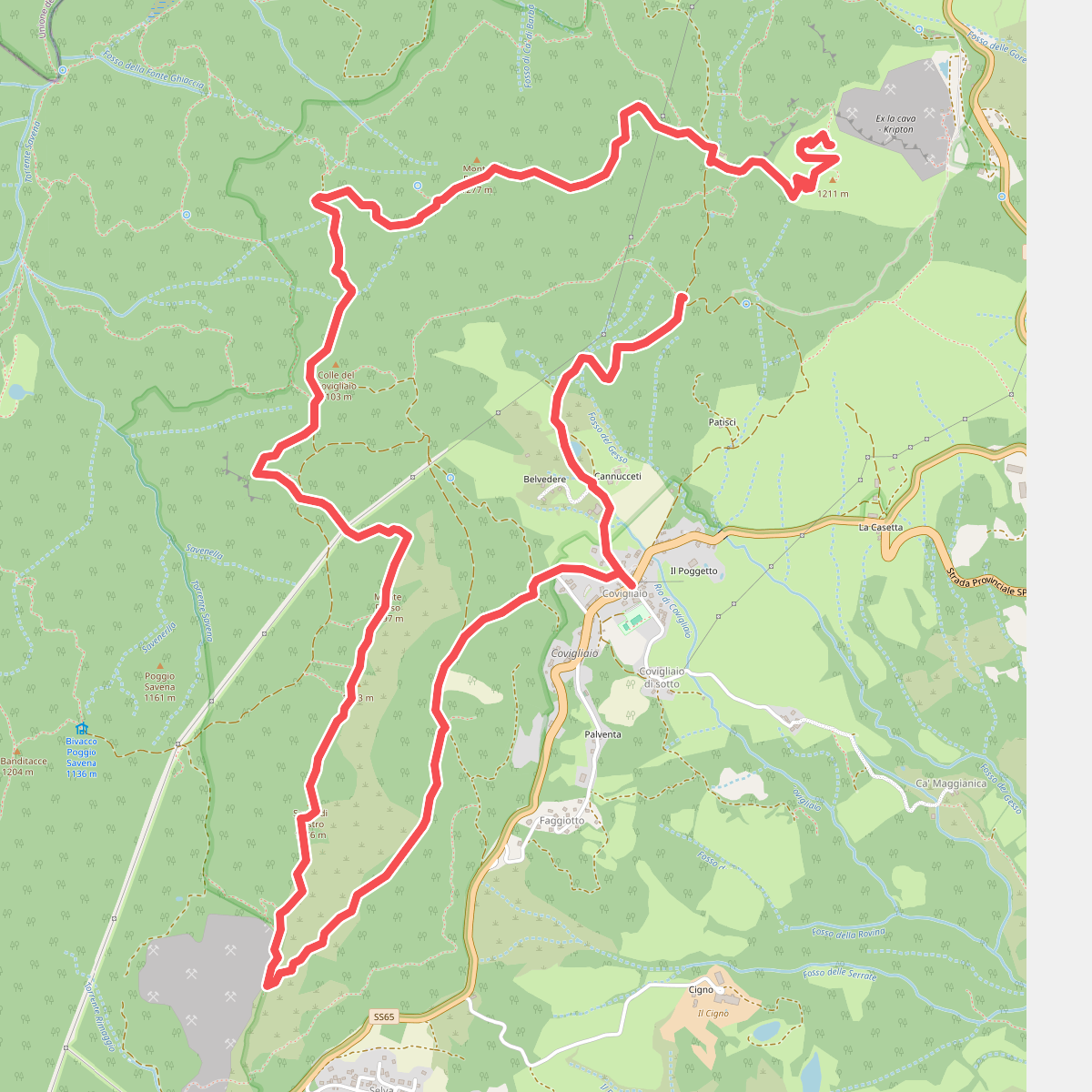
#3. Percorso 00
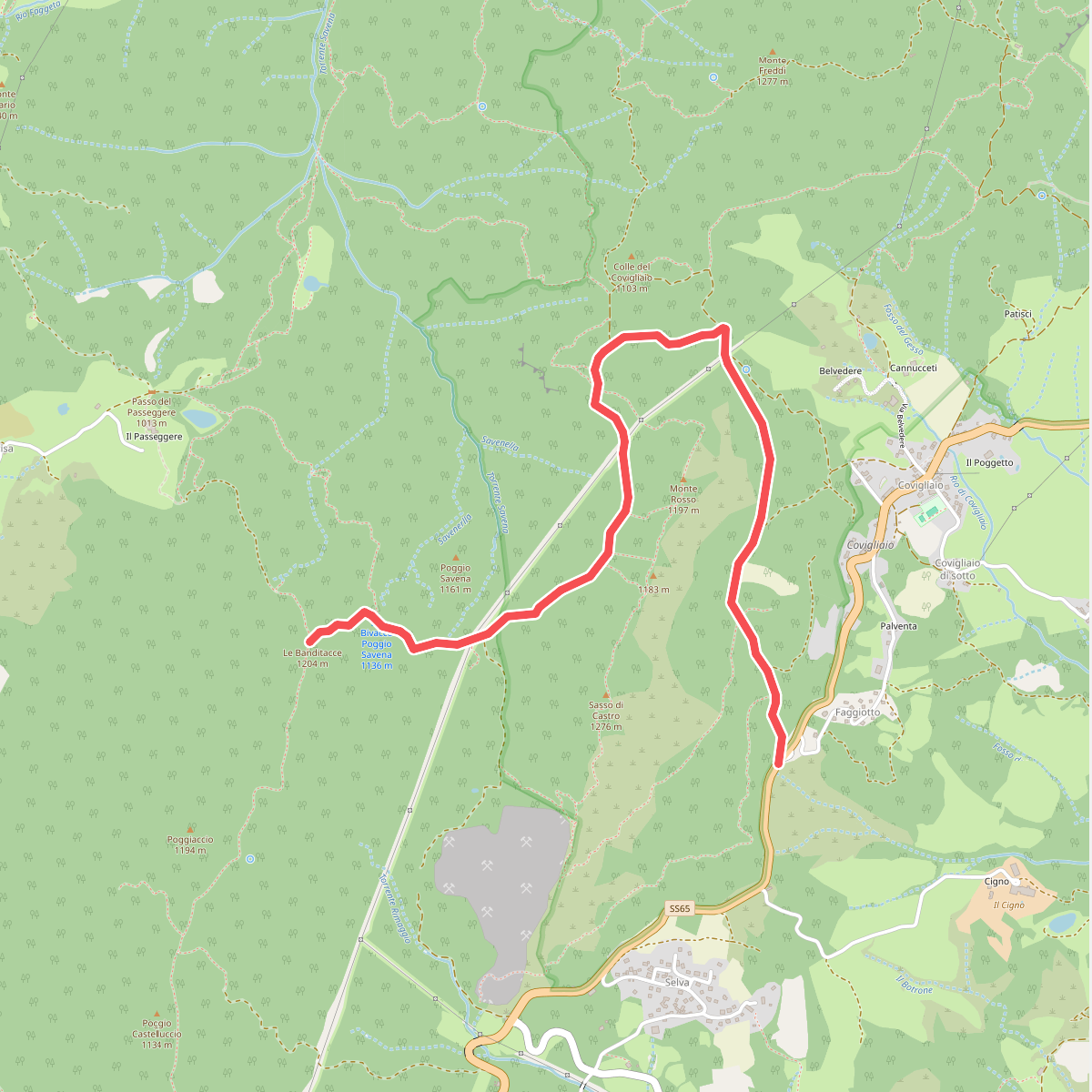
#4. Percorso 01
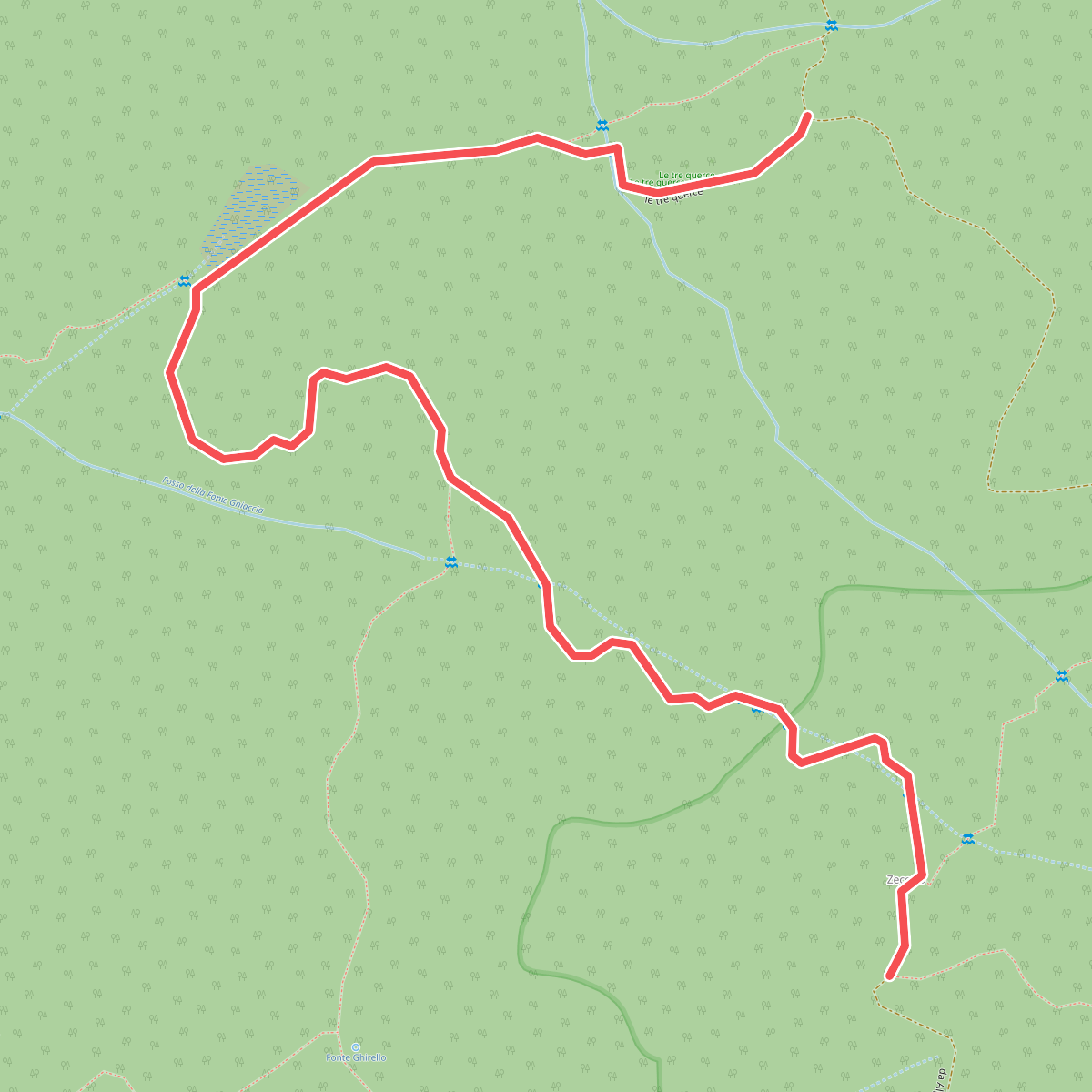
#5. Percorso 09
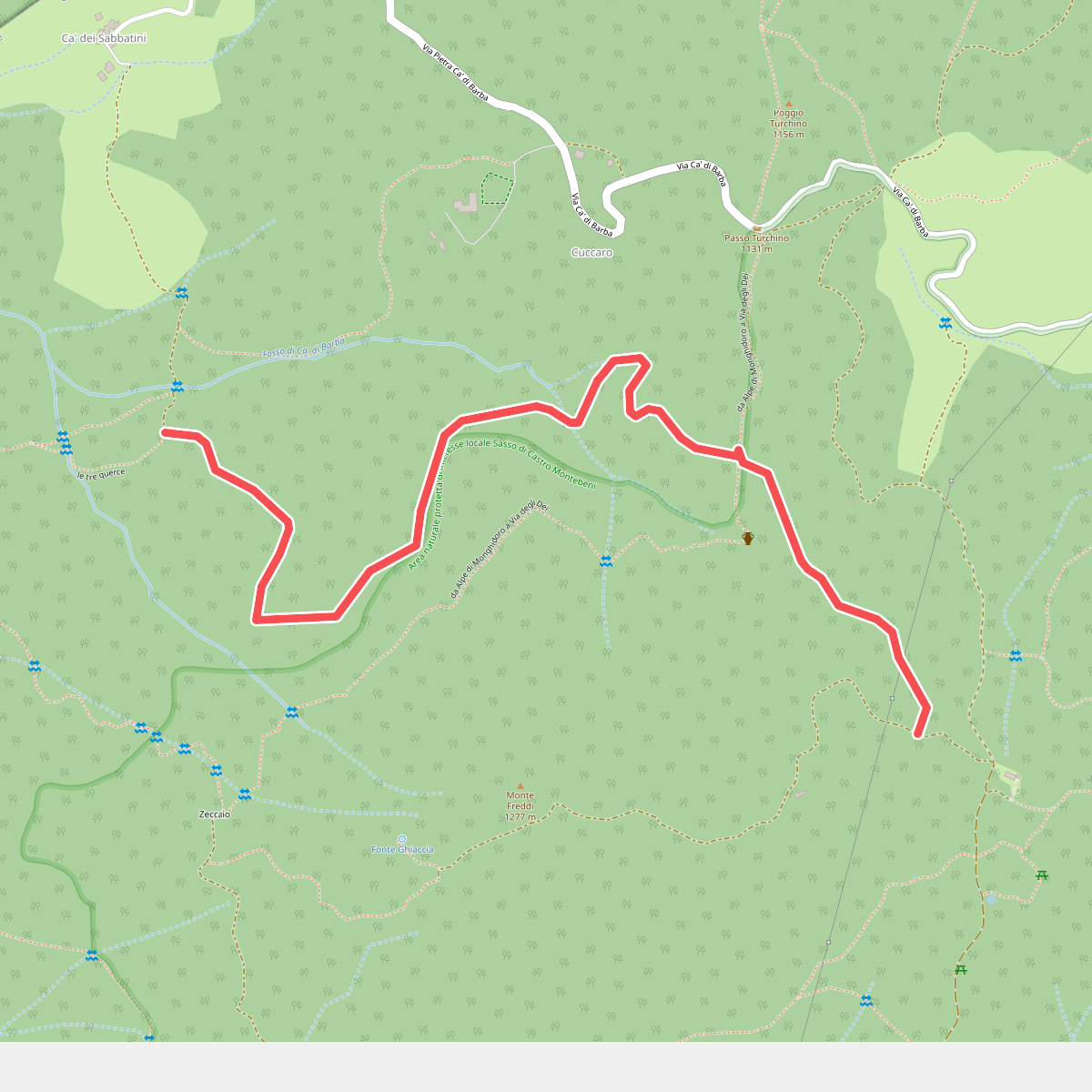
#6. Percorso 10
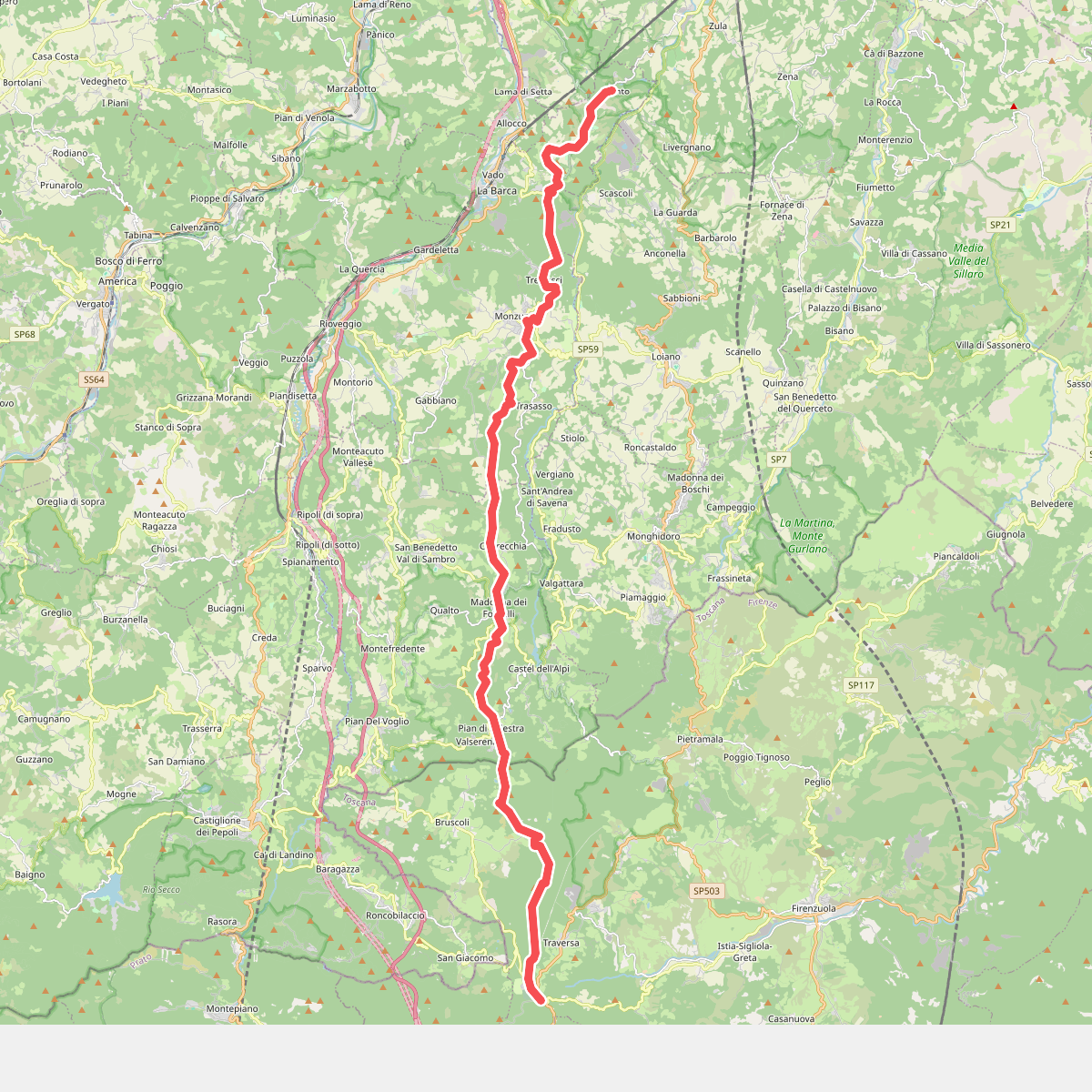
#7. Percorso CAI 019
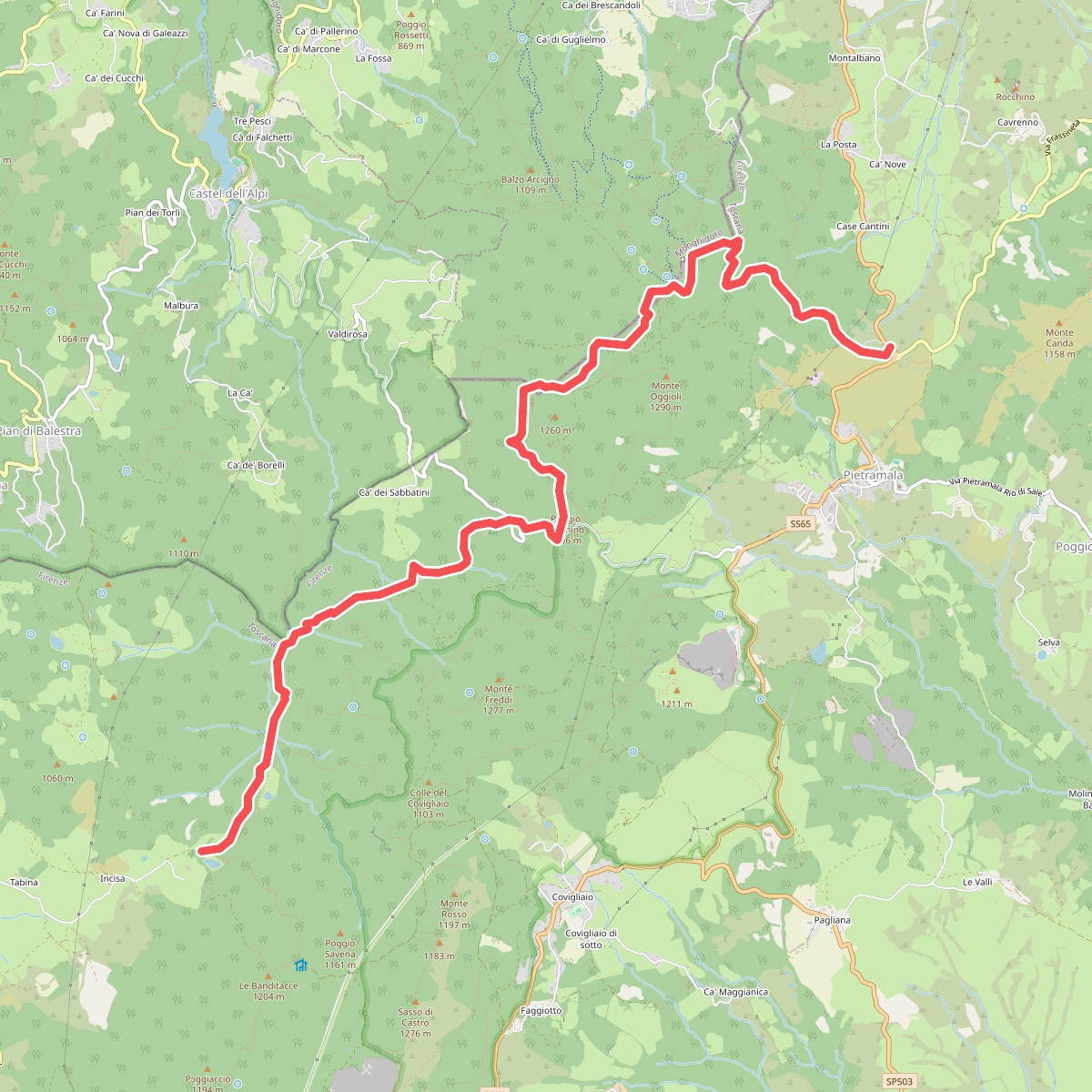
#8. Percorso CAI 917
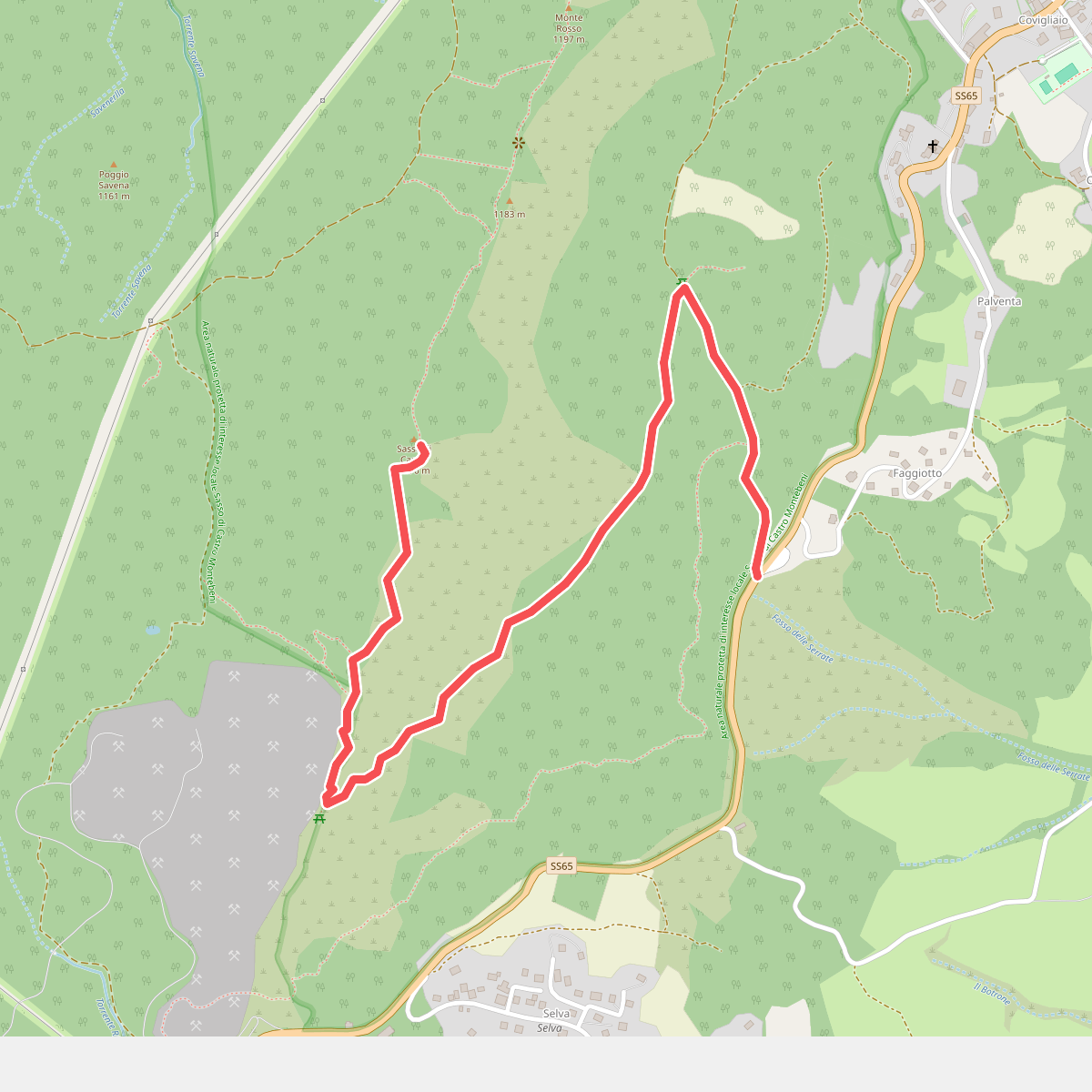
#9. Salita al Sasso di Castro
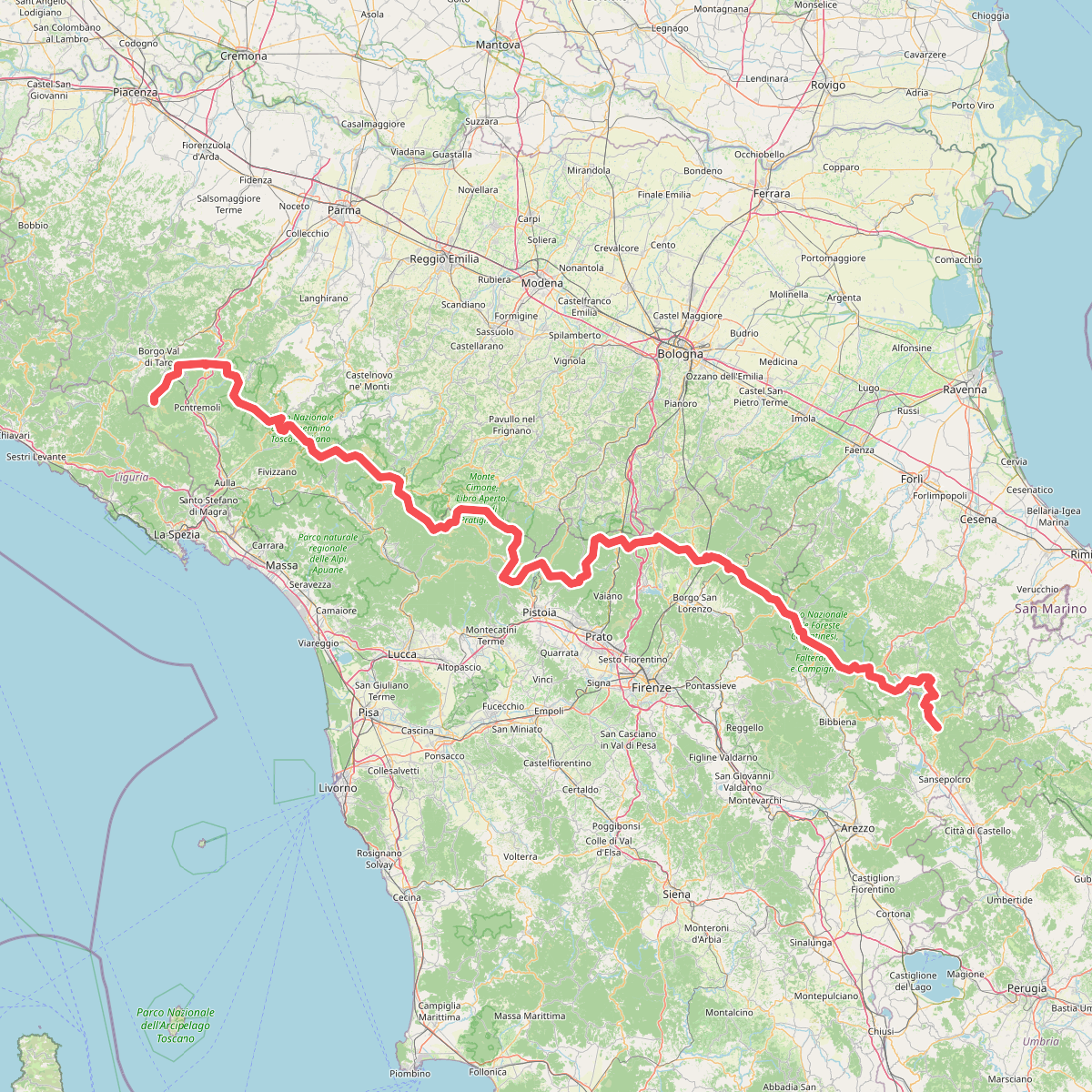
#10. Sentiero di spartiacque appenninico
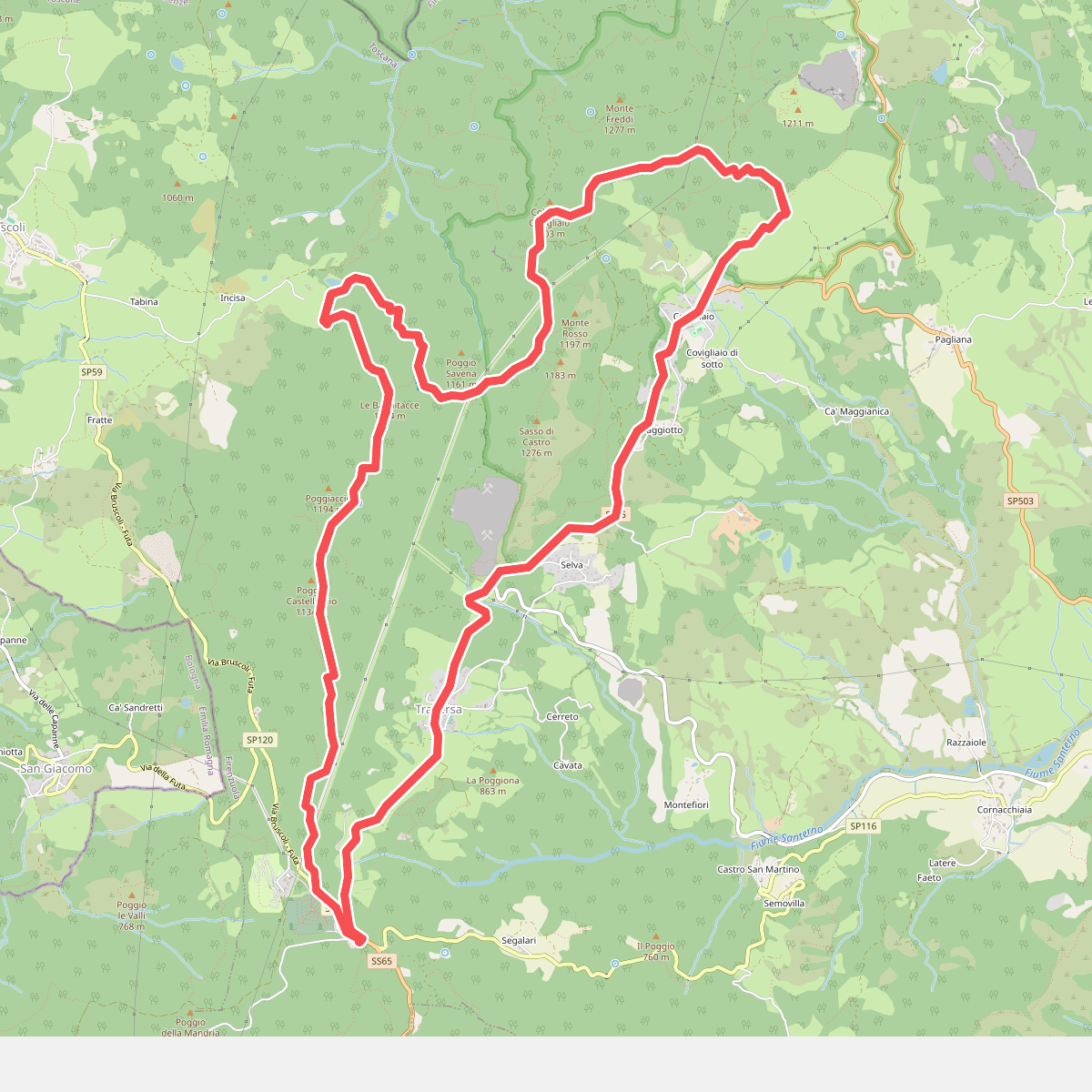
#11. Sorgenti di Firenze Trekking – Anello 11: Sul tracciato romano della Flaminia militare