
The best hiking routes in Area naturale protetta di interesse locale Monteferrato
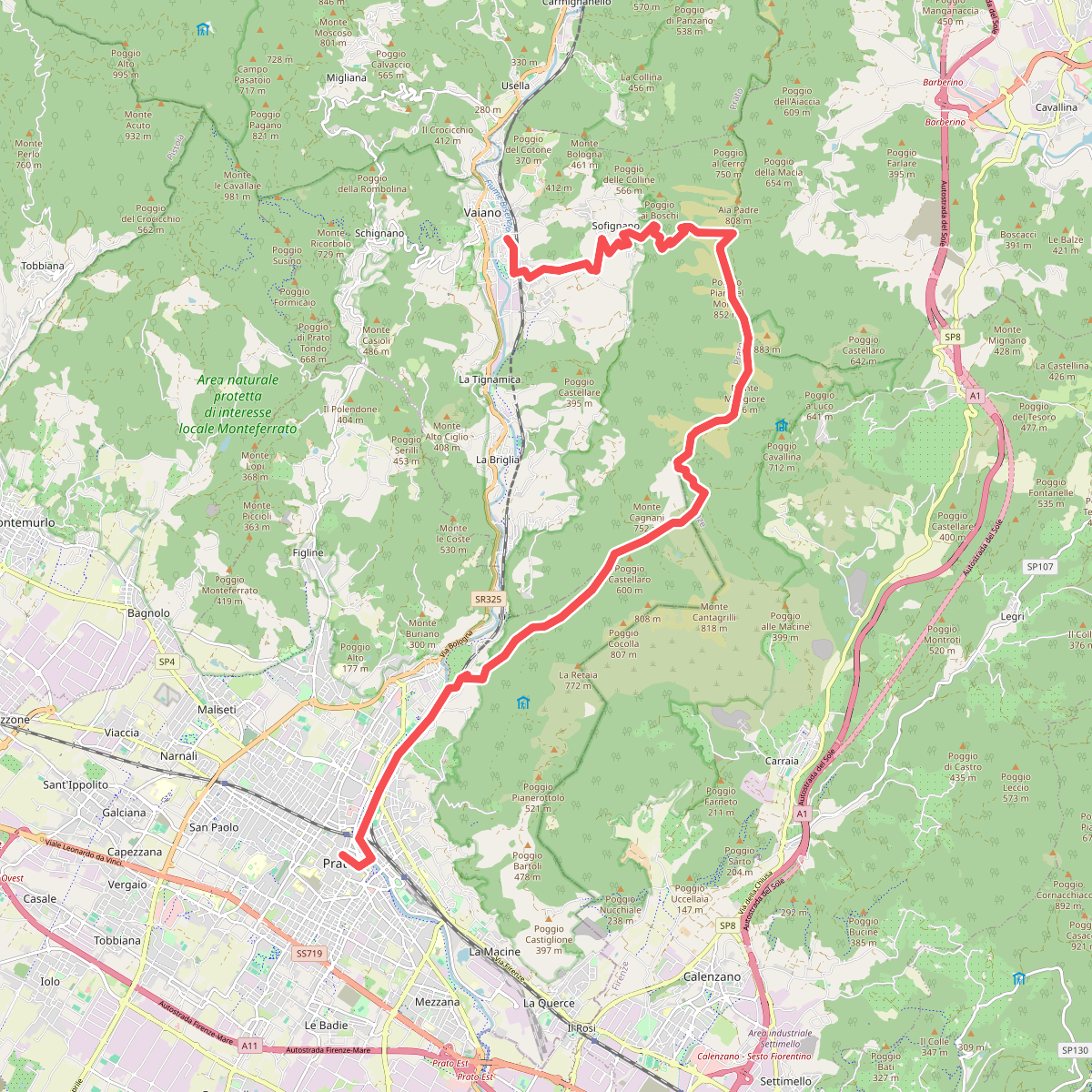
Discover the best walks in Area naturale protetta di interesse locale Monteferrato. 5 routes on the map, with descriptions, photos and GPX.
About Area naturale protetta di interesse locale Monteferrato
Area naturale protetta di interesse locale Monteferrato offers a distinct walking experience shaped by its unusual geology. Unlike the typical clay and limestone hills of Tuscany, this small ridge is defined by ophiolite, a dark green serpentine rock. Underfoot, the paths are often stony and rough, littered with green-black gravelly fragments that crumble easily. This specific rock type creates a harsh, basic soil that limits plant growth, resulting in a stark contrast between the bare, rocky upper slopes of Monteferrato and the denser pine and oak woods that cover the lower flanks.
Read more
About Area naturale protetta di interesse locale Monteferrato
Area naturale protetta di interesse locale Monteferrato offers a distinct walking experience shaped by its unusual geology. Unlike the typical clay and limestone hills of Tuscany, this small ridge is defined by ophiolite, a dark green serpentine rock. Underfoot, the paths are often stony and rough, littered with green-black gravelly fragments that crumble easily. This specific rock type creates a harsh, basic soil that limits plant growth, resulting in a stark contrast between the bare, rocky upper slopes of Monteferrato and the denser pine and oak woods that cover the lower flanks.
Read moreArea naturale protetta di interesse locale Monteferrato offers a distinct walking experience shaped by its unusual geology. Unlike the typical clay and limestone hills of Tuscany, this small ridge is defined by ophiolite, a dark green serpentine rock. Underfoot, the paths are often stony and rough, littered with green-black gravelly fragments that crumble easily. This specific rock type creates a harsh, basic soil that limits plant growth, resulting in a stark contrast between the bare, rocky upper slopes of Monteferrato and the denser pine and oak woods that cover the lower flanks.
Walkers can choose between two main environments. The lower paths wind through planted maritime pines and native oaks, where the ground is softer with leaf litter and needles. As you climb higher toward the peaks of Monte San Baronto or Monteferrato itself, the trees thin out dramatically, replaced by a sparse, shrubby heathland of gorse and specialized grasses that can tolerate the high metal content of the serpentine soil. The ridge paths are exposed and rocky, requiring careful stepping over uneven stone.
This is not a high-alpine environment with dramatic cliffs or deep gorges, but rather a modest, rugged ridge rising above the Prato plain. The area is well-suited for those who prefer rough, dry tracks and unusual botanical sights over manicured park paths. While the lower woodland trails are popular with local walkers, the higher, stony ridges are often quieter, offering a more barren and open landscape to explore.