The best hiking routes in County Cork
Discover the best walks in County Cork. 59 routes on the map, with descriptions, photos and GPX.
About County Cork
County Cork presents a landscape of contrasts, shifting from the deeply indented, rocky peninsulas of the far west to the gentler, agricultural river valleys of the east. Walkers will find that the county does not offer high, jagged alpine peaks, but rather a series of sandstone ridges and coastal paths. The western peninsulas, such as Sheep's Head and Beara, are defined by exposed, heather-clad rock and rough sheep pastures, where the Atlantic has carved out long, narrow inlets. In contrast, the eastern and northern sections of the county feature rolling farmland, quiet woodland tracks, and tidal estuaries.
Read more
About County Cork
County Cork presents a landscape of contrasts, shifting from the deeply indented, rocky peninsulas of the far west to the gentler, agricultural river valleys of the east. Walkers will find that the county does not offer high, jagged alpine peaks, but rather a series of sandstone ridges and coastal paths. The western peninsulas, such as Sheep's Head and Beara, are defined by exposed, heather-clad rock and rough sheep pastures, where the Atlantic has carved out long, narrow inlets. In contrast, the eastern and northern sections of the county feature rolling farmland, quiet woodland tracks, and tidal estuaries.
Read moreCounty Cork presents a landscape of contrasts, shifting from the deeply indented, rocky peninsulas of the far west to the gentler, agricultural river valleys of the east. Walkers will find that the county does not offer high, jagged alpine peaks, but rather a series of sandstone ridges and coastal paths. The western peninsulas, such as Sheep's Head and Beara, are defined by exposed, heather-clad rock and rough sheep pastures, where the Atlantic has carved out long, narrow inlets. In contrast, the eastern and northern sections of the county feature rolling farmland, quiet woodland tracks, and tidal estuaries.
Underfoot, the terrain varies significantly depending on your choice of route. Coastal trails often require navigating uneven sandstone slabs, muddy farm tracks, and steep, grassy cliffs where boots with good grip are essential. Inland, particularly along the Blackwater Valley, the paths transition to firmer forestry tracks, gravelled lanes, and quiet tarmac roads. The landscape you see today is heavily shaped by centuries of livestock farming and forestry, meaning you will frequently cross stiles, walk alongside active pastures, and pass through commercial pine plantations.
Seasonality changes the character of these walks. In May, the coastal heathlands of the Mizen Peninsula are bright with flowering gorse and sea pinks, while the inland beech woods near Dunmanway show their fresh spring leaves. The well-known coastal routes tend to attract more visitors during the summer months, whereas the inland river valleys remain quieter options. Walkers should expect stile crossings, occasional boggy patches on peat paths, and route markings that rely on the goodwill of local landowners.
Zoom or pan for more routes
Hiking routes in County Cork (59)
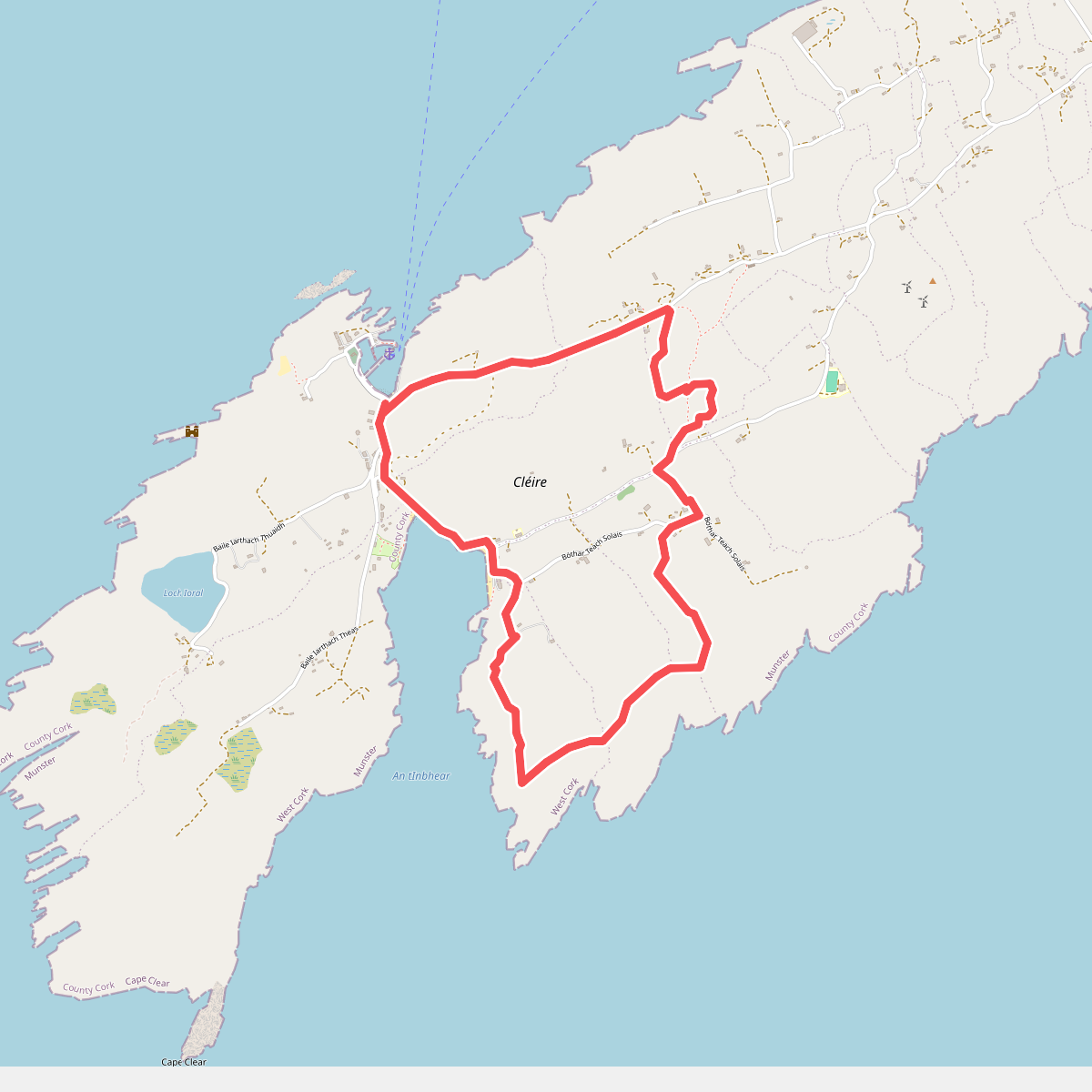
#1. An Gleann Loop
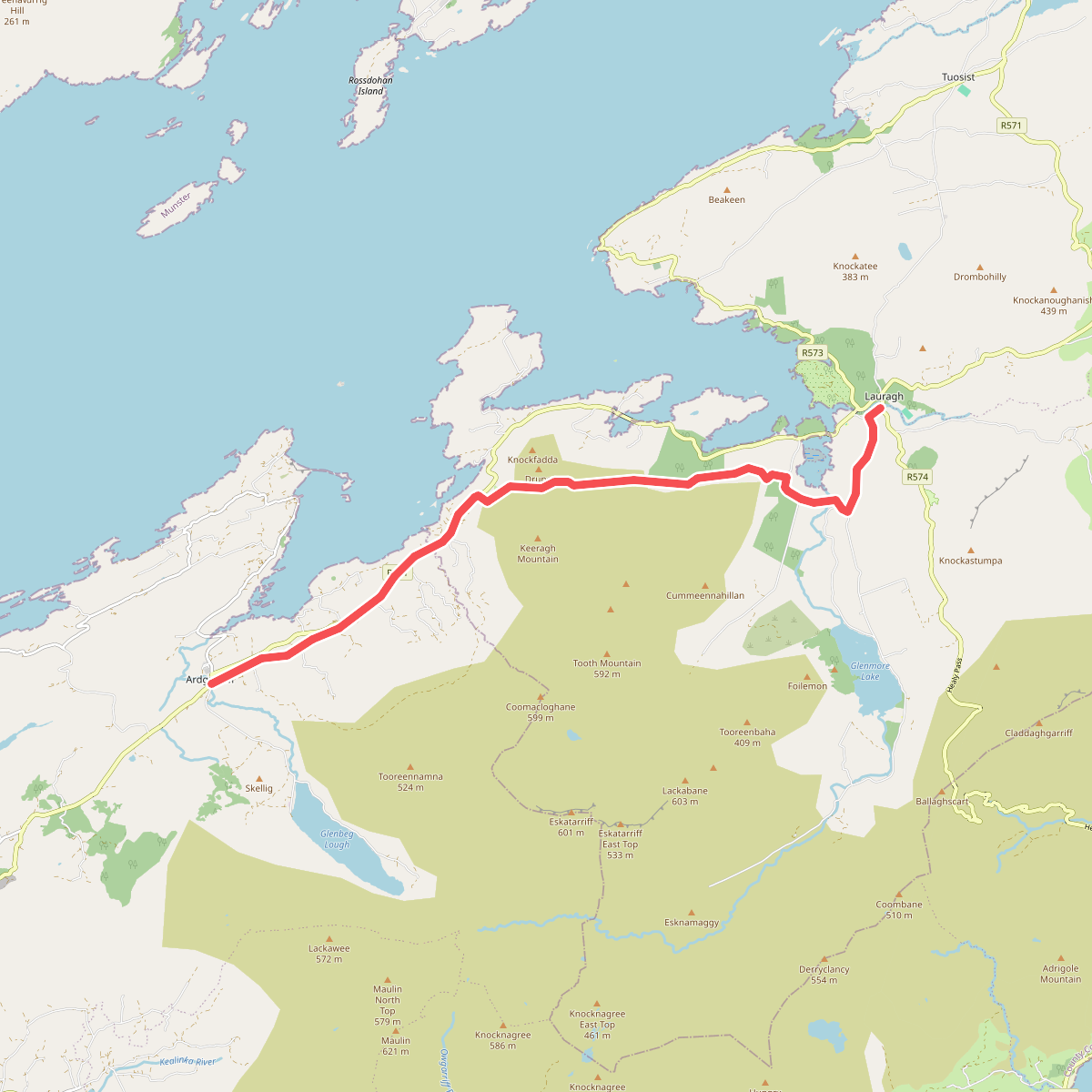
#2. Ardgroom - Lauragh
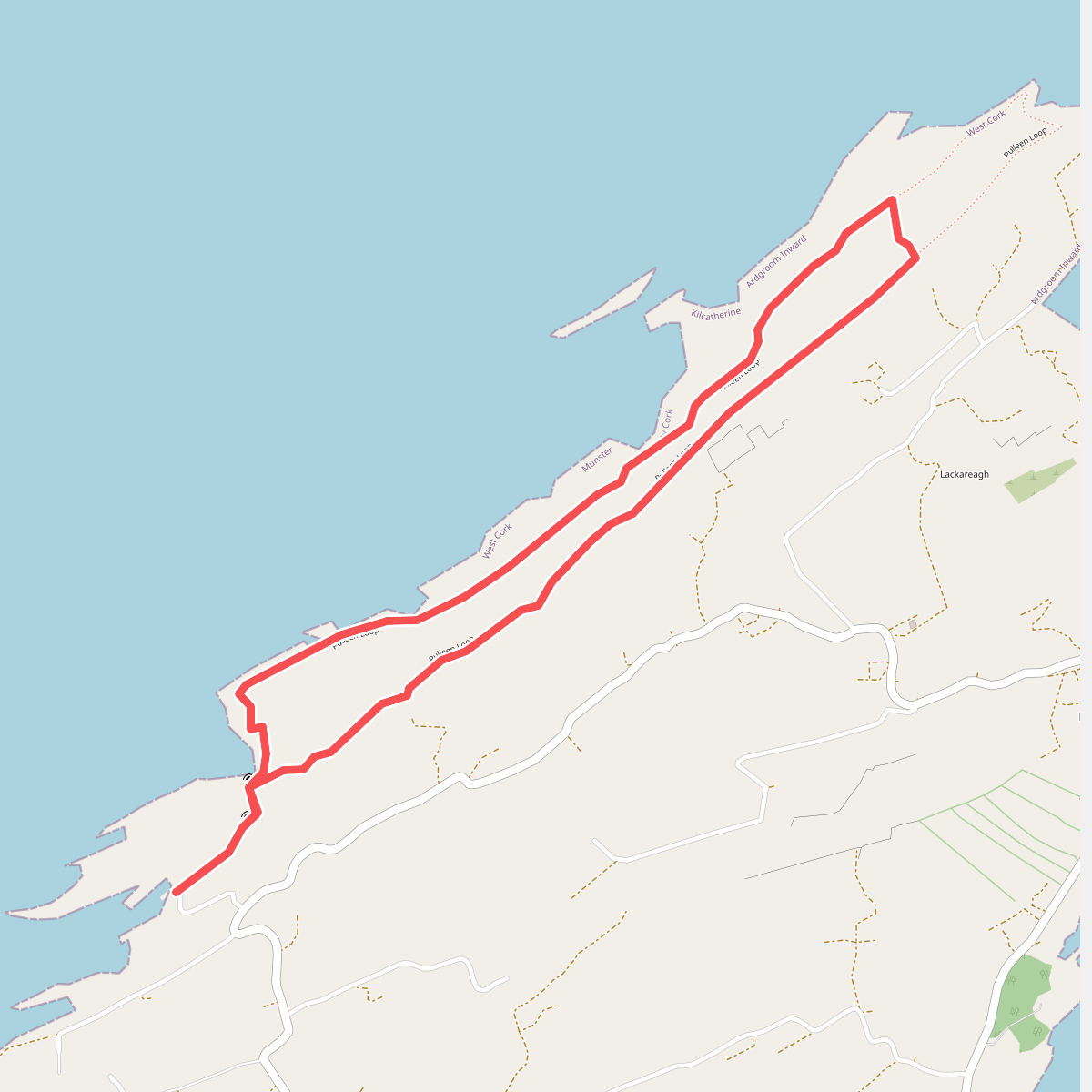
#3. Ardgroom Pulleen Loop
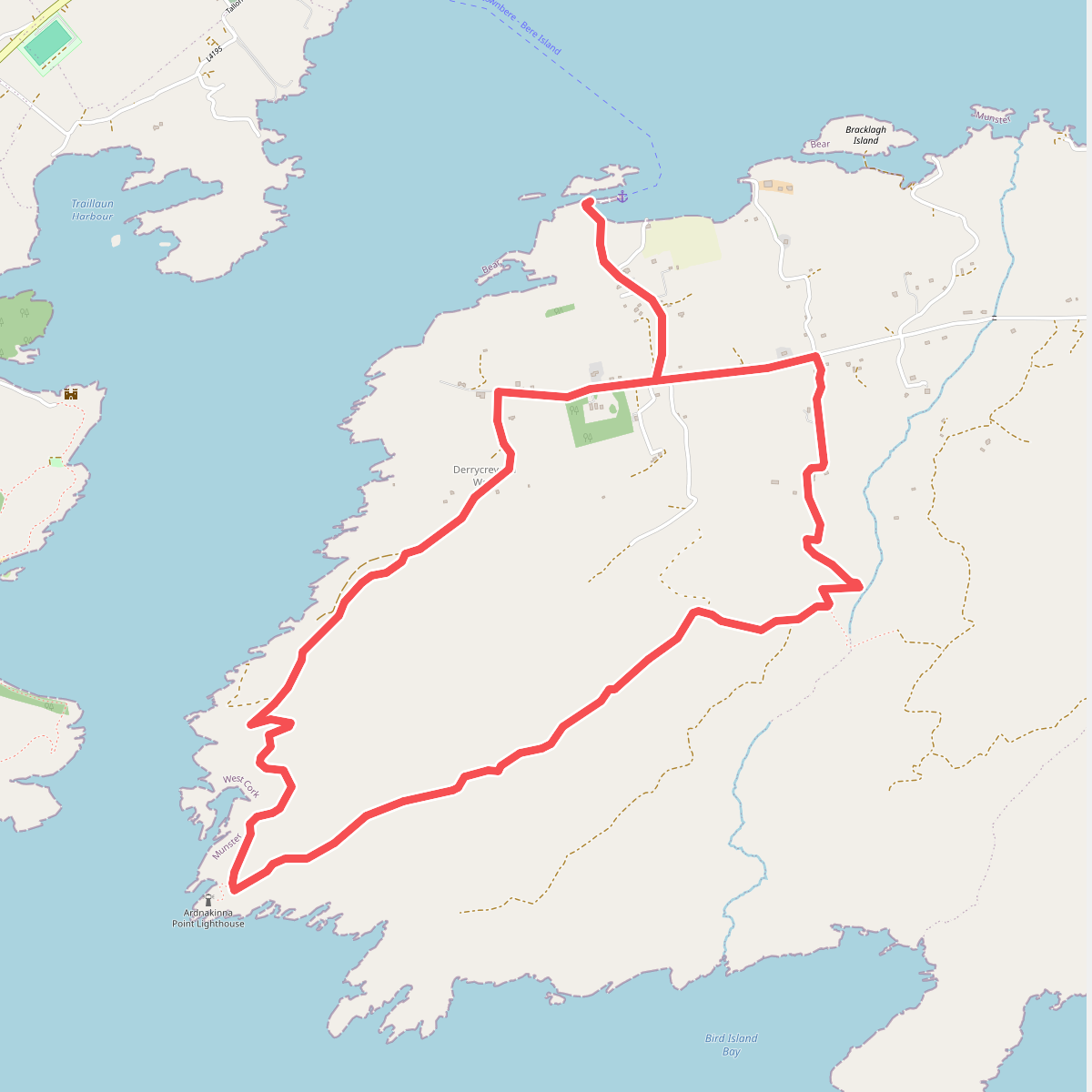
#4. Ardnakinna West Island Loop
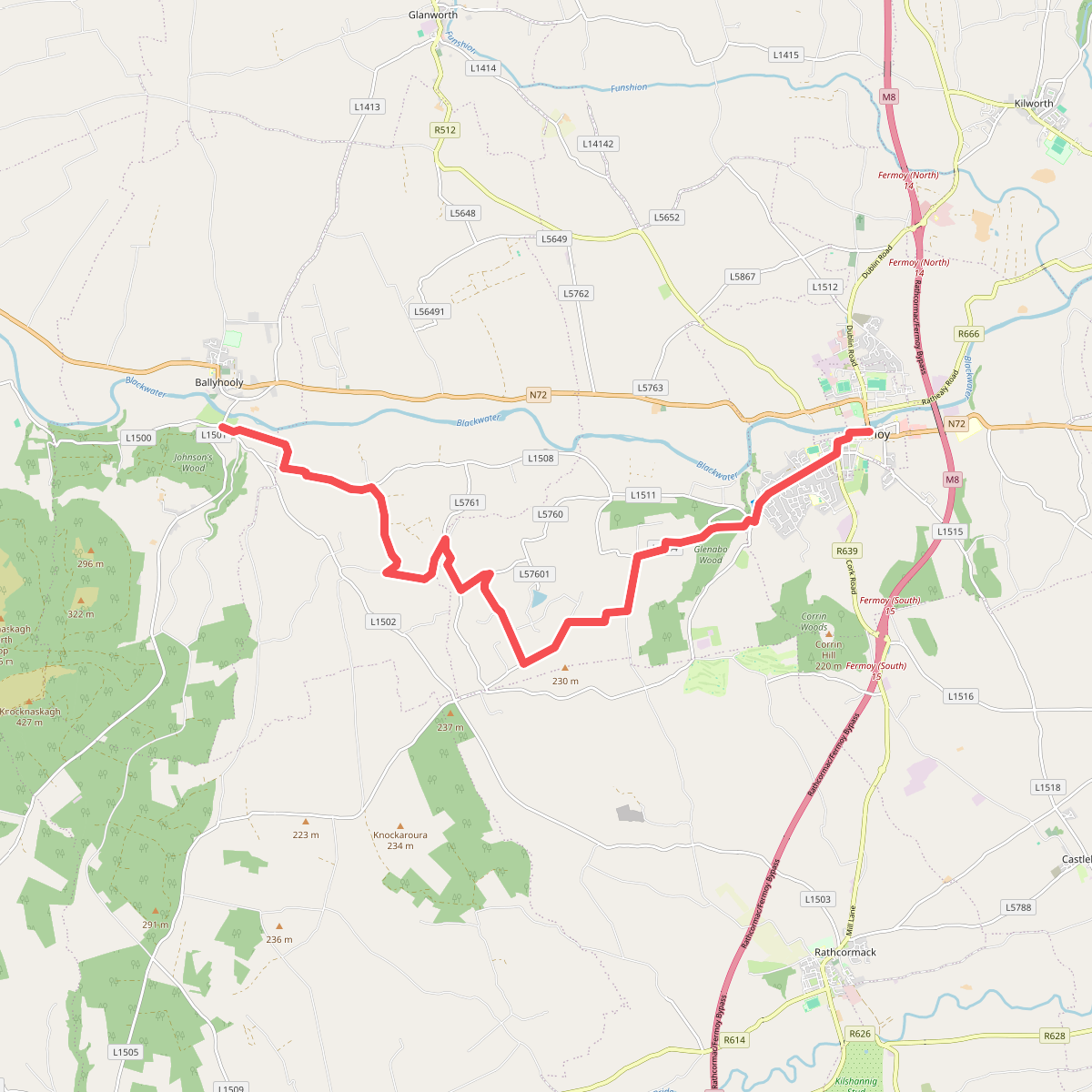
#5. Ballyhooly - Fermoy
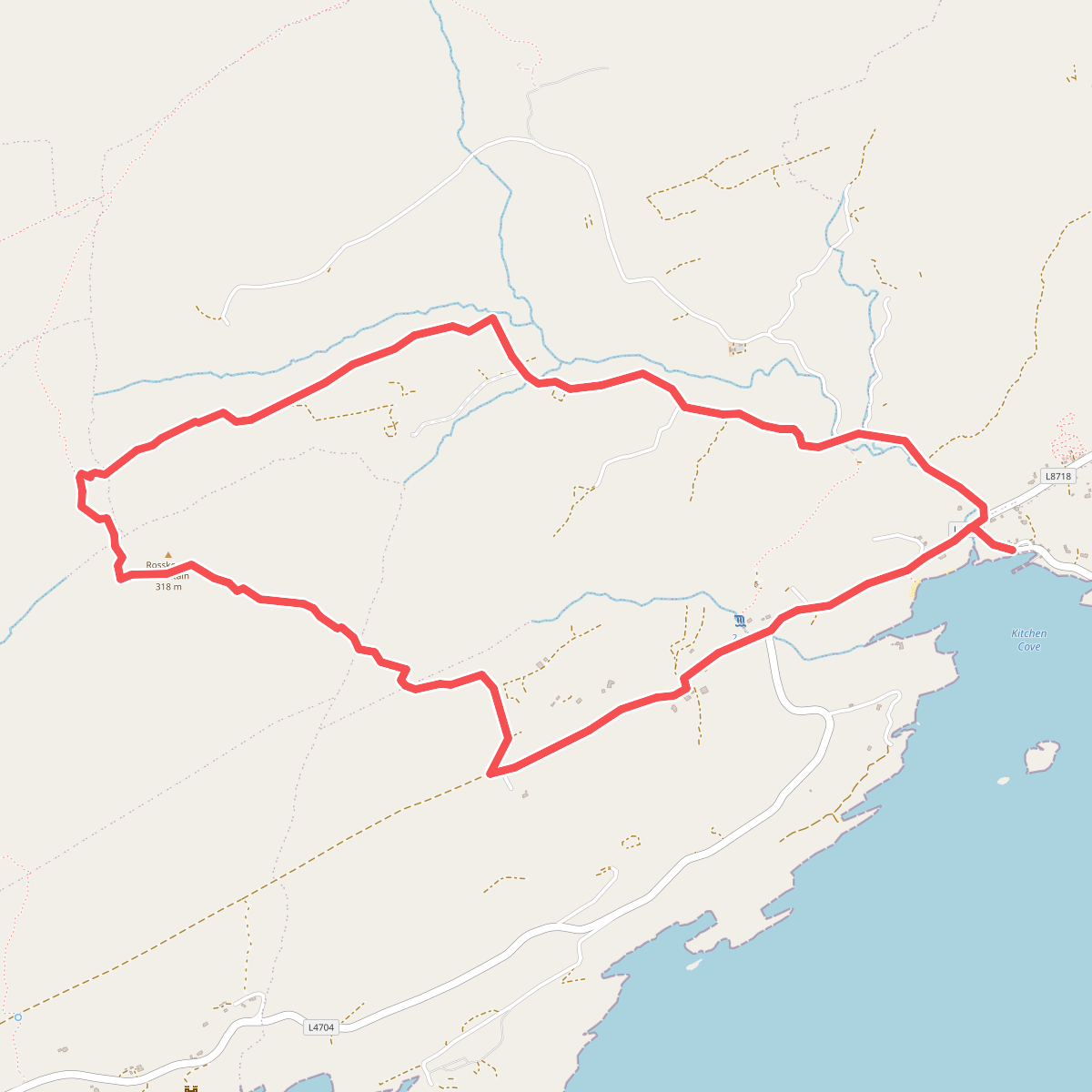
#6. Barán Loop
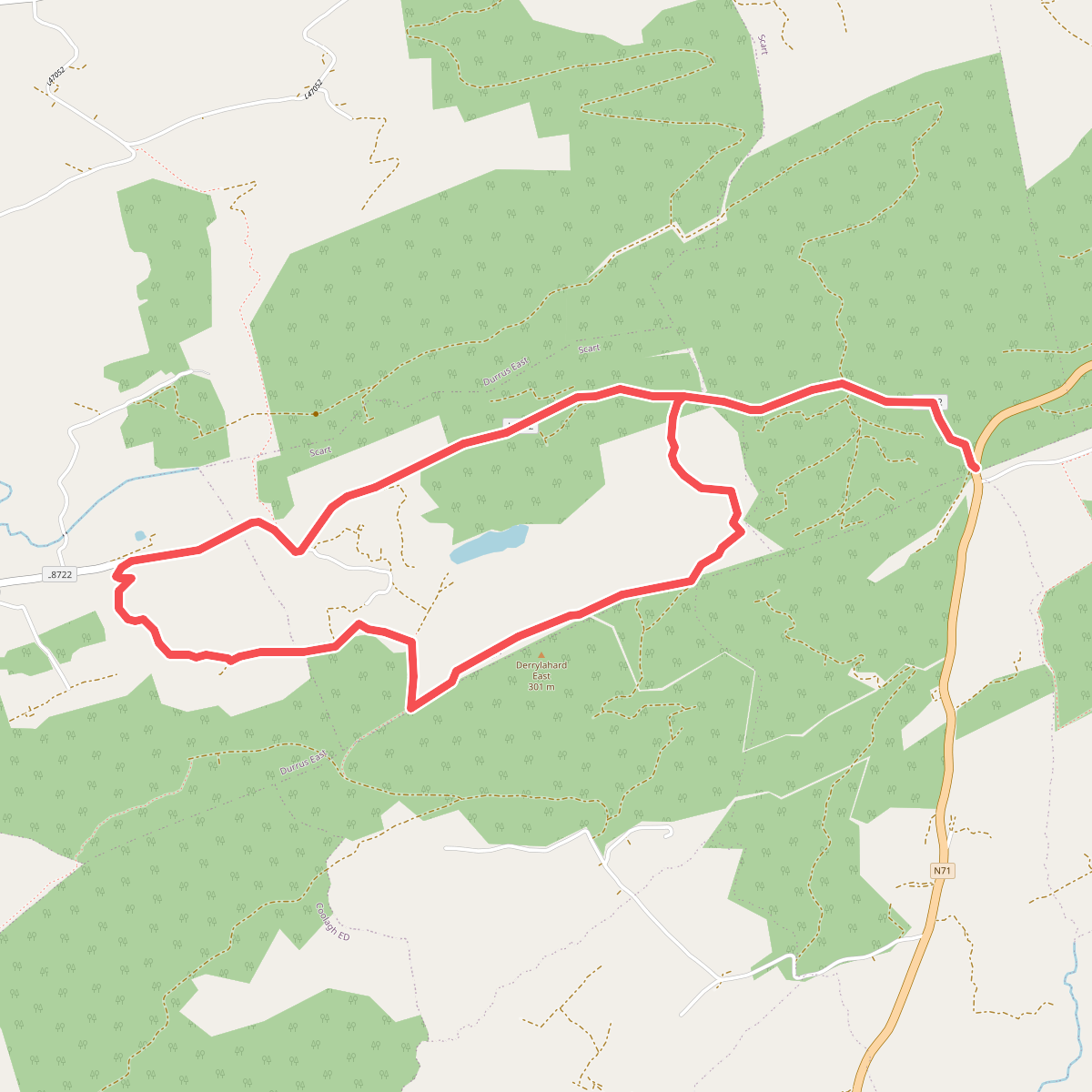
#7. Barnageehy Loop Walk
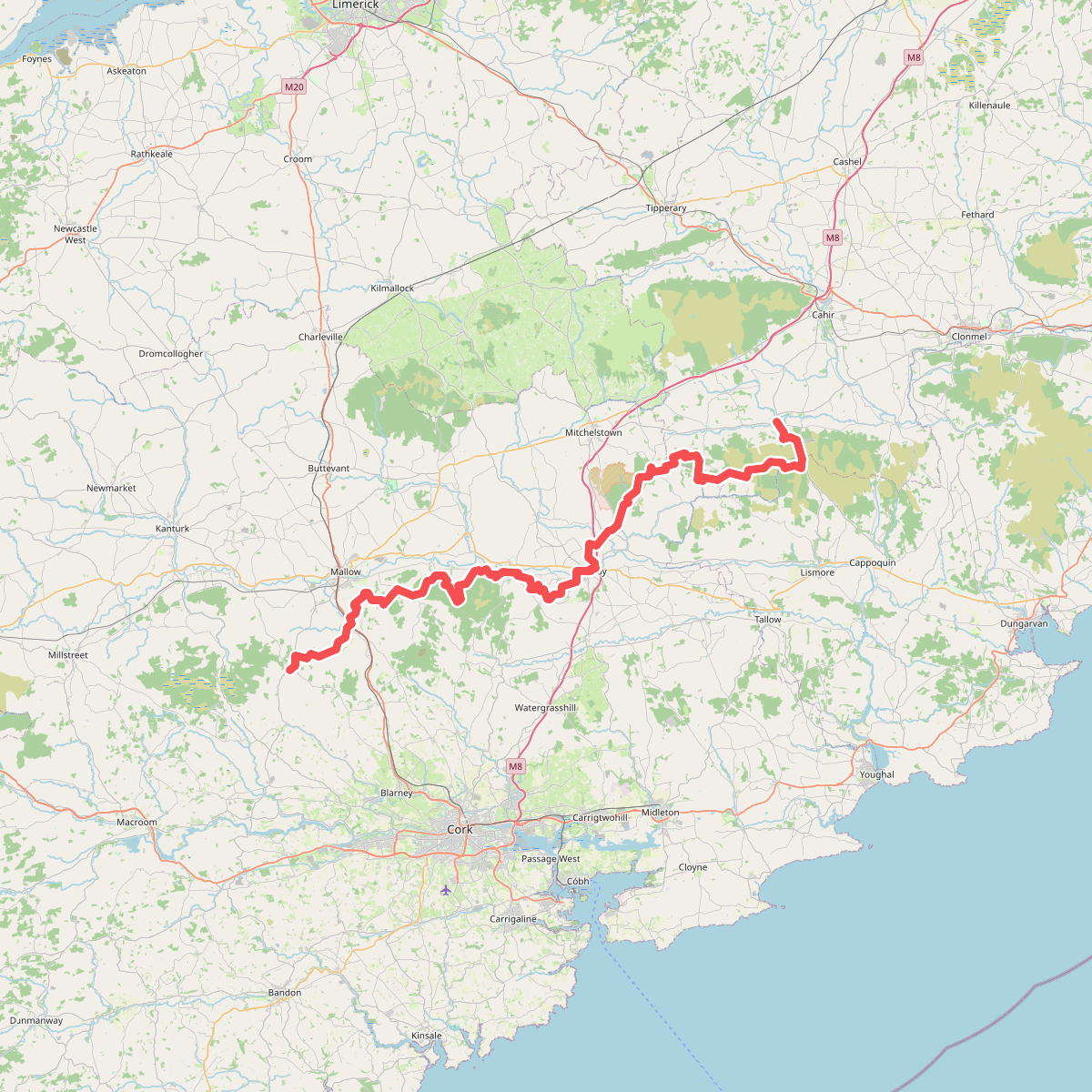
#8. Blackwater (Avondhu) Way
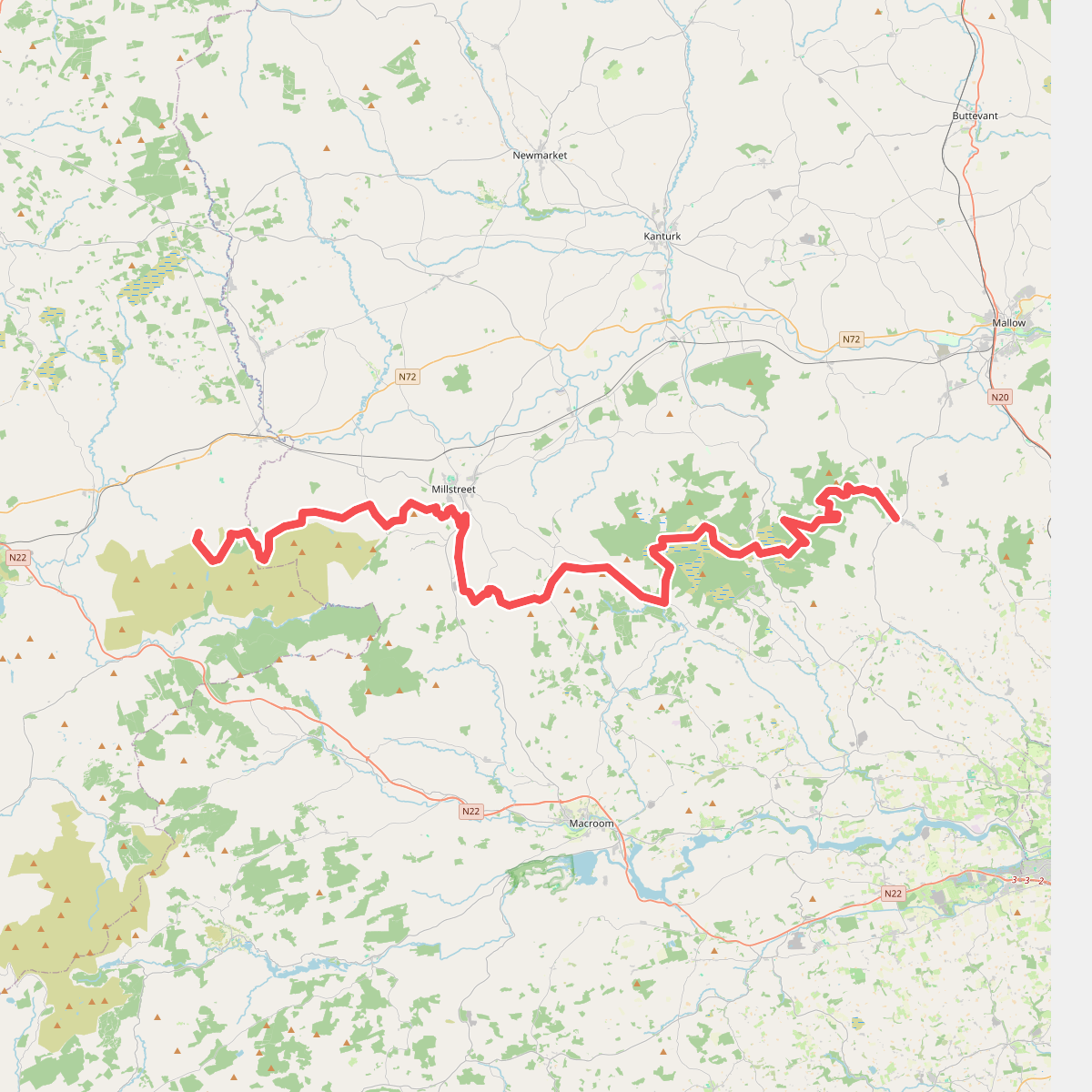
#9. Blackwater (Duhallow) Way
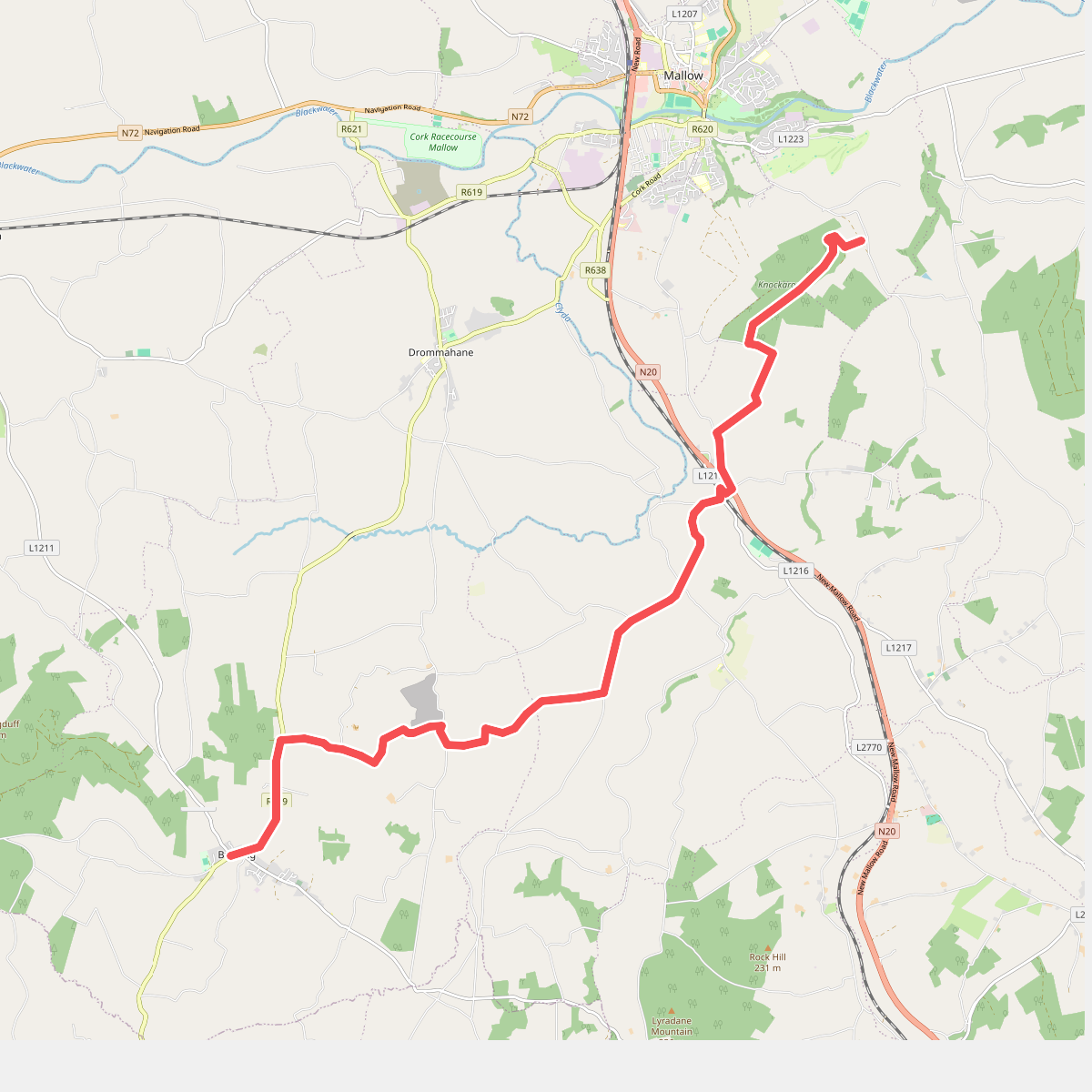
#10. Bweeng - Mallow
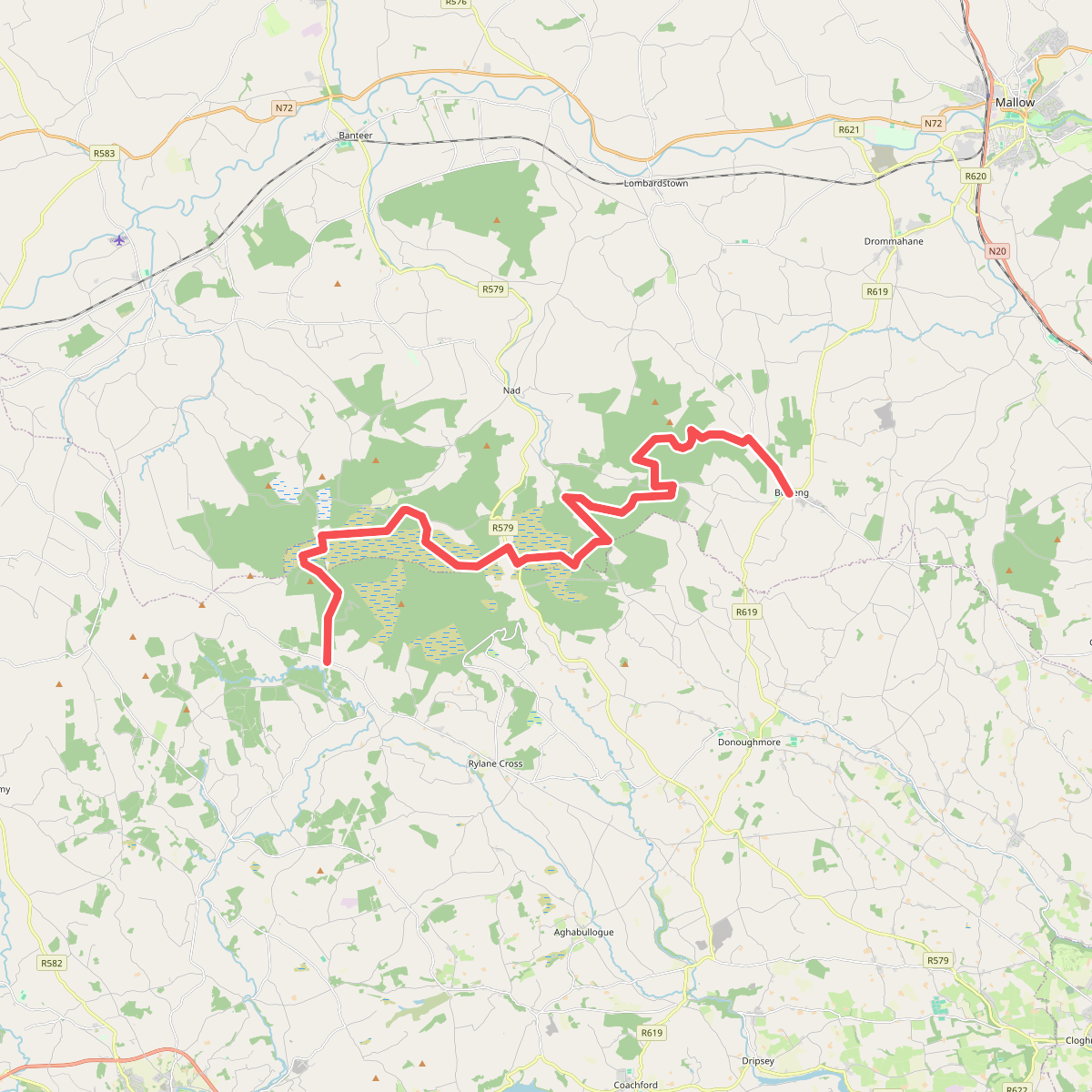
#11. Carrigagulla - Bweeng