The best hiking routes in Cantabria
Discover the best walks in Cantabria. 73 routes on the map, with descriptions, photos and GPX.
About Cantabria
Cantabria offers a sharp division between its coastal wetlands and the limestone walls of the interior. If you prefer flat, sea-level walking on soft sand and boardwalks, the Parque Natural de las Marismas de Santoña, Victoria y Joyel provides tidal marshes and estuaries shaped by the Atlantic tides. In contrast, heading inland leads to steep, rocky paths where the terrain is defined by limestone pavements and deep sinkholes, particularly in the Parque Natural de los Collados del Asón.
Read more
About Cantabria
Cantabria offers a sharp division between its coastal wetlands and the limestone walls of the interior. If you prefer flat, sea-level walking on soft sand and boardwalks, the Parque Natural de las Marismas de Santoña, Victoria y Joyel provides tidal marshes and estuaries shaped by the Atlantic tides. In contrast, heading inland leads to steep, rocky paths where the terrain is defined by limestone pavements and deep sinkholes, particularly in the Parque Natural de los Collados del Asón.
Read moreCantabria offers a sharp division between its coastal wetlands and the limestone walls of the interior. If you prefer flat, sea-level walking on soft sand and boardwalks, the Parque Natural de las Marismas de Santoña, Victoria y Joyel provides tidal marshes and estuaries shaped by the Atlantic tides. In contrast, heading inland leads to steep, rocky paths where the terrain is defined by limestone pavements and deep sinkholes, particularly in the Parque Natural de los Collados del Asón.
For walkers seeking dense woodland and shade, the Parque Natural Saja-Besaya contains extensive beech and oak forests. Here, the paths are often covered in damp leaf litter and clay, showing the effects of forestry and grazing. This is not a region of gentle, manicured parkland; the terrain is rugged, and the paths require careful footing over exposed tree roots and loose stones. In November, the beech leaves in Saja-Besaya turn a deep copper, which is a characteristic feature of these northern valleys.
Further south and west, the landscape rises into the high limestone massifs of the Parque Nacional de Picos de Europa. This area is characterized by grey scree slopes, sheer cliffs, and high-altitude pastures where bells from grazing cattle echo off the rock faces. The walking here is physically demanding, with steep gradients and rough, stony tracks underfoot. While the well-known gorges can become busy with visitors, the higher, more demanding routes remain much quieter.
Nature areas in Cantabria
Zoom or pan for more routes
Hiking routes in Cantabria (73)
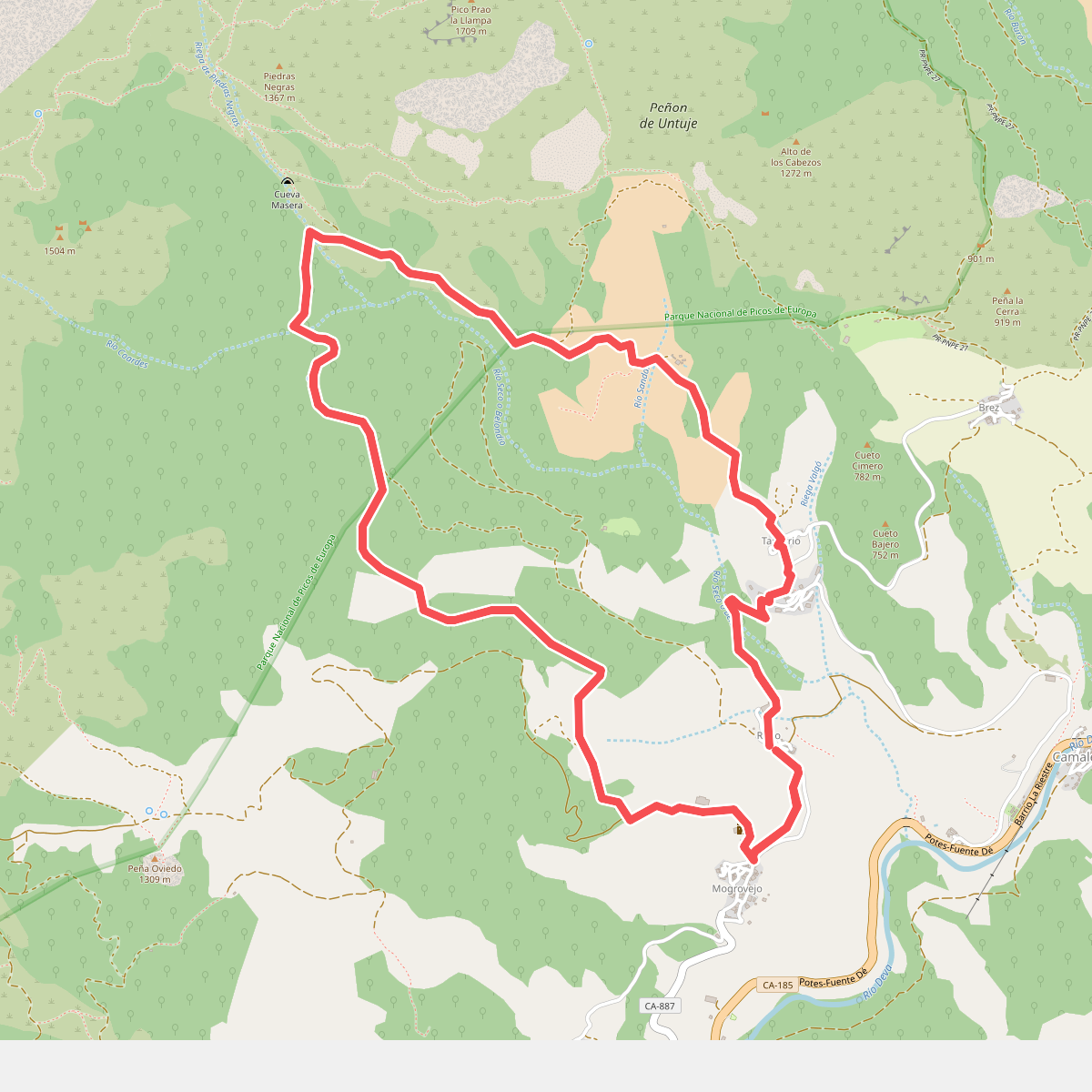
#1. Bajo los picos
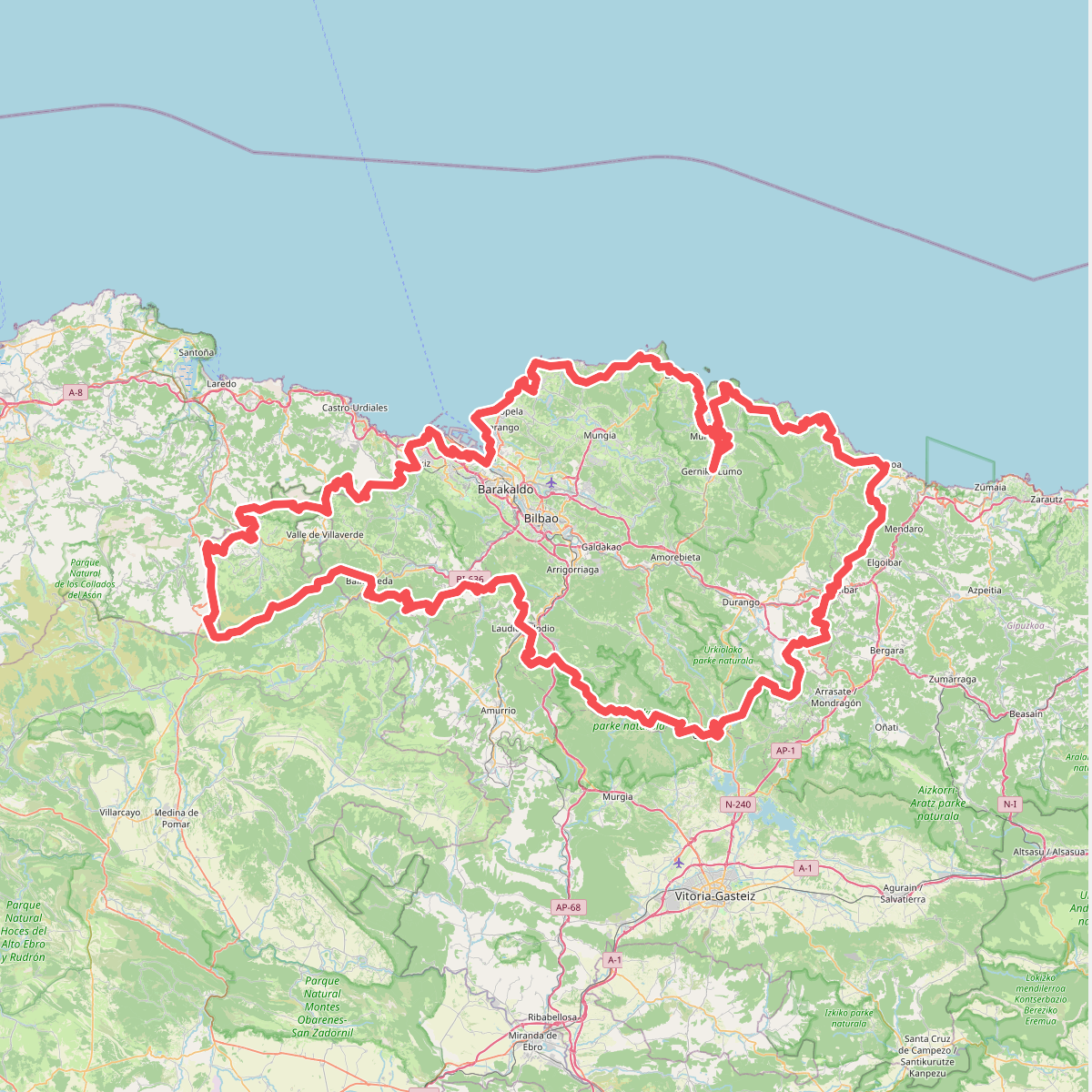
#2. Bizkaiko bira
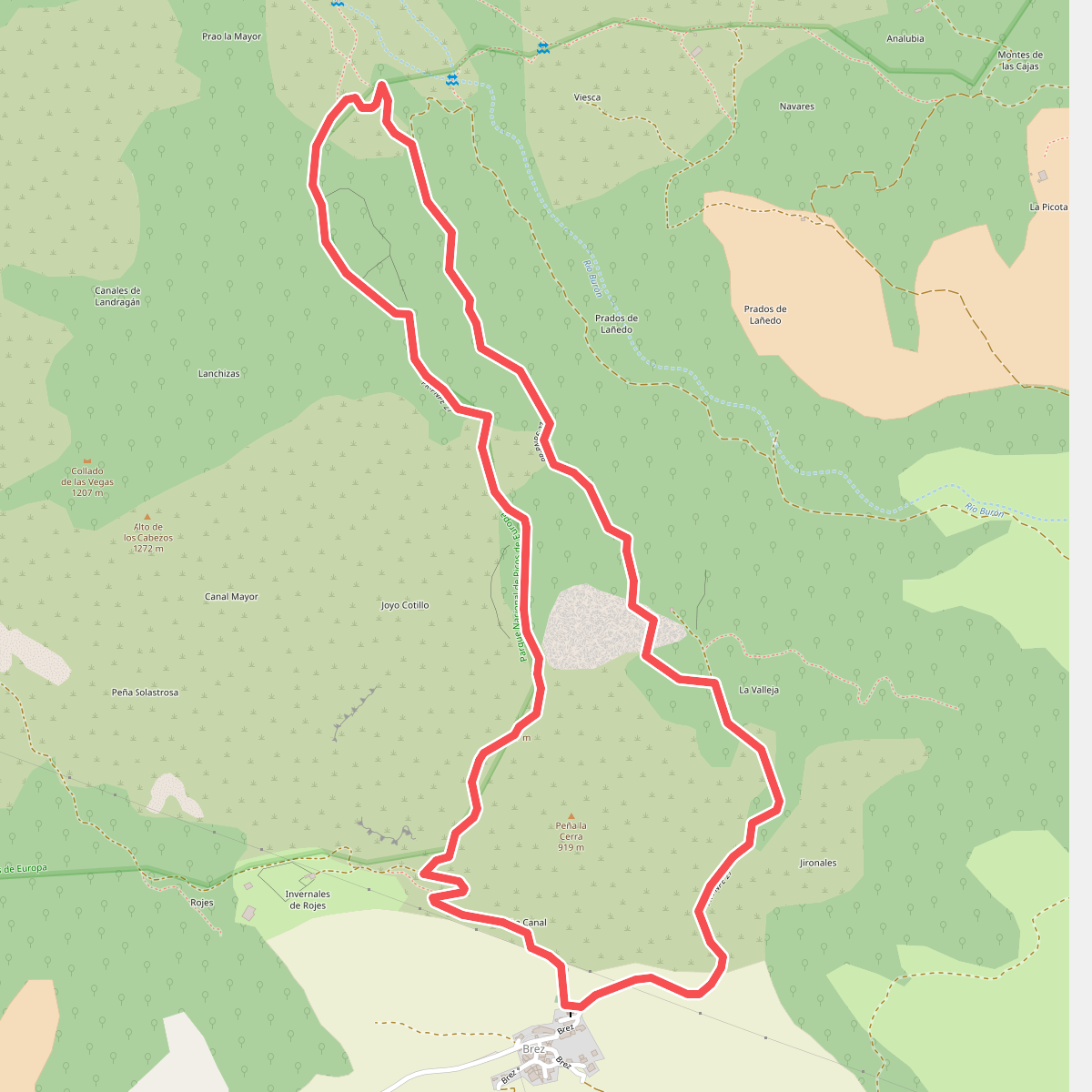
#3. Brez - Canal de las Arredondas
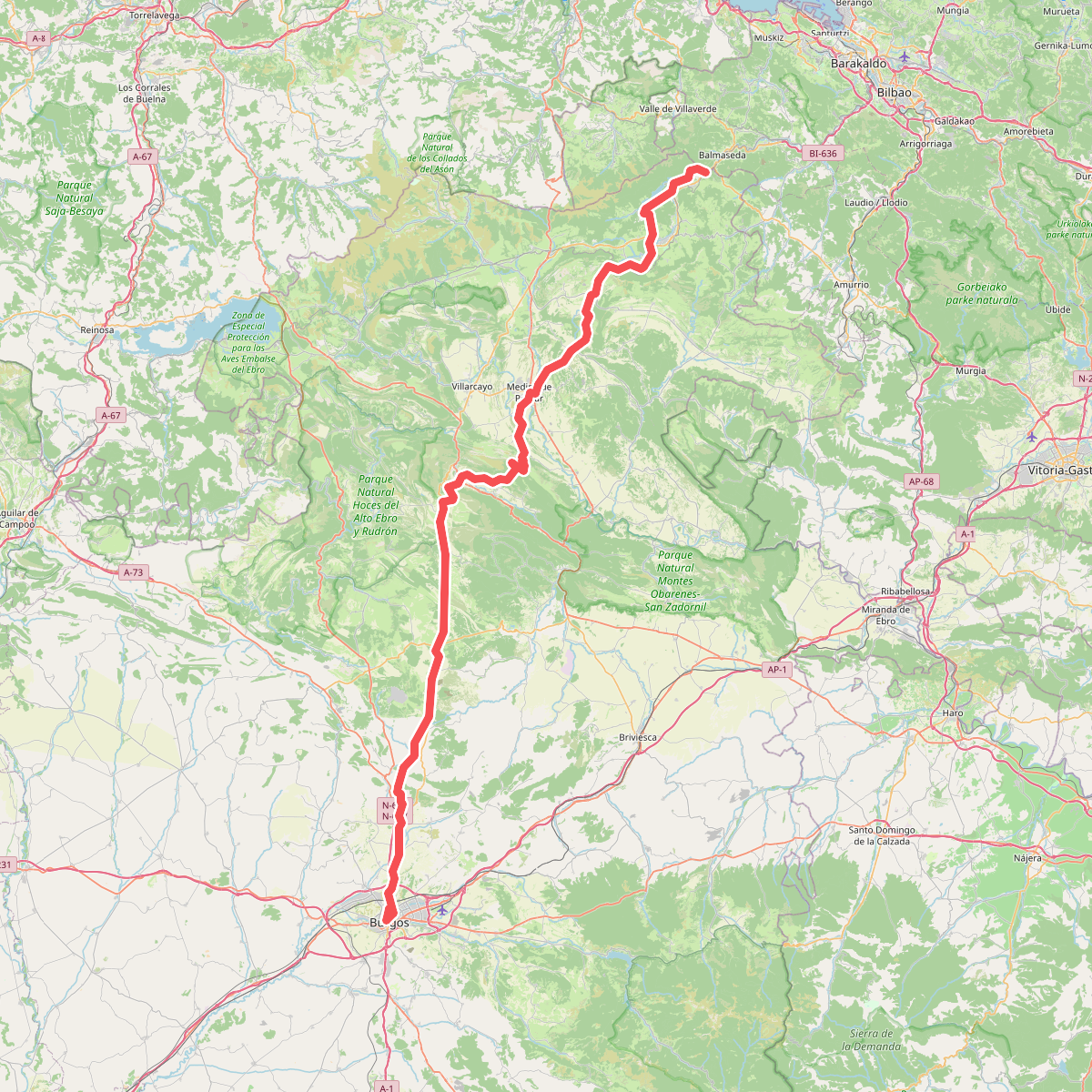
#4. Camino de Las Merindades
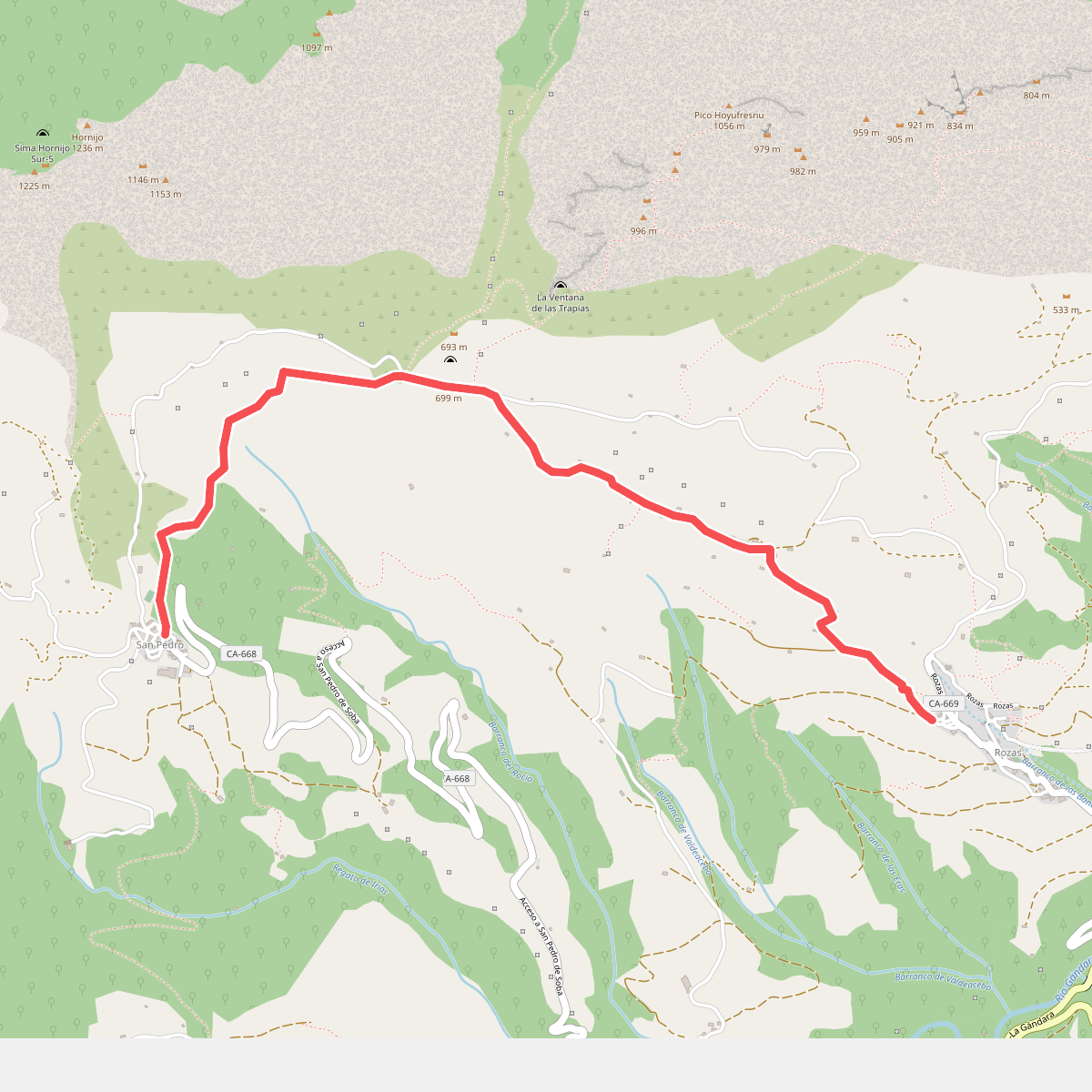
#5. Camino de San Pedro a Rozas
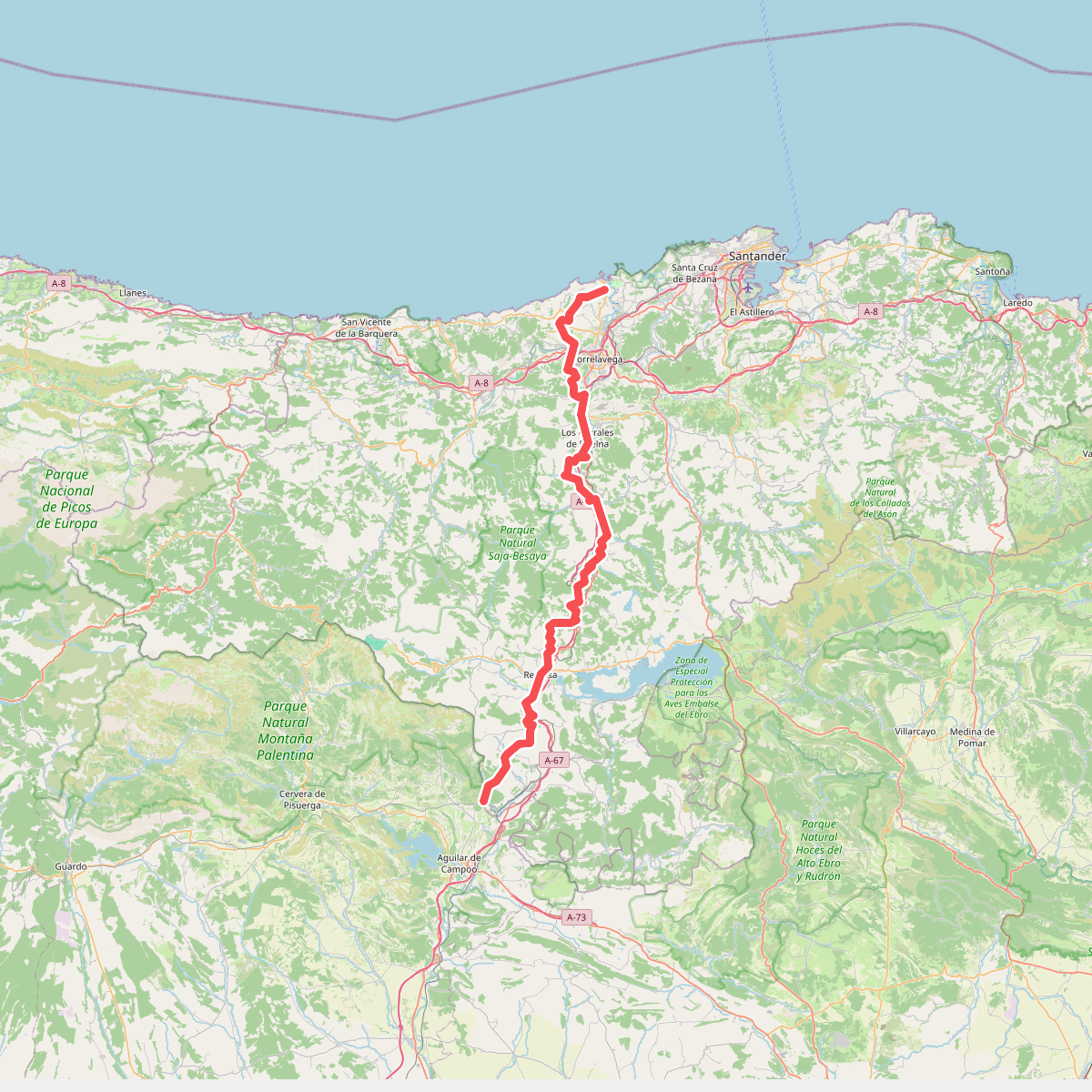
#6. Camino del Besaya: Cantabria
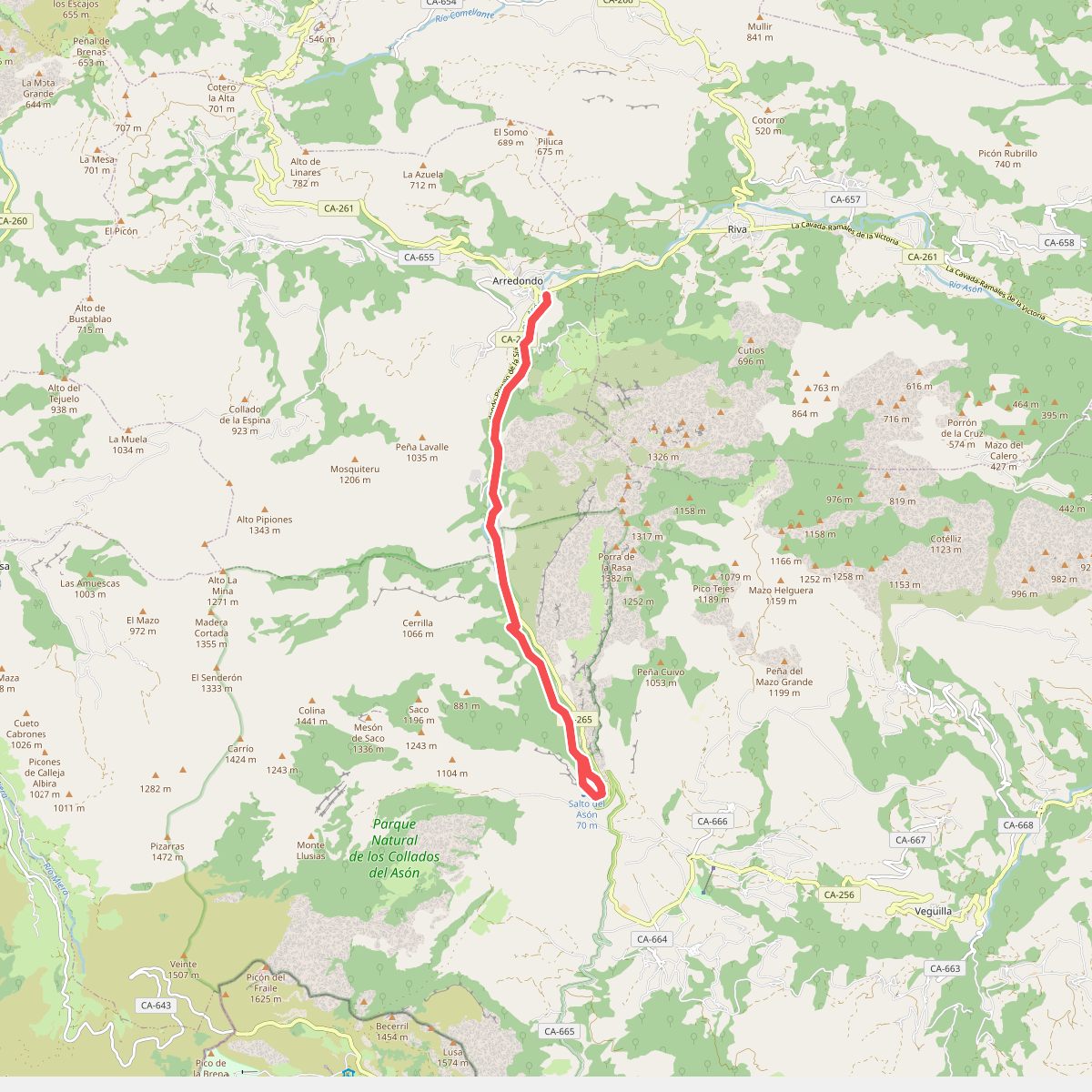
#7. Camino del Val del Asón (Nacimiento del río Asón)
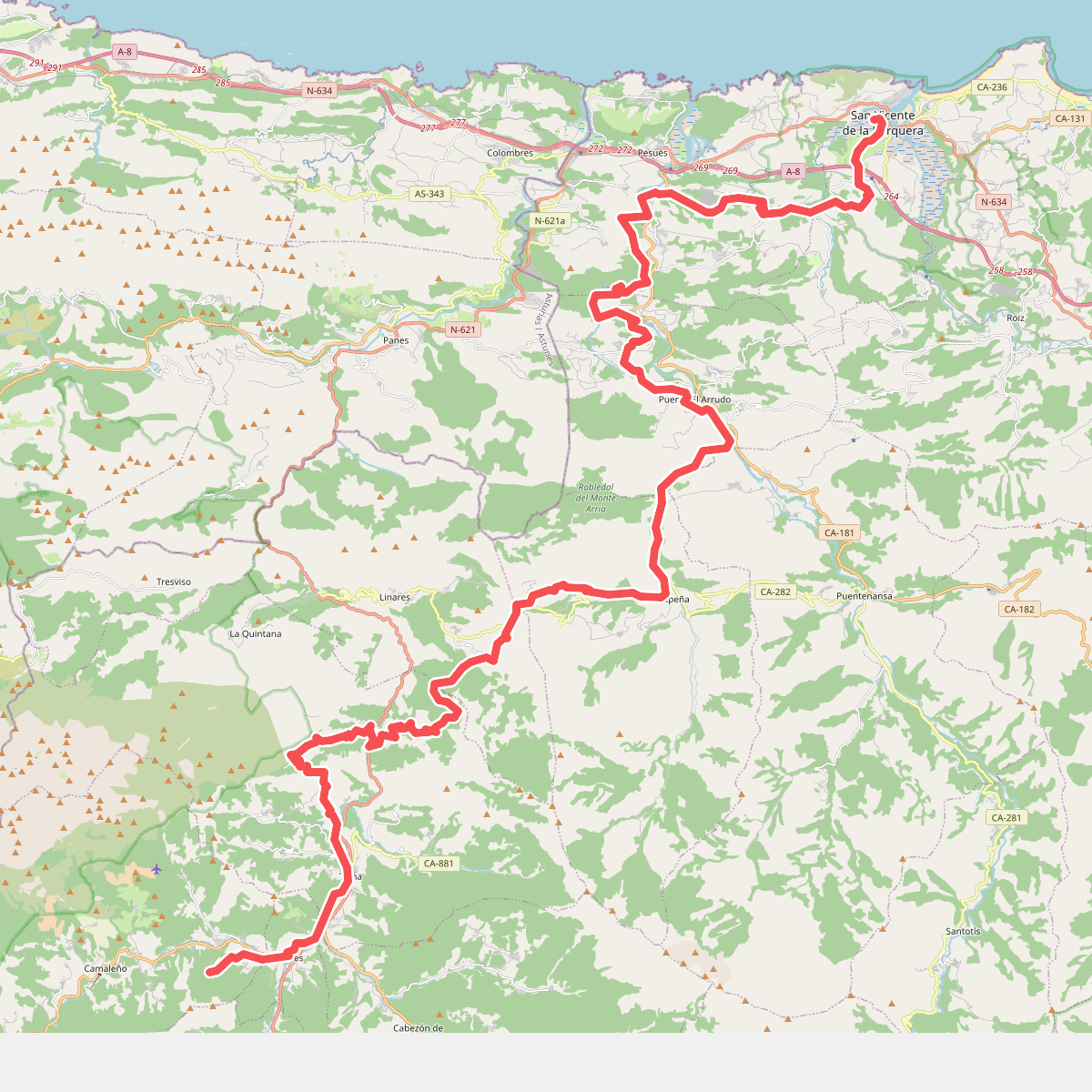
#8. Camino Lebaniego
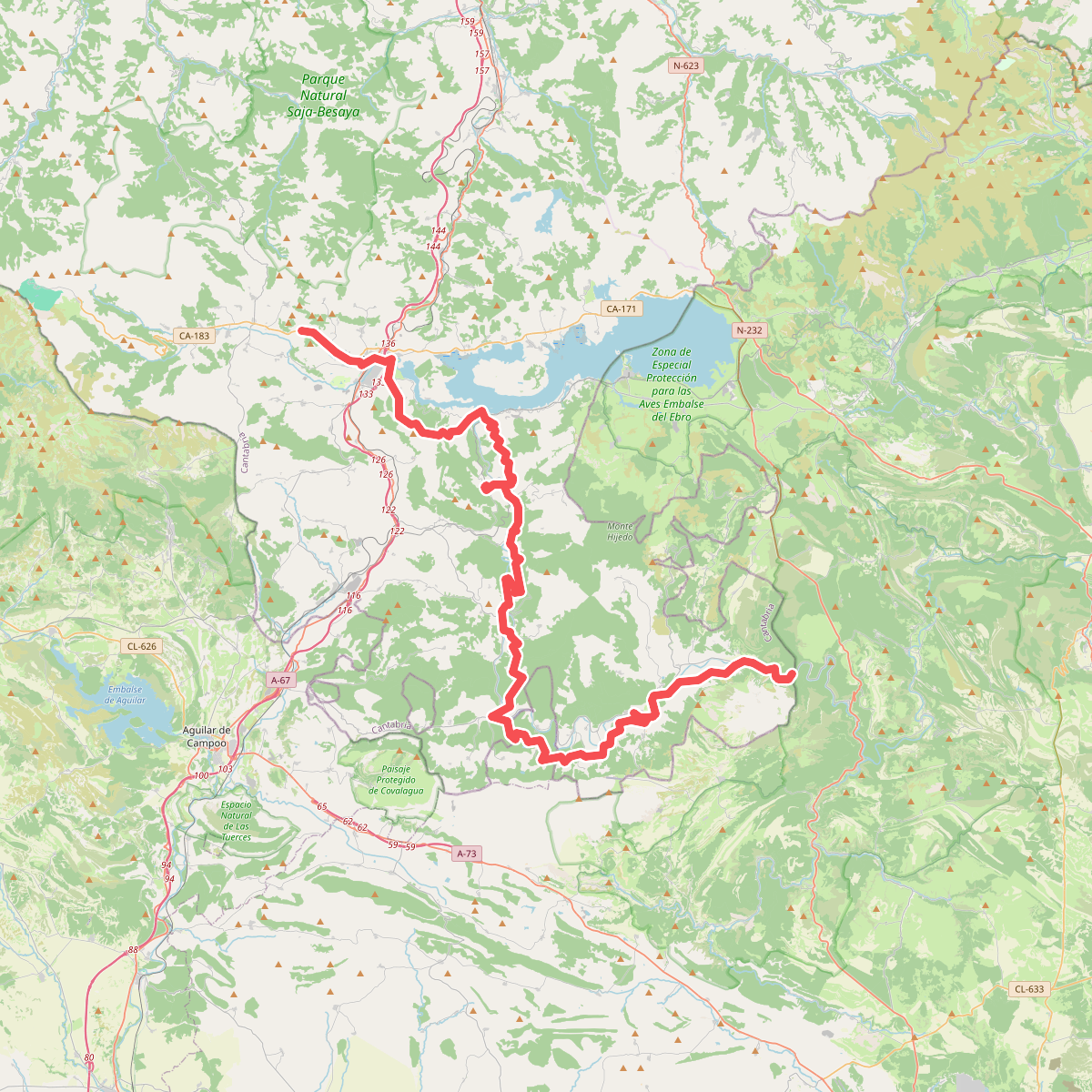
#9. Camino natural de Ebro - Cantabria
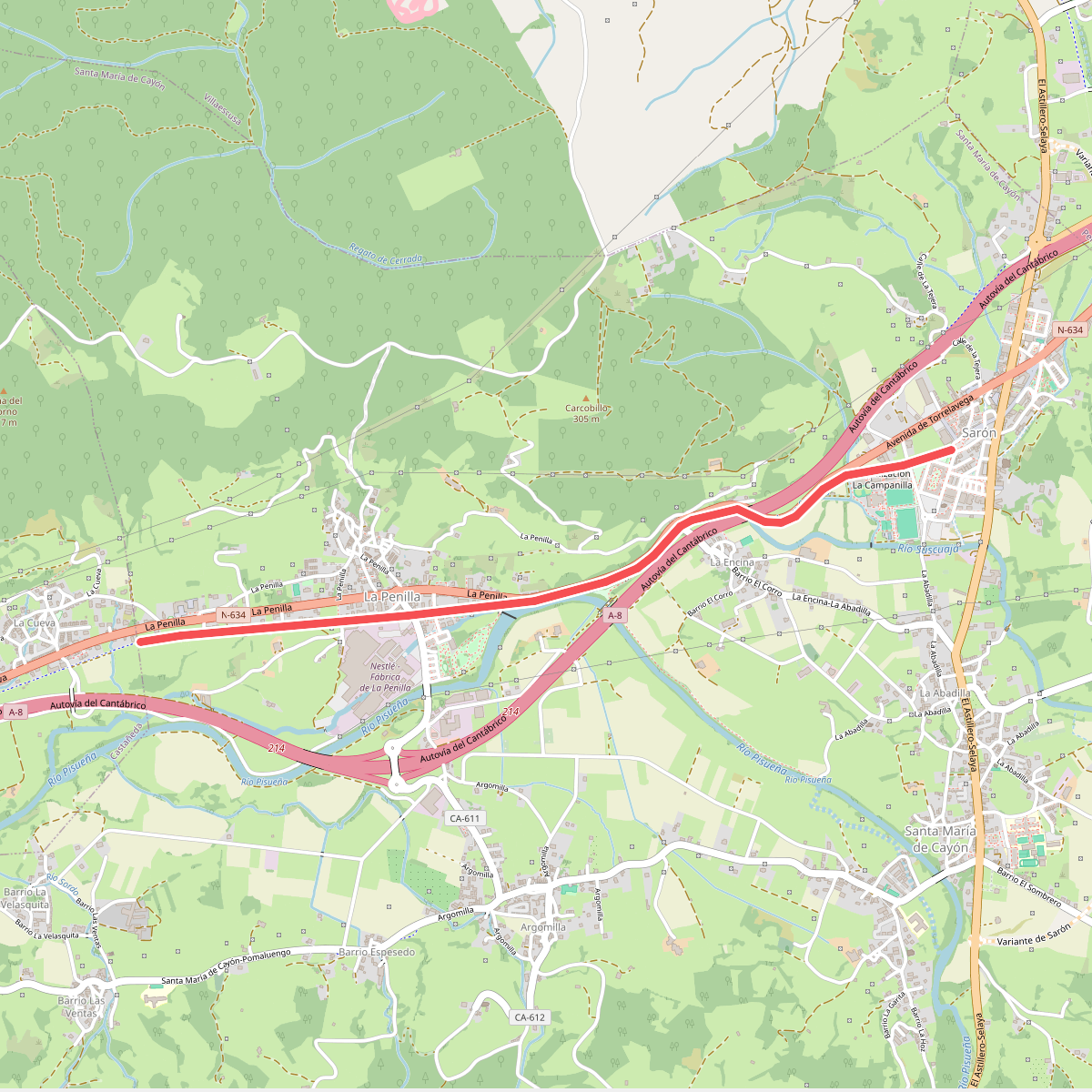
#10. Camino Natural de Sarón - La Penilla
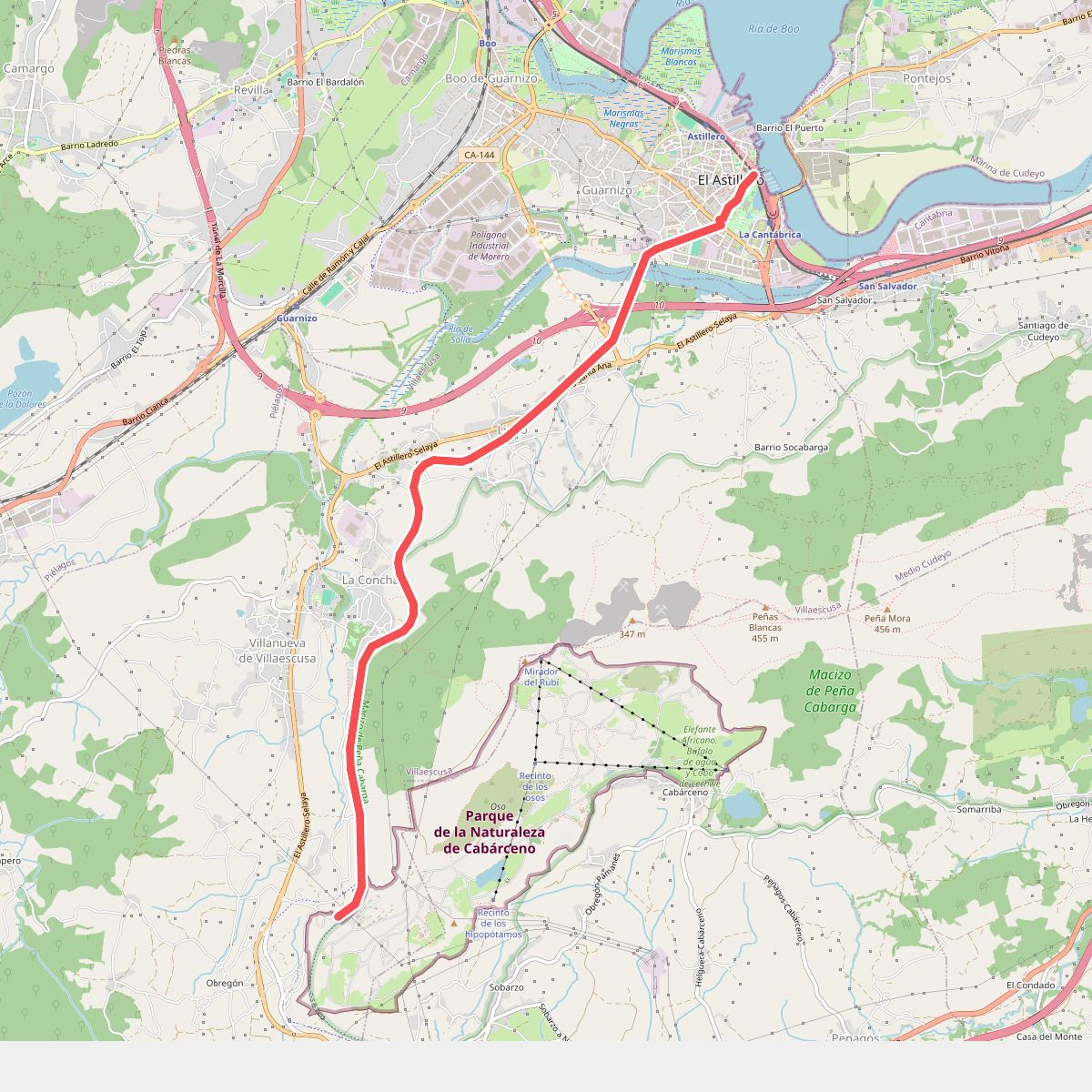
#11. Camino Natural de Villaescusa