
The best hiking routes in ZPE Monforte
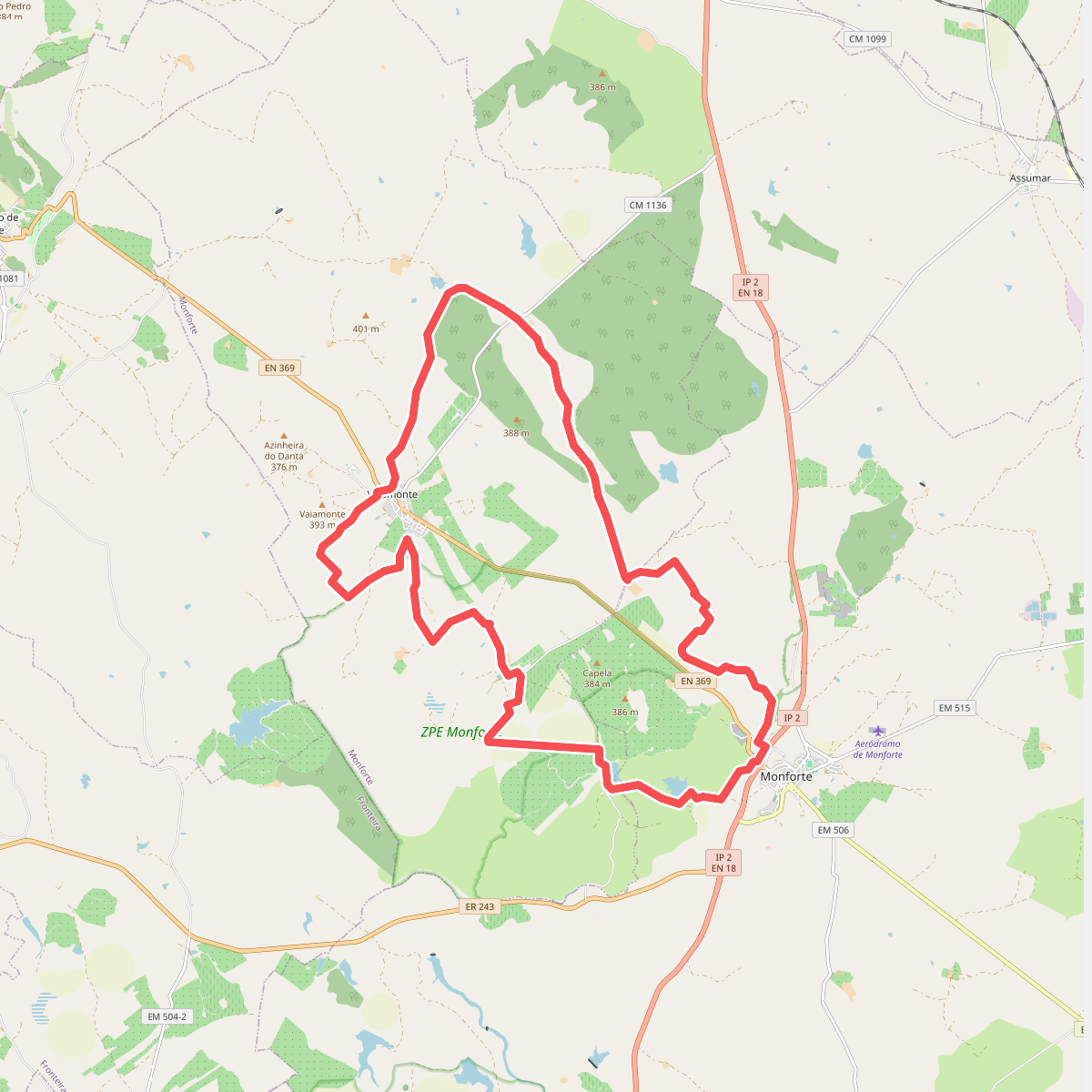
Discover the best walks in ZPE Monforte. 1 routes on the map, with descriptions, photos and GPX.
Managed by ICNF
About ZPE Monforte
ZPE Monforte offers a distinct walking experience shaped by the traditional Alentejo montado landscape. Unlike the dense pine forests or steep coastal cliffs found in other parts of Portugal, this protected area consists of gently rolling plains dominated by scattered holm and cork oaks. The terrain is characterized by wide agricultural fields, granite outcrops, and small water reservoirs that attract a variety of bird species. Walking here means navigating a working rural landscape where nature conservation coexists with low-intensity farming.
Read more
About ZPE Monforte
ZPE Monforte offers a distinct walking experience shaped by the traditional Alentejo montado landscape. Unlike the dense pine forests or steep coastal cliffs found in other parts of Portugal, this protected area consists of gently rolling plains dominated by scattered holm and cork oaks. The terrain is characterized by wide agricultural fields, granite outcrops, and small water reservoirs that attract a variety of bird species. Walking here means navigating a working rural landscape where nature conservation coexists with low-intensity farming.
Read moreZPE Monforte offers a distinct walking experience shaped by the traditional Alentejo montado landscape. Unlike the dense pine forests or steep coastal cliffs found in other parts of Portugal, this protected area consists of gently rolling plains dominated by scattered holm and cork oaks. The terrain is characterized by wide agricultural fields, granite outcrops, and small water reservoirs that attract a variety of bird species. Walking here means navigating a working rural landscape where nature conservation coexists with low-intensity farming.
Underfoot, walkers will mostly encounter wide, unpaved agricultural tracks and sandy paths that cut through the pastures. The lack of steep inclines makes the walking physically accessible, though the open nature of the landscape means there is very little shade between the oak trees. In spring, particularly around April, the ground between the trees is covered in a dense carpet of wildflowers, while late summer reveals a much drier, golden landscape of stubble fields and parched earth.
This area is not a wilderness of dense forests or dramatic valleys, but rather an open, quiet expanse where the focus is on birdwatching and rural tranquility. While the main tracks are easy to follow, there are no boardwalks or heavily manicured trail systems. It is a destination suited for those who appreciate subtle changes in vegetation and the quiet presence of birds of prey soaring over the oak canopy.