The best hiking routes in ZEPA Esteiro do Miño
Discover the best walks in ZEPA Esteiro do Miño. 14 routes on the map, with descriptions, photos and GPX.
Managed by Xunta de Galicia
About ZEPA Esteiro do Miño
The ZEPA Esteiro do Miño covers the brackish wetlands, reedbeds, and alluvial woods where the Miño River meets the Atlantic Ocean. Walkers here will find a flat, low-lying landscape shaped by tidal fluctuations, where freshwater currents and saltwater tides constantly mix. The terrain is dominated by salt marshes, muddy channels, and dense stands of reeds, rather than dry coastal dunes or rocky cliffs.
Read more
About ZEPA Esteiro do Miño
The ZEPA Esteiro do Miño covers the brackish wetlands, reedbeds, and alluvial woods where the Miño River meets the Atlantic Ocean. Walkers here will find a flat, low-lying landscape shaped by tidal fluctuations, where freshwater currents and saltwater tides constantly mix. The terrain is dominated by salt marshes, muddy channels, and dense stands of reeds, rather than dry coastal dunes or rocky cliffs.
Read moreThe ZEPA Esteiro do Miño covers the brackish wetlands, reedbeds, and alluvial woods where the Miño River meets the Atlantic Ocean. Walkers here will find a flat, low-lying landscape shaped by tidal fluctuations, where freshwater currents and saltwater tides constantly mix. The terrain is dominated by salt marshes, muddy channels, and dense stands of reeds, rather than dry coastal dunes or rocky cliffs.
Underfoot, the paths transition between firm dirt tracks on the higher riverbanks and softer, muddy ground closer to the marsh edges. Some sections feature wooden boardwalks designed to keep walkers above the wettest soils, while other paths require navigating uneven, grassy dikes. The vegetation changes rapidly from willow and alder groves to open, salty meadows, depending on how often the tide floods the soil.
This area is primarily a sanctuary for waterfowl and migratory birds, meaning the landscape is structured around observation rather than high-speed hiking. There are no elevated viewpoints or steep climbs, only low bird hides and flat, winding trails. During the autumn migration in October, the mudflats become active feeding grounds, offering a direct look at how the river silt supports the local ecosystem.
Hiking routes in ZEPA Esteiro do Miño (14)
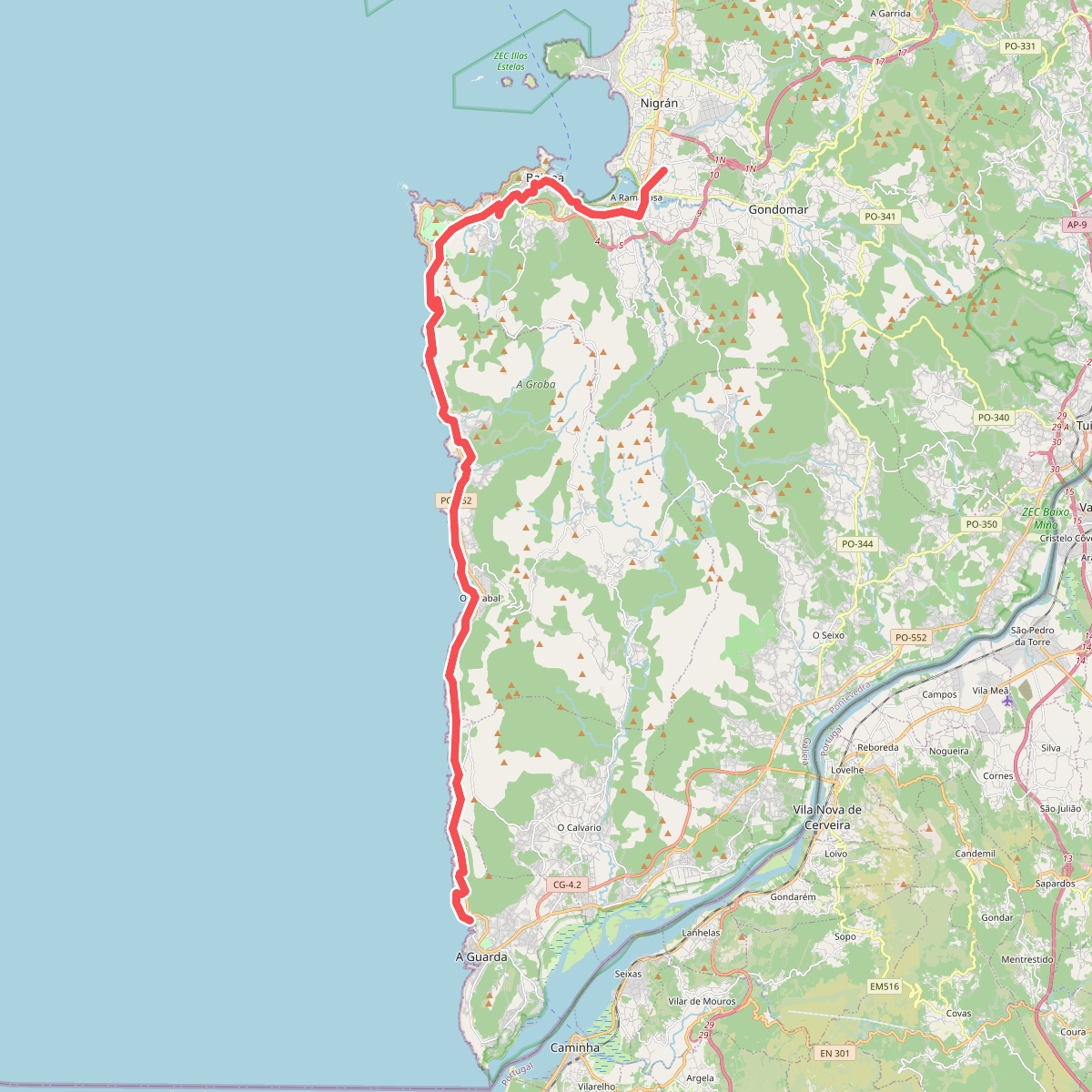
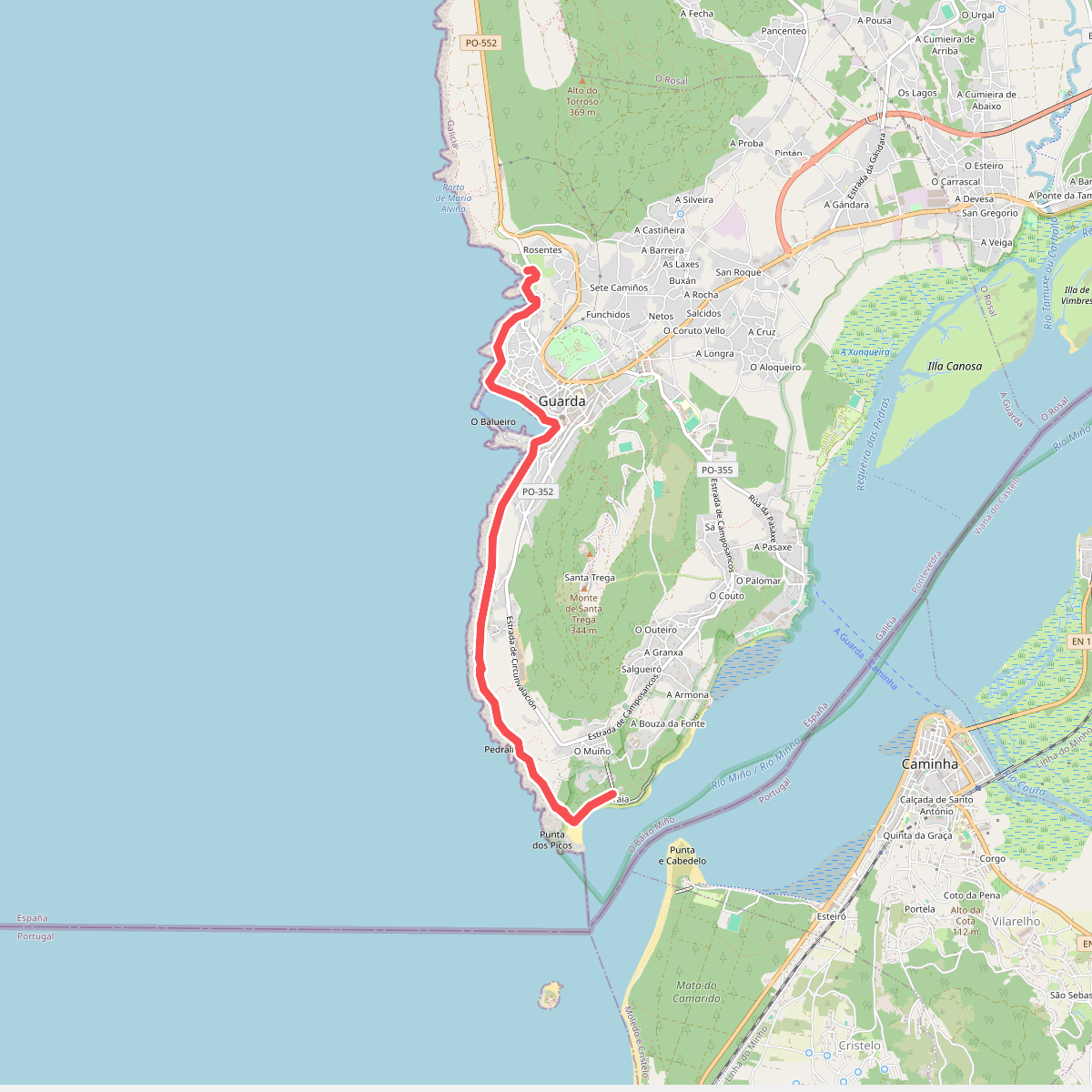
#1. Caminho Português da Costa (A Guarda - A Ramalosa)
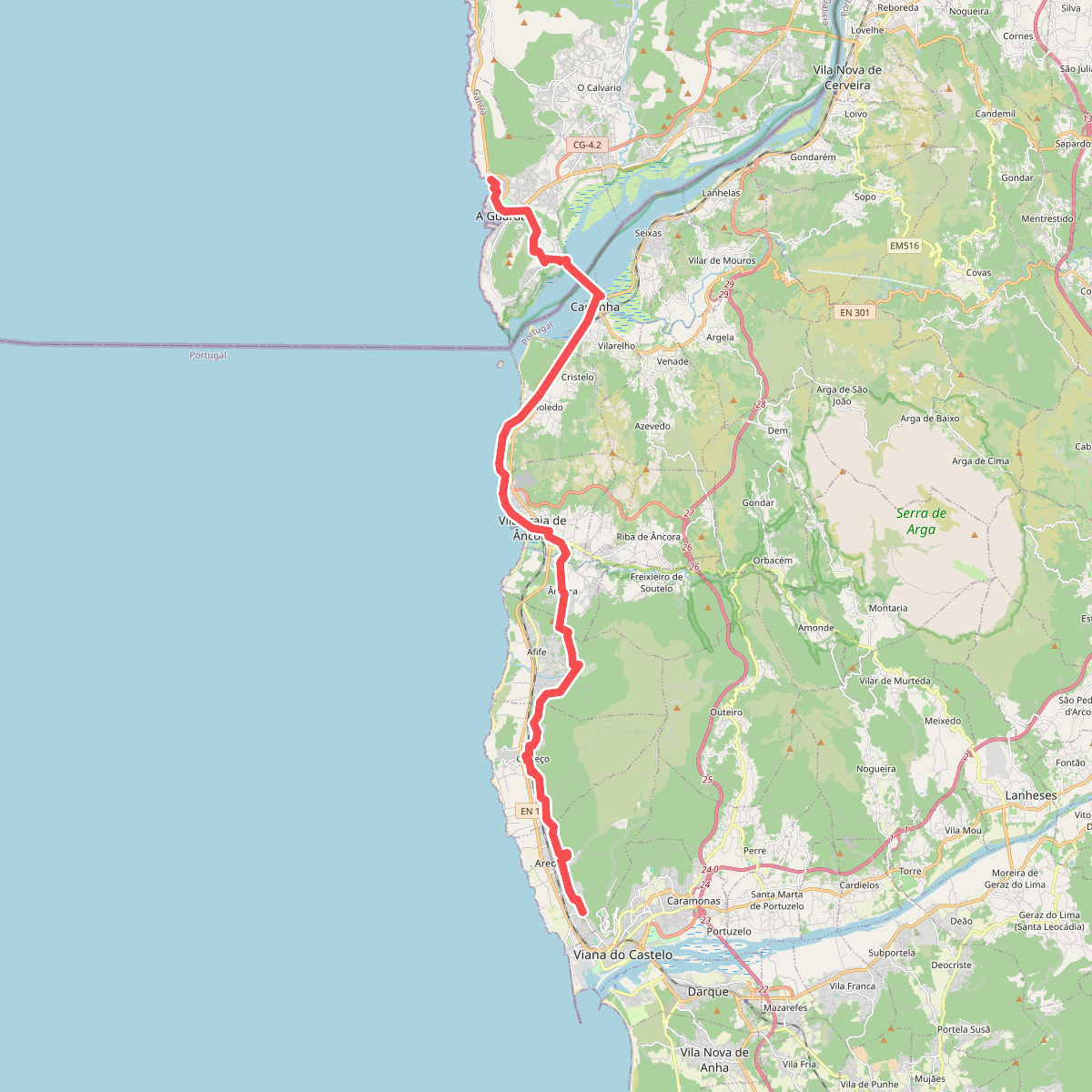
#2. Caminho Português da Costa (Viana do Castelo - A Guarda)
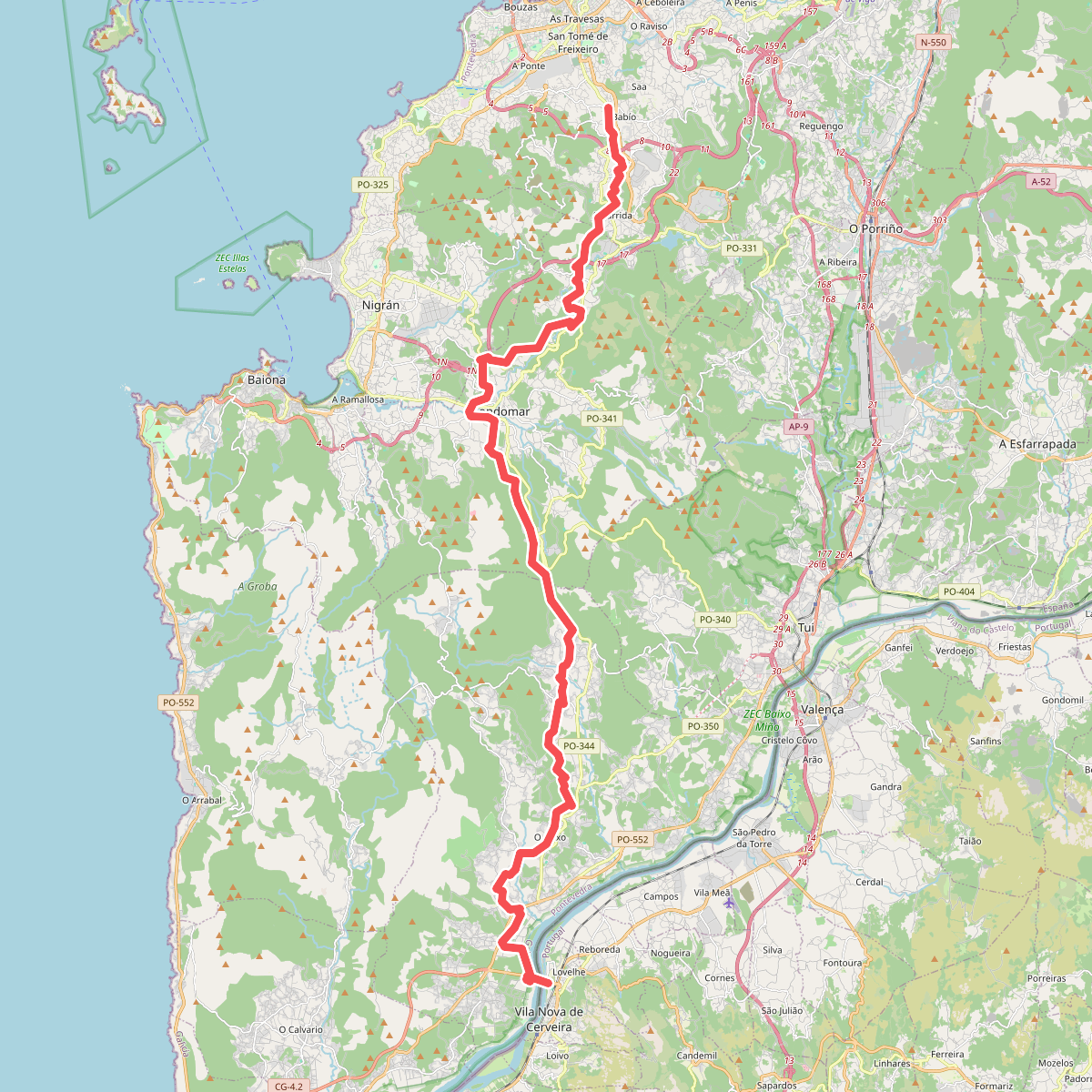
#3. Caminho Português de Nossa Senhora do Norte
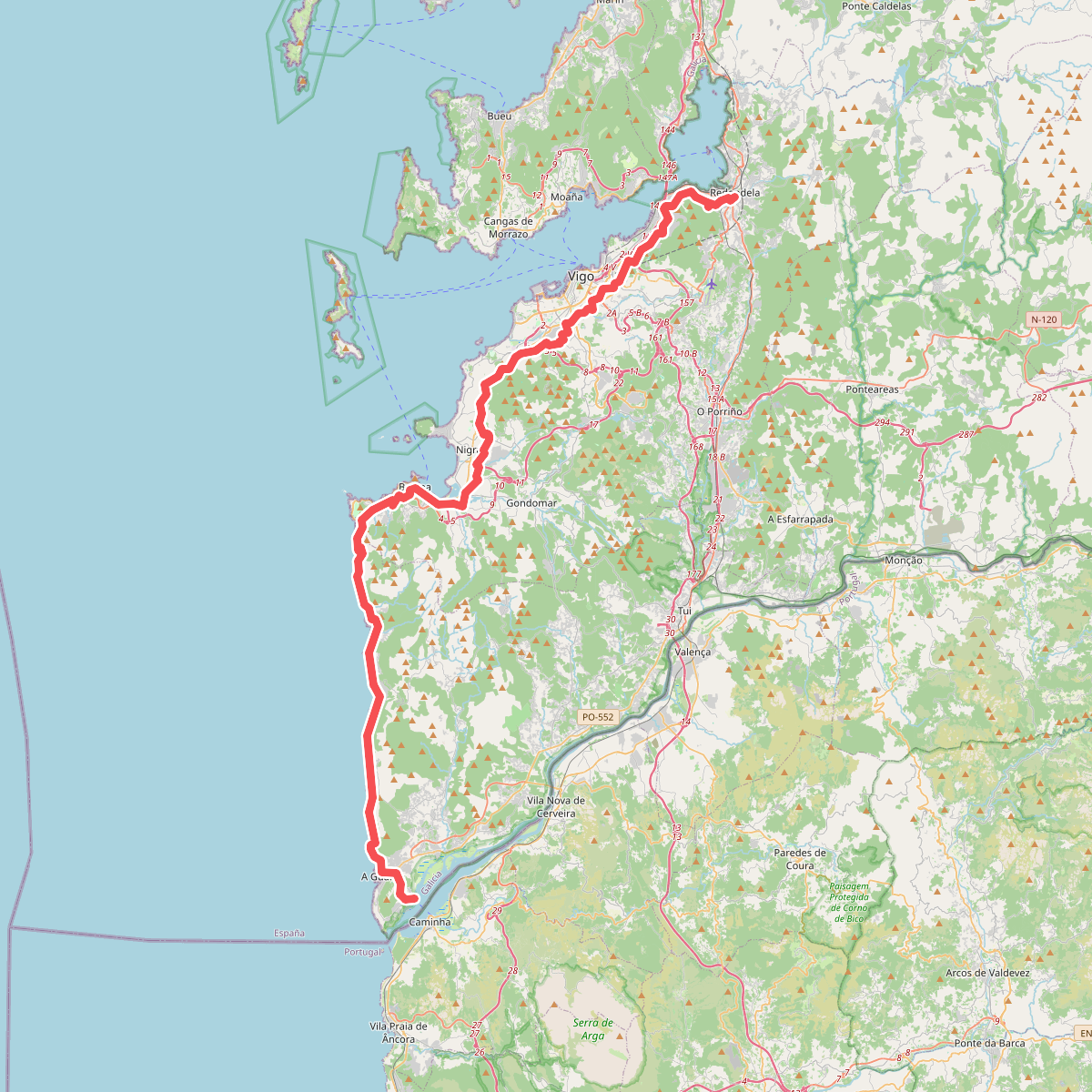
#4. Caminho Português de Santiago
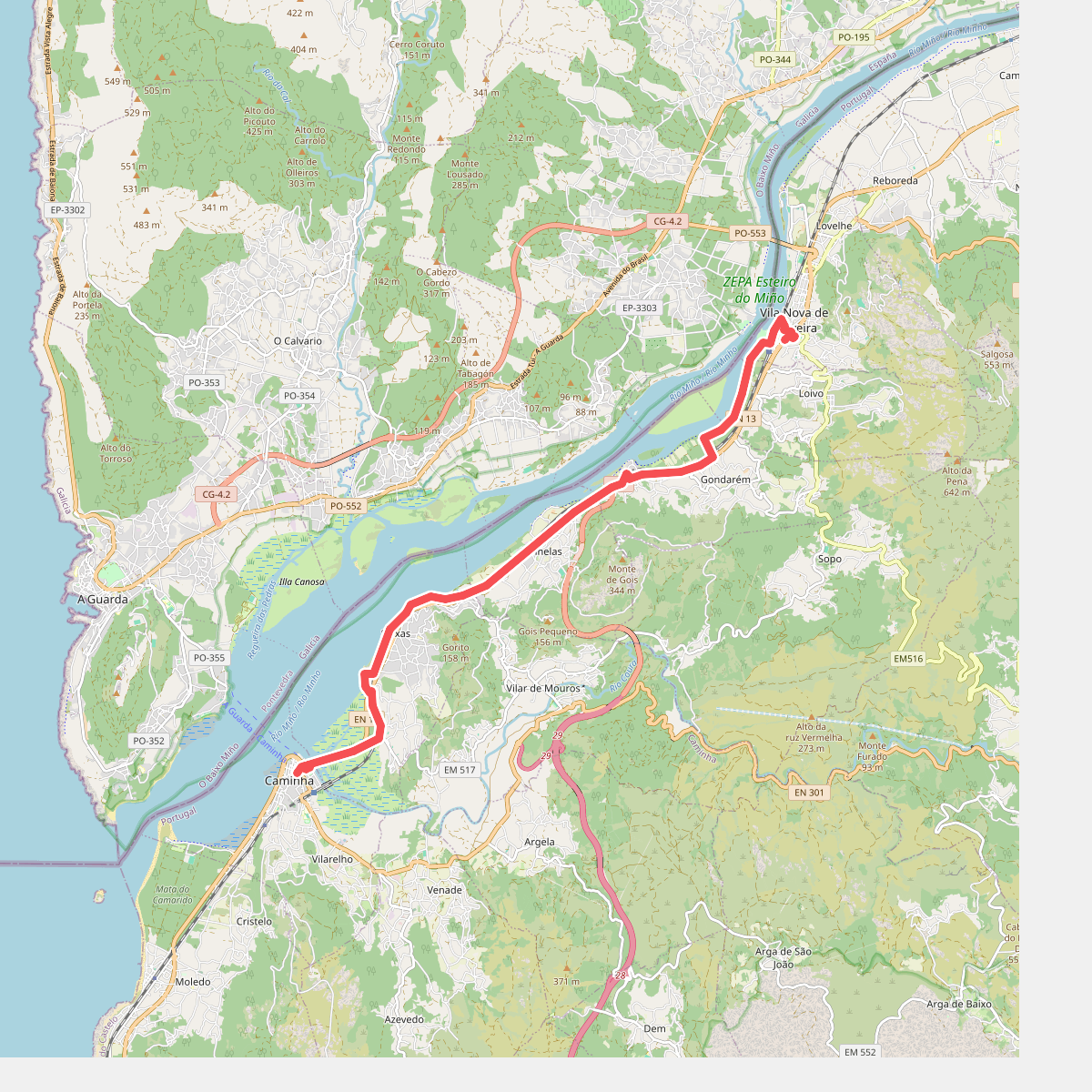
#5. Camino Caminha - Vila Nova de Cerveira
Caminha,Vila Nova de Cerveira
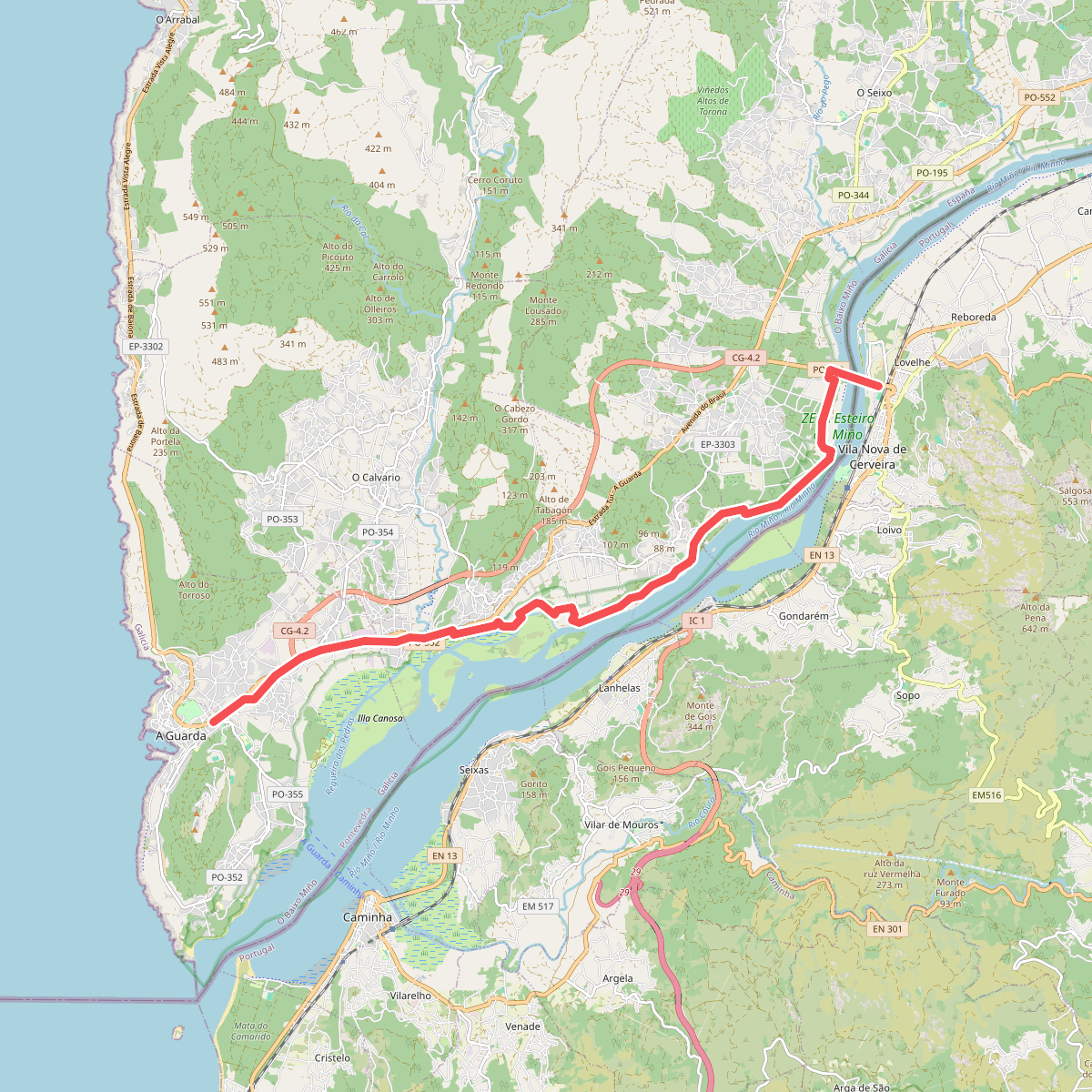
#6. Camiño Portugués da Costa
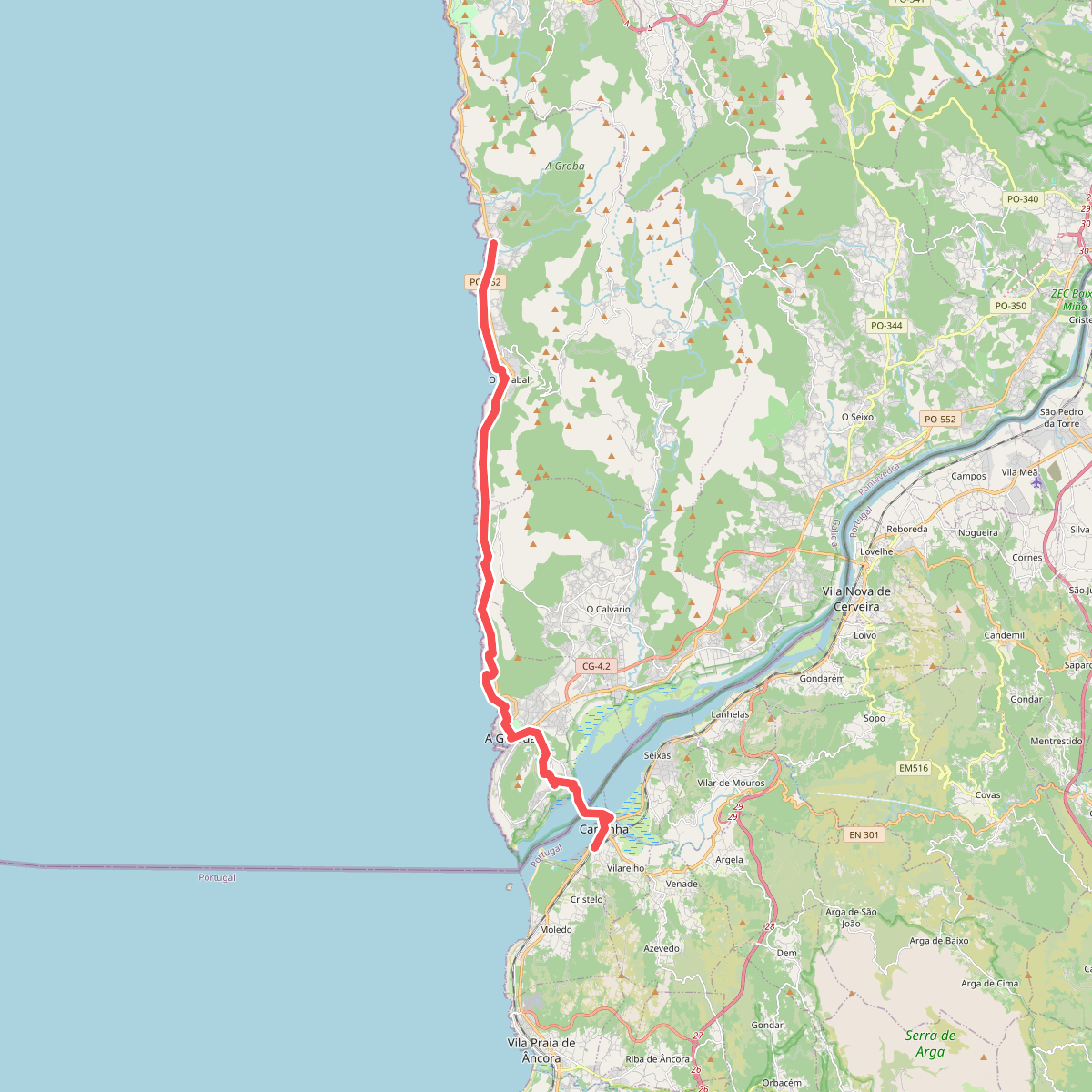
#7. Camino Portuguese da costa Caminha - Viladesuso
Caminha
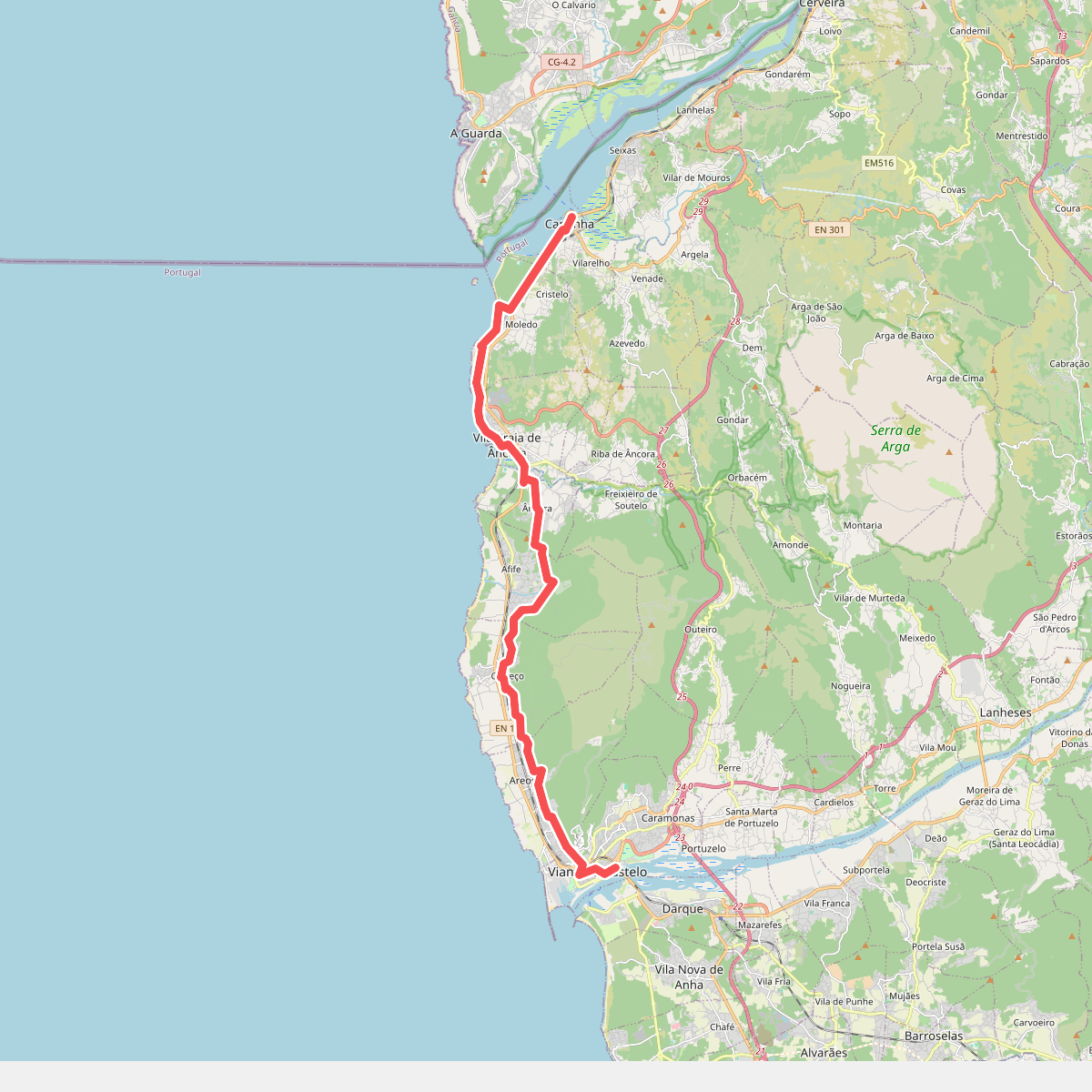
#8. Camino Viana do Castelo - Caminha
Viana do Castelo,Caminha,Vila Praia de Âncora
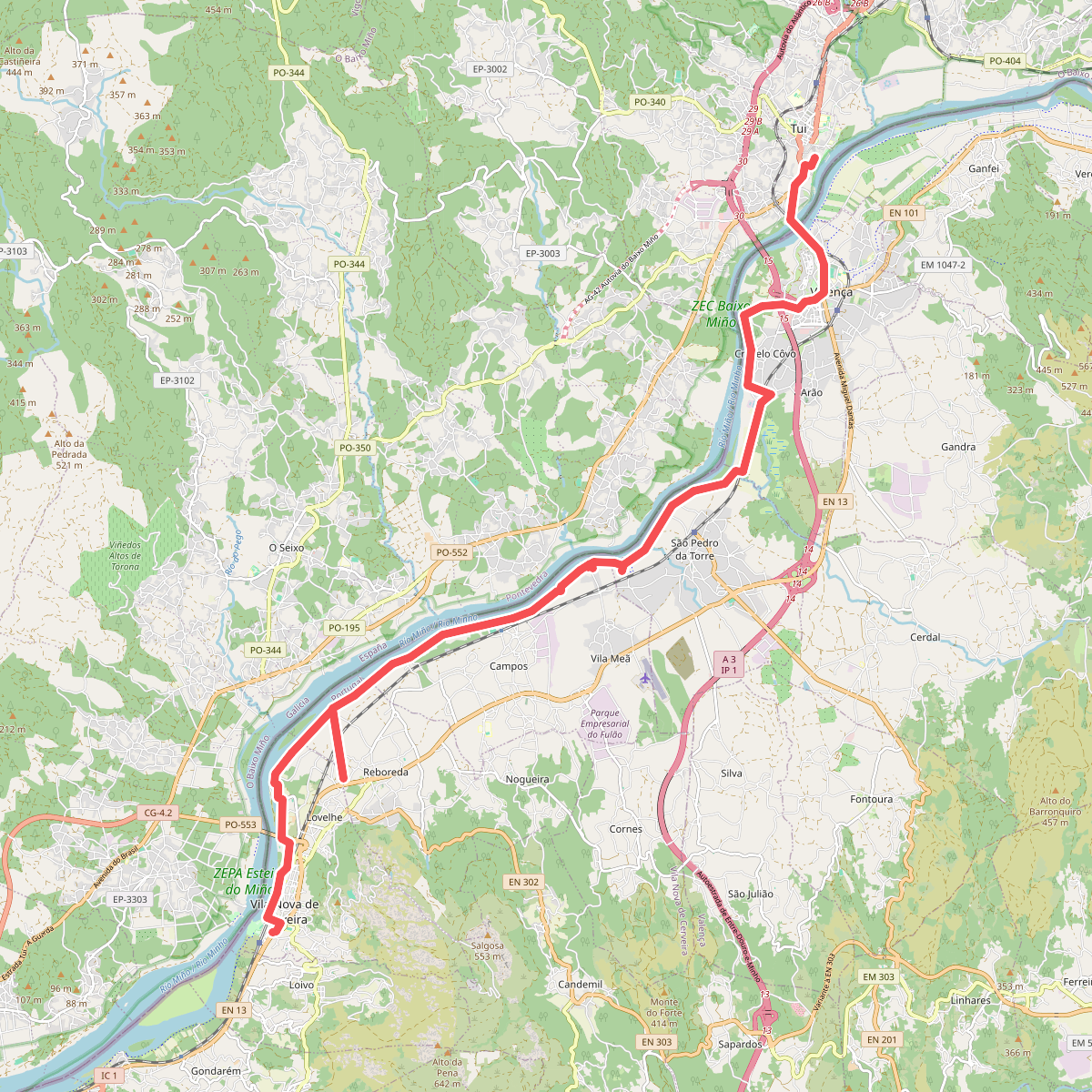
#9. Camino Vila Nova de Cerveira - Tui
Vila Nova de Cerveira,Valença
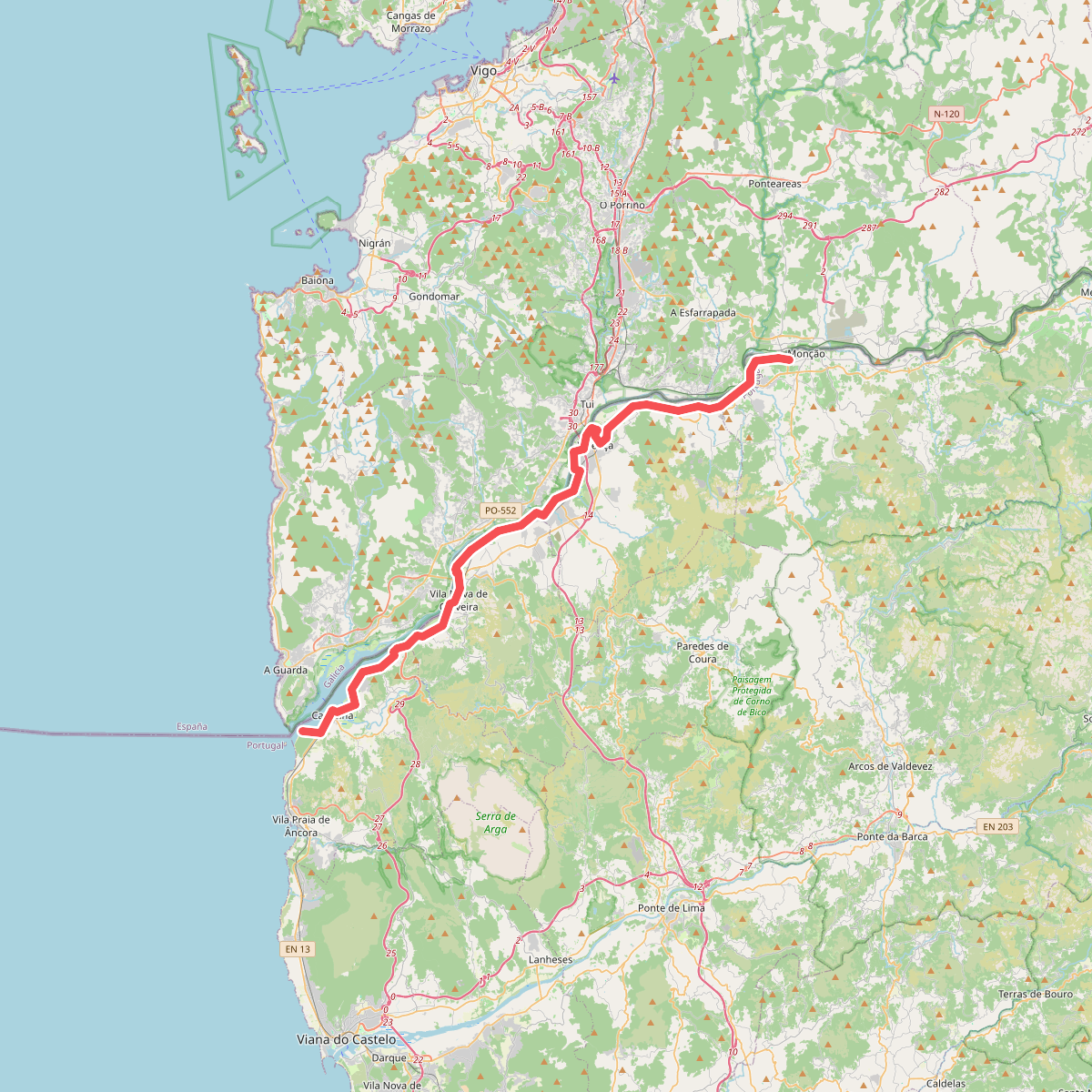
#10. Ecopista do Rio Minho
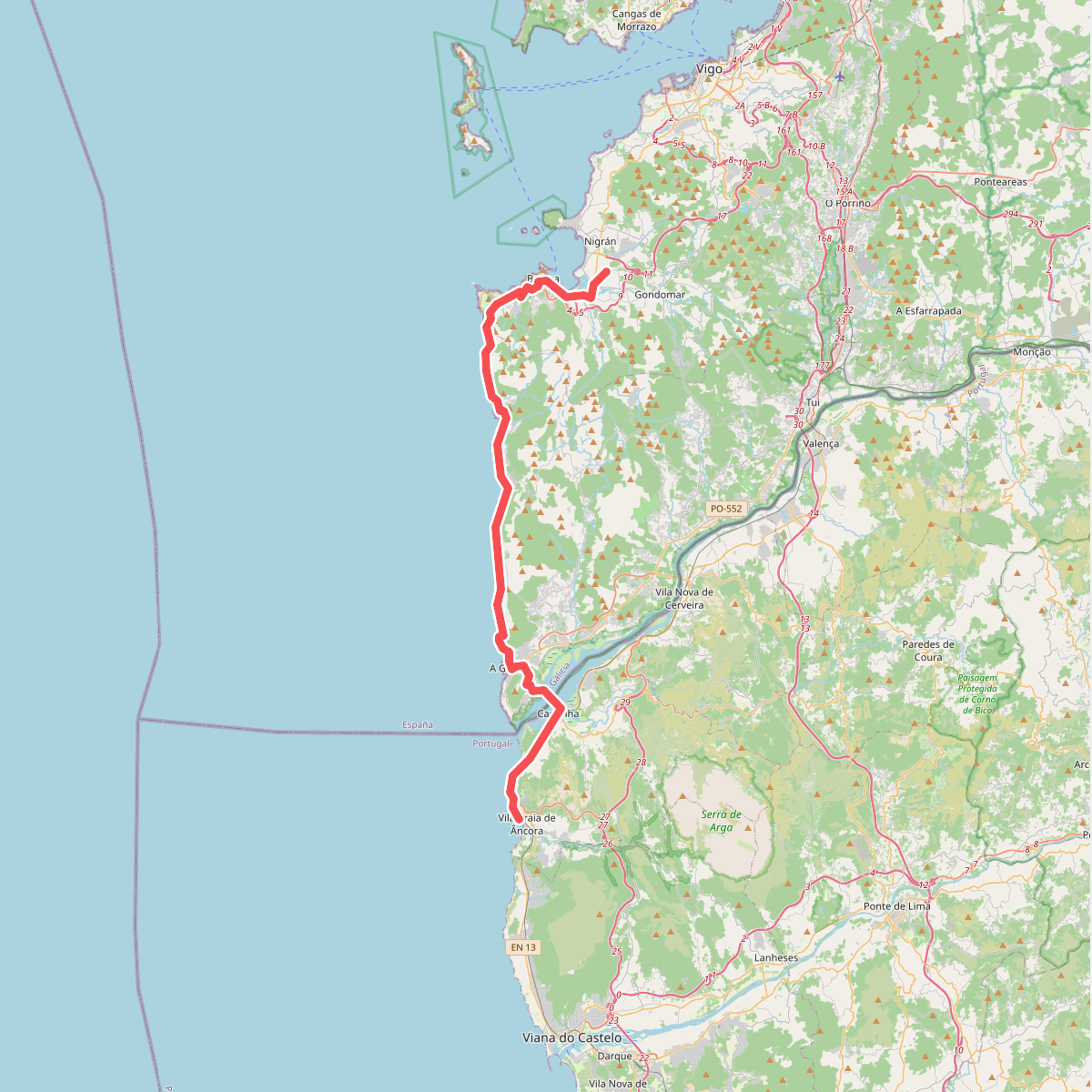
#11. Porto - Santiago deel 3 · Porto - Santiago etappe 3