
The best hiking routes in Uckermärkische Seen
Discover the best walks in Uckermärkische Seen. 6 routes on the map, with descriptions, photos and GPX.
About Uckermärkische Seen
The Uckermärkische Seen nature park offers a gently rolling landscape shaped by the last ice age, where dense beech and pine forests alternate with over two hundred lakes, mires, and small kettle holes. Unlike the flat agricultural plains nearby, this area is defined by its constant transition between water and woodland. Walkers will find a mix of wide, hard-packed forest tracks and narrow, uneven paths that wind through damp hollows and along lake shores. The terrain is never flat, but it lacks any steep climbs or high vantage points, offering instead a quiet, enclosed woodland experience.
Read more
About Uckermärkische Seen
The Uckermärkische Seen nature park offers a gently rolling landscape shaped by the last ice age, where dense beech and pine forests alternate with over two hundred lakes, mires, and small kettle holes. Unlike the flat agricultural plains nearby, this area is defined by its constant transition between water and woodland. Walkers will find a mix of wide, hard-packed forest tracks and narrow, uneven paths that wind through damp hollows and along lake shores. The terrain is never flat, but it lacks any steep climbs or high vantage points, offering instead a quiet, enclosed woodland experience.
Read moreThe Uckermärkische Seen nature park offers a gently rolling landscape shaped by the last ice age, where dense beech and pine forests alternate with over two hundred lakes, mires, and small kettle holes. Unlike the flat agricultural plains nearby, this area is defined by its constant transition between water and woodland. Walkers will find a mix of wide, hard-packed forest tracks and narrow, uneven paths that wind through damp hollows and along lake shores. The terrain is never flat, but it lacks any steep climbs or high vantage points, offering instead a quiet, enclosed woodland experience.
Underfoot, the paths vary from soft, needle-covered soil in the pine stands to sandy stretches that can feel loose, particularly on the low hills. Near the lake margins and peat bogs, the ground becomes damp and spongy, with wooden boardwalks occasionally provided to cross the wettest sections. The water itself is a constant presence, though often glimpsed through a screen of reeds or alder trees rather than across wide, open vistas. It is a landscape of close details, where the transition from dry sandy ridges to wet peat depressions happens within a few dozen metres.
In late autumn, particularly November, the beech forests lose their leaves, revealing the complex contours of the glacial moraines and the dark surfaces of the hidden lakes. The area is generally quiet, though the lakeside paths near Lychen and Templin see more foot traffic than the interior forest trails. Walkers should expect a landscape that requires attention to the ground, where the main appeal lies in the quiet variation of woodland and water rather than dramatic views.
Hiking routes in Uckermärkische Seen (6)
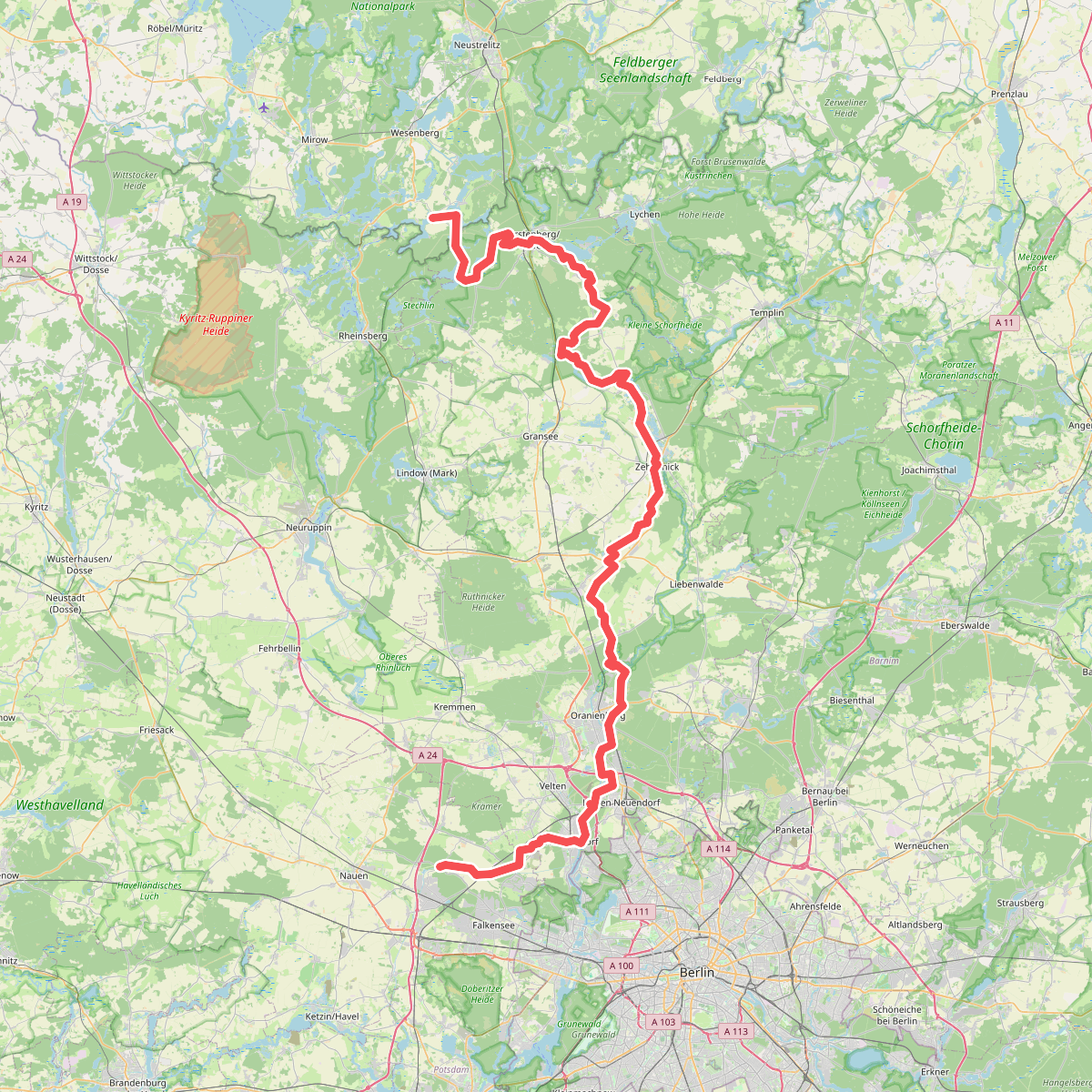
#1. European hiking path E10, Germany, Alternative
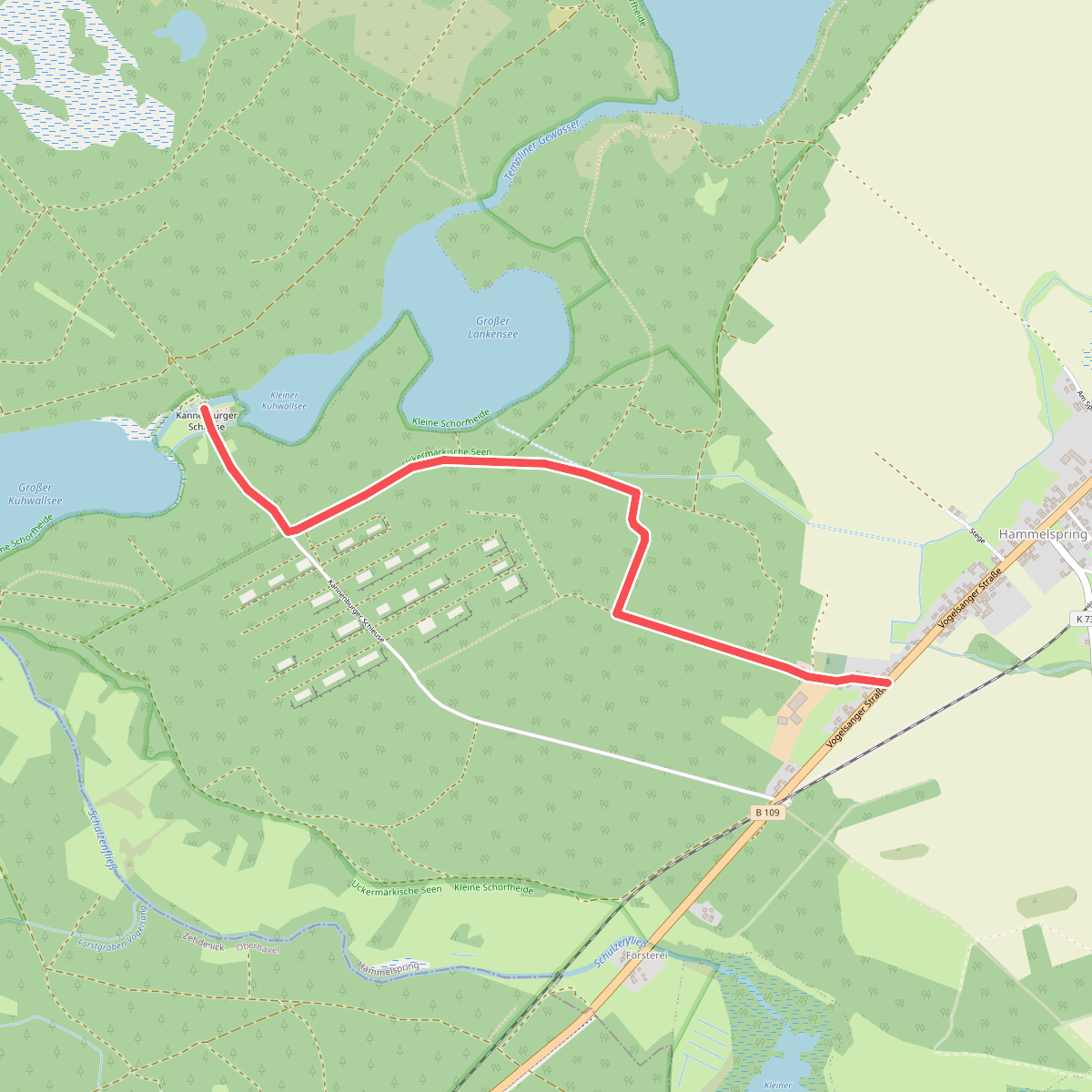
#2. Hammelspring-Kannenburg
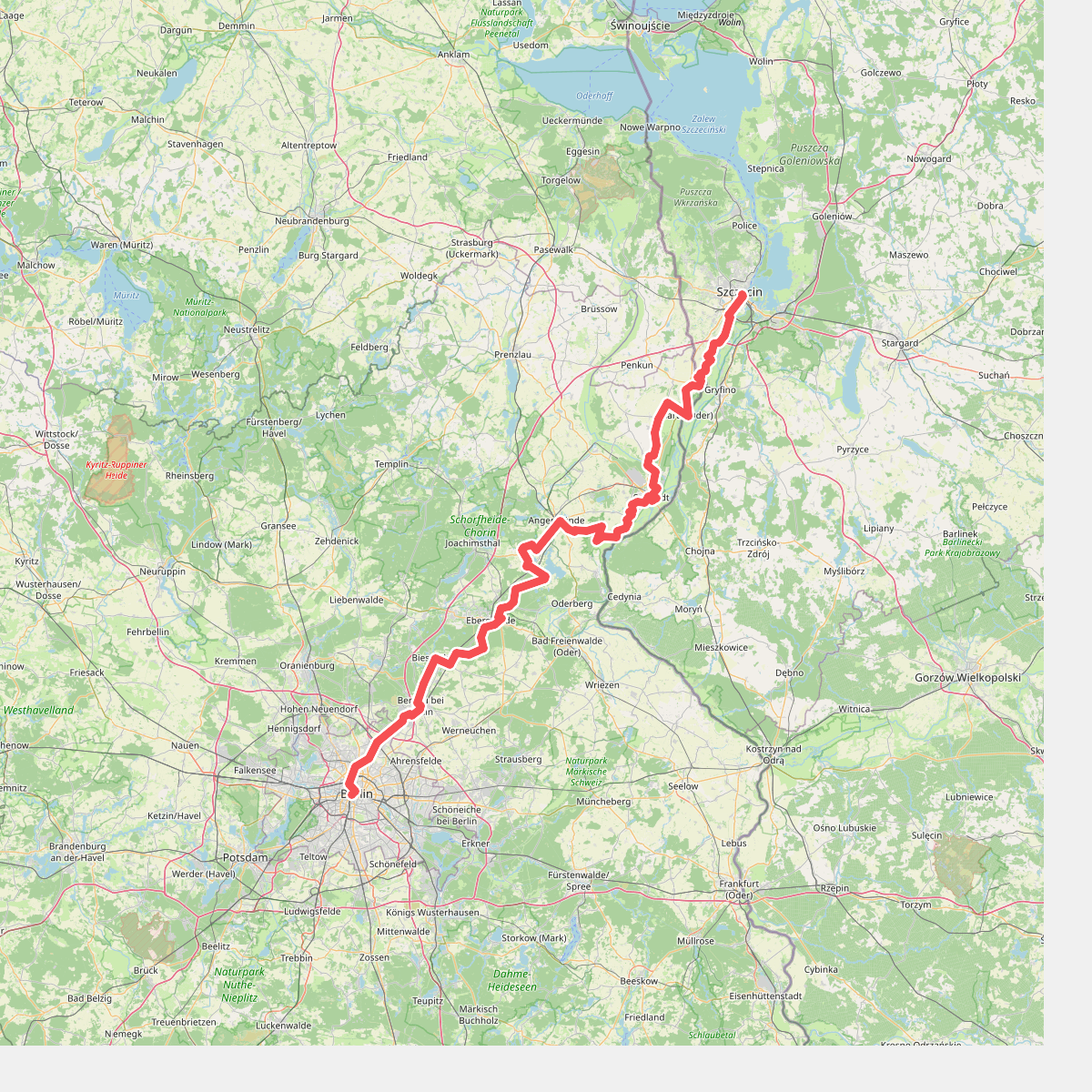
#3. Jakobsweg Via Imperii SzczecinPL- BerlinDE
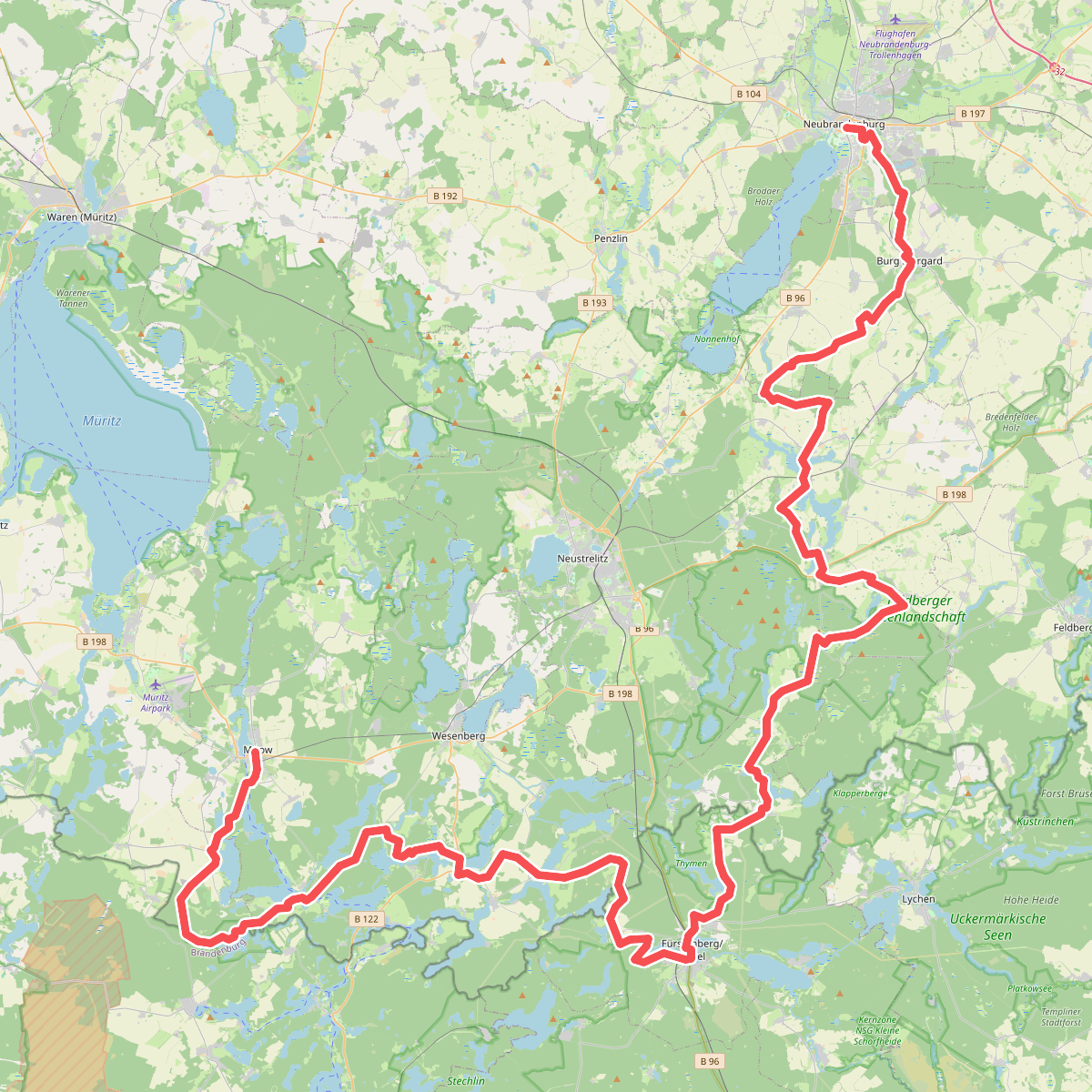
#4. Pilgerweg Mecklenburgische Seenplatte (Südost)
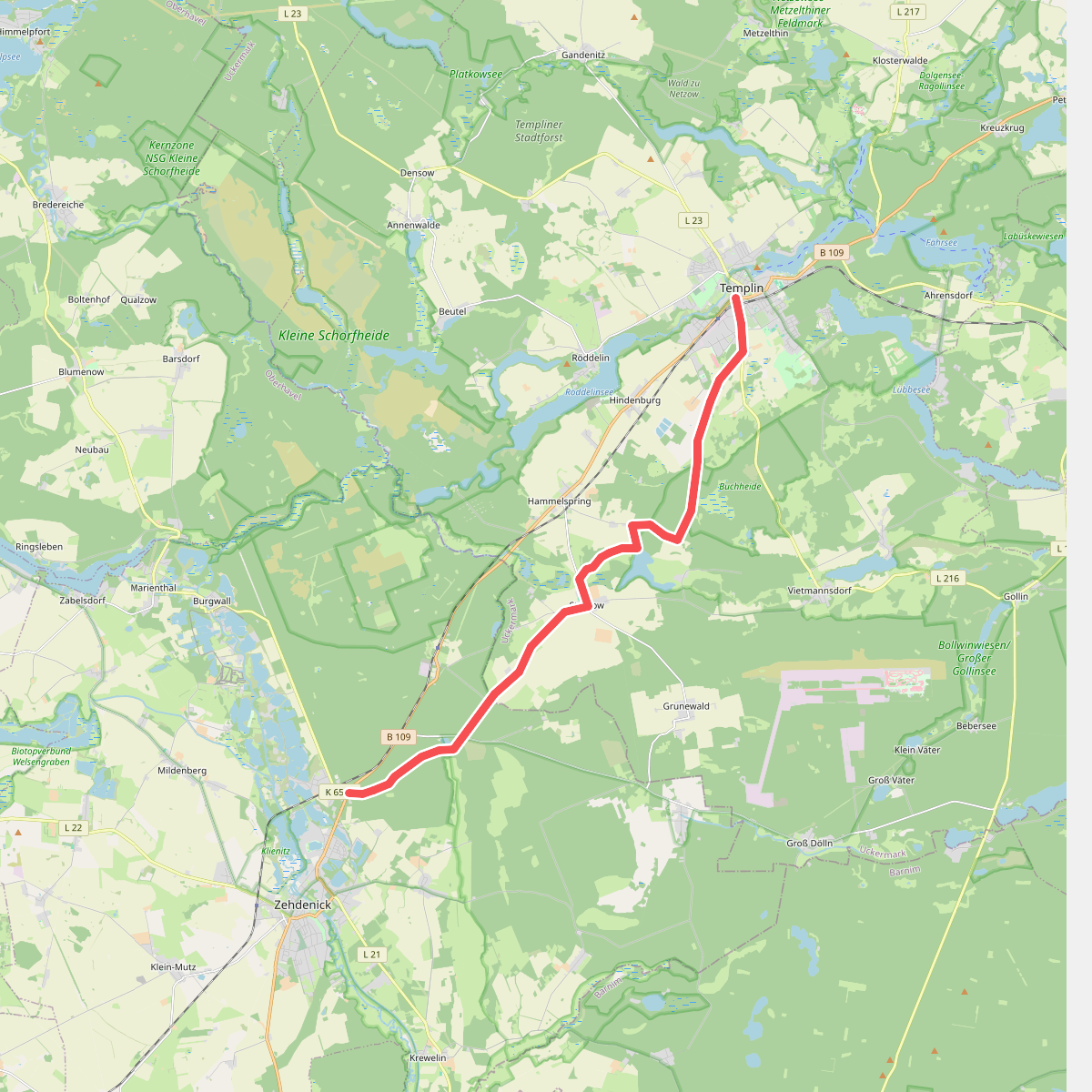
#5. Roter Balken Zehdenick-Templin