
The best hiking routes in Tivedens nationalpark
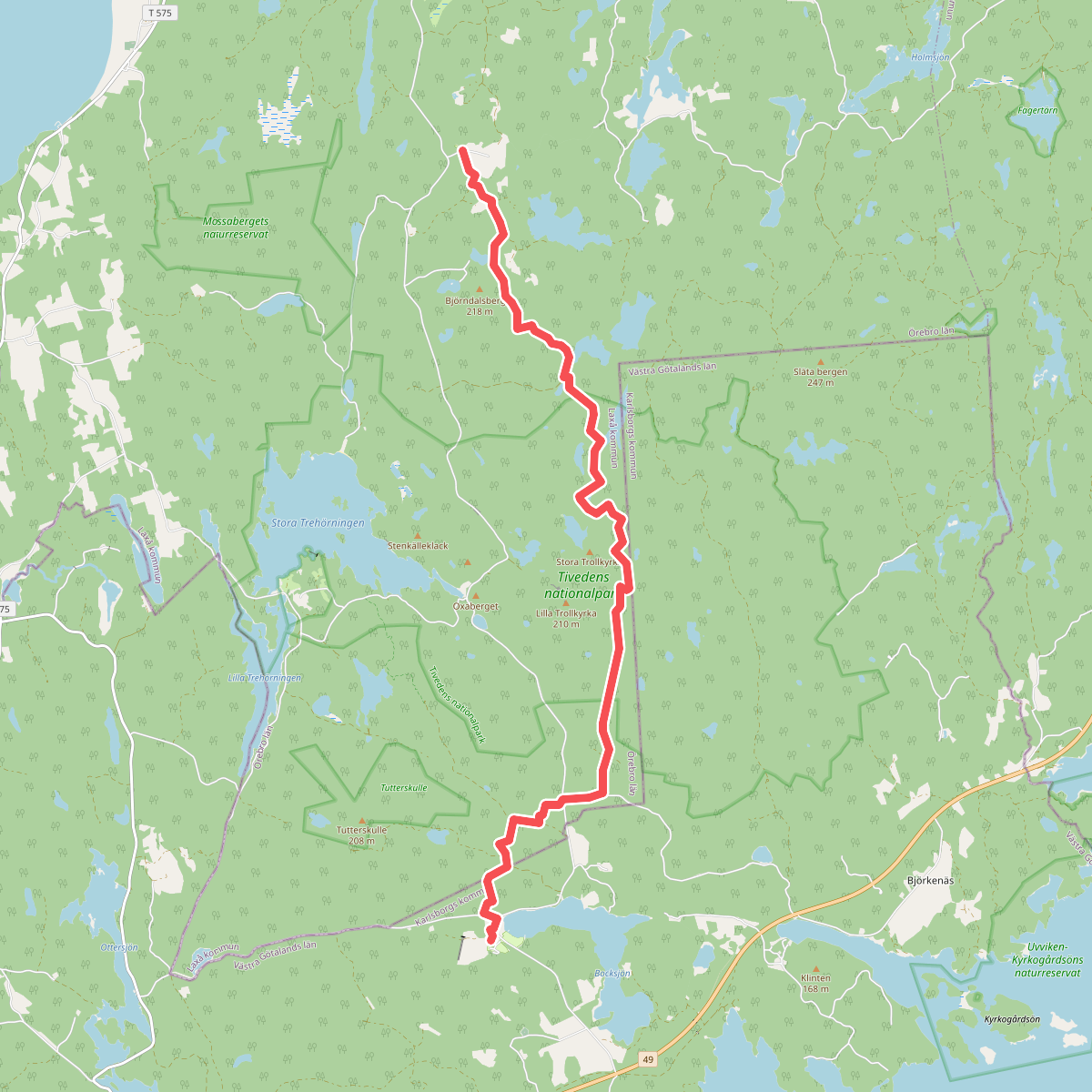
Discover the best walks in Tivedens nationalpark. 1 routes on the map, with descriptions, photos and GPX.
Managed by Länsstyrelsen i Örebro län
About Tivedens nationalpark
Tivedens nationalpark is defined by its rugged, chaotic terrain of massive granite boulders, deep rift valleys, and dense coniferous forest. Unlike flatter Swedish woodlands, walking here requires constant stepping over thick tree roots and scrambling over steep, moss-covered rock formations. The landscape is a direct result of the last ice age, which left behind a labyrinth of glacial debris that has remained largely undisturbed by modern forestry.
Read more
About Tivedens nationalpark
Tivedens nationalpark is defined by its rugged, chaotic terrain of massive granite boulders, deep rift valleys, and dense coniferous forest. Unlike flatter Swedish woodlands, walking here requires constant stepping over thick tree roots and scrambling over steep, moss-covered rock formations. The landscape is a direct result of the last ice age, which left behind a labyrinth of glacial debris that has remained largely undisturbed by modern forestry.
Read moreTivedens nationalpark is defined by its rugged, chaotic terrain of massive granite boulders, deep rift valleys, and dense coniferous forest. Unlike flatter Swedish woodlands, walking here requires constant stepping over thick tree roots and scrambling over steep, moss-covered rock formations. The landscape is a direct result of the last ice age, which left behind a labyrinth of glacial debris that has remained largely undisturbed by modern forestry.
Underfoot, the trails alternate between rough, uneven dirt paths, slippery granite slabs, and wooden boardwalks that cross the peat bogs and small, dark forest lakes. The elevation changes are short but frequent, meaning you will constantly climb and descend rather than follow a level contour. The central areas around the main entrance and Lake Stora Trehörningen feature the most developed infrastructure, while the outer loops offer a more rugged, less managed path.
This is a dense, enclosed forest environment where views are limited to the immediate trees, rocks, and small lakes rather than wide horizons. Visitors should expect slow progress due to the technical nature of the paths, which can become slick after rain. The park is highly popular, and the central trailheads are often busy, but the eastern and southern edges of the park generally see fewer walkers.