
The best hiking routes in Parque Natural Montes de Málaga
Discover the best walks in Parque Natural Montes de Málaga. 6 routes on the map, with descriptions, photos and GPX.
Managed by Junta de Andalucía
About Parque Natural Montes de Málaga
Parque Natural Montes de Málaga is a heavily forested mountain range directly rising behind the coastal city of Malaga. Unlike the jagged limestone peaks found further inland in Andalusia, this area consists of softer, rounded hills shaped by clay and shale soils. The landscape you see today is the result of massive twentieth-century replanting efforts, dominated by Aleppo pines, which were introduced to prevent the devastating river floods that historically rushed down the steep slopes into the city below.
Read more
About Parque Natural Montes de Málaga
Parque Natural Montes de Málaga is a heavily forested mountain range directly rising behind the coastal city of Malaga. Unlike the jagged limestone peaks found further inland in Andalusia, this area consists of softer, rounded hills shaped by clay and shale soils. The landscape you see today is the result of massive twentieth-century replanting efforts, dominated by Aleppo pines, which were introduced to prevent the devastating river floods that historically rushed down the steep slopes into the city below.
Read moreParque Natural Montes de Málaga is a heavily forested mountain range directly rising behind the coastal city of Malaga. Unlike the jagged limestone peaks found further inland in Andalusia, this area consists of softer, rounded hills shaped by clay and shale soils. The landscape you see today is the result of massive twentieth-century replanting efforts, dominated by Aleppo pines, which were introduced to prevent the devastating river floods that historically rushed down the steep slopes into the city below.
When walking here, the terrain underfoot consists mostly of wide, unpaved forest tracks and narrower dirt paths that can be stony and uneven in places. The dense pine canopy provides extensive shade, which creates a distinct woodland atmosphere that contrasts sharply with the exposed, sun-baked scrublands typical of southern Spain. As you climb higher, the pine forests occasionally open up to reveal patches of traditional Mediterranean vegetation, including cork oaks, olive trees, and carob trees.
Walkers should expect steady, sometimes demanding climbs rather than flat strolls or dramatic alpine ridges. The park is highly accessible, meaning the main tracks near the environmental education centres and picnic areas are popular with local cyclists and families, while the steeper, narrower paths deeper in the valleys offer a much quieter experience among the trees.
Hiking routes in Parque Natural Montes de Málaga (6)
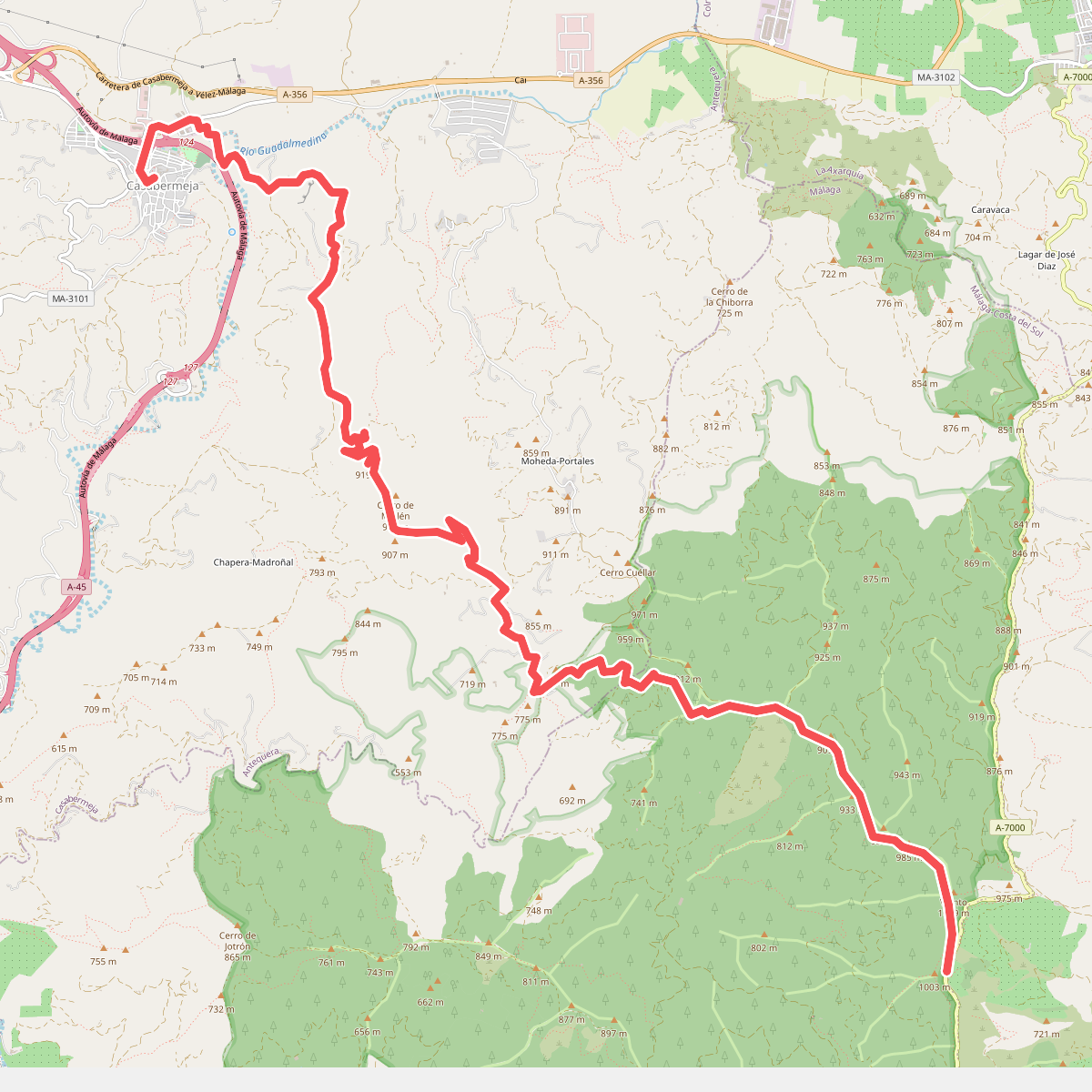
#1. Casabermeja - Cerro Mallén
Casabermeja
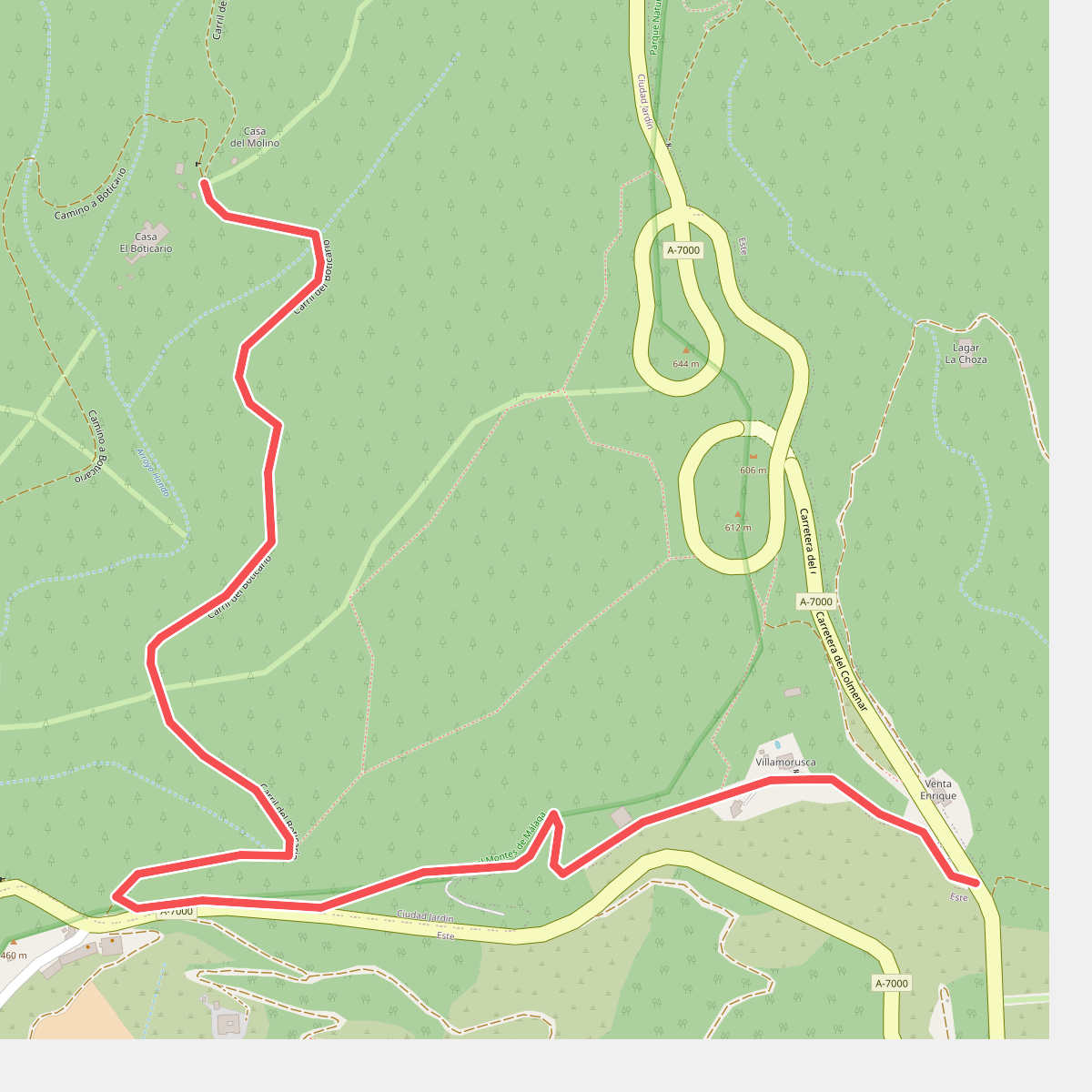
#2. Enlace Boticario Mirador
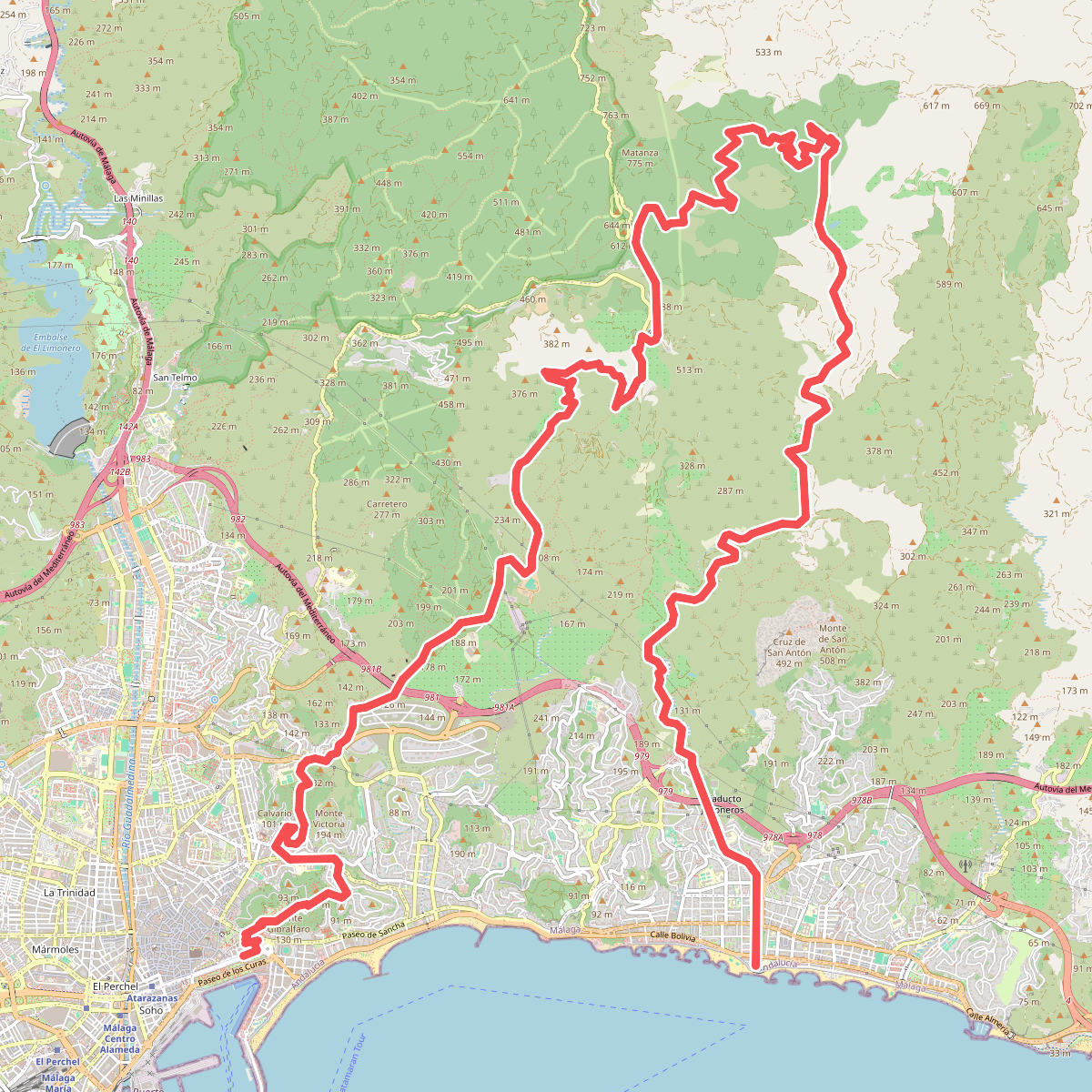
#3. Sendero del Mirador
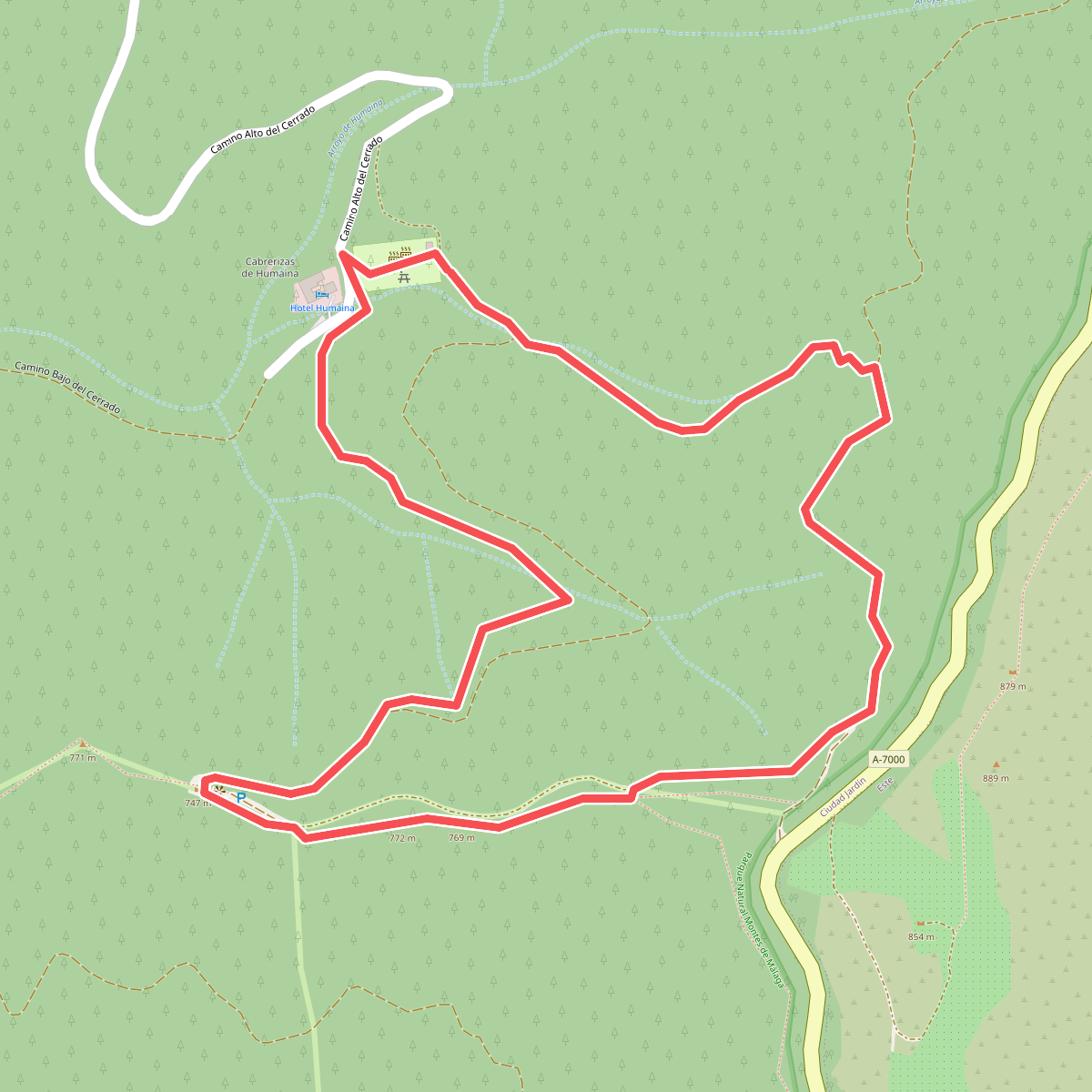
#4. Sendero El Cerrado
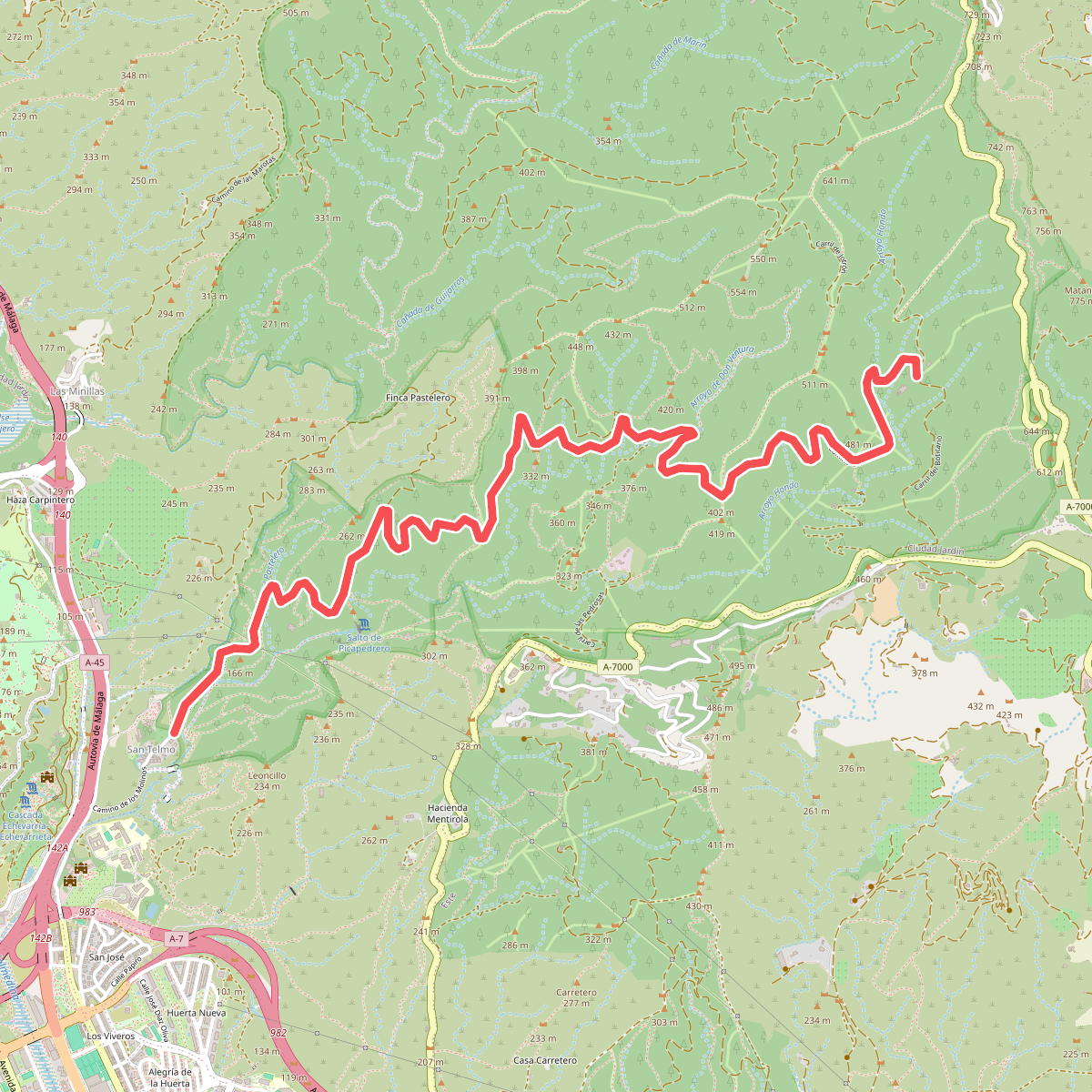
#5. Sendero Picapedrero-Boticario