The best hiking routes in Parque Natural de las Bardenas Reales
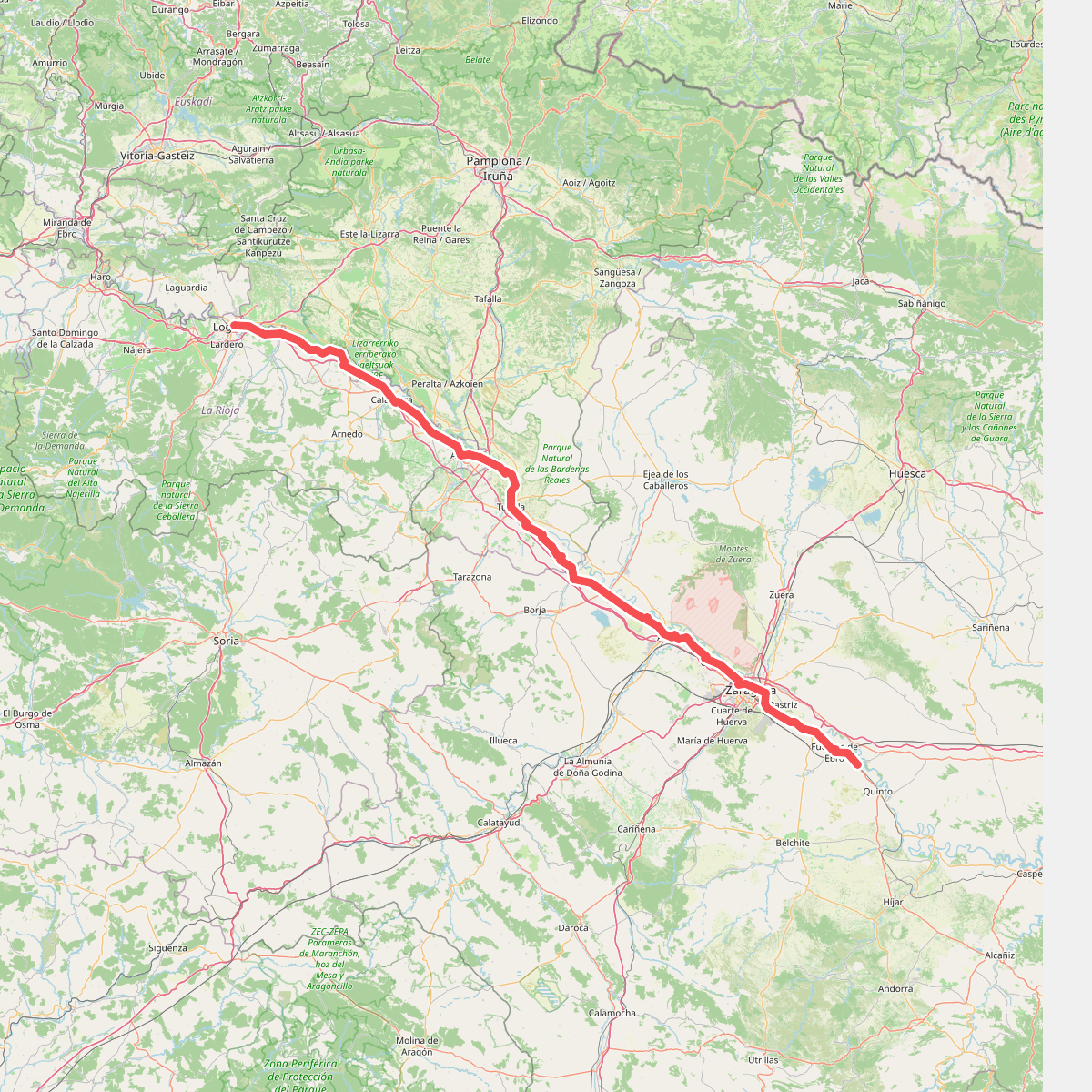
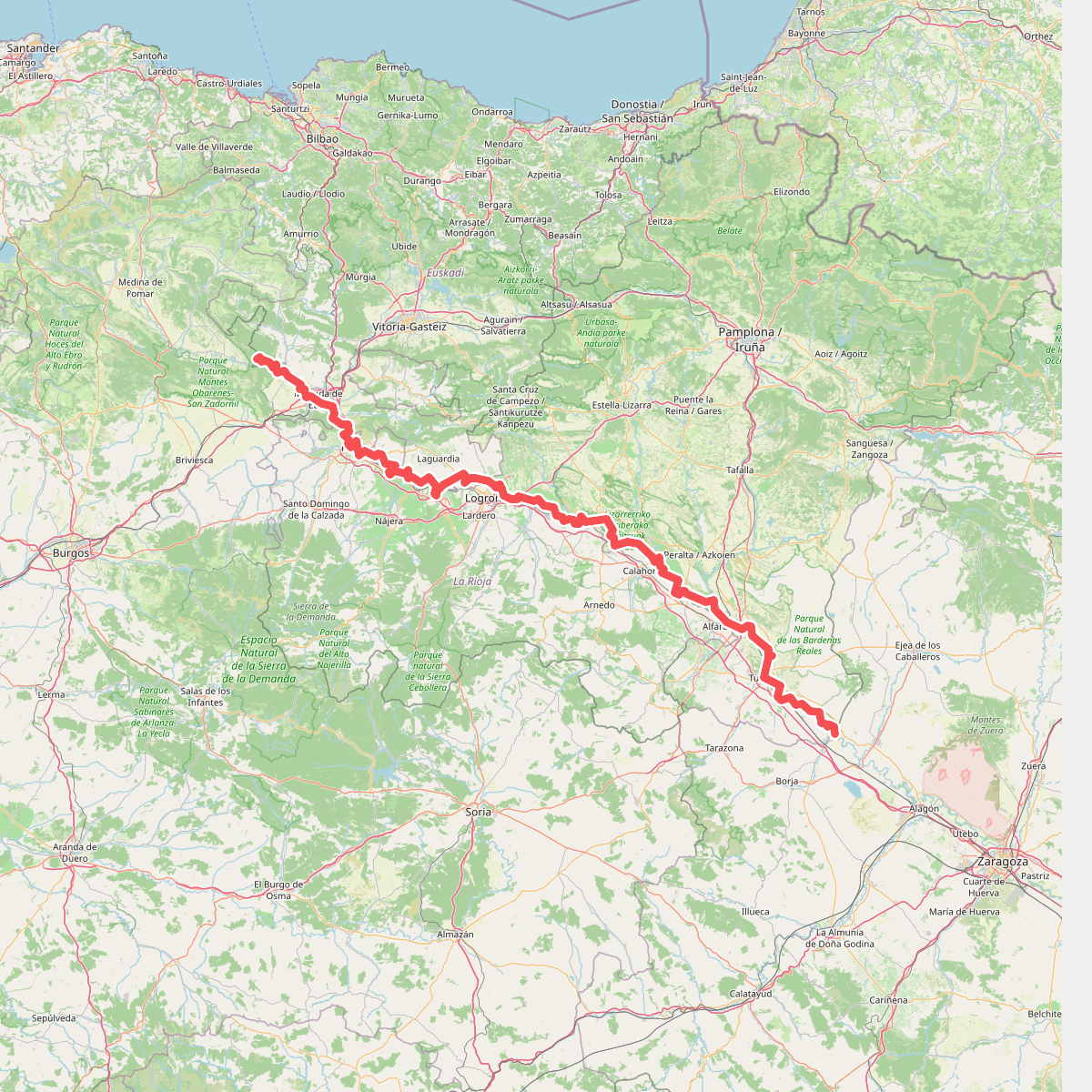
Discover the best walks in Parque Natural de las Bardenas Reales. 2 routes on the map, with descriptions, photos and GPX.
About Parque Natural de las Bardenas Reales
Parque Natural de las Bardenas Reales is a semi-desert landscape in northern Spain, characterized by clay, chalk, and sandstone formations that have been heavily eroded by water and wind. Walkers will find a stark contrast between the white clay badlands of the Bardena Blanca, where flat-topped mesas like Castildetierra rise above dry ravines, and the greener, pine-covered plateaus of the Bardena Negra to the south. The terrain is highly exposed, with no natural shelter from the elements and very little shade.
Read more
About Parque Natural de las Bardenas Reales
Parque Natural de las Bardenas Reales is a semi-desert landscape in northern Spain, characterized by clay, chalk, and sandstone formations that have been heavily eroded by water and wind. Walkers will find a stark contrast between the white clay badlands of the Bardena Blanca, where flat-topped mesas like Castildetierra rise above dry ravines, and the greener, pine-covered plateaus of the Bardena Negra to the south. The terrain is highly exposed, with no natural shelter from the elements and very little shade.
Read moreParque Natural de las Bardenas Reales is a semi-desert landscape in northern Spain, characterized by clay, chalk, and sandstone formations that have been heavily eroded by water and wind. Walkers will find a stark contrast between the white clay badlands of the Bardena Blanca, where flat-topped mesas like Castildetierra rise above dry ravines, and the greener, pine-covered plateaus of the Bardena Negra to the south. The terrain is highly exposed, with no natural shelter from the elements and very little shade.
Underfoot, the paths consist of compacted clay, loose gravel, and dusty tracks. During dry periods, the clay bakes into a hard, cracked crust that is easy to step on, though it quickly turns into thick, sticky mud after rainfall, making off-track walking difficult. Navigating the park requires attention to the white and yellow trail markers, as the labyrinth of ravines and gullies can look remarkably similar from the ground.
This park is not a mountain range with high peaks or deep forested valleys, but rather a series of wide depressions and flat-topped hills. While the central tracks near the main viewpoints can attract vehicle traffic and cyclists, the walking-only paths deeper in the ravines offer a much quieter experience. Visitors should expect a dry, open environment where the primary appeal lies in the unusual geological shapes and the transition from bare clay to scrubby Mediterranean vegetation.