
The best hiking routes in Parque nacional de Cabañeros
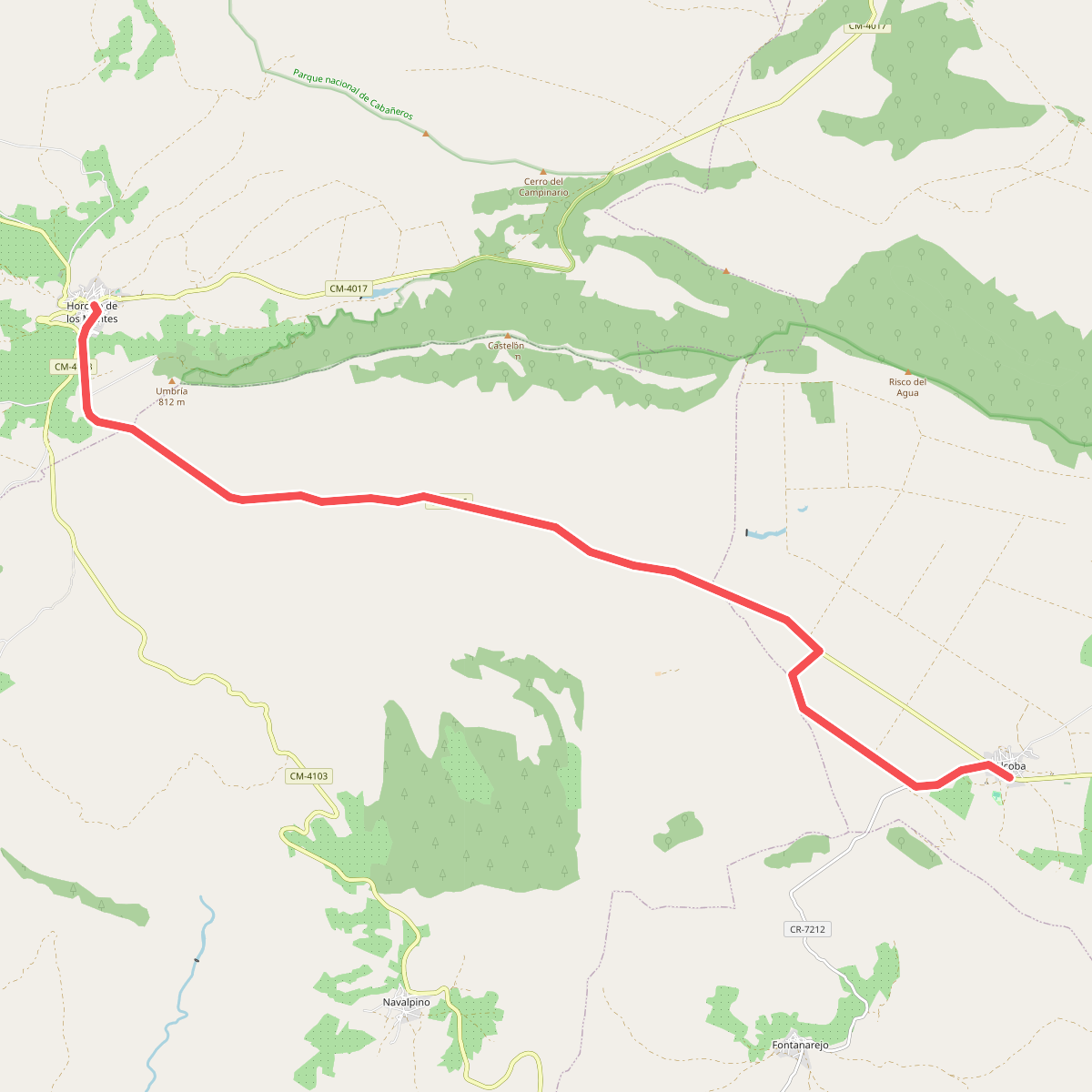
Discover the best walks in Parque nacional de Cabañeros. 1 routes on the map, with descriptions, photos and GPX.
About Parque nacional de Cabañeros
Parque nacional de Cabañeros is characterized by two distinct landscape types that dictate your walking experience: the flat, open grassland known as the raña, and the Mediterranean forested hillsides of the sierra. Walking on the raña involves following wide, dirt tracks across vast, clay-rich plains dotted with scattered holm oaks, where the terrain is completely flat and exposed. In contrast, entering the wooded slopes requires navigating stony paths that climb gently through dense scrub of rockrose, heather, and cork oak, where the tree canopy provides intermittent shade.
Read more
About Parque nacional de Cabañeros
Parque nacional de Cabañeros is characterized by two distinct landscape types that dictate your walking experience: the flat, open grassland known as the raña, and the Mediterranean forested hillsides of the sierra. Walking on the raña involves following wide, dirt tracks across vast, clay-rich plains dotted with scattered holm oaks, where the terrain is completely flat and exposed. In contrast, entering the wooded slopes requires navigating stony paths that climb gently through dense scrub of rockrose, heather, and cork oak, where the tree canopy provides intermittent shade.
Read moreParque nacional de Cabañeros is characterized by two distinct landscape types that dictate your walking experience: the flat, open grassland known as the raña, and the Mediterranean forested hillsides of the sierra. Walking on the raña involves following wide, dirt tracks across vast, clay-rich plains dotted with scattered holm oaks, where the terrain is completely flat and exposed. In contrast, entering the wooded slopes requires navigating stony paths that climb gently through dense scrub of rockrose, heather, and cork oak, where the tree canopy provides intermittent shade.
Underfoot, the transition between these zones is sharp. The low-lying plains feature hard-packed earth that can become sticky clay after autumn rains, while the hillside trails are dominated by loose quartzite scree and rocky steps that require stable footing. There are no high alpine peaks or deep ravines here; instead, the landscape consists of gently rolling ridges and wide-open savannahs. Navigating the park is straightforward, as walkers are restricted to designated, well-marked paths to protect the breeding grounds of large raptors and Iberian mammals.
Choosing where to walk depends on the season and your interest in wildlife. The open raña is ideal for observing large herds of red deer, particularly during the autumn rutting season in September and October, though these flat tracks offer little shelter. The forested valleys, such as those around the Estena river, offer boardwalks and gravel paths that run alongside permanent watercourses, where deciduous trees like gall oaks and willows create a cooler, more enclosed environment.