
The best hiking routes in Parco Regionale del Monte San Bartolo
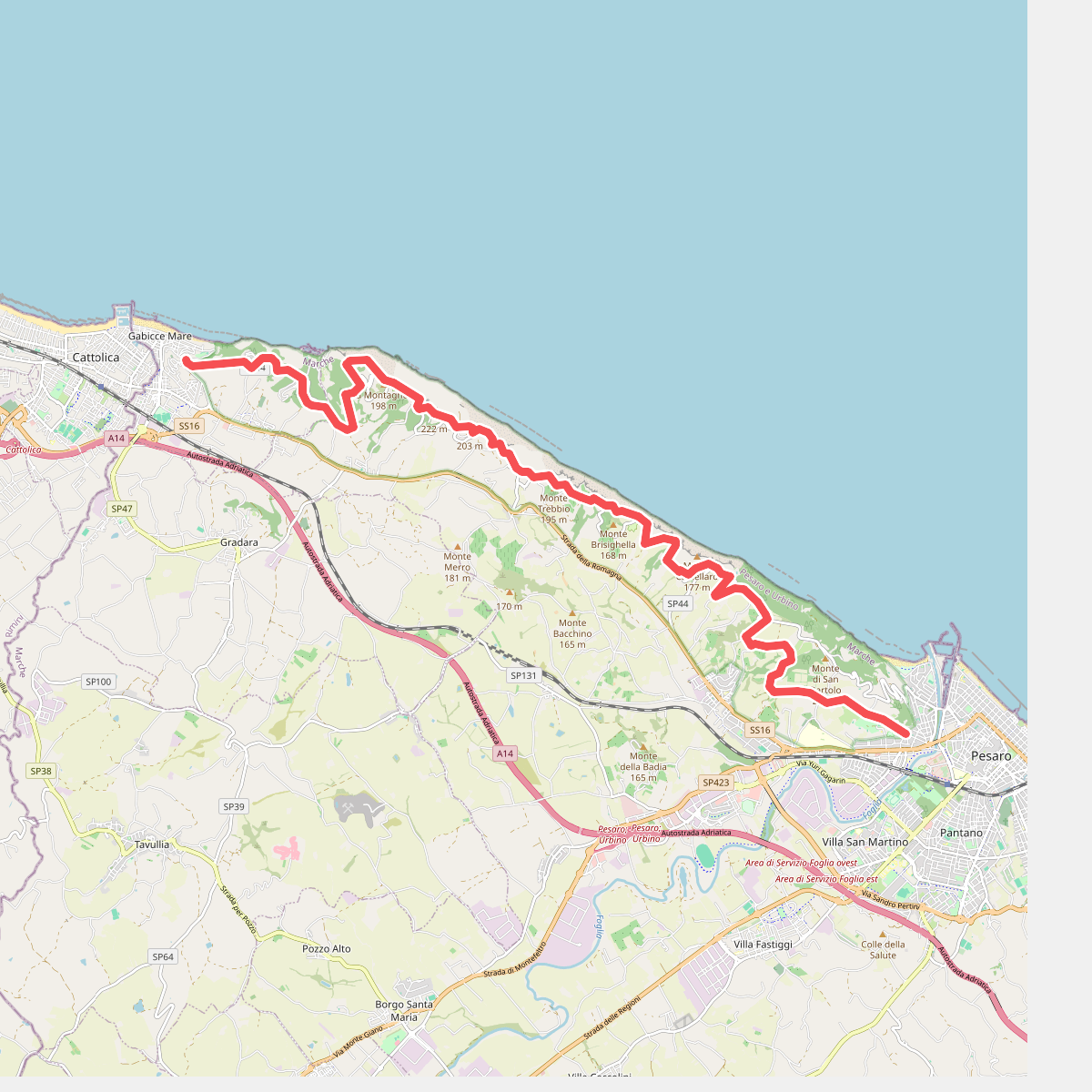
Discover the best walks in Parco Regionale del Monte San Bartolo. 1 routes on the map, with descriptions, photos and GPX.
About Parco Regionale del Monte San Bartolo
Parco Regionale del Monte San Bartolo offers a distinct coastal walking experience where the northern Apennines abruptly meet the Adriatic Sea. Unlike the flat sandy beaches typical of this coastline, this park is defined by high clay cliffs and steep slopes that rise directly from the water. The terrain is characterized by a mix of cultivated fields, abandoned pastures, and dense Mediterranean scrub, with broom shrubs dominating the landscape and flowering yellow in May. Walking here means navigating a network of dirt tracks, gravel paths, and occasional paved lanes that connect small hilltop hamlets like Casteldimezzo and Fiorenzuola di Focara.
Read more
About Parco Regionale del Monte San Bartolo
Parco Regionale del Monte San Bartolo offers a distinct coastal walking experience where the northern Apennines abruptly meet the Adriatic Sea. Unlike the flat sandy beaches typical of this coastline, this park is defined by high clay cliffs and steep slopes that rise directly from the water. The terrain is characterized by a mix of cultivated fields, abandoned pastures, and dense Mediterranean scrub, with broom shrubs dominating the landscape and flowering yellow in May. Walking here means navigating a network of dirt tracks, gravel paths, and occasional paved lanes that connect small hilltop hamlets like Casteldimezzo and Fiorenzuola di Focara.
Read moreParco Regionale del Monte San Bartolo offers a distinct coastal walking experience where the northern Apennines abruptly meet the Adriatic Sea. Unlike the flat sandy beaches typical of this coastline, this park is defined by high clay cliffs and steep slopes that rise directly from the water. The terrain is characterized by a mix of cultivated fields, abandoned pastures, and dense Mediterranean scrub, with broom shrubs dominating the landscape and flowering yellow in May. Walking here means navigating a network of dirt tracks, gravel paths, and occasional paved lanes that connect small hilltop hamlets like Casteldimezzo and Fiorenzuola di Focara.
Underfoot, the paths are primarily composed of packed clay and sandstone, which can become slick and heavy when wet. The elevation changes are moderate but frequent, requiring steady climbs and descents rather than long, high-altitude ascents. Walkers should expect a landscape shaped by active erosion, where the seaward cliffs show visible scars of landslides and shifting soil, contrasting with the more stable, farmed inland slopes.
The park is relatively compact, meaning the sound of the sea is rarely far away, even when walking through the shaded oak and hornbeam woods. While the main ridge paths are popular and can be busier on spring weekends, the narrower trails descending toward the pebble beaches below the cliffs offer a more secluded, rustic experience. It is a landscape of transition, where agricultural life exists alongside a fragile, constantly changing coastal edge.