
The best hiking routes in Parc naturel régional des Vosges du Nord
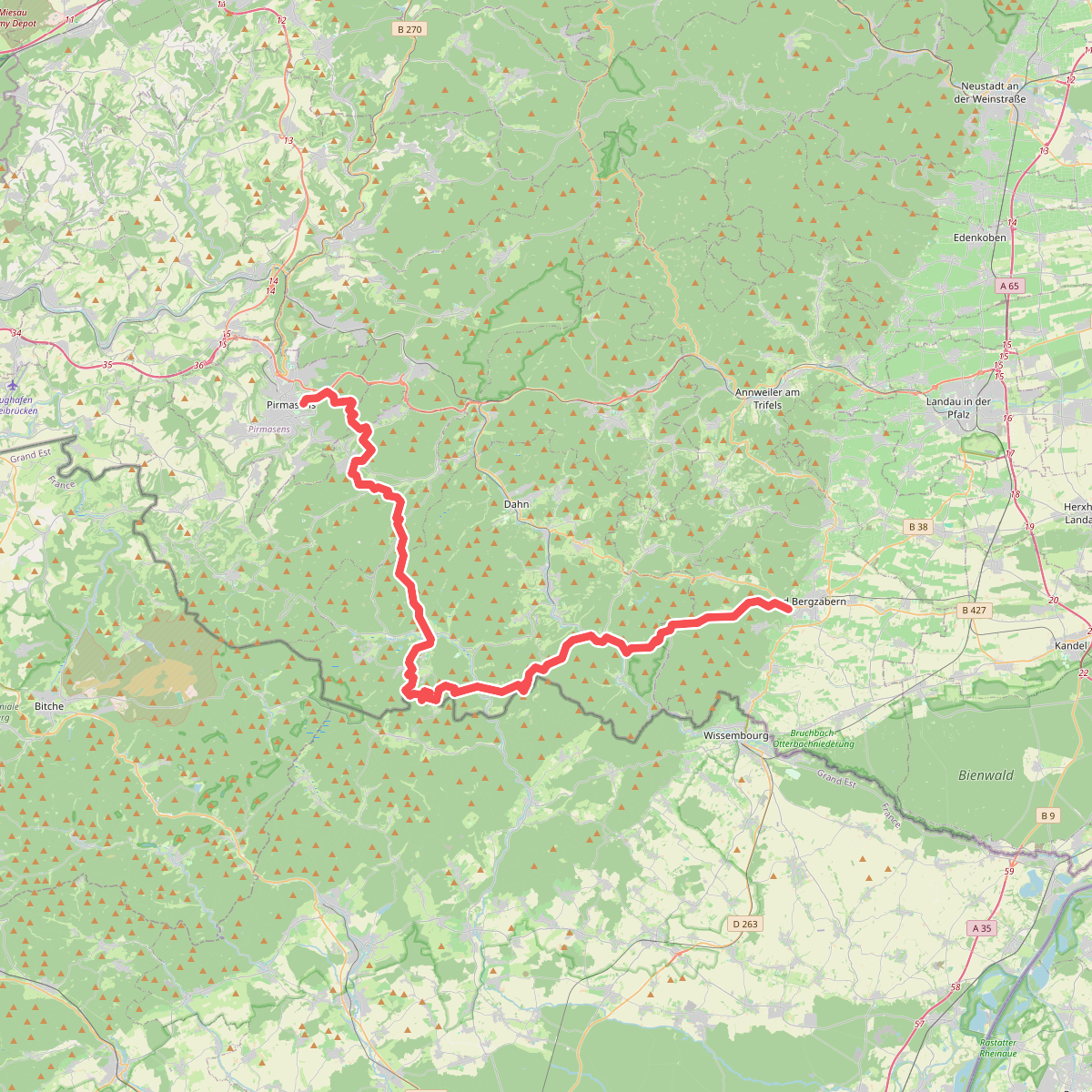
Discover the best walks in Parc naturel régional des Vosges du Nord. 21 routes on the map, with descriptions, photos and GPX.
About Parc naturel régional des Vosges du Nord
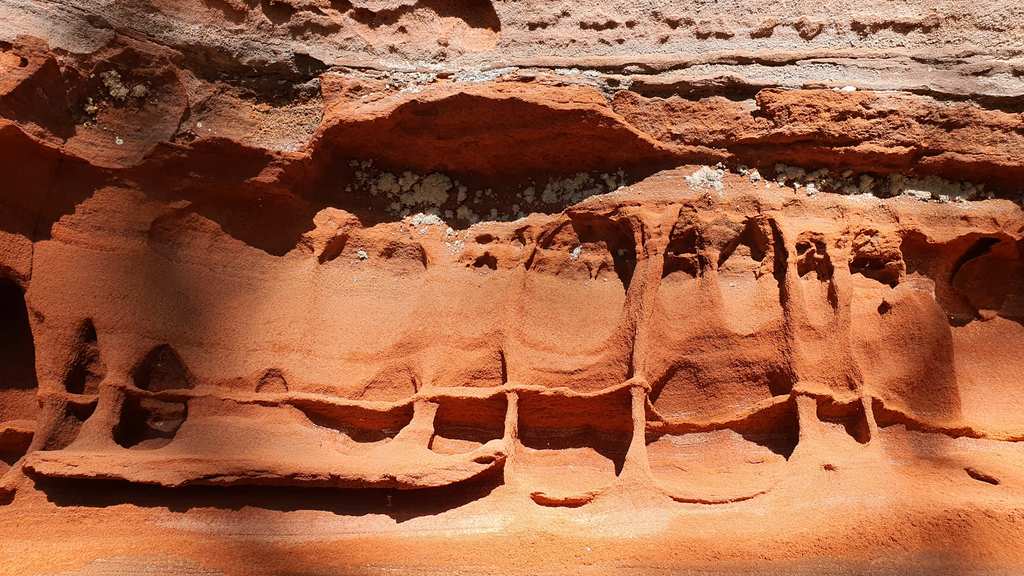
The Parc naturel régional des Vosges du Nord is characterized by low, forested sandstone hills rather than dramatic alpine peaks. Walking here means moving through dense woodland of beech, oak, and pine, where the sandstone bedrock frequently breaks the surface in the form of massive, weathered pink cliffs and ruined medieval castles built directly into the rock. Underfoot, the paths are predominantly sandy and soft, formed from the erosion of this Buntsandstein sandstone, which drains quickly and creates a dry, acidic soil profile.
Read more
About Parc naturel régional des Vosges du Nord
The Parc naturel régional des Vosges du Nord is characterized by low, forested sandstone hills rather than dramatic alpine peaks. Walking here means moving through dense woodland of beech, oak, and pine, where the sandstone bedrock frequently breaks the surface in the form of massive, weathered pink cliffs and ruined medieval castles built directly into the rock. Underfoot, the paths are predominantly sandy and soft, formed from the erosion of this Buntsandstein sandstone, which drains quickly and creates a dry, acidic soil profile.
Read moreThe Parc naturel régional des Vosges du Nord is characterized by low, forested sandstone hills rather than dramatic alpine peaks. Walking here means moving through dense woodland of beech, oak, and pine, where the sandstone bedrock frequently breaks the surface in the form of massive, weathered pink cliffs and ruined medieval castles built directly into the rock. Underfoot, the paths are predominantly sandy and soft, formed from the erosion of this Buntsandstein sandstone, which drains quickly and creates a dry, acidic soil profile.
As you explore, the dry forest ridges contrast sharply with the narrow, damp valley floors. In these low-lying areas, the landscape shifts to wet meadows, peat bogs, and quiet alder carrs, where boardwalks occasionally protect the fragile ground. The transition between the dry, pine-scented heights and the cool, humid valley bottoms is a constant feature of the local trail network, offering a varied terrain within relatively short distances.
In late autumn, particularly during November, the beech canopy turns a deep copper, and the fallen leaves cover the sandy tracks, making the pink stone formations stand out more prominently against the bare trees. While popular spots near the ruined castles can attract visitors on weekends, the deeper forest trails remain quiet, offering a consistent, undulating landscape of wood and stone without steep climbs or exposed ridges.
Hiking routes in Parc naturel régional des Vosges du Nord (21)
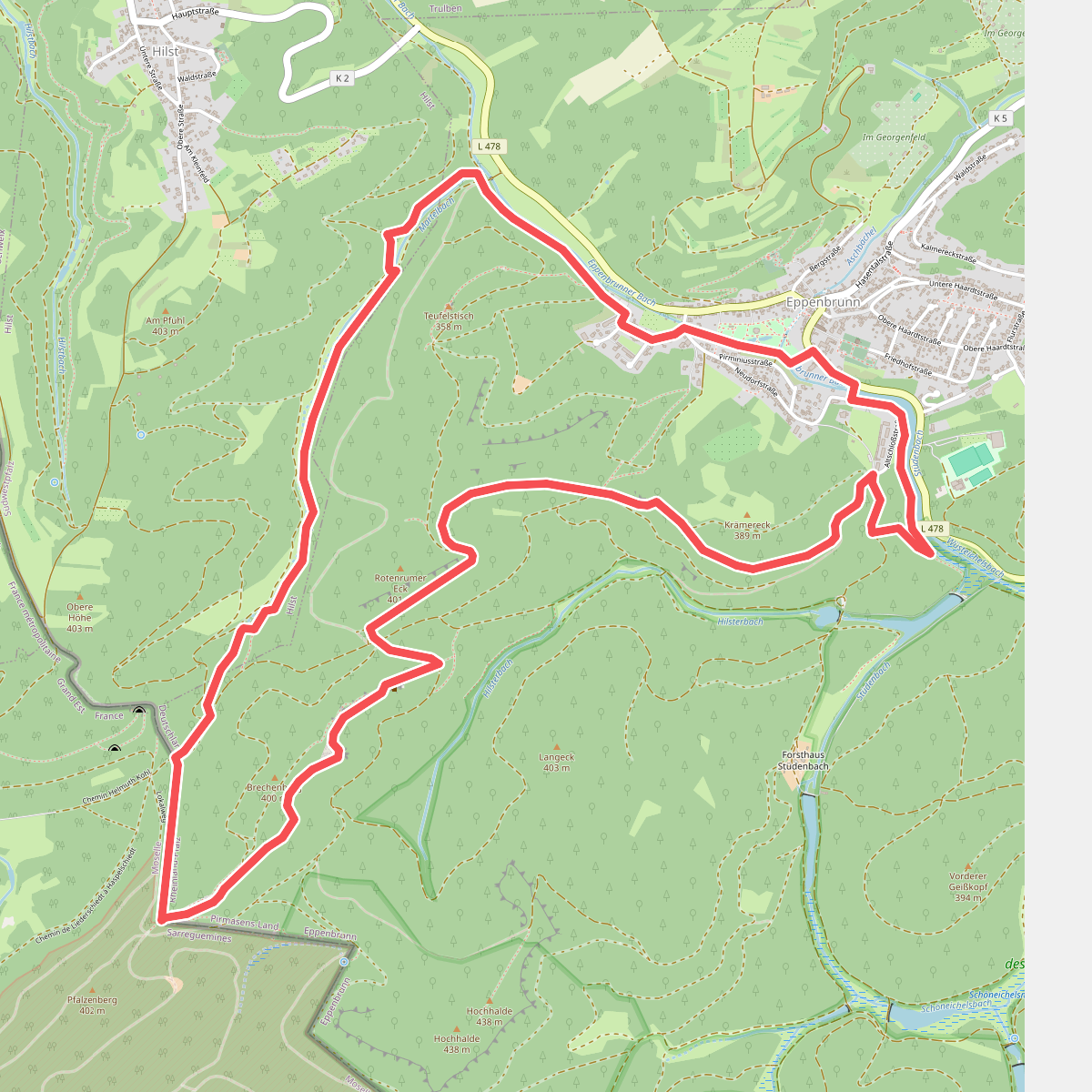
#1. Altschloßpfad
Eppenbrunn,Hilst
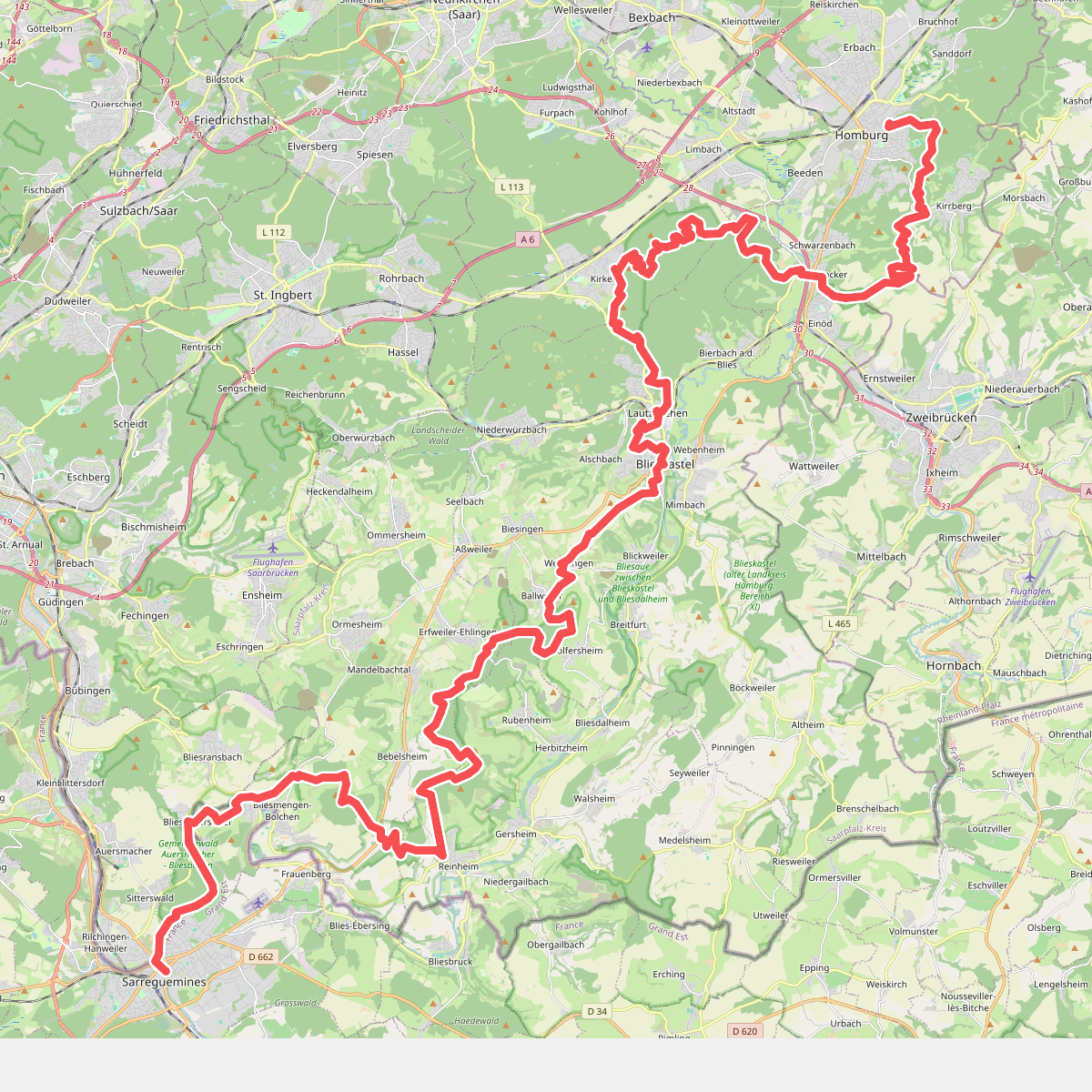
#2. Bliessteig
Homburg,Blieskastel,Kirkel,Mandelbachtal,Gersheim,Blies-Guersviller,Kleinblittersdorf,Sarreguemines
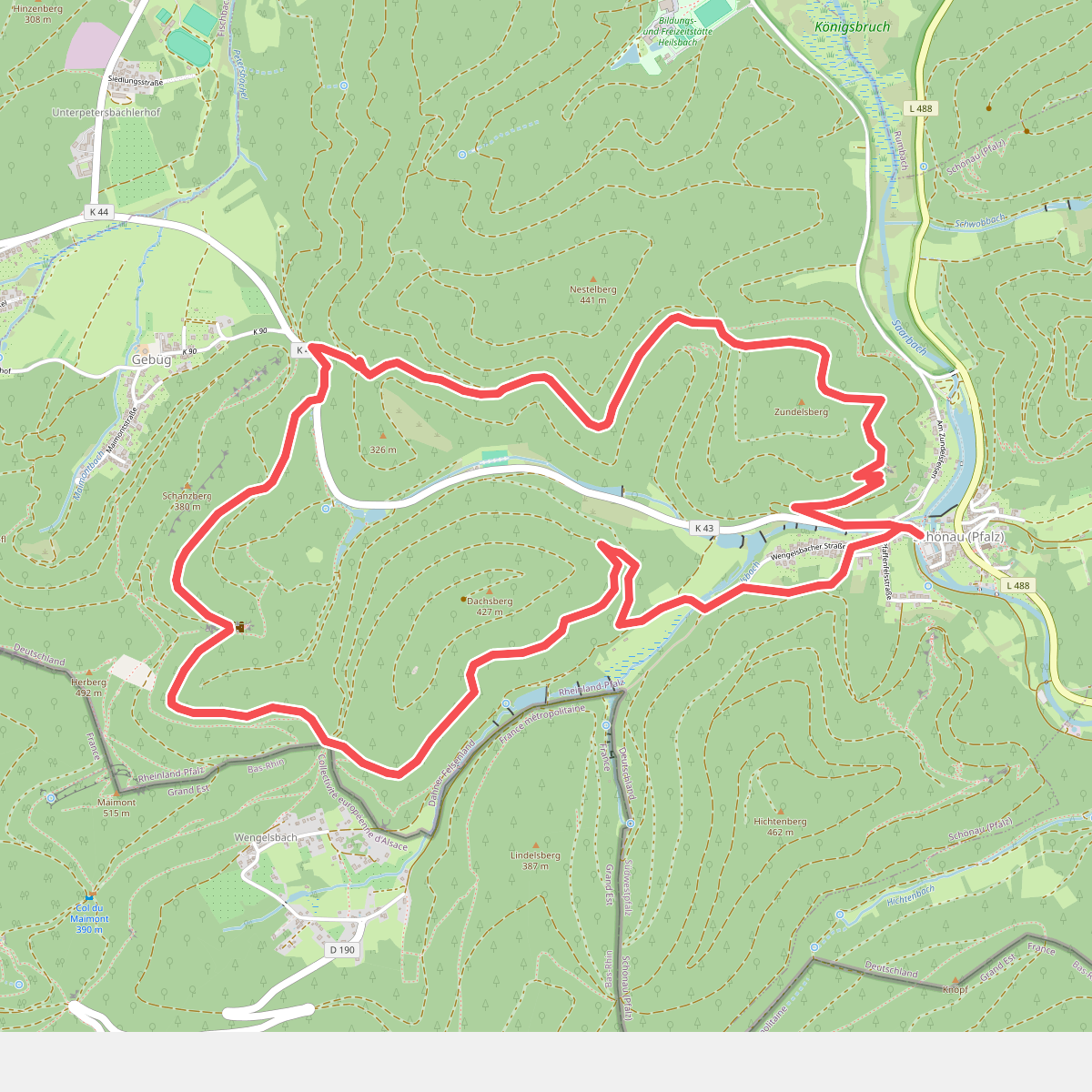
#3. Dachs-Weg
Schönau (Pfalz)
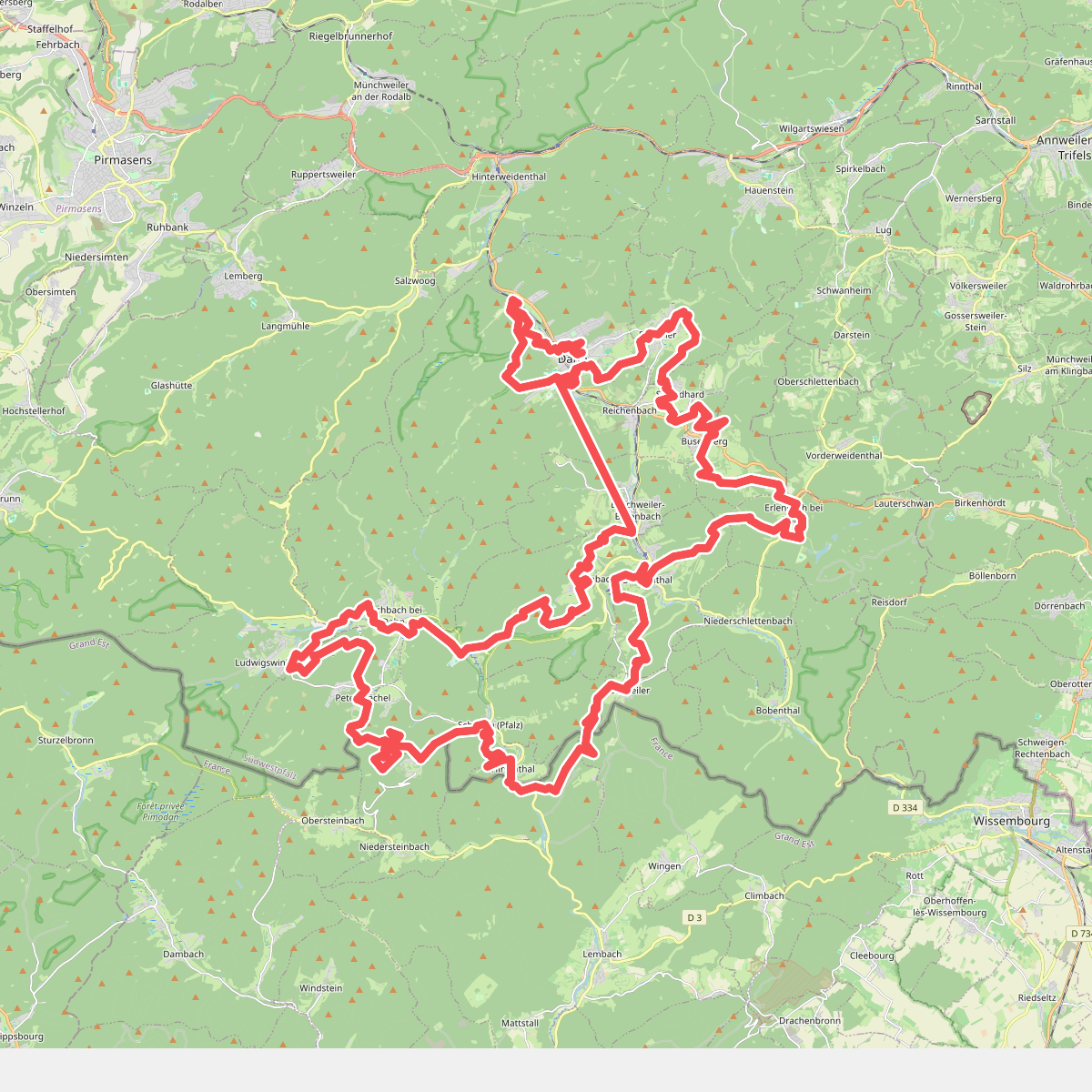
#4. Felsenland Sagenweg
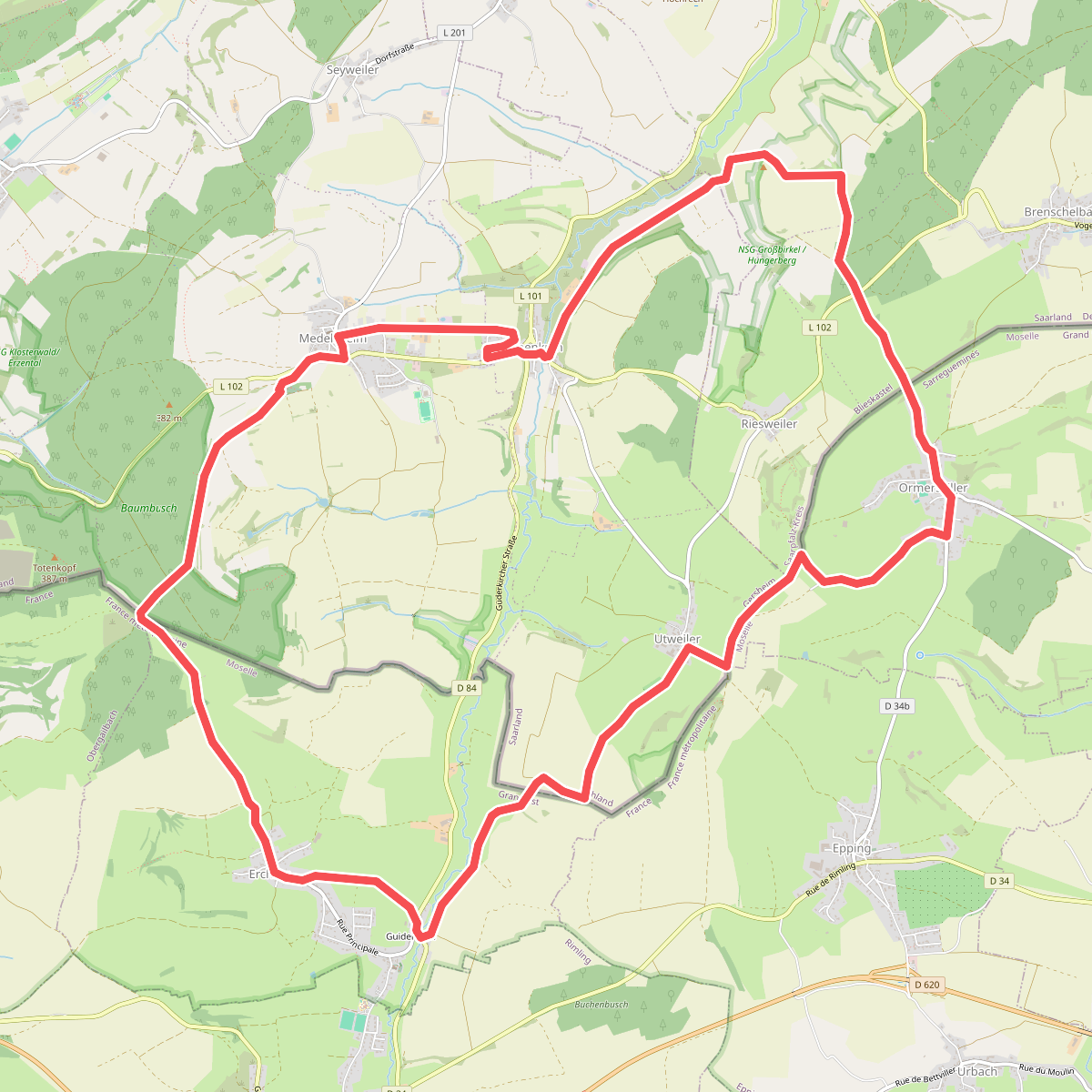
#5. Freundschaftsweg
Gersheim,Blieskastel,Ormersviller,Erching
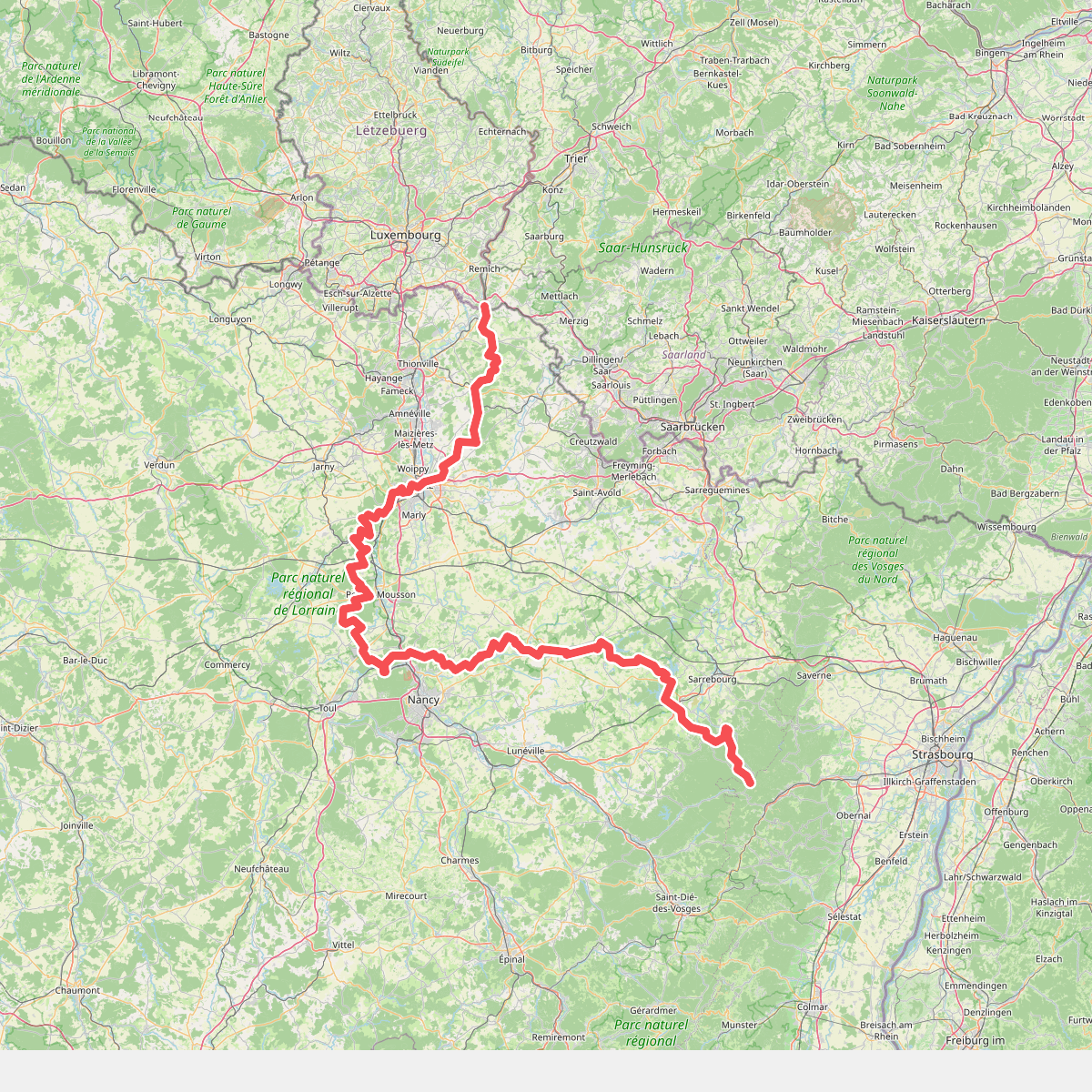
#6. GR 5 Lorraine
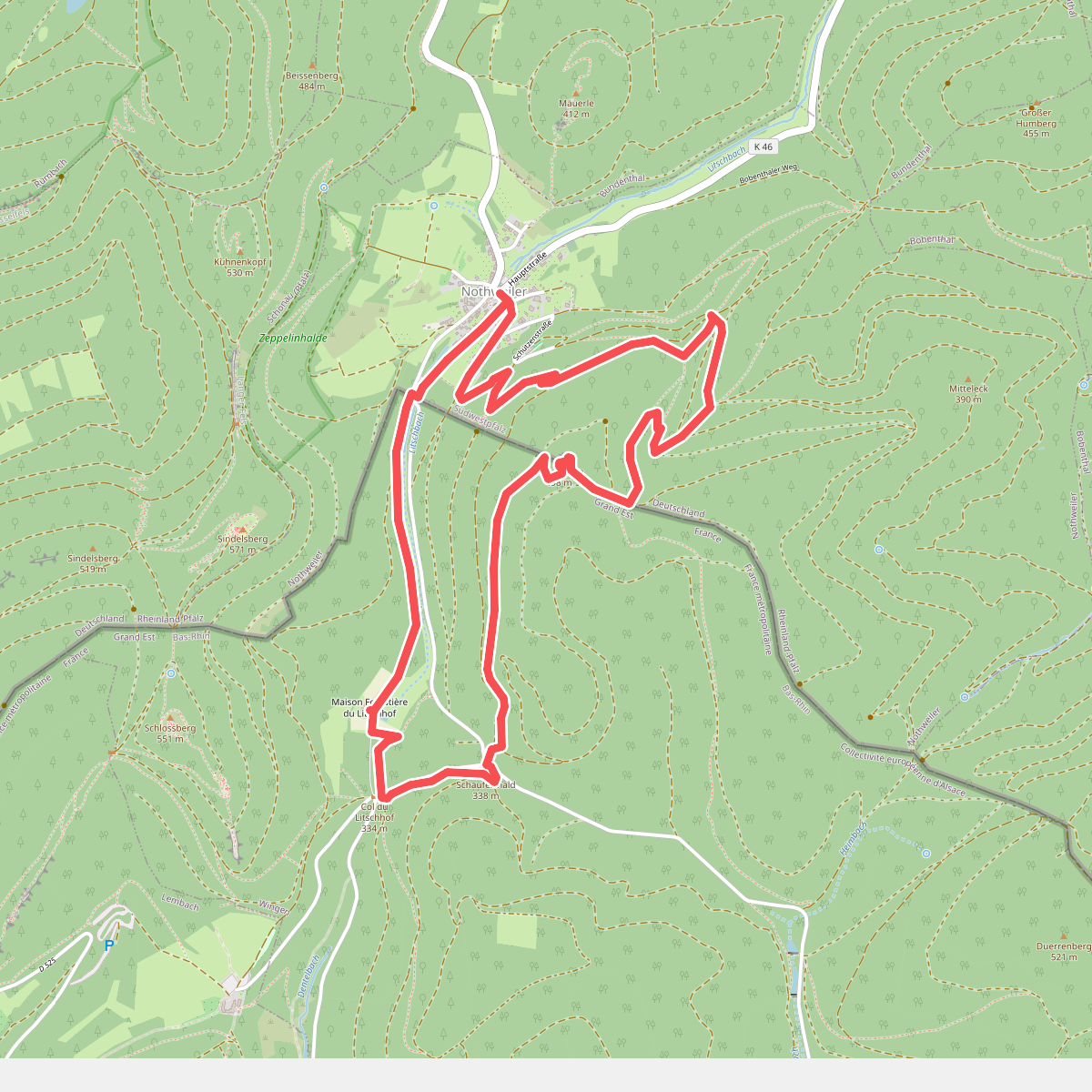
#7. Grenzgängerweg / Le sentier à saute frontier
Nothweiler,Wingen
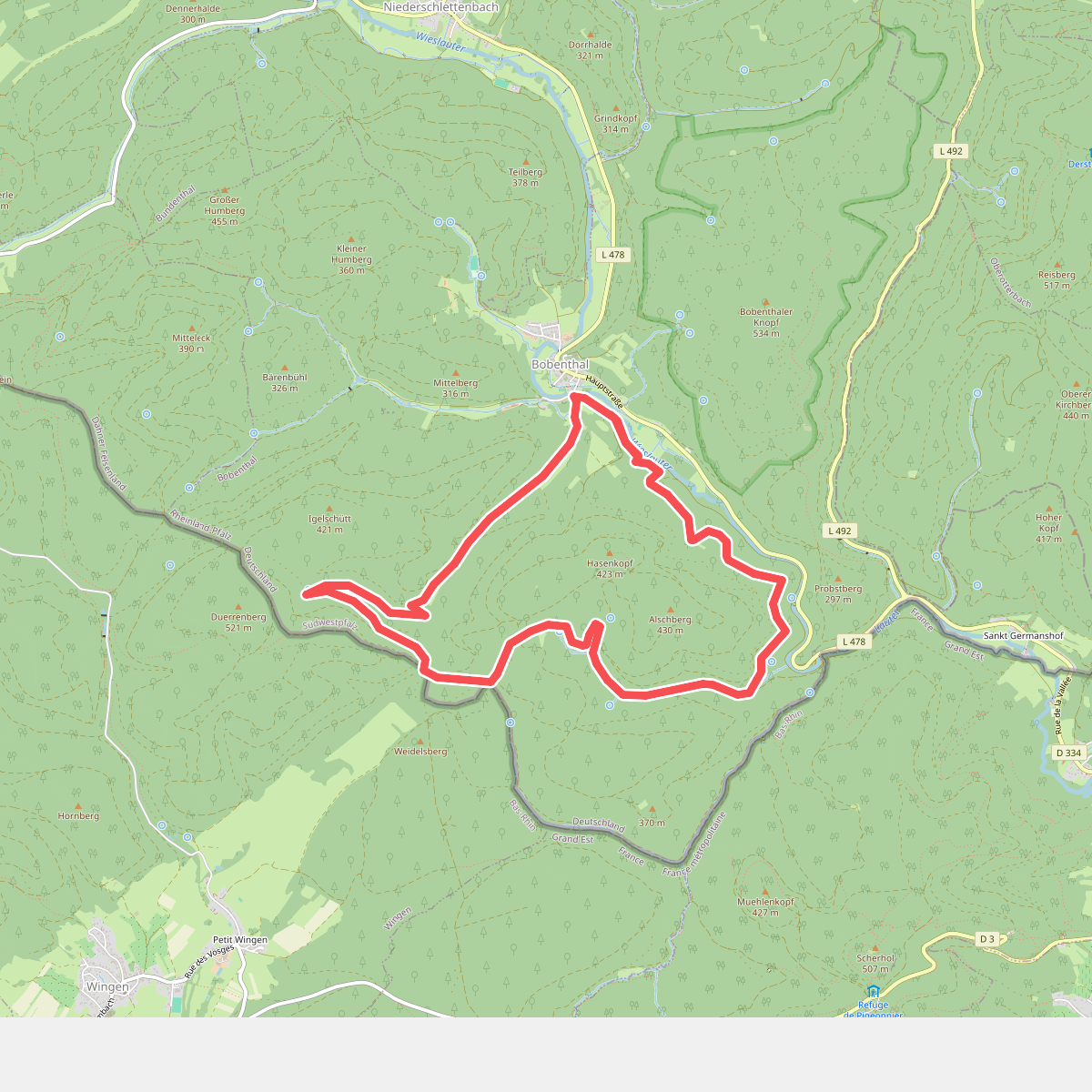
#8. Hasenkopf-Runde
Bobenthal
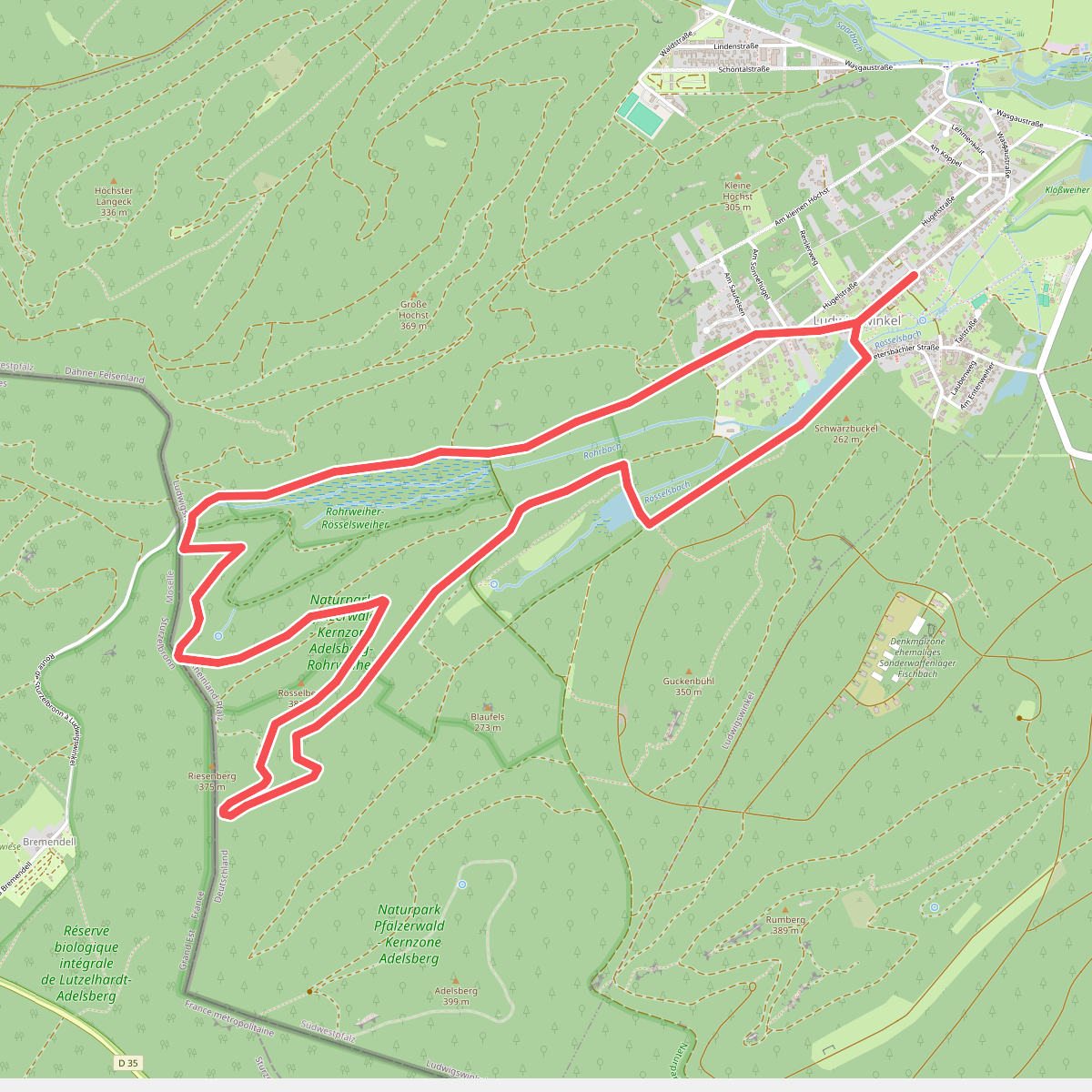
#9. Ludwigswinkel Rundweg 4
Ludwigswinkel
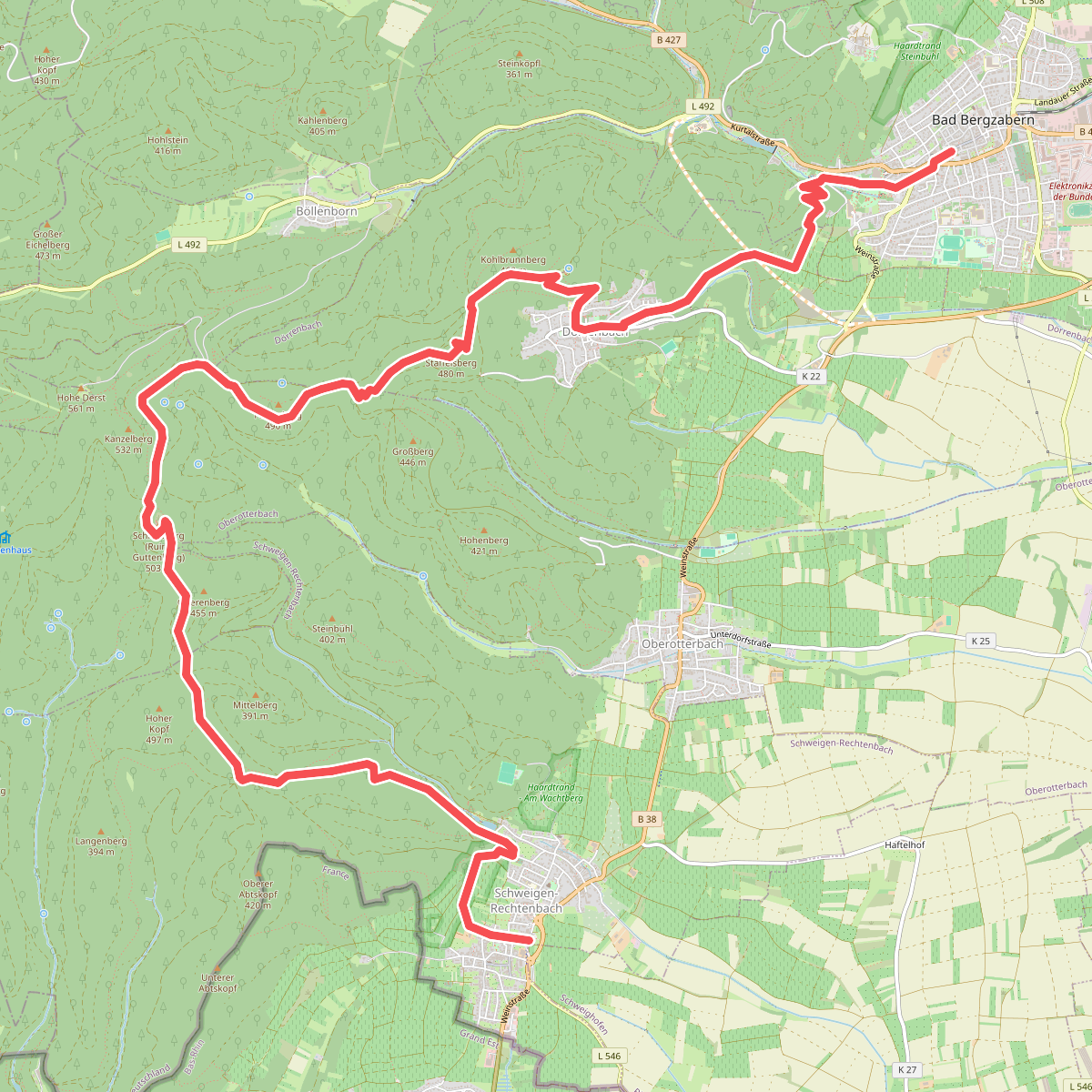
#10. Pfälzer Weinsteig - Etappe 11
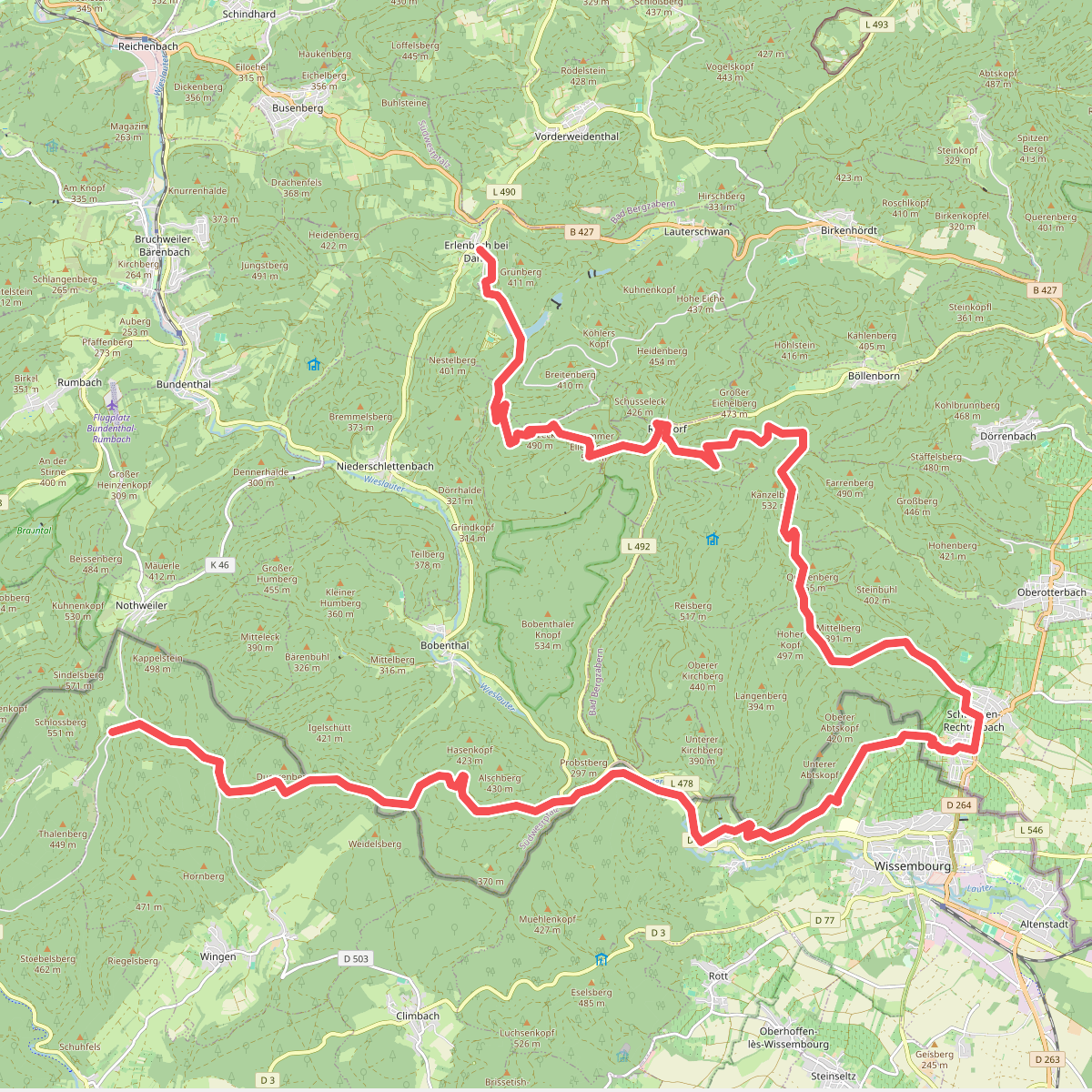
#11. Pfälzerwald Gelber Punkt #4
Erlenbach bei Dahn,Bobenthal,Böllenborn,Oberotterbach,Schweigen-Rechtenbach,Wissembourg,Wingen