
The best hiking routes in Naturpark Spessart
Discover the best walks in Naturpark Spessart. 457 routes on the map, with descriptions, photos and GPX.
About Naturpark Spessart
Naturpark Spessart is characterized by its vast, continuous deciduous forests, dominated by centuries-old oak and beech trees rather than the pine plantations common in other German hills. The terrain consists of a gently rolling sandstone dome, meaning you will not find dramatic rocky peaks or deep gorges here. Instead, the landscape features broad, dome-like ridges separated by quiet, damp meadow valleys. Underfoot, the paths are mostly soft forest soil and sandstone tracks, which can feel sandy and loose on the ridges but turn to damp earth near the valley floors.
Read more
About Naturpark Spessart
Naturpark Spessart is characterized by its vast, continuous deciduous forests, dominated by centuries-old oak and beech trees rather than the pine plantations common in other German hills. The terrain consists of a gently rolling sandstone dome, meaning you will not find dramatic rocky peaks or deep gorges here. Instead, the landscape features broad, dome-like ridges separated by quiet, damp meadow valleys. Underfoot, the paths are mostly soft forest soil and sandstone tracks, which can feel sandy and loose on the ridges but turn to damp earth near the valley floors.
Read moreNaturpark Spessart is characterized by its vast, continuous deciduous forests, dominated by centuries-old oak and beech trees rather than the pine plantations common in other German hills. The terrain consists of a gently rolling sandstone dome, meaning you will not find dramatic rocky peaks or deep gorges here. Instead, the landscape features broad, dome-like ridges separated by quiet, damp meadow valleys. Underfoot, the paths are mostly soft forest soil and sandstone tracks, which can feel sandy and loose on the ridges but turn to damp earth near the valley floors.
As you walk, the history of the forest is visible in the structure of the trees. In areas like the Metzgergraben, the ancient, wide-crowned oaks stand as a testament to historic grazing practices, where animals were driven into the woods to feed. This contrasts with the dense, straight-trunked beech stands that block out the light in other sections. Small, clear streams cut through the sandstone, creating boggy valley bottoms where alder trees thrive.
In May, the fresh green of the emerging beech leaves creates a bright canopy, while October brings deep copper tones to the forest floor. The area is generally quiet, though the central valleys near historic inns can attract more visitors on weekends. If you prefer long, steady climbs through deep woodland without sharp changes in elevation, this sandstone forest offers a consistent, sheltered walking environment.
Hiking routes in Naturpark Spessart (457)
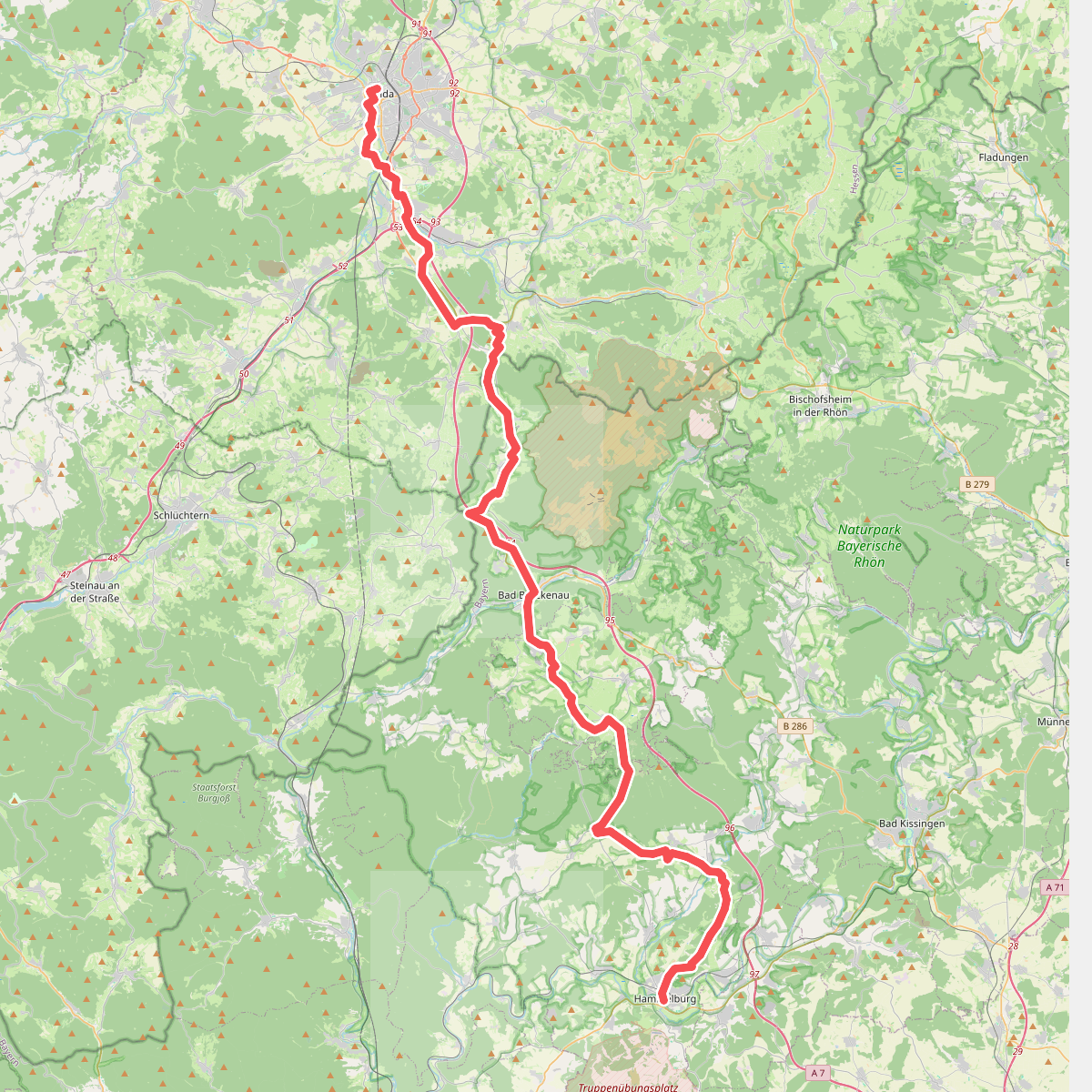
#1. Abtsweg
Fulda,Motten,Römershager Forst-Nord,Bad Brückenau,Oberleichtersbach,Schondra,Geiersnest Ost,Neuwirtshauser Forst,Wartmannsroth,Oberthulba,Hammelburg
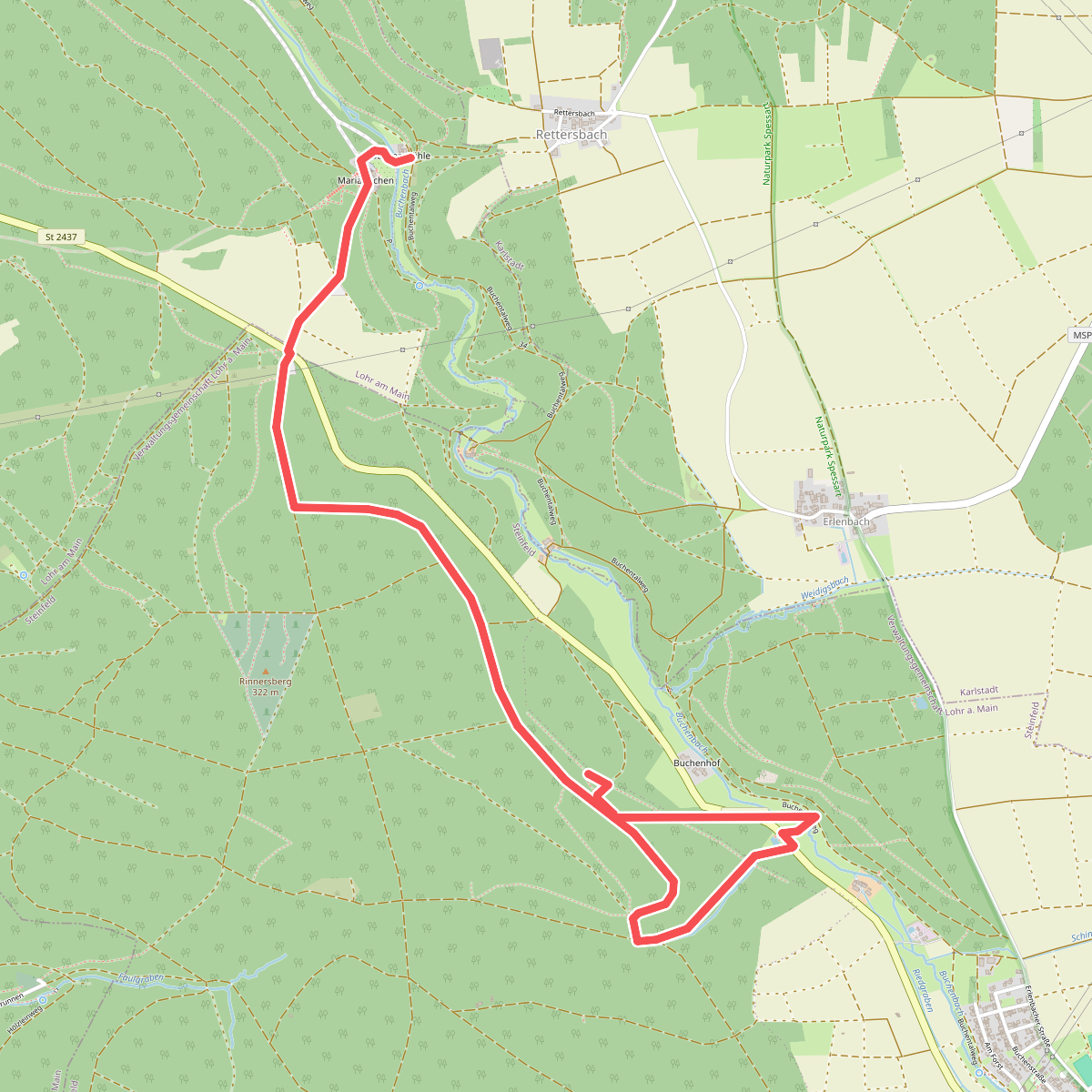
#2. Alternativweg Steinkreis-Hoimostein
Lohr am Main,Steinfeld
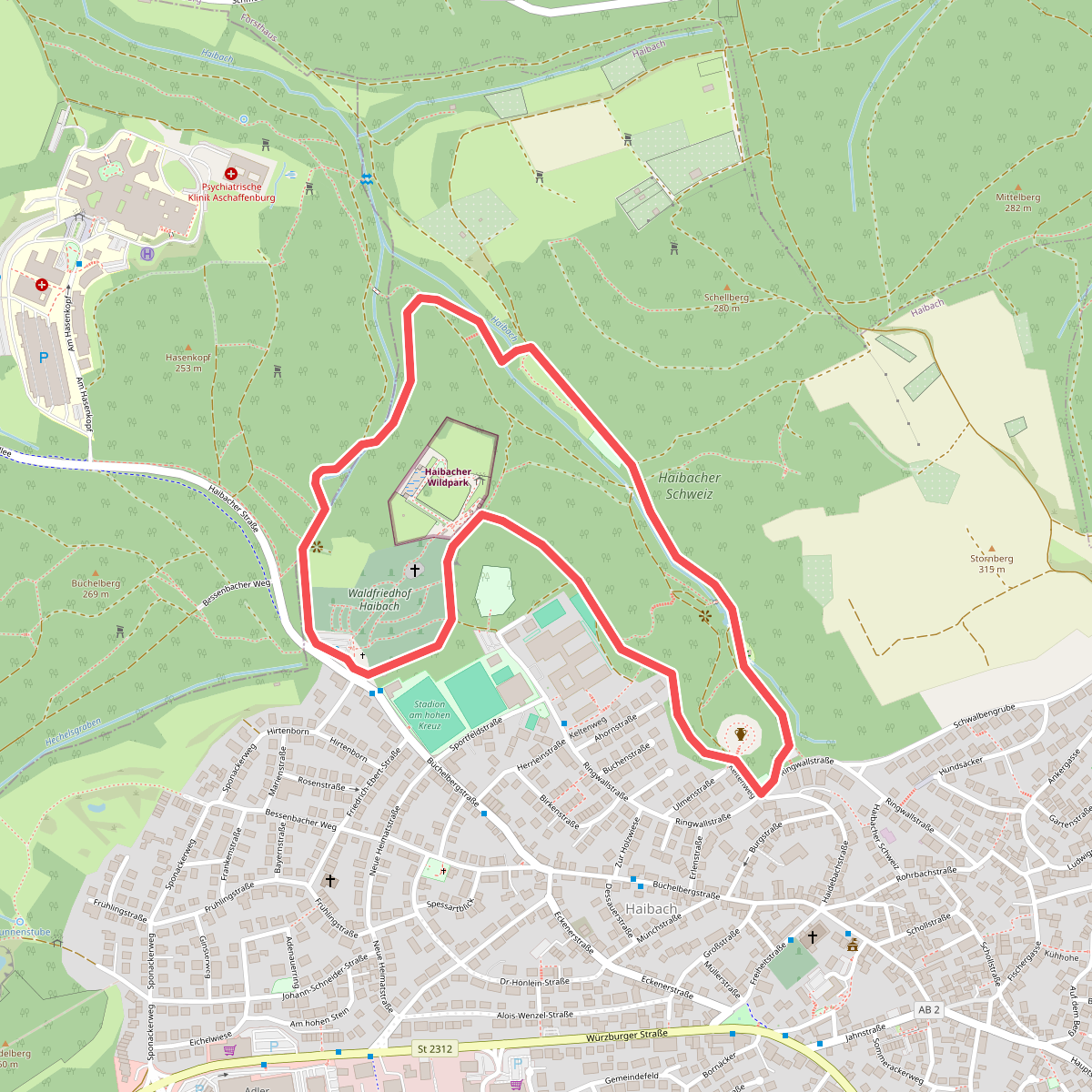
#3. AOK-Trail Nordic Walking Grün
Haibach
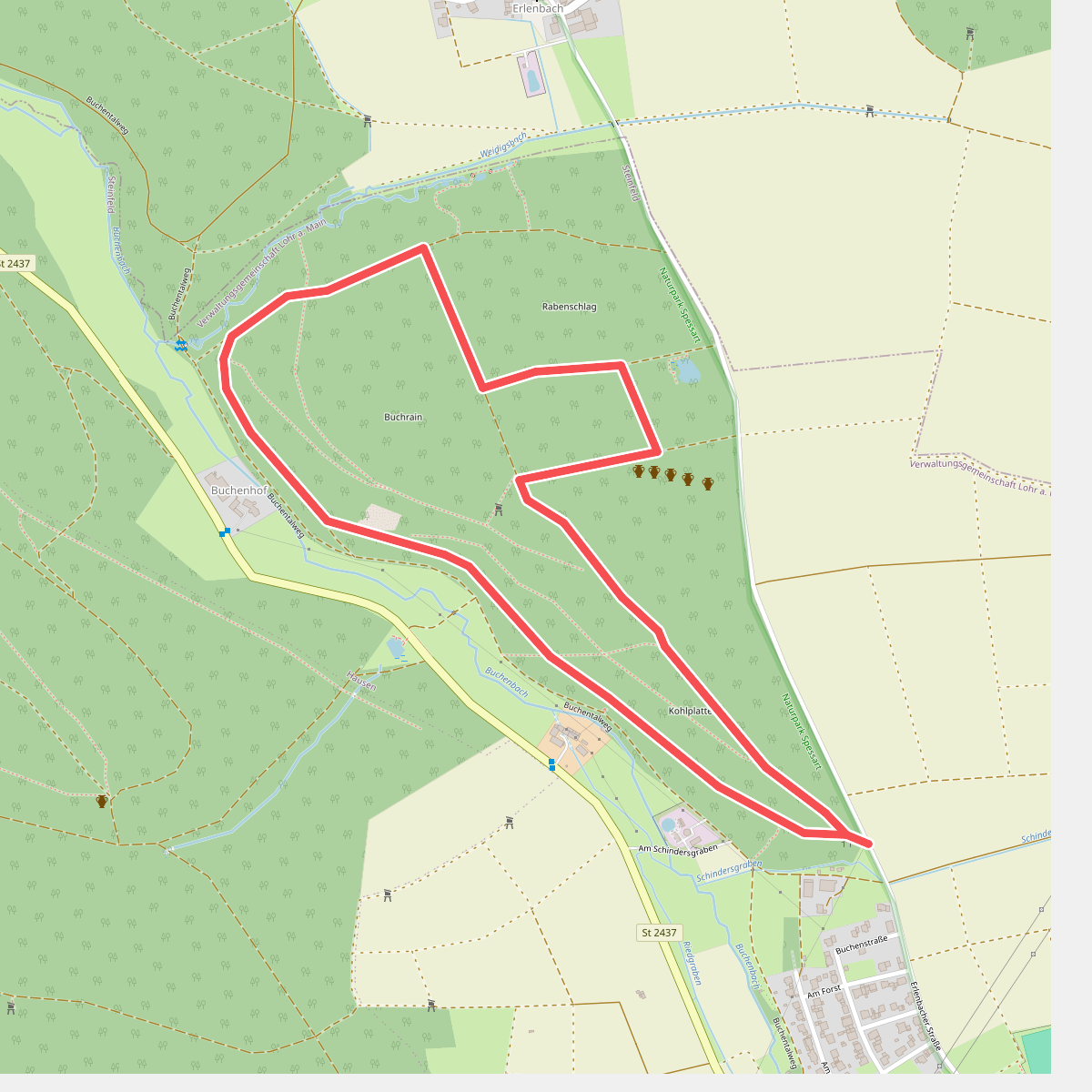
#4. Archäologischer Wanderweg
Steinfeld
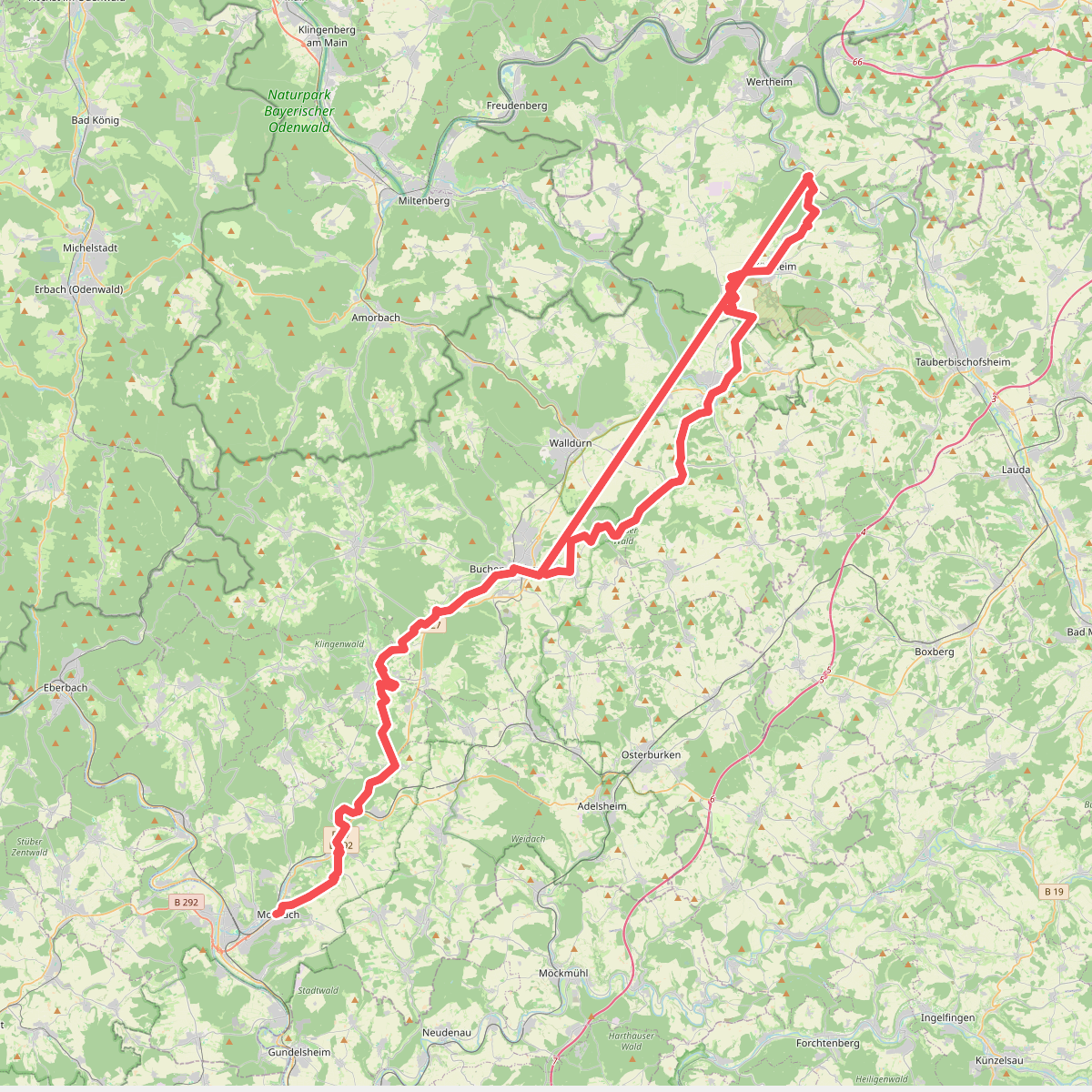
#5. Baulandweg
Mosbach,Limbach,Buchen (Odenwald),Walldürn,Höpfingen,Hardheim,Külsheim,Wertheim
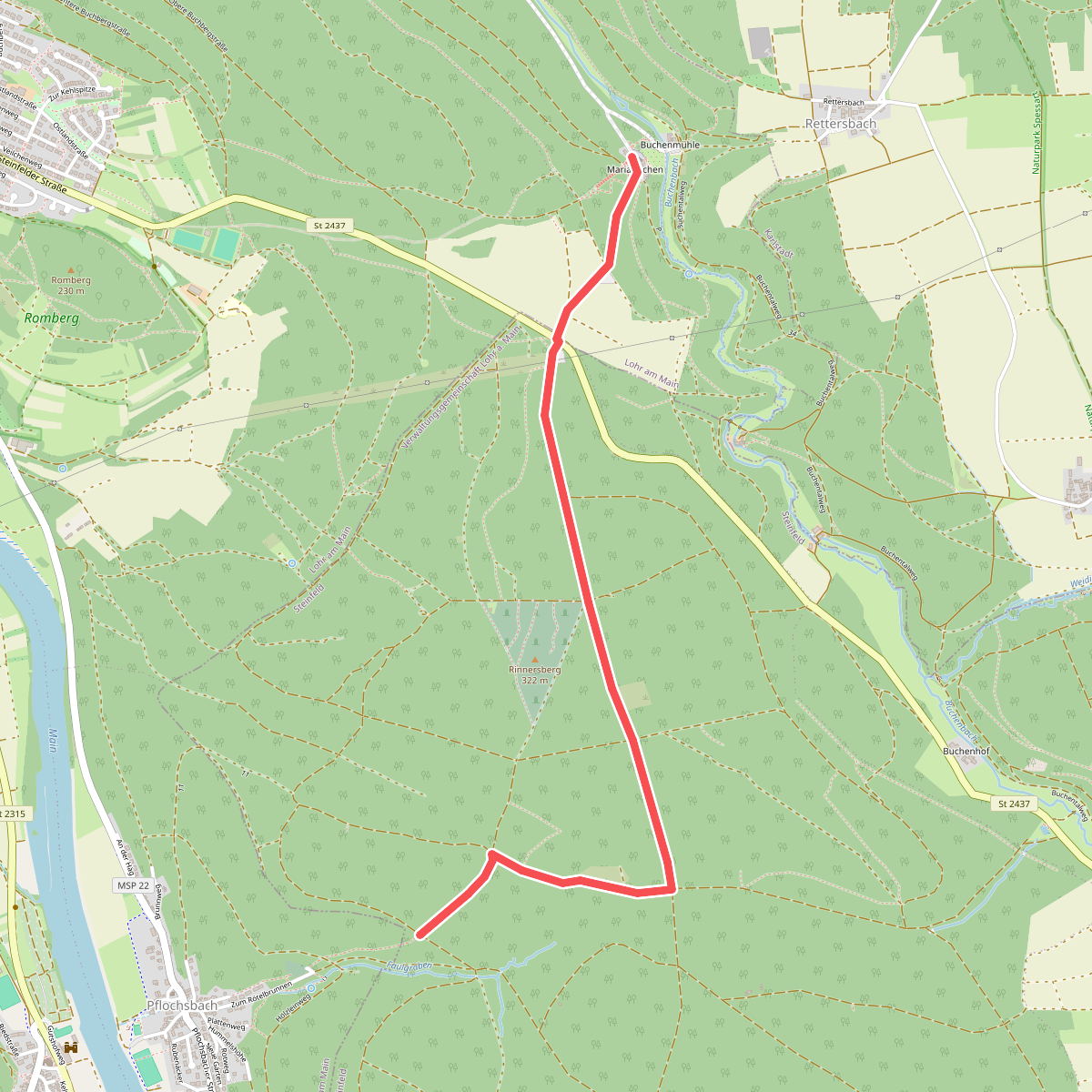
#6. Bildhäuschen-Weg Maria-Buchen - Pflochsbach
Lohr am Main,Steinfeld
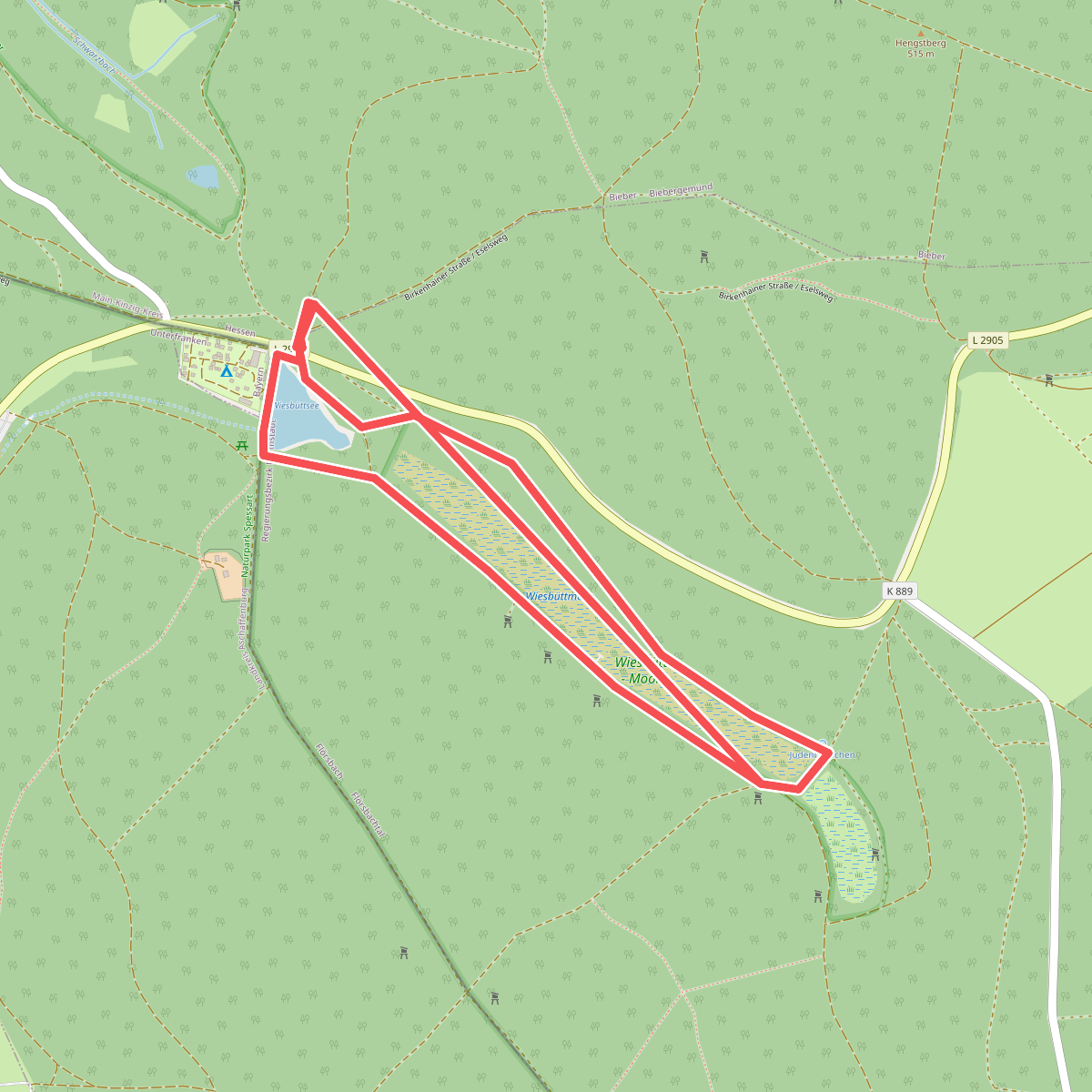
#7. Blaue Libelle, Rundwanderweg Wiesbütt
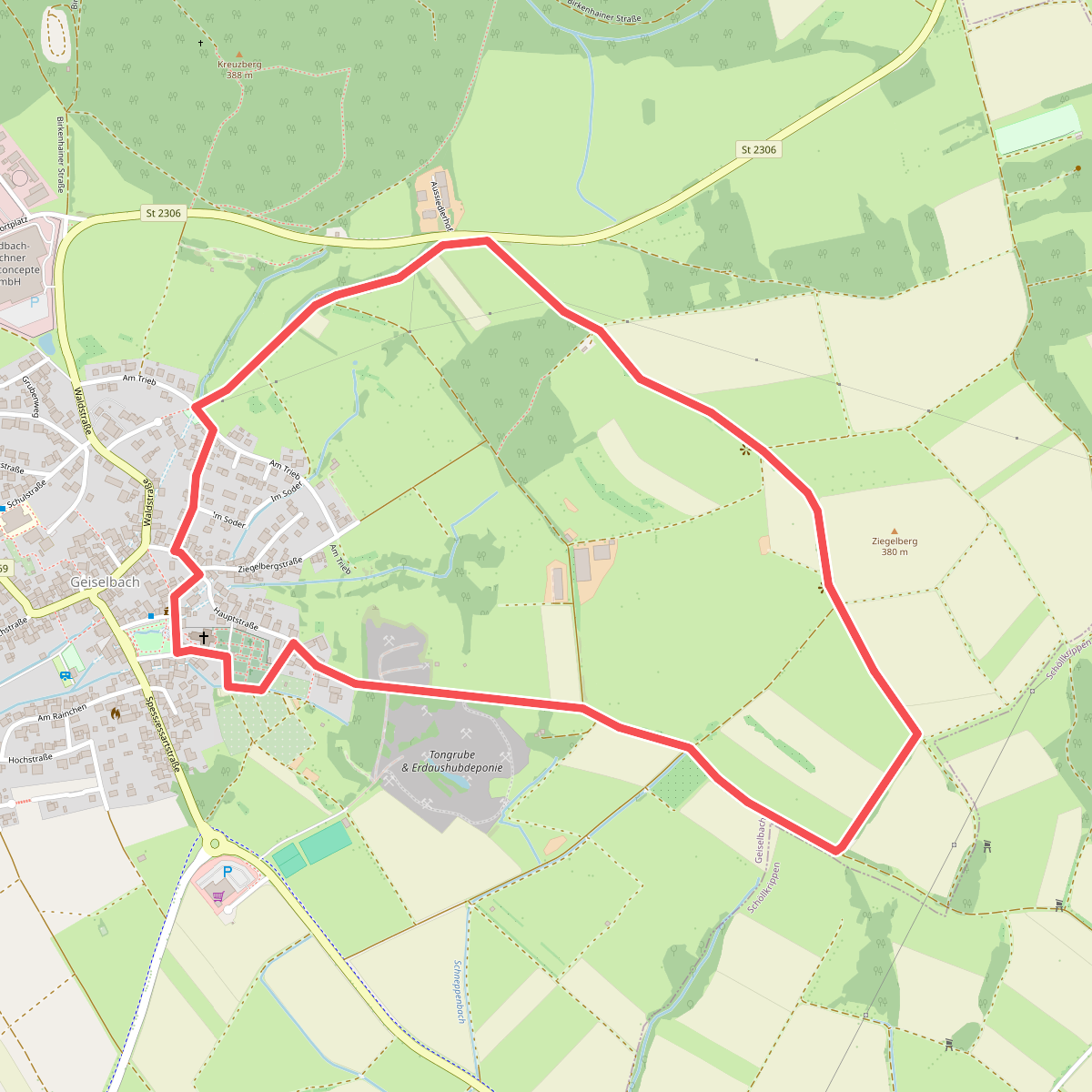
#8. Blauer Laubbaum, Rundwanderweg Geiselbach
Geiselbach
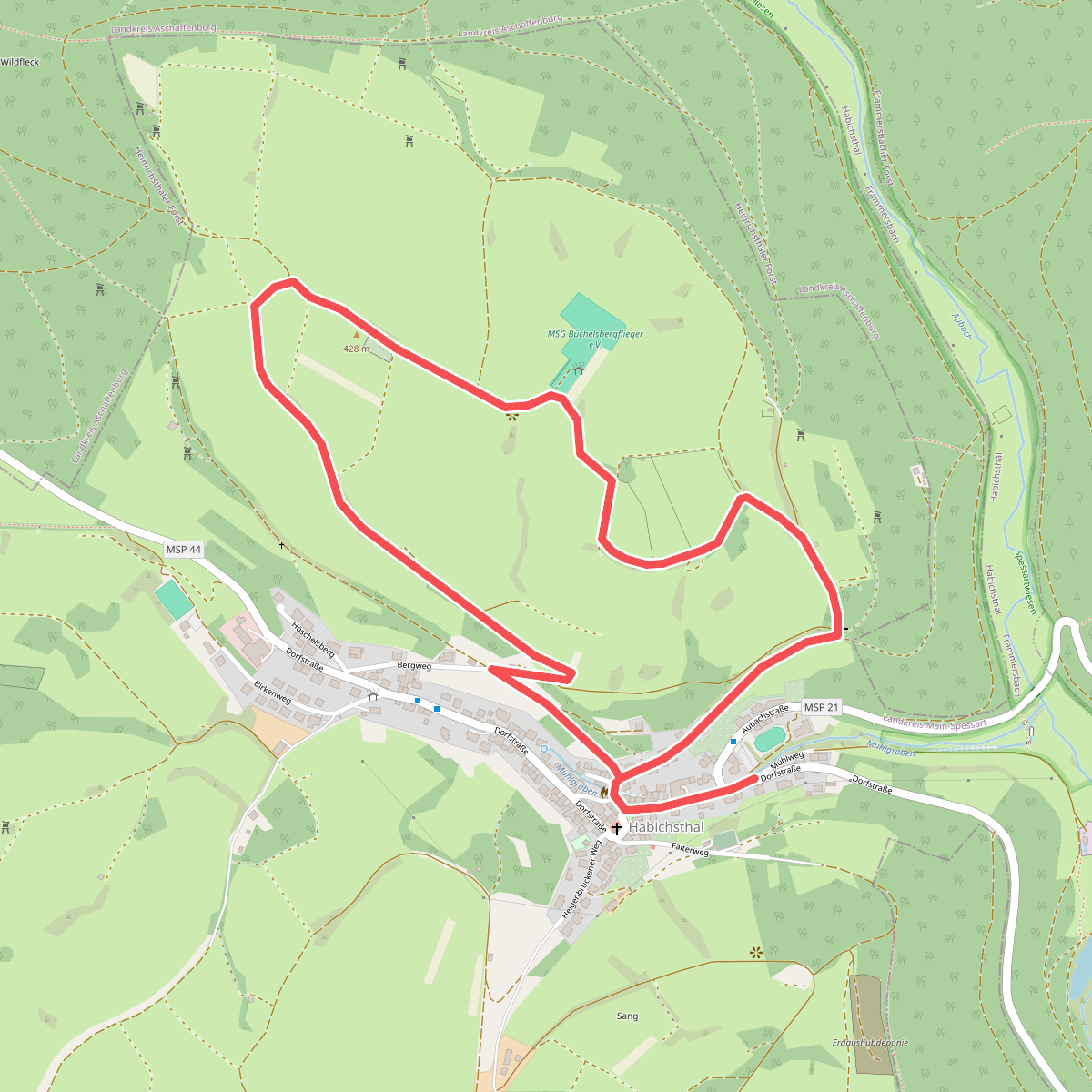
#9. Blauer Laubbaum Rundwanderweg Habichsthal
Frammersbach
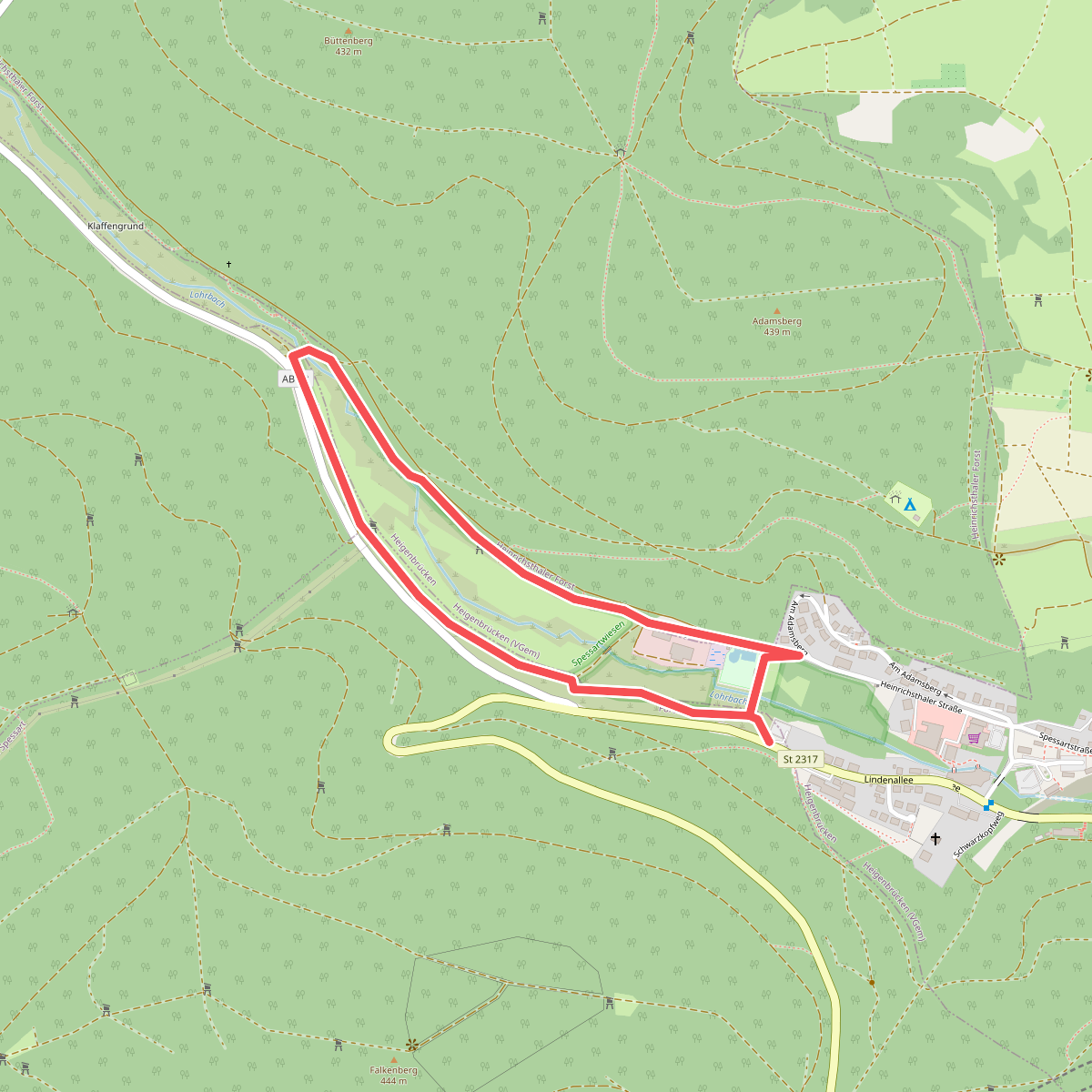
#10. Blauer Laubbaum, Rundwanderweg Heigenbrücken
Forst Hain im Spessart,Heinrichsthaler Forst,Sailaufer Forst
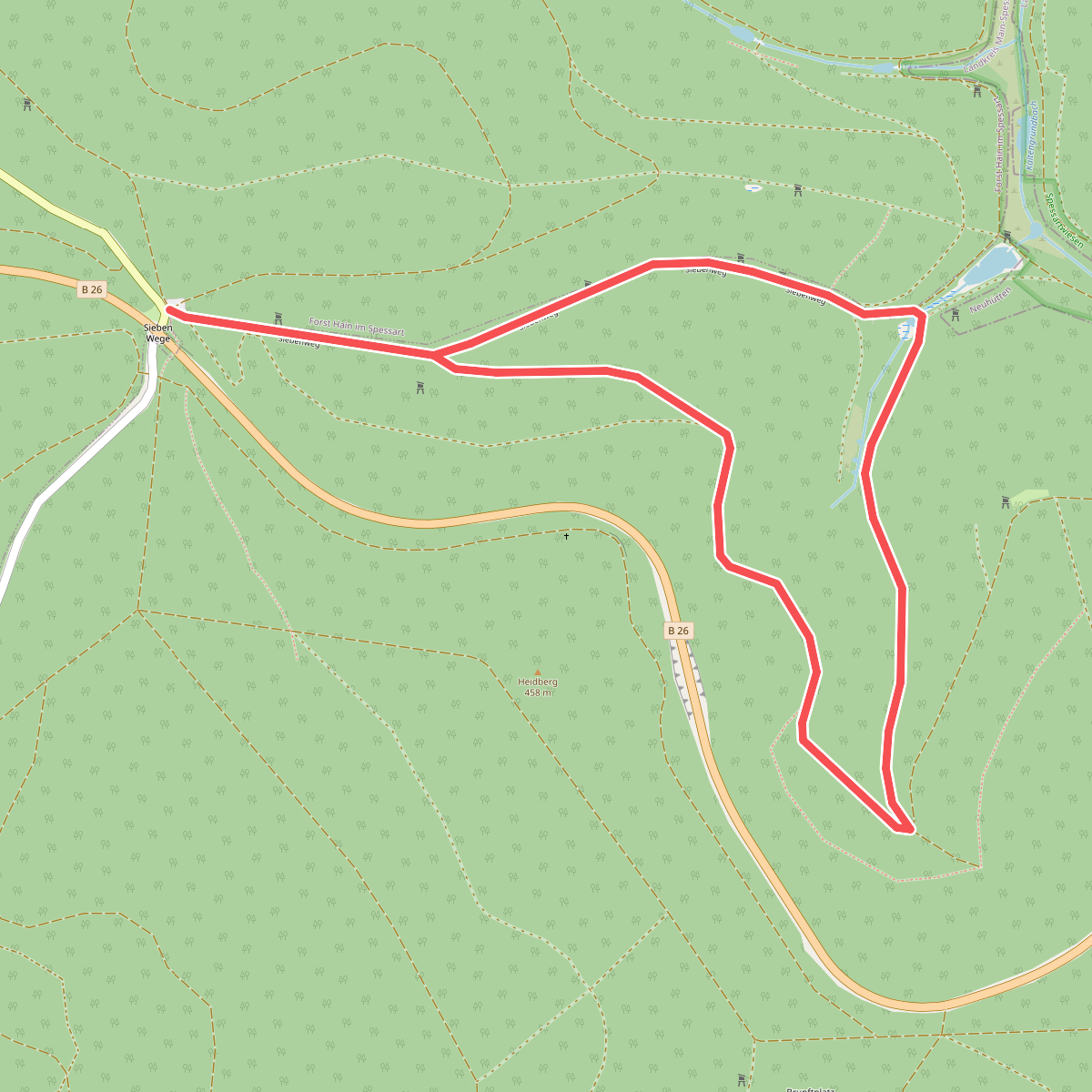
#11. Blauer Pilz, Rundwanderweg 7 Wege
Forst Hain im Spessart,Rothenbucher Forst
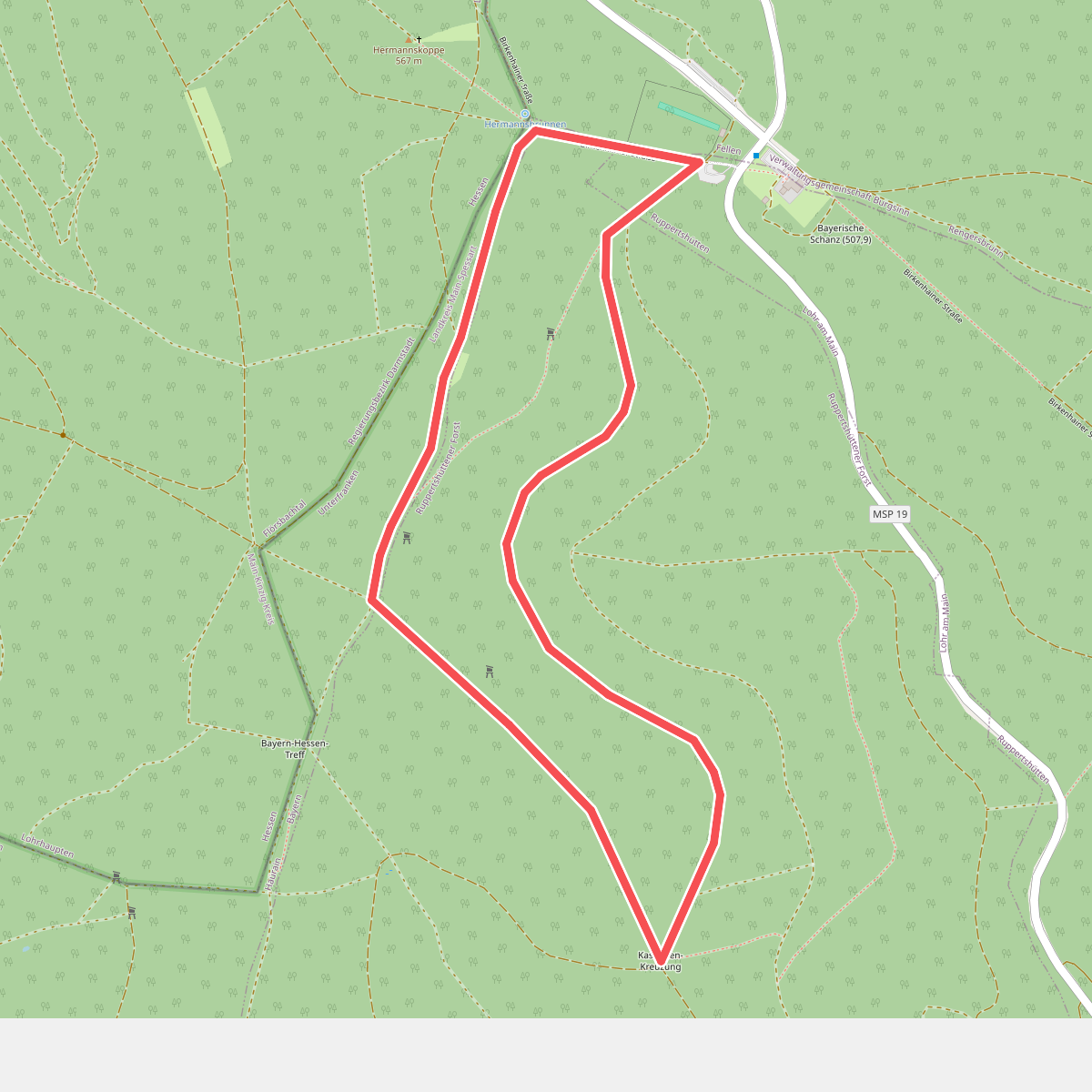
#12. Blauer Pilz Rundwanderweg, Bayerische Schanz
Haurain,Ruppertshüttener Forst,Lohr am Main