
The best hiking routes in Monte Spinarda - Rio Nero
Discover the best walks in Monte Spinarda - Rio Nero. 9 routes on the map, with descriptions, photos and GPX.
About Monte Spinarda - Rio Nero
Monte Spinarda - Rio Nero offers a transition between maritime influences and the lower Ligurian Alps. The landscape is defined by the contrast between the dry, wooded slopes of Monte Spinarda and the damp, shaded ravine of the Rio Nero stream. Hikers will notice how the vegetation changes abruptly from open chestnut and oak woods on the upper slopes to dense beech forests and moisture-loving plants near the watercourse. This is a landscape of moderate heights and steep, rocky valleys rather than high alpine peaks.
Read more
About Monte Spinarda - Rio Nero
Monte Spinarda - Rio Nero offers a transition between maritime influences and the lower Ligurian Alps. The landscape is defined by the contrast between the dry, wooded slopes of Monte Spinarda and the damp, shaded ravine of the Rio Nero stream. Hikers will notice how the vegetation changes abruptly from open chestnut and oak woods on the upper slopes to dense beech forests and moisture-loving plants near the watercourse. This is a landscape of moderate heights and steep, rocky valleys rather than high alpine peaks.
Read moreMonte Spinarda - Rio Nero offers a transition between maritime influences and the lower Ligurian Alps. The landscape is defined by the contrast between the dry, wooded slopes of Monte Spinarda and the damp, shaded ravine of the Rio Nero stream. Hikers will notice how the vegetation changes abruptly from open chestnut and oak woods on the upper slopes to dense beech forests and moisture-loving plants near the watercourse. This is a landscape of moderate heights and steep, rocky valleys rather than high alpine peaks.
Underfoot, the terrain consists of rough dirt tracks, stony forest paths, and narrow trails covered in leaf litter. The paths near the stream bed can be rocky and uneven, requiring careful stepping over exposed roots and slate fragments. Unlike flatter lowland forests, the terrain here is constantly tilted, demanding steady effort as you climb from the humid valley floor up to the drier, wind-exposed ridges.
In late spring, around May, the forest floor near the Rio Nero is marked by fresh green foliage and damp-loving wildflowers, while autumn brings a heavy cover of leaves that can obscure the stony paths. The area is generally quiet, with most visitors sticking to the main ridge trails, leaving the deeper stream gullies to those seeking a more secluded, enclosed forest experience.
Hiking routes in Monte Spinarda - Rio Nero (9)
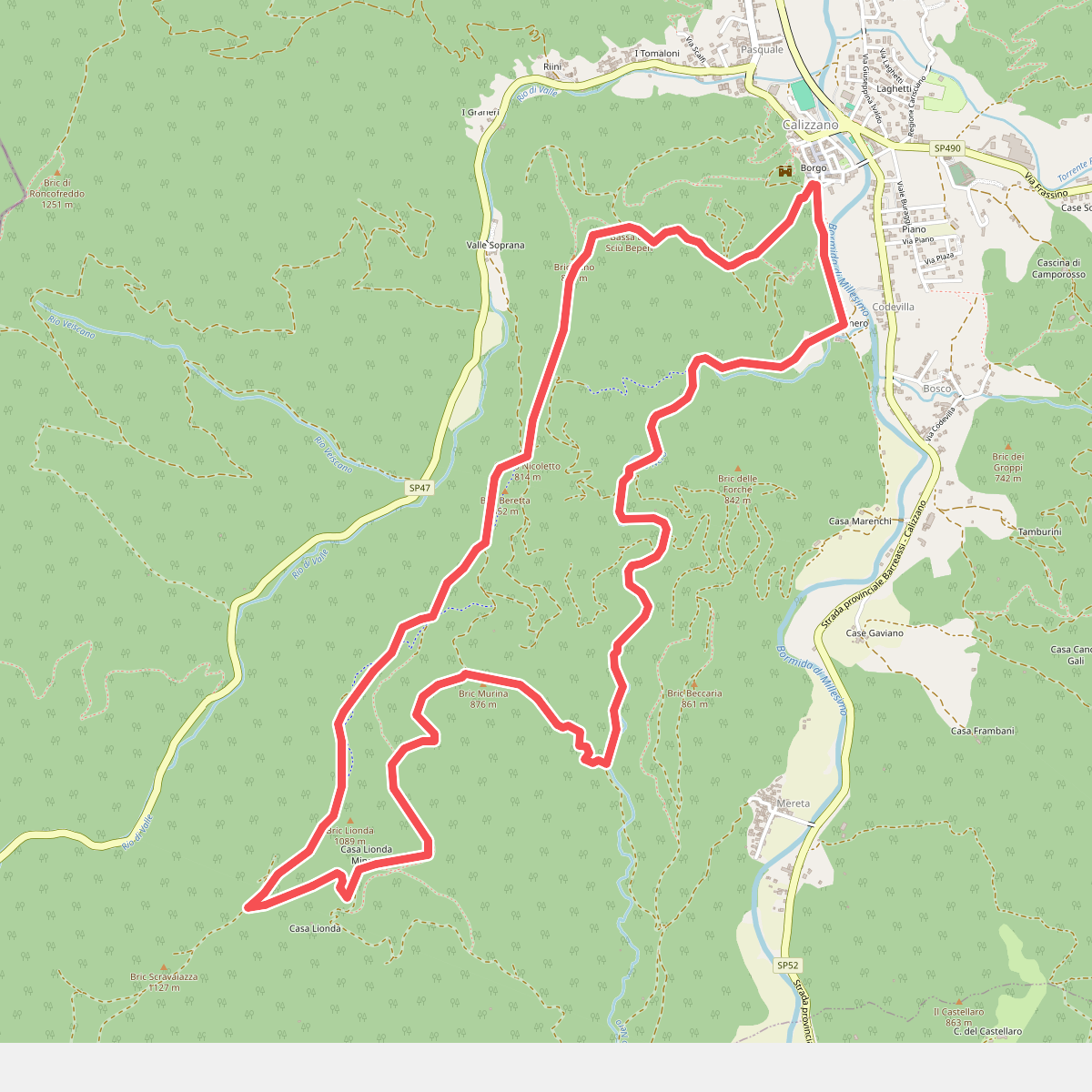
#1. Anello del Rio Nero
Calizzano
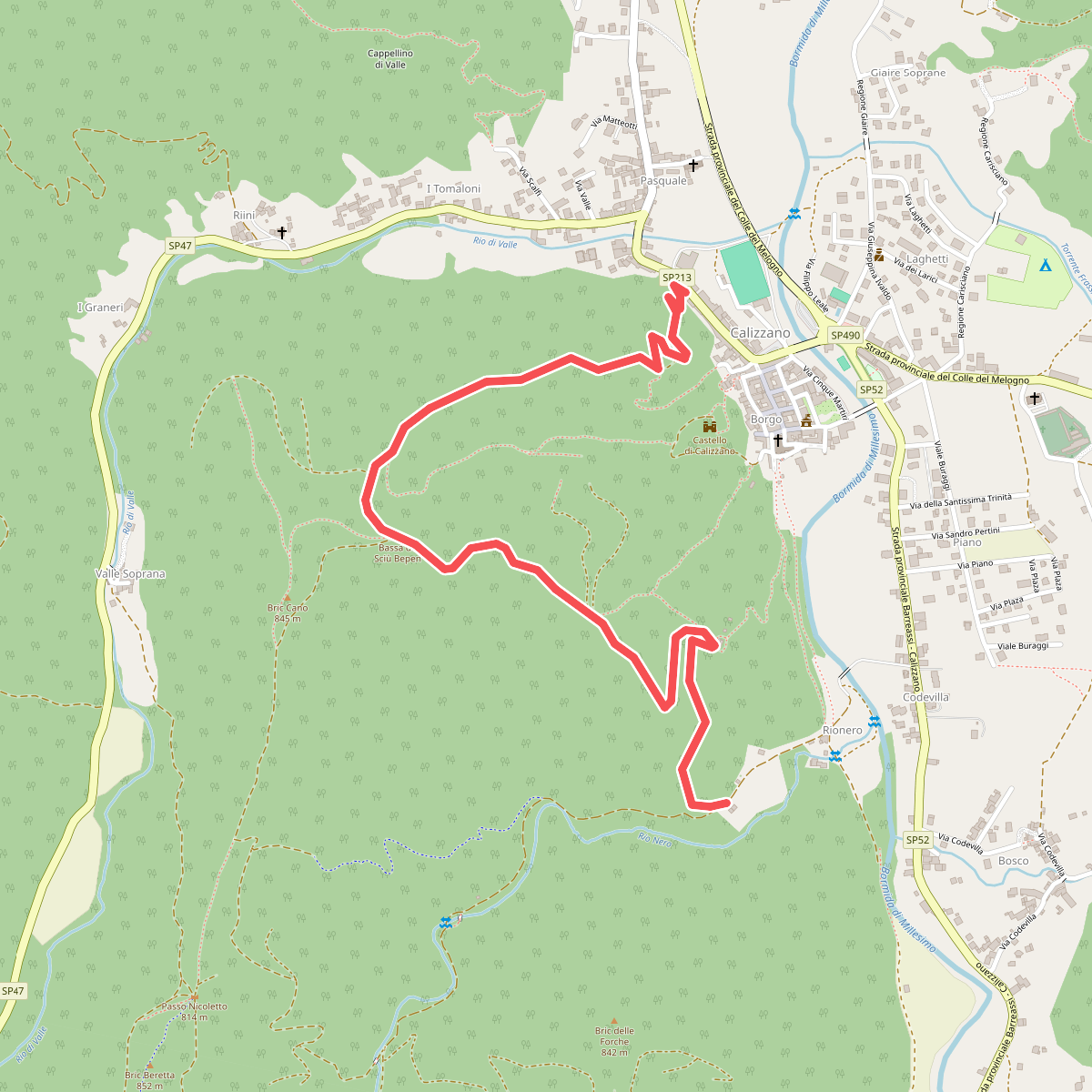
#2. Borgo Calizzano - Castagnone
Calizzano
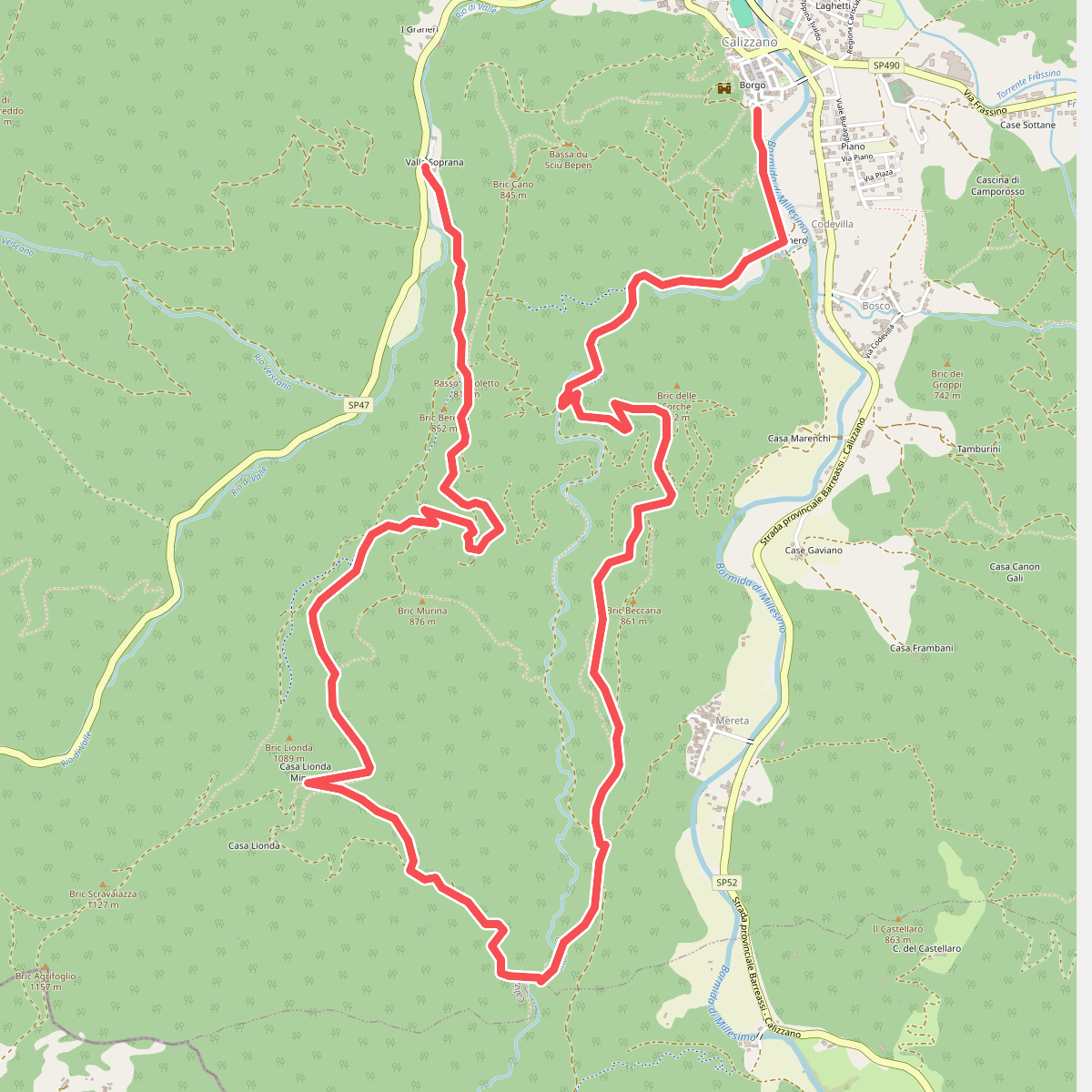
#3. Calizzano - Cascina Coccalini - Valle Superiore - San Mauro
Calizzano
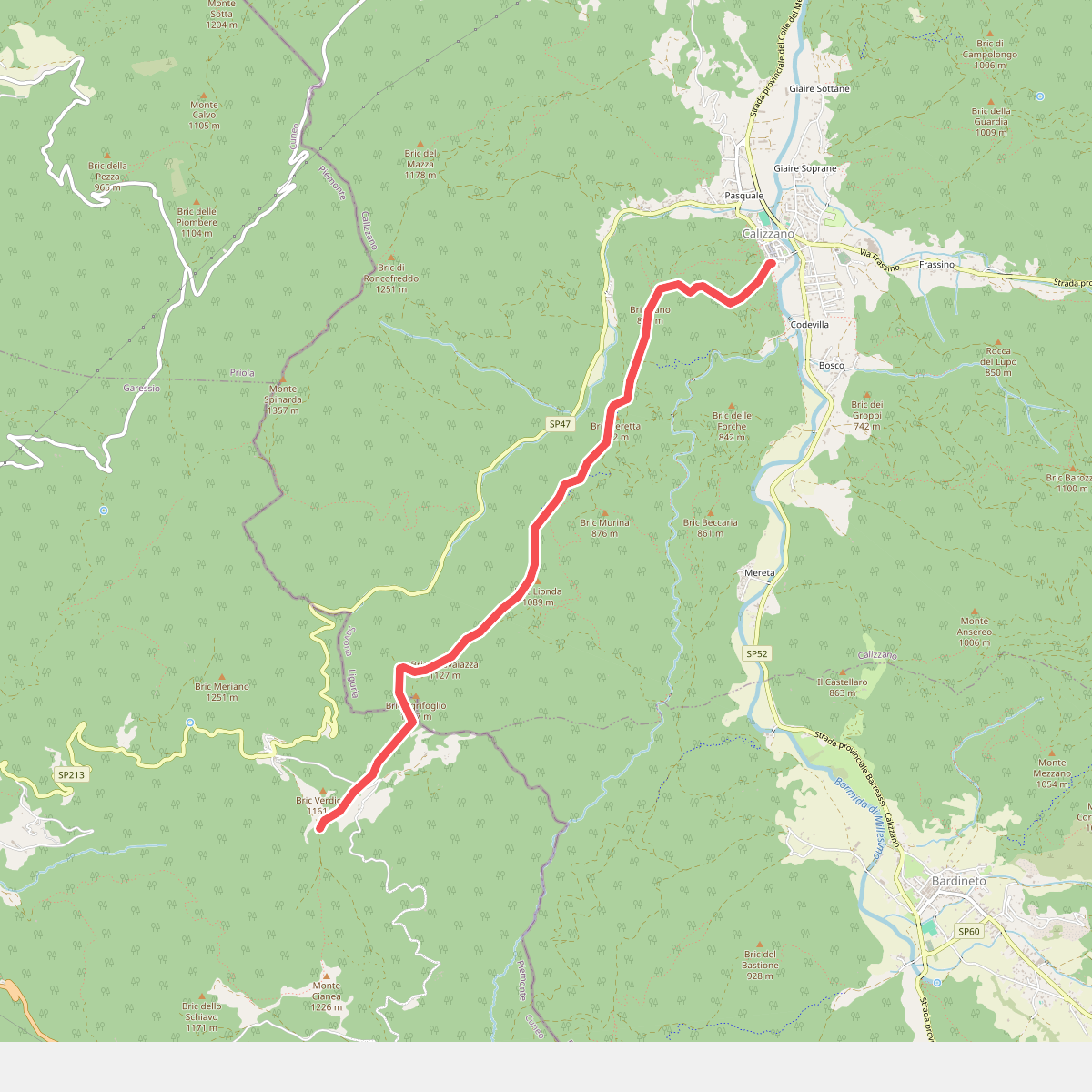
#4. Calizzano - Costa della Cianea
Calizzano,Garessio
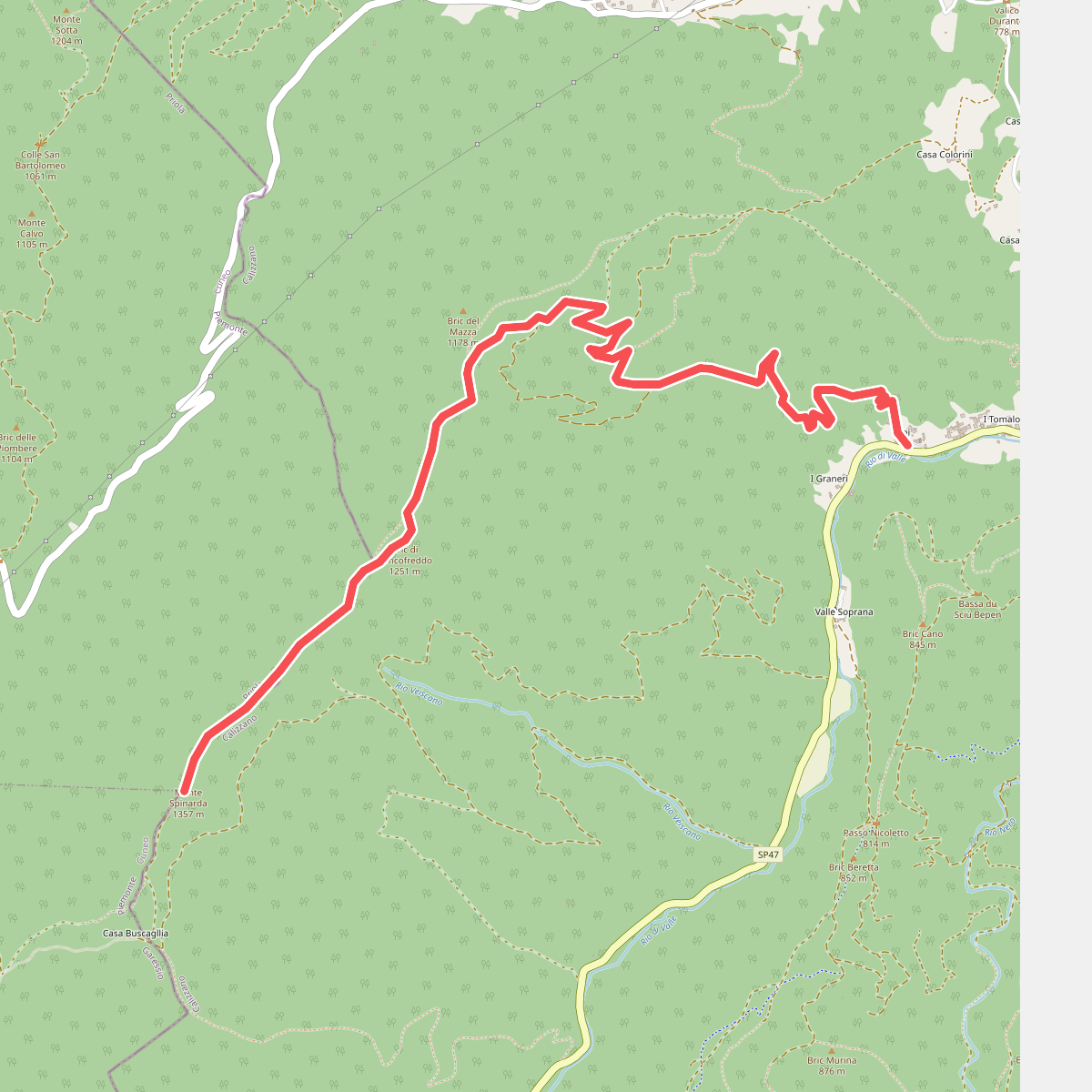
#5. Calizzano - Monte Spinarda
Calizzano,Priola
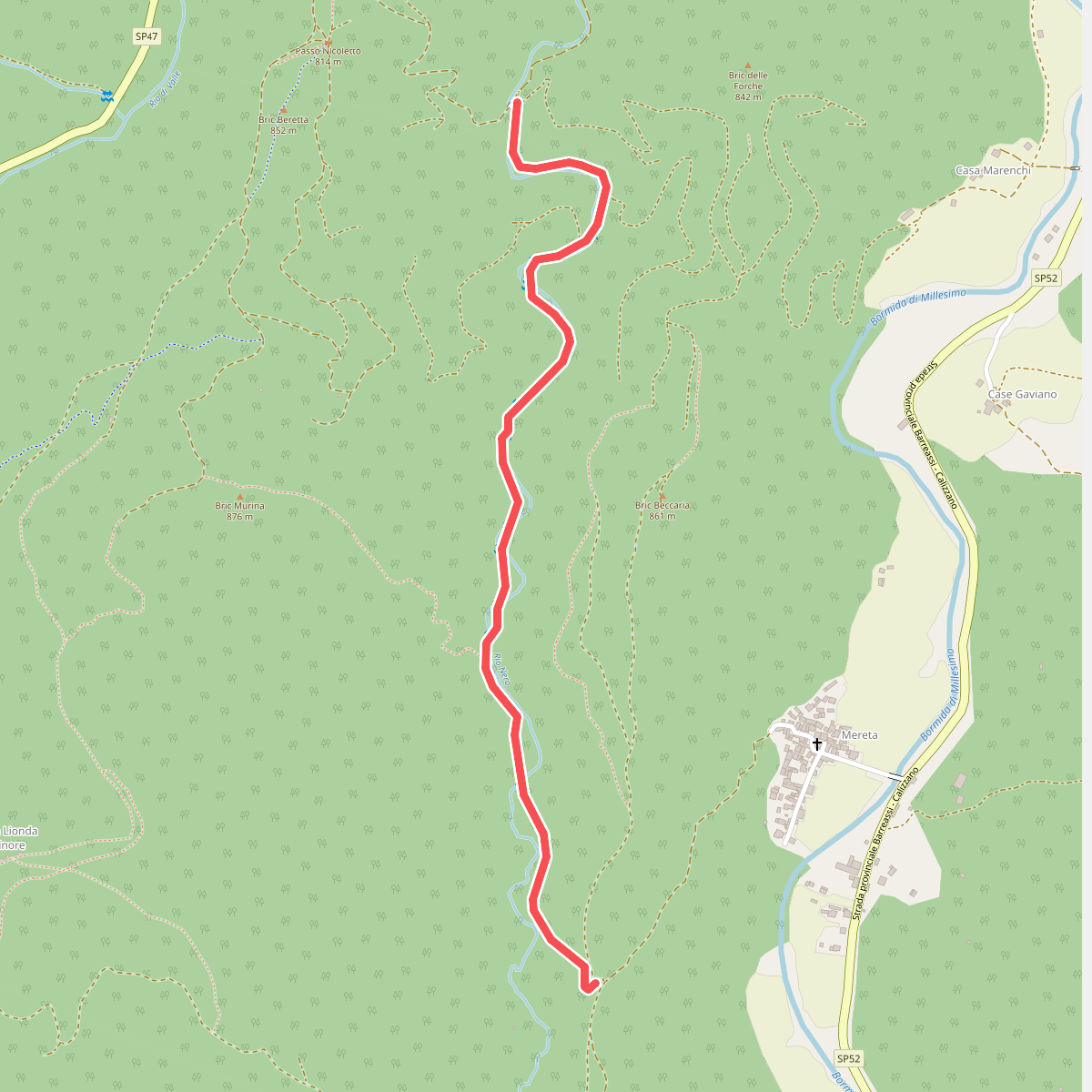
#6. Cascina Rionero - Prati di Mereta
Calizzano
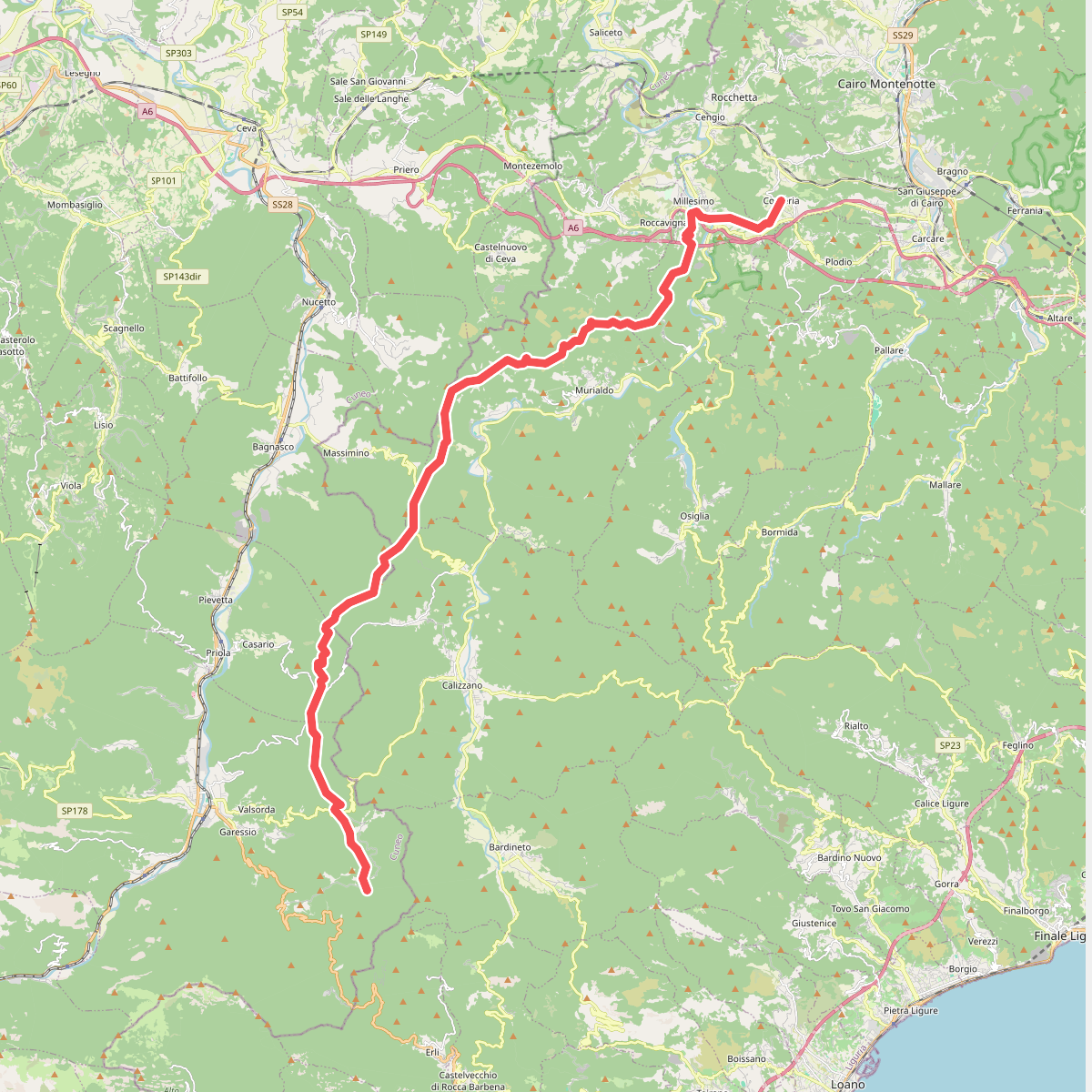
#7. Millesimo - Colle Quazzo
Garessio,Priola,Calizzano,Bagnasco,Murialdo,Massimino,Perlo,Millesimo,Cosseria
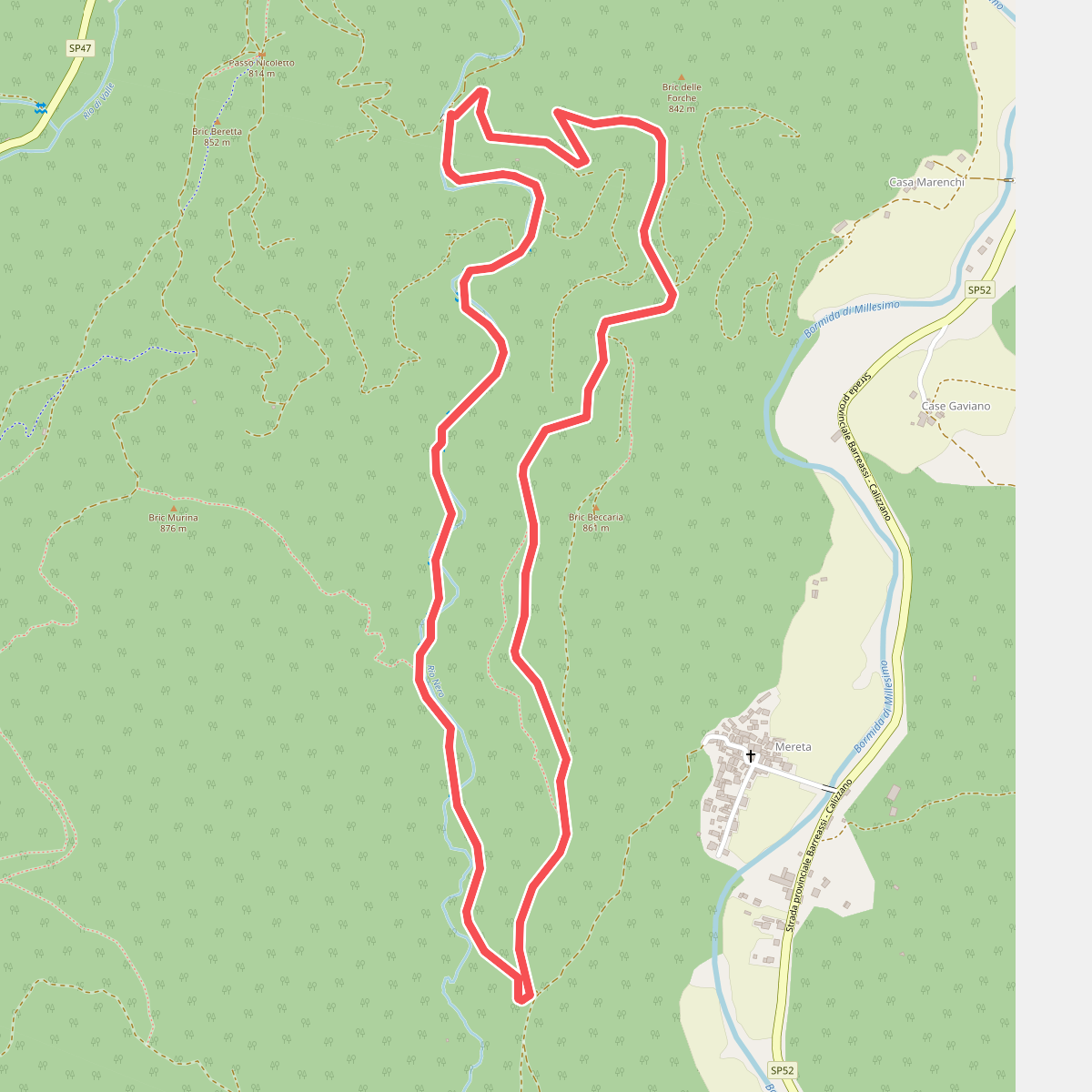
#8. Percorso Naturalistico del Rio Nero
Calizzano
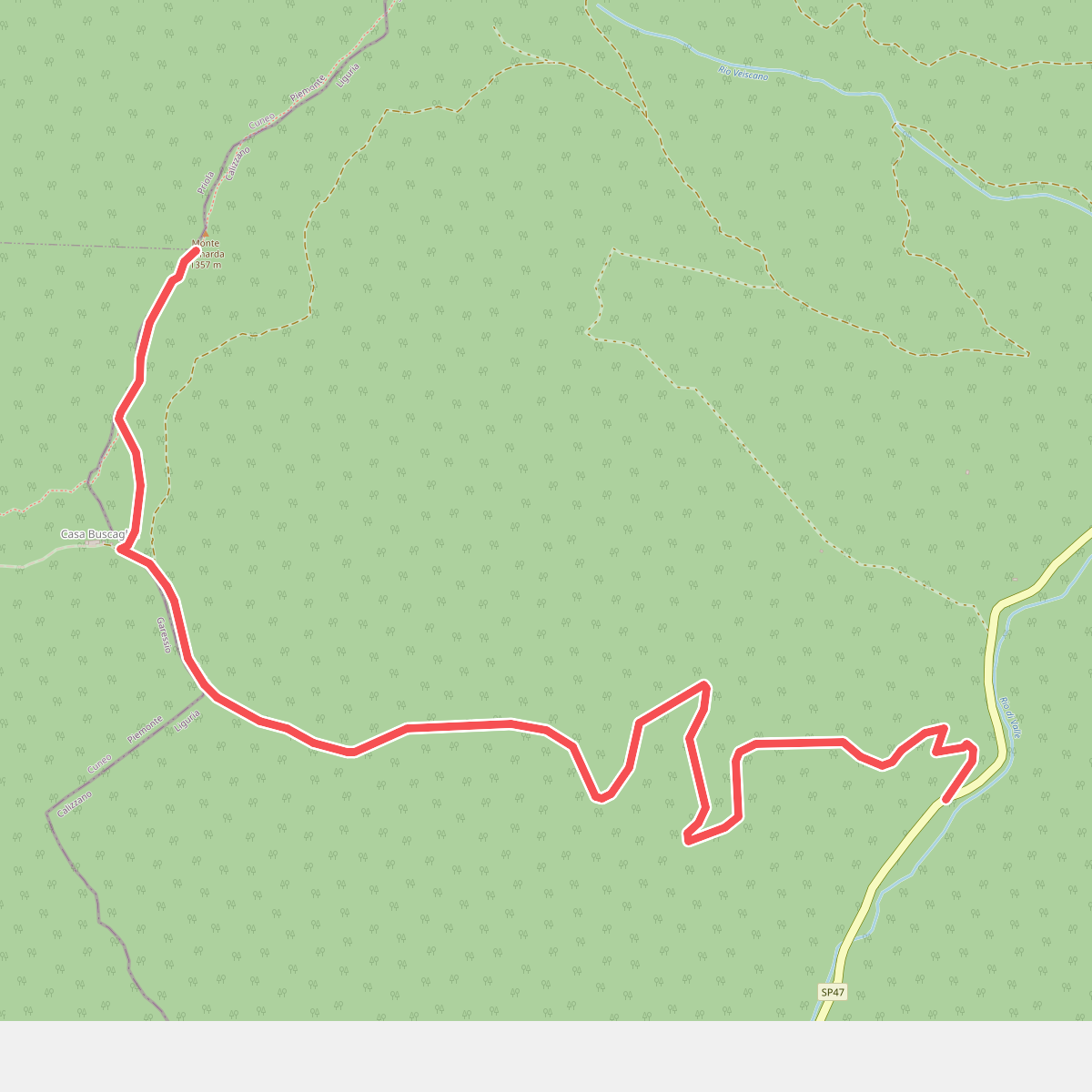
#9. Pian per Valle - Monte Spinarda
Calizzano