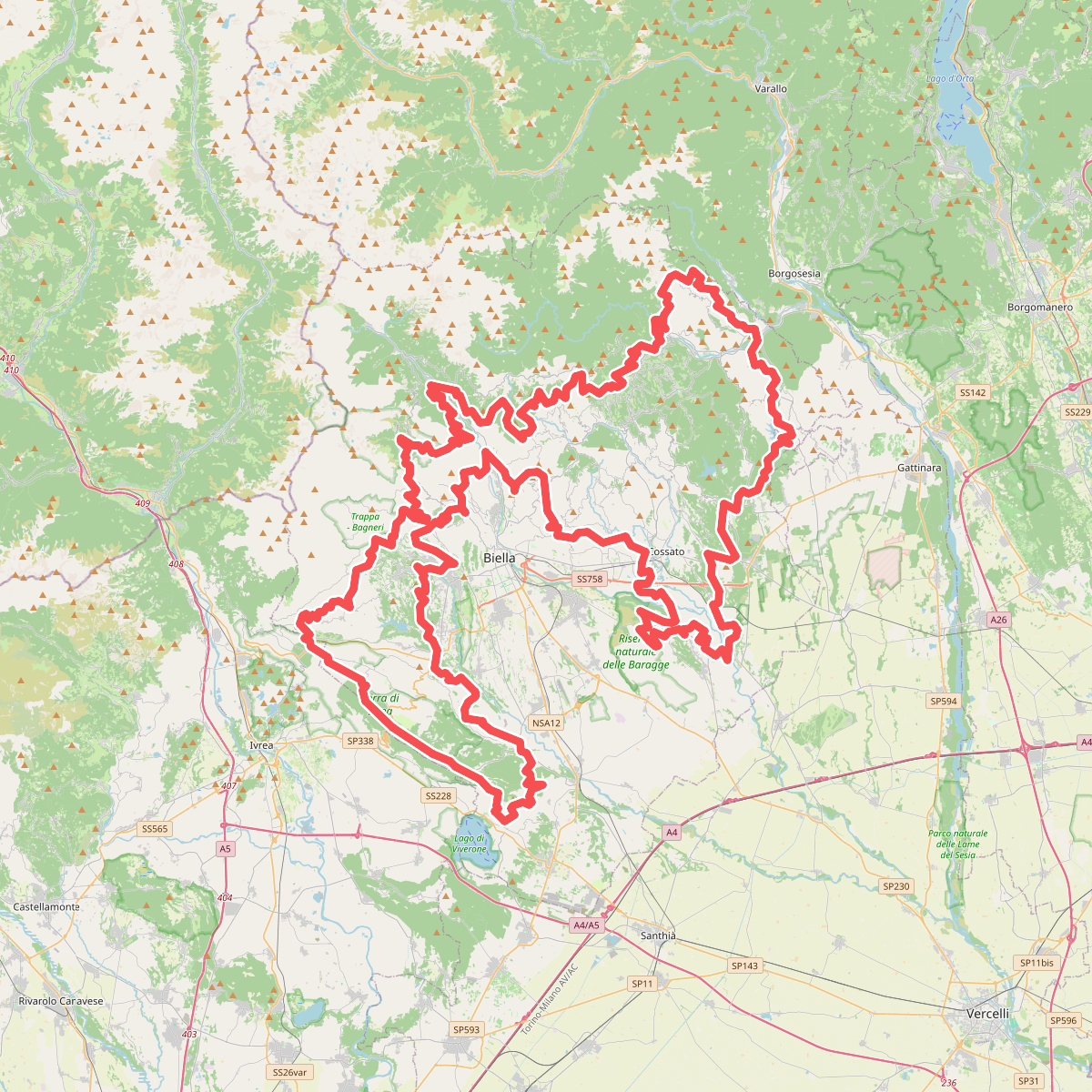

The best hiking routes in Laghi di Ivrea
Discover the best walks in Laghi di Ivrea. 5 routes on the map, with descriptions, photos and GPX.
About Laghi di Ivrea
The Laghi di Ivrea nature reserve, situated in Piedmont, is defined by a series of small, deep glacial lakes nestled within a dense woodland of chestnut, birch, and oak trees. Formed by the retreat of the Balteo Glacier, the terrain is characterized by steep morainic hills and rocky outcrops of dark diorite. Walkers will notice how the paths transition rapidly from damp, mossy lakeside tracks to dry, stony climbs over these ancient glacial ridges. Unlike flatter wetlands, this landscape offers constant, short elevation changes underfoot.
Read more
About Laghi di Ivrea
The Laghi di Ivrea nature reserve, situated in Piedmont, is defined by a series of small, deep glacial lakes nestled within a dense woodland of chestnut, birch, and oak trees. Formed by the retreat of the Balteo Glacier, the terrain is characterized by steep morainic hills and rocky outcrops of dark diorite. Walkers will notice how the paths transition rapidly from damp, mossy lakeside tracks to dry, stony climbs over these ancient glacial ridges. Unlike flatter wetlands, this landscape offers constant, short elevation changes underfoot.
Read moreThe Laghi di Ivrea nature reserve, situated in Piedmont, is defined by a series of small, deep glacial lakes nestled within a dense woodland of chestnut, birch, and oak trees. Formed by the retreat of the Balteo Glacier, the terrain is characterized by steep morainic hills and rocky outcrops of dark diorite. Walkers will notice how the paths transition rapidly from damp, mossy lakeside tracks to dry, stony climbs over these ancient glacial ridges. Unlike flatter wetlands, this landscape offers constant, short elevation changes underfoot.
Walking here means navigating a mix of soft forest soil, exposed tree roots, and sections of loose granite gravel. The five main lakes, including Lago Sirio and Lago Pistono, are connected by a network of marked trails that wind through narrow valleys and past marshy reed beds. You will often find yourself walking on narrow dirt paths just meters from the water, before climbing onto rocky terraces that look down onto the dark, still basins.
This area is not a high-mountain destination with sweeping alpine vistas, but rather a enclosed, intimate woodland landscape. In late autumn, around November, the canopy opens up as the chestnut leaves fall, revealing the rugged contours of the morainic amphitheater. While the lakeside beaches can be busy with swimmers and locals near the road access points, the interior woodland paths and the rocky trails around the smaller lakes offer a much quieter walking experience.
Hiking routes in Laghi di Ivrea (5)
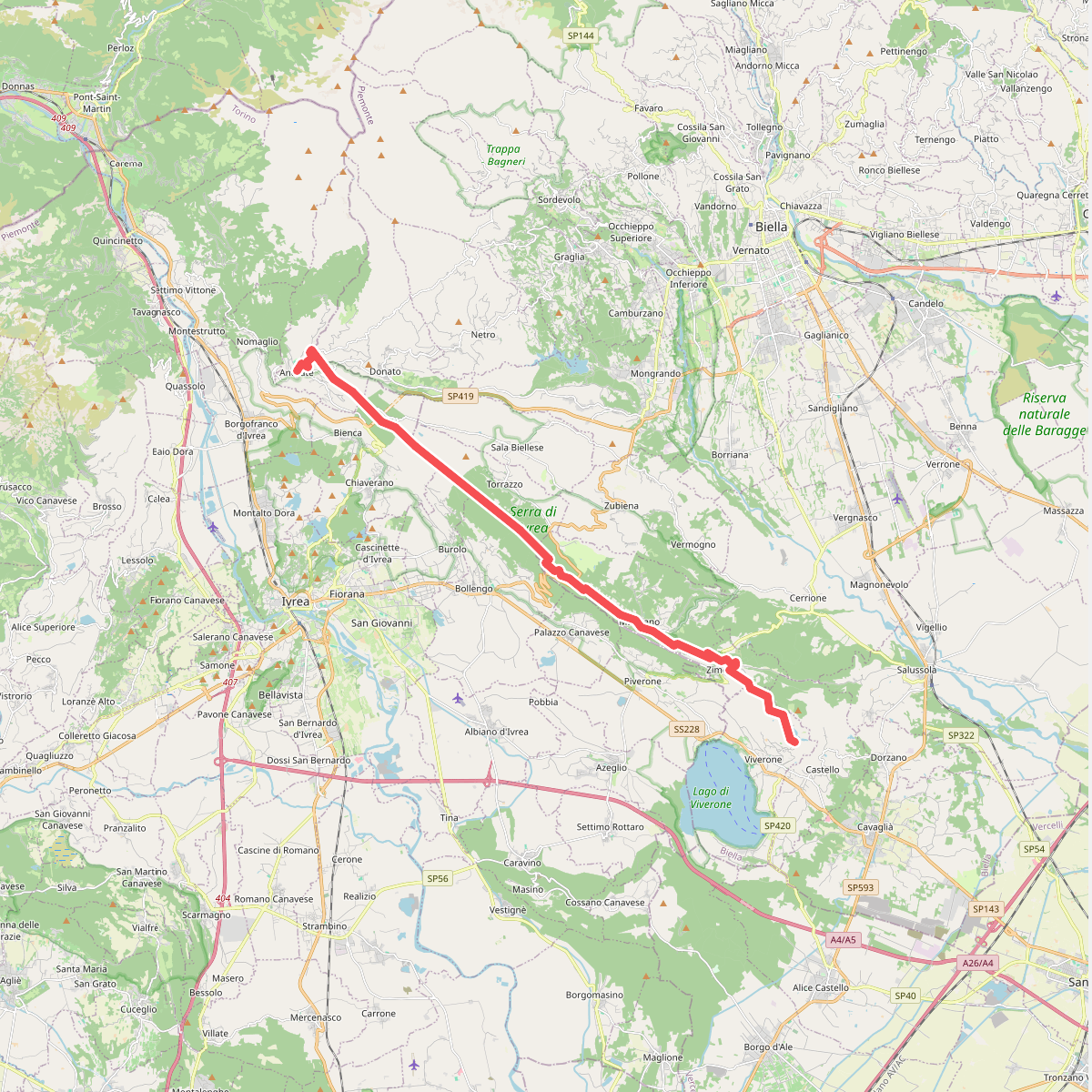
#1. Alta Via dell'Anfiteatro Morenico di Ivrea Tappa 1
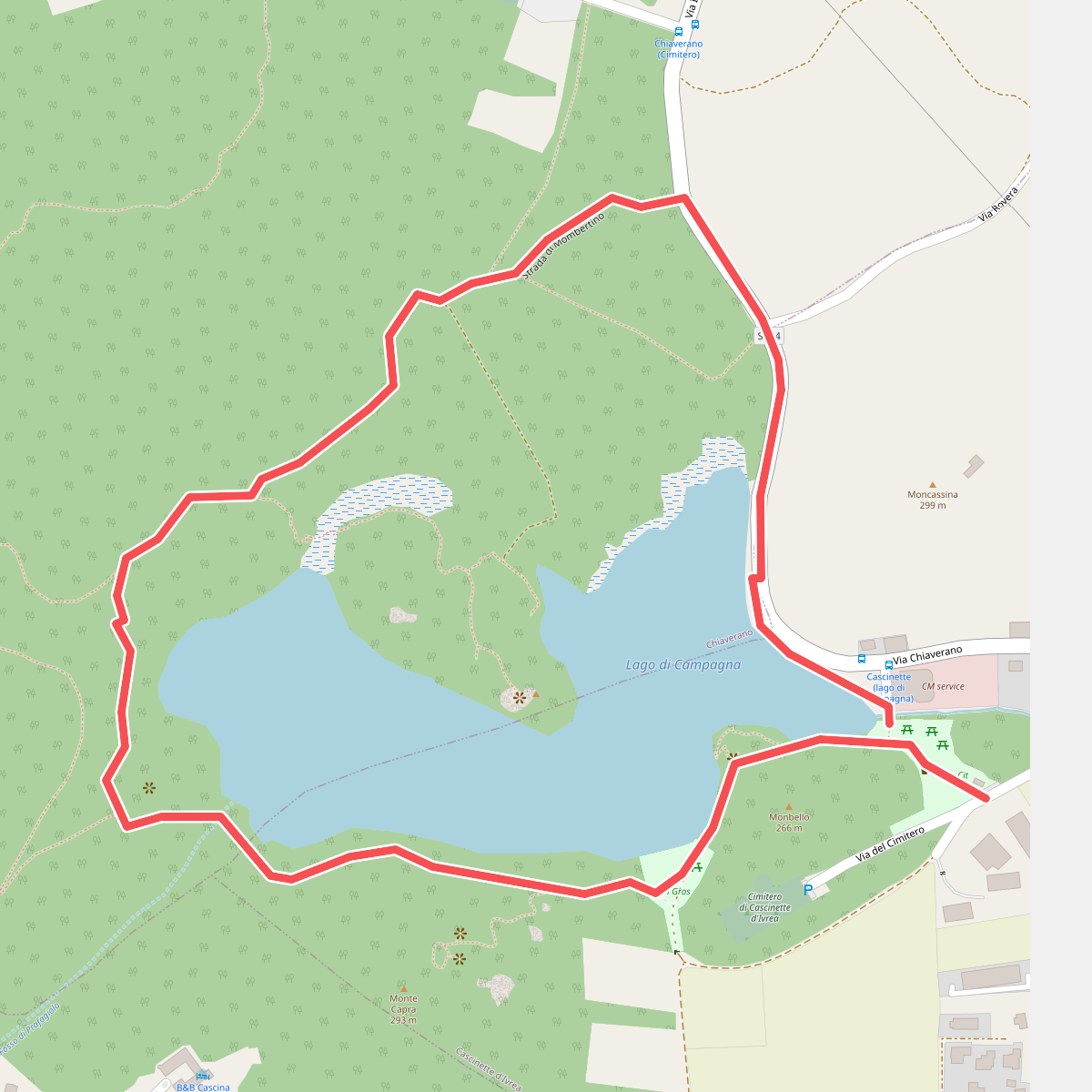
#2. Anello del Lago di Campagna
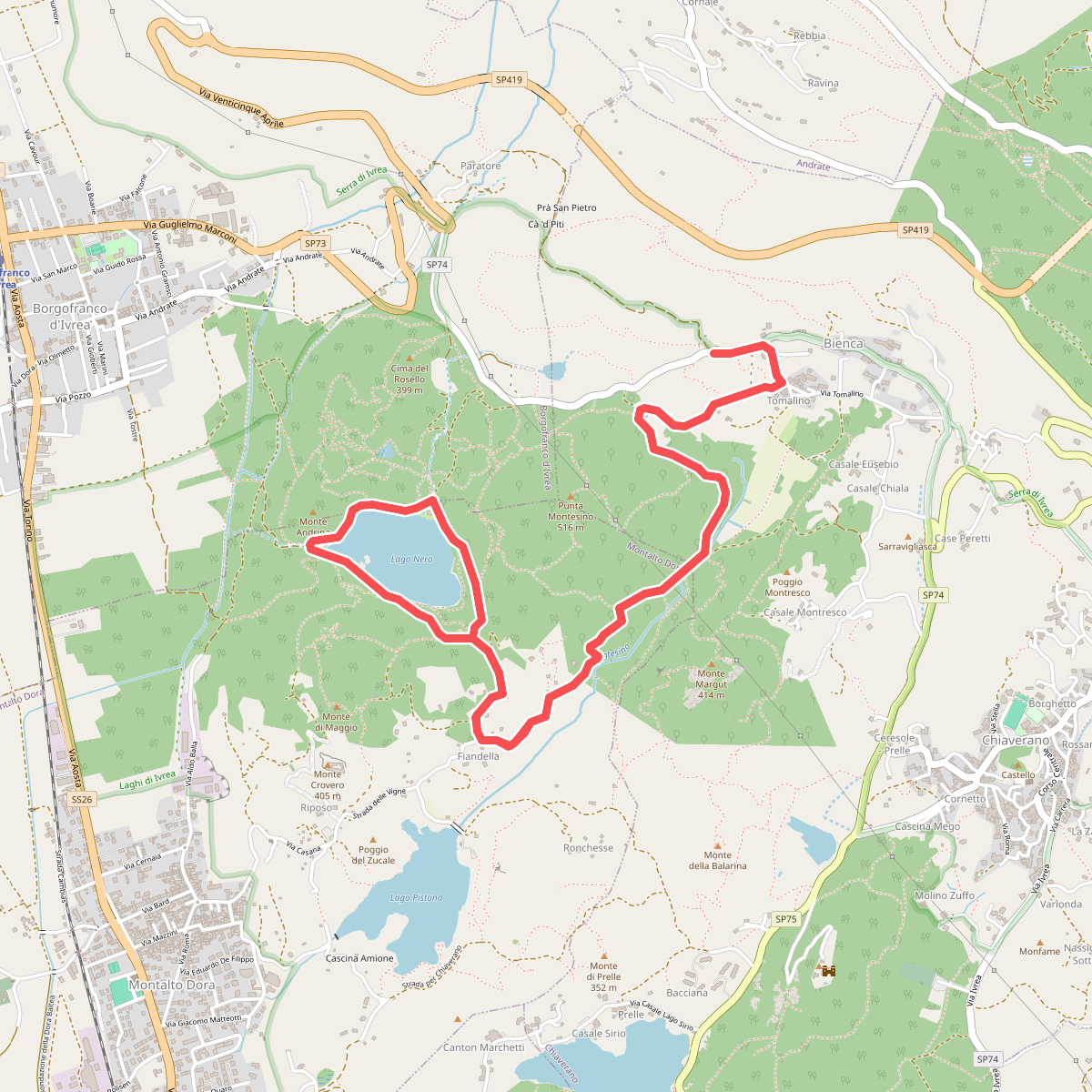
#3. Anello del Lago Nero
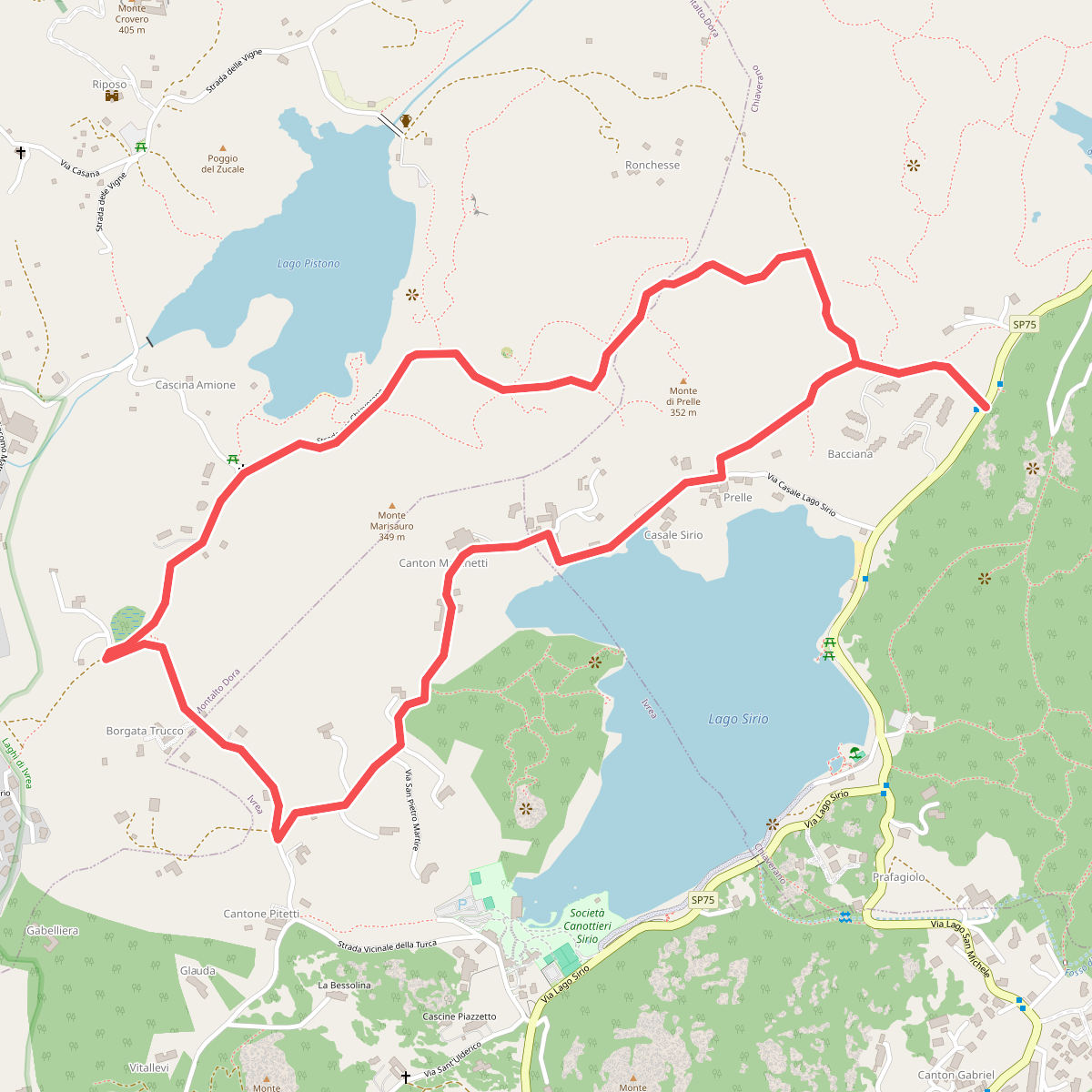
#4. Anello del Lago Sirio e delle Terre Ballerine