The best hiking routes in Fulufjället
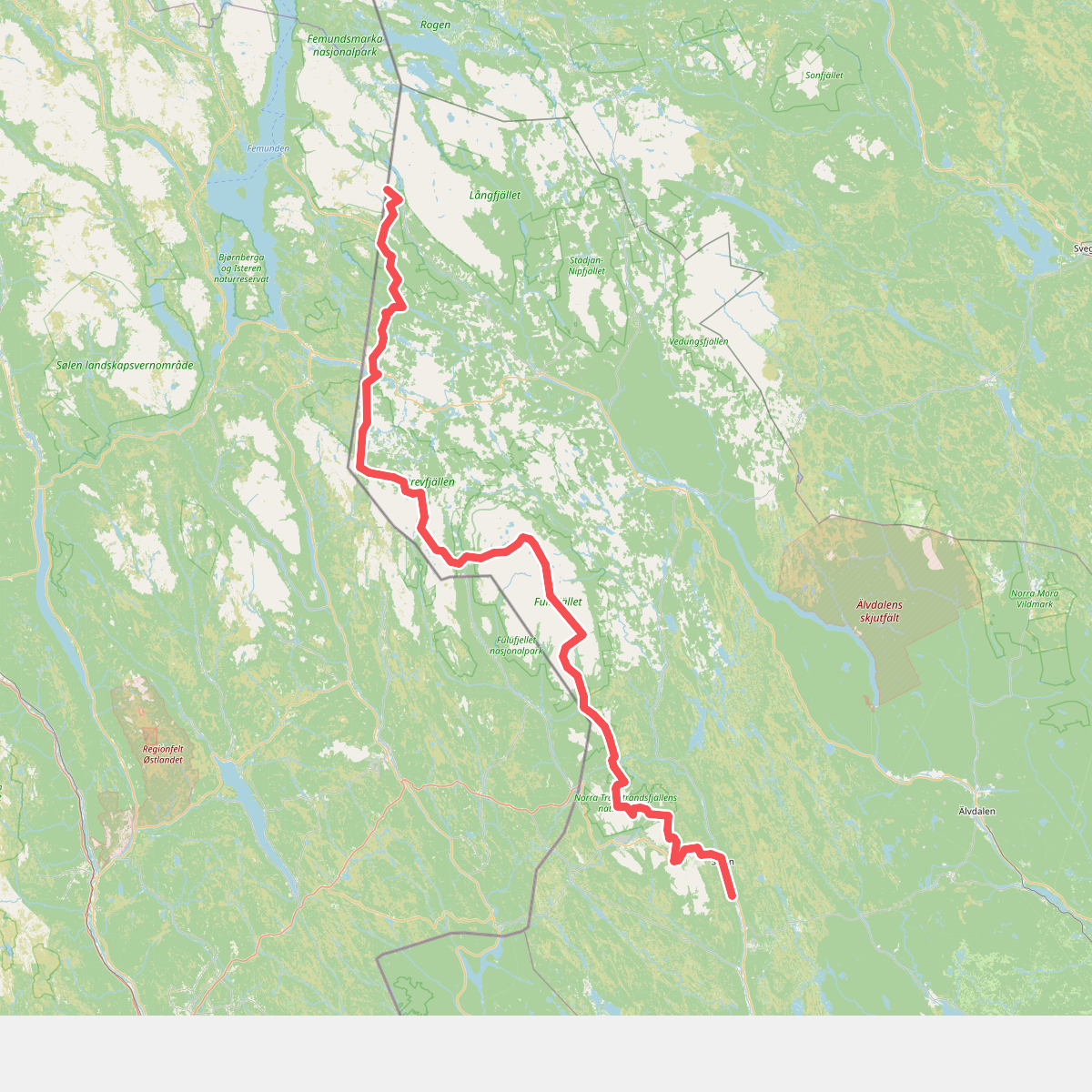
Discover the best walks in Fulufjället. 1 routes on the map, with descriptions, photos and GPX.
About Fulufjället
Fulufjället is a sandstone plateau rising abruptly from the surrounding pine forests. Unlike the jagged peaks further north in the Scandinavian mountain range, this southern national park is characterized by a flat, gently rolling tableland. The top of the plateau is a vast, treeless alpine heath dominated by thick carpets of grey reindeer lichen, low-growing shrubs, and blocky stone fields. Walking here means navigating a landscape of stark contrasts, where the steep, forested slopes of the canyon walls suddenly give way to an open, windswept tundra.
Read more
About Fulufjället
Fulufjället is a sandstone plateau rising abruptly from the surrounding pine forests. Unlike the jagged peaks further north in the Scandinavian mountain range, this southern national park is characterized by a flat, gently rolling tableland. The top of the plateau is a vast, treeless alpine heath dominated by thick carpets of grey reindeer lichen, low-growing shrubs, and blocky stone fields. Walking here means navigating a landscape of stark contrasts, where the steep, forested slopes of the canyon walls suddenly give way to an open, windswept tundra.
Read moreFulufjället is a sandstone plateau rising abruptly from the surrounding pine forests. Unlike the jagged peaks further north in the Scandinavian mountain range, this southern national park is characterized by a flat, gently rolling tableland. The top of the plateau is a vast, treeless alpine heath dominated by thick carpets of grey reindeer lichen, low-growing shrubs, and blocky stone fields. Walking here means navigating a landscape of stark contrasts, where the steep, forested slopes of the canyon walls suddenly give way to an open, windswept tundra.
Underfoot, the trail conditions vary significantly depending on your choice of route. The popular eastern approaches, particularly around the Njupeskär waterfall, feature wide, gravelled paths and sturdy wooden boardwalks that protect the fragile peat. Once you climb onto the plateau itself, the terrain changes to rougher, unmarked paths where you must step over loose sandstone rocks and navigate boggy depressions. Navigating the plateau requires a keen eye for the stone cairns that mark the winter trails, as the flat terrain offers few distinct landmarks.
In late August and September, the dwarf birch and bilberry bushes on the plateau turn a deep red and orange, signaling the early arrival of autumn. While the area around the main entrance and the waterfall can be busy with day-trippers, the vast interior of the plateau remains quiet and sees far fewer walkers. This is a landscape for those who appreciate the subtle beauty of lichens, ancient slow-growing spruce trees, and the expansive feel of a high-altitude plateau, rather than dramatic alpine peaks or deep, rushing river gorges.