
The best hiking routes in Dolný vrch
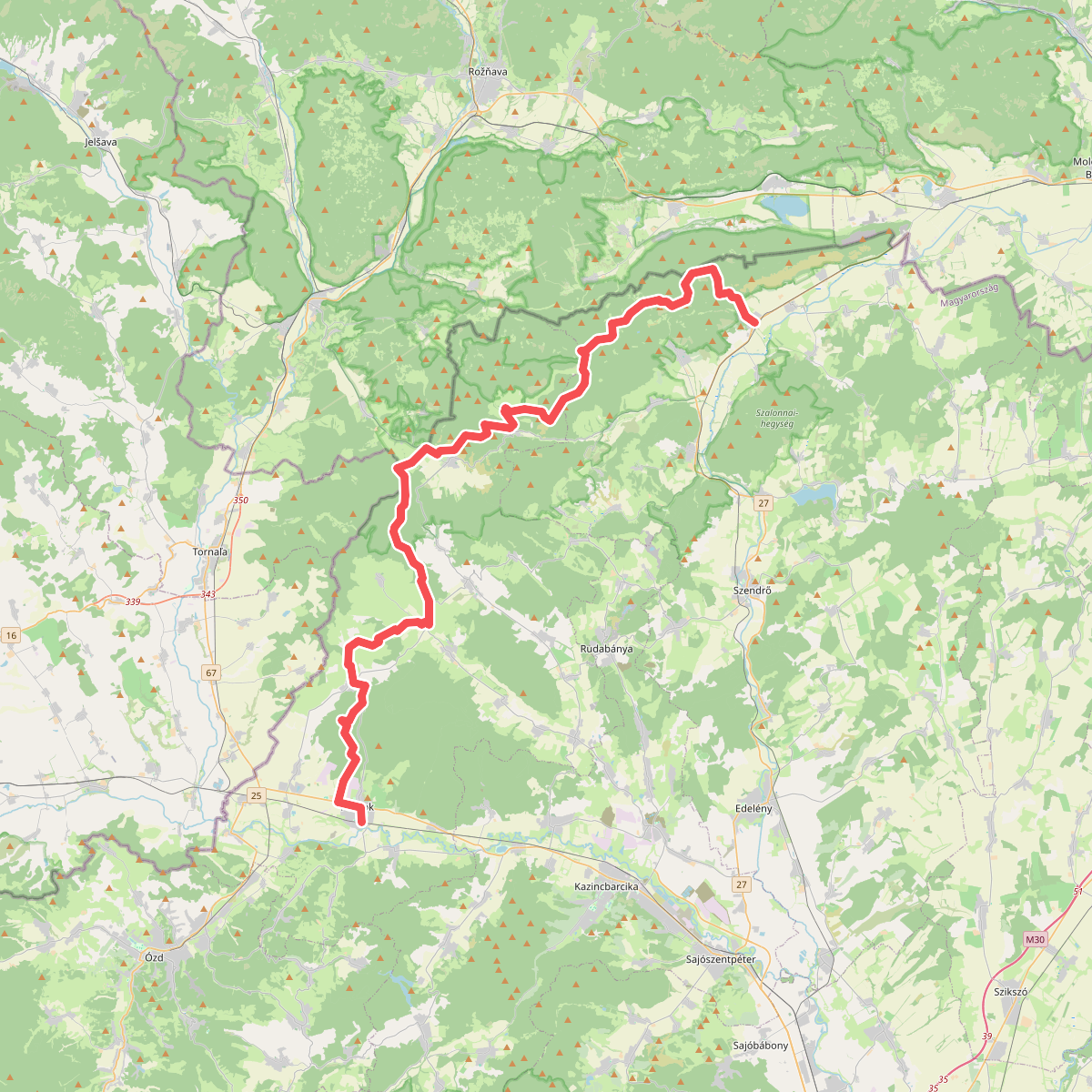
Discover the best walks in Dolný vrch. 1 routes on the map, with descriptions, photos and GPX.
About Dolný vrch
Dolný vrch is a limestone plateau characterized by its karst landscape, where the terrain is defined by sinkholes, deep shafts, and rocky outcrops rather than flowing rivers or open lakes. Walking here means navigating a dense forest cover of beech and hornbeam that grows directly over the rugged limestone pavement. The ground is dry underfoot because rainwater immediately drains into the subterranean cave systems, leaving the surface without permanent streams.
Read more
About Dolný vrch
Dolný vrch is a limestone plateau characterized by its karst landscape, where the terrain is defined by sinkholes, deep shafts, and rocky outcrops rather than flowing rivers or open lakes. Walking here means navigating a dense forest cover of beech and hornbeam that grows directly over the rugged limestone pavement. The ground is dry underfoot because rainwater immediately drains into the subterranean cave systems, leaving the surface without permanent streams.
Read moreDolný vrch is a limestone plateau characterized by its karst landscape, where the terrain is defined by sinkholes, deep shafts, and rocky outcrops rather than flowing rivers or open lakes. Walking here means navigating a dense forest cover of beech and hornbeam that grows directly over the rugged limestone pavement. The ground is dry underfoot because rainwater immediately drains into the subterranean cave systems, leaving the surface without permanent streams.
Unlike the flatter agricultural plains nearby, the paths on this plateau are stony, uneven, and often obscured by leaf litter. You will find yourself constantly stepping over exposed tree roots and sharp limestone rocks, requiring sturdy footwear and careful attention to your footing. There are no boardwalks or paved promenades here; instead, the trails are narrow, dirt-and-stone tracks that wind through the sinkholes and limestone depressions.
In late autumn, particularly in November, the falling leaves expose the true shape of the karst terrain, revealing the sheer number of rocky hollows that are hidden by thick green foliage during the summer months. It is a quiet, forested upland that offers a close-up look at geological erosion, without panoramic viewpoints or high mountain peaks.