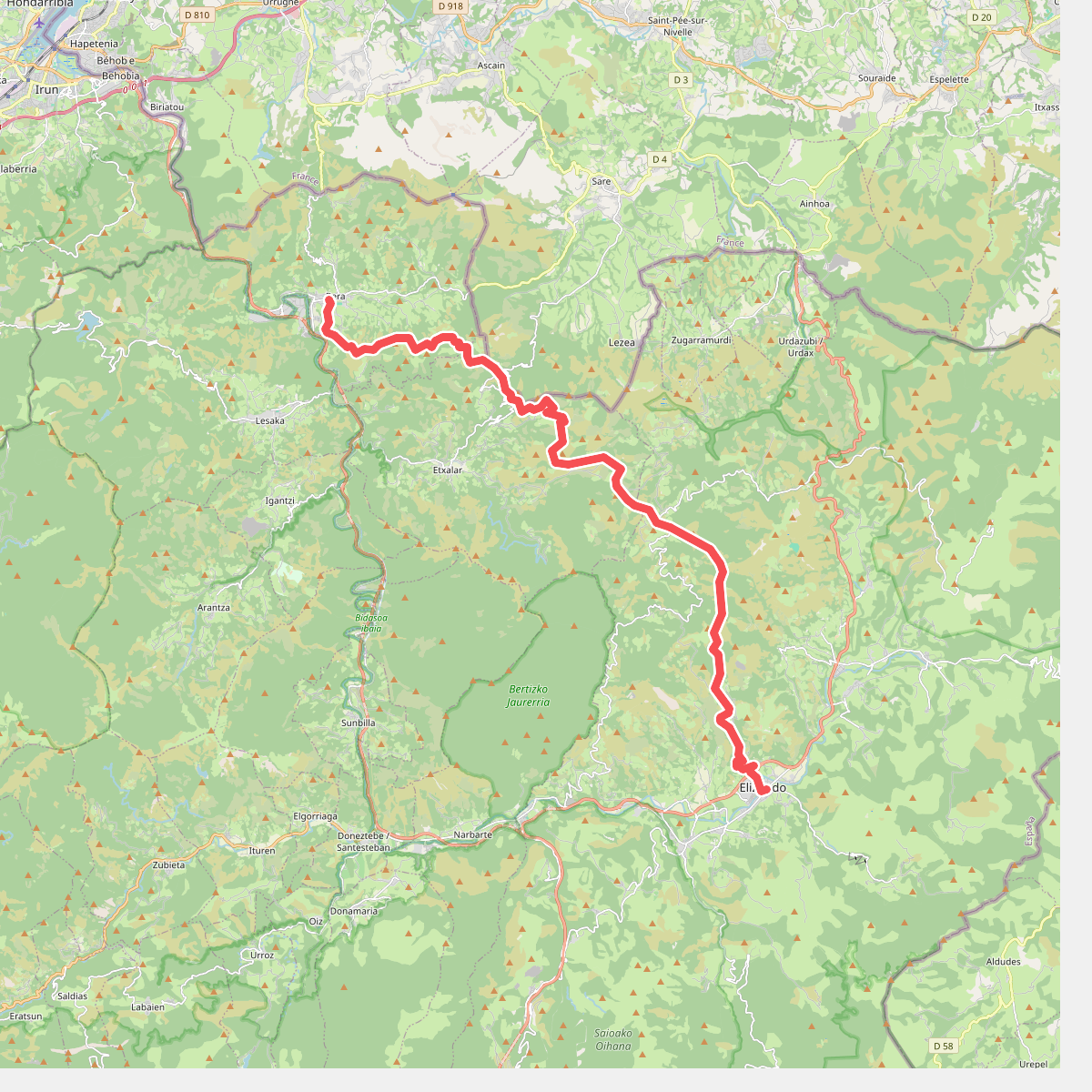

The best hiking routes in Bertizko Jaurerria
Discover the best walks in Bertizko Jaurerria. 7 routes on the map, with descriptions, photos and GPX.
About Bertizko Jaurerria
Bertizko Jaurerria is a compact, heavily wooded valley in the western Pyrenees, dominated by Atlantic temperate rainforest. Unlike the rocky, open summits of the surrounding Basque mountains, this nature reserve is almost entirely covered by a dense canopy of mature beech and oak trees. The landscape is shaped by the humid climate and the course of the Bidasoa River, resulting in a damp, mossy environment where ferns and lichens cover the forest floor and tree trunks. Walking here means being enclosed by deep green foliage rather than looking out over wide mountain vistas.
Read more
About Bertizko Jaurerria
Bertizko Jaurerria is a compact, heavily wooded valley in the western Pyrenees, dominated by Atlantic temperate rainforest. Unlike the rocky, open summits of the surrounding Basque mountains, this nature reserve is almost entirely covered by a dense canopy of mature beech and oak trees. The landscape is shaped by the humid climate and the course of the Bidasoa River, resulting in a damp, mossy environment where ferns and lichens cover the forest floor and tree trunks. Walking here means being enclosed by deep green foliage rather than looking out over wide mountain vistas.
Read moreBertizko Jaurerria is a compact, heavily wooded valley in the western Pyrenees, dominated by Atlantic temperate rainforest. Unlike the rocky, open summits of the surrounding Basque mountains, this nature reserve is almost entirely covered by a dense canopy of mature beech and oak trees. The landscape is shaped by the humid climate and the course of the Bidasoa River, resulting in a damp, mossy environment where ferns and lichens cover the forest floor and tree trunks. Walking here means being enclosed by deep green foliage rather than looking out over wide mountain vistas.
The trail network is divided into two distinct zones. Near the entrance, you will find flat, paved paths winding through a historic botanical garden with exotic plant species. Beyond this cultivated area, the trails turn into dirt tracks and stony forest paths that climb steadily up the valley slopes. These upper paths can be muddy and are often strewn with leaf litter and fallen branches, reflecting the reserve's status as a protected wilderness where dead wood is left to decay naturally.
This reserve is best suited for those who appreciate close-up forest details, fungi, and the sound of running water from the numerous small streams cutting through the hillsides. It does not offer high alpine peaks or dramatic cliffs. While the lower garden area and the main track along the stream can be busy with families, the steeper, longer trails leading toward the higher ridges of the park are generally much quieter, quieter.
Hiking routes in Bertizko Jaurerria (7)
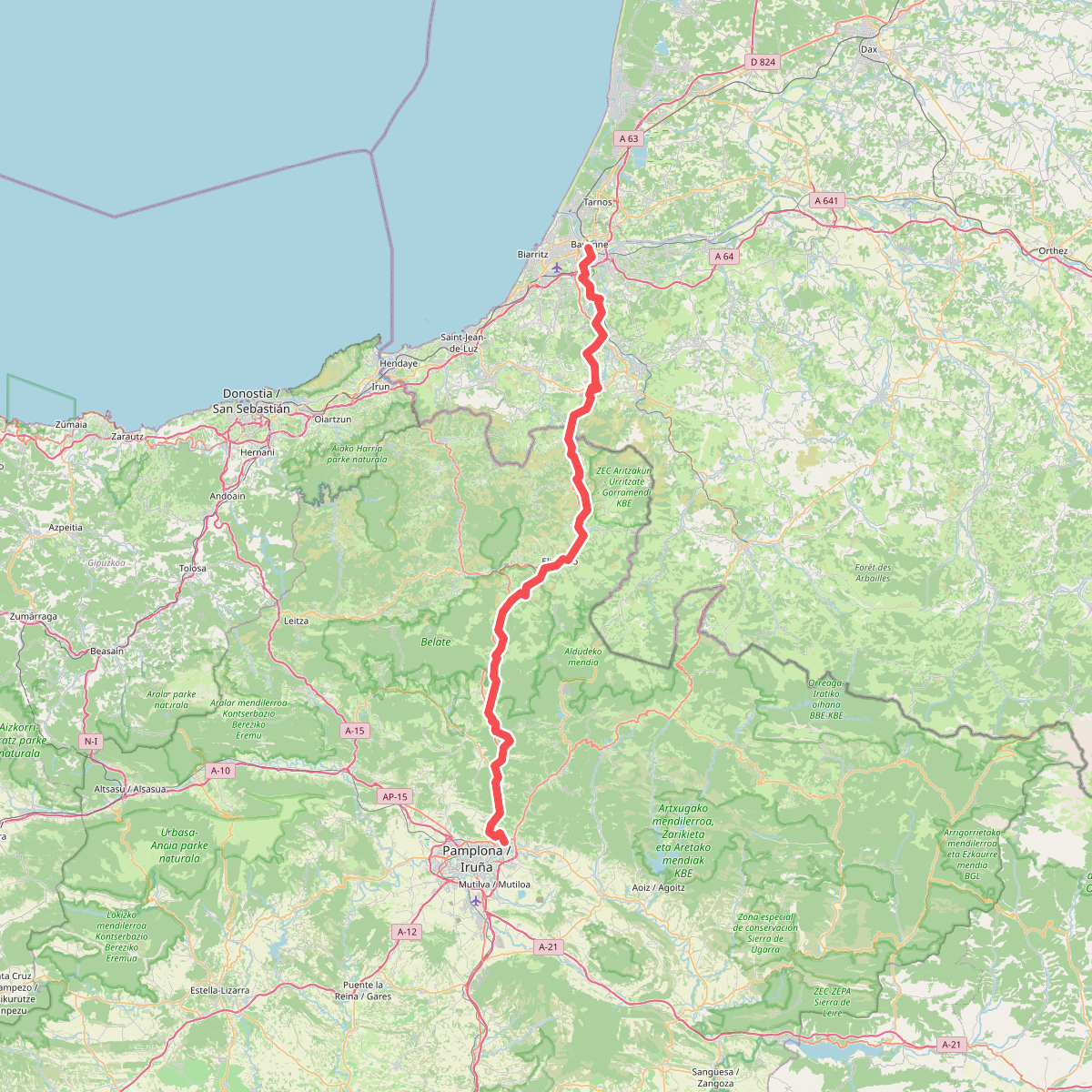
#1. Baztango Donejakue bidea
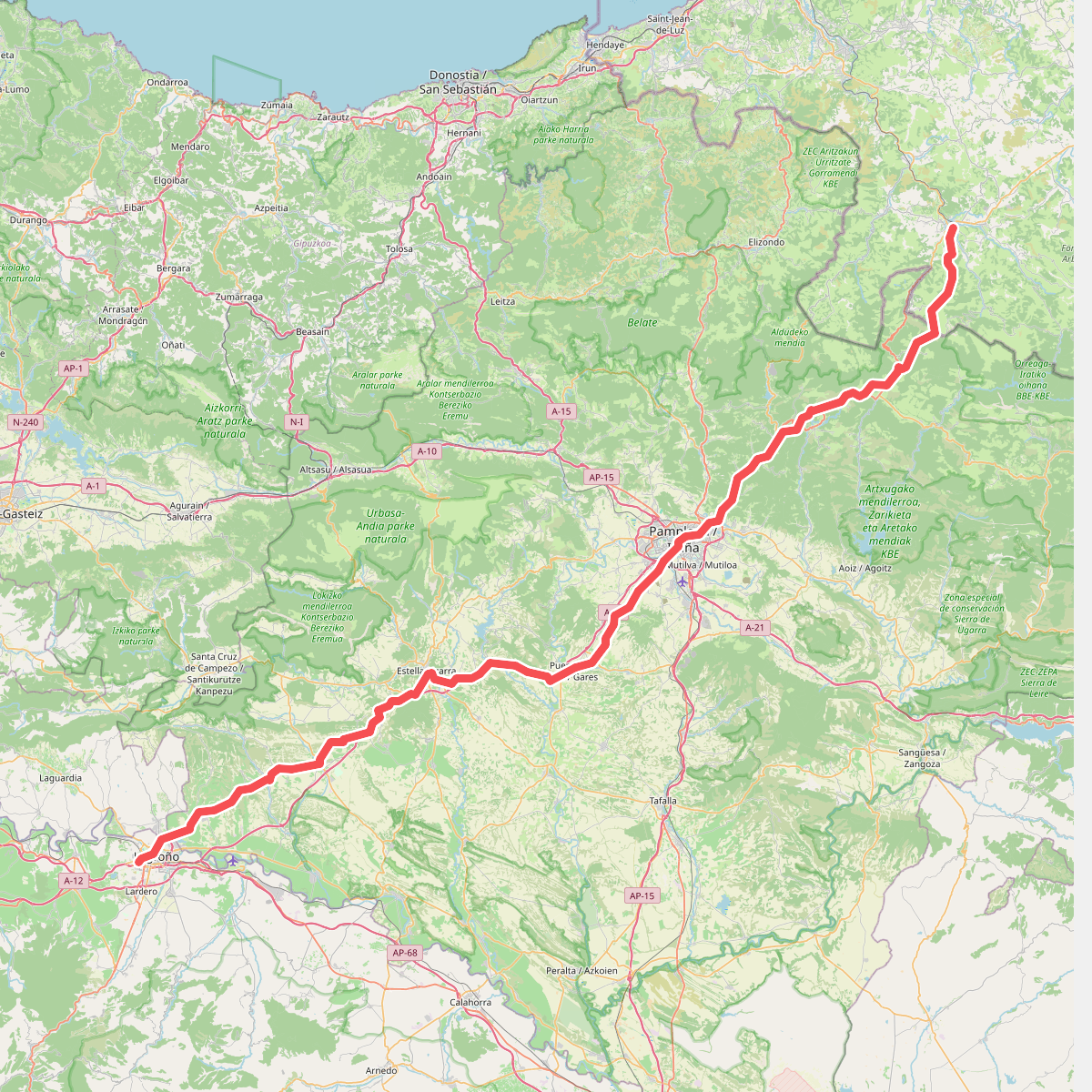
#2. Camino Francés - 01
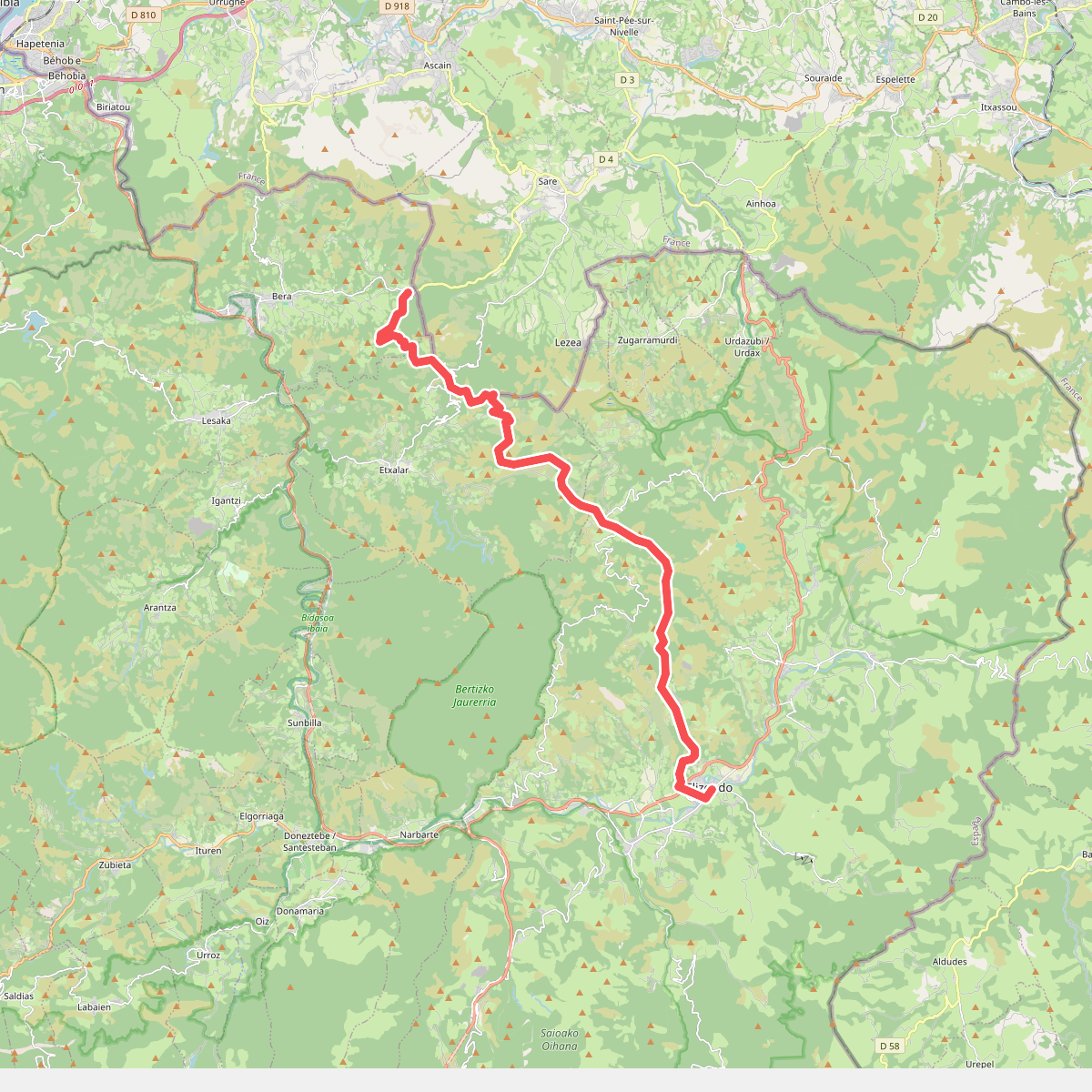
#3. Étape 02
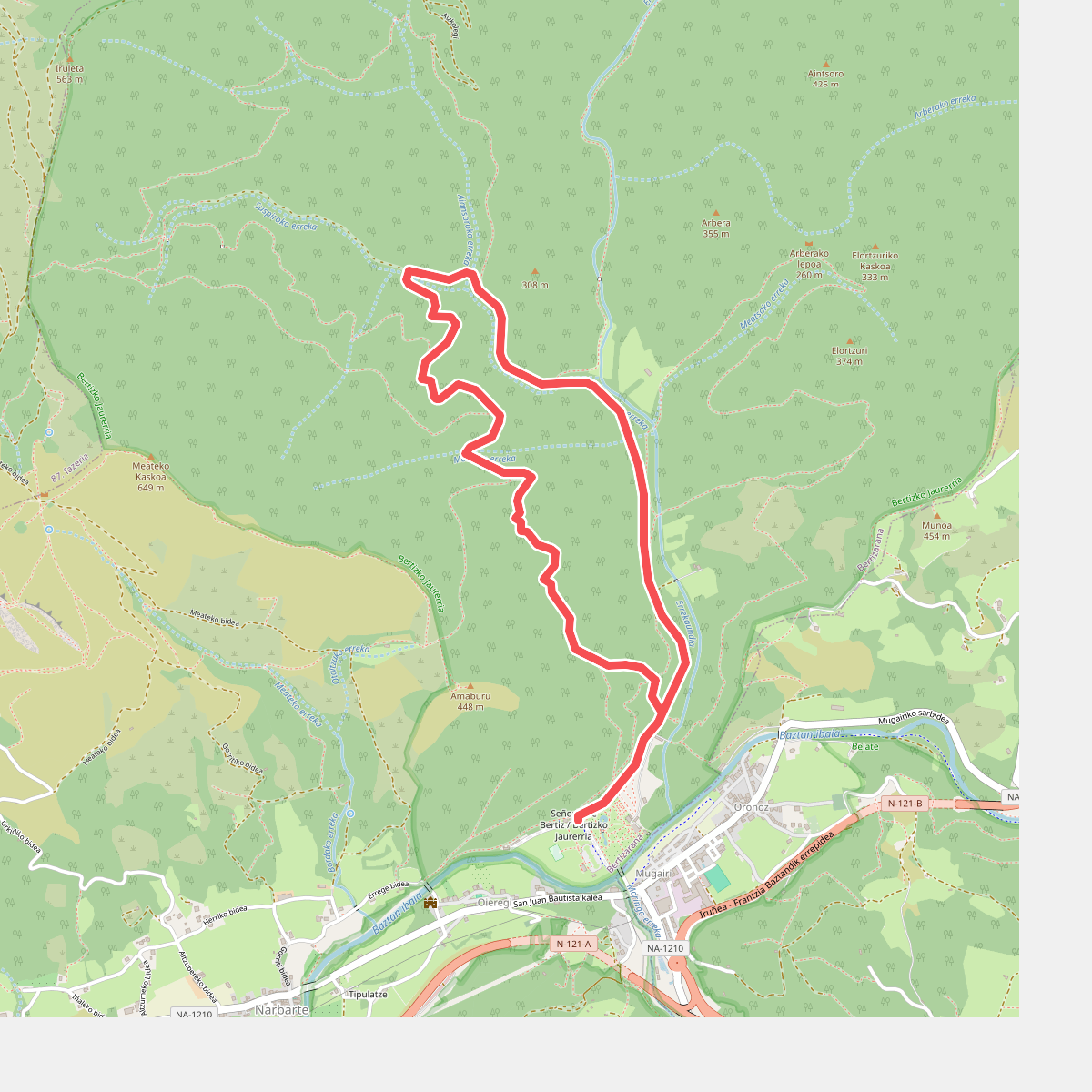
#4. Iturburua
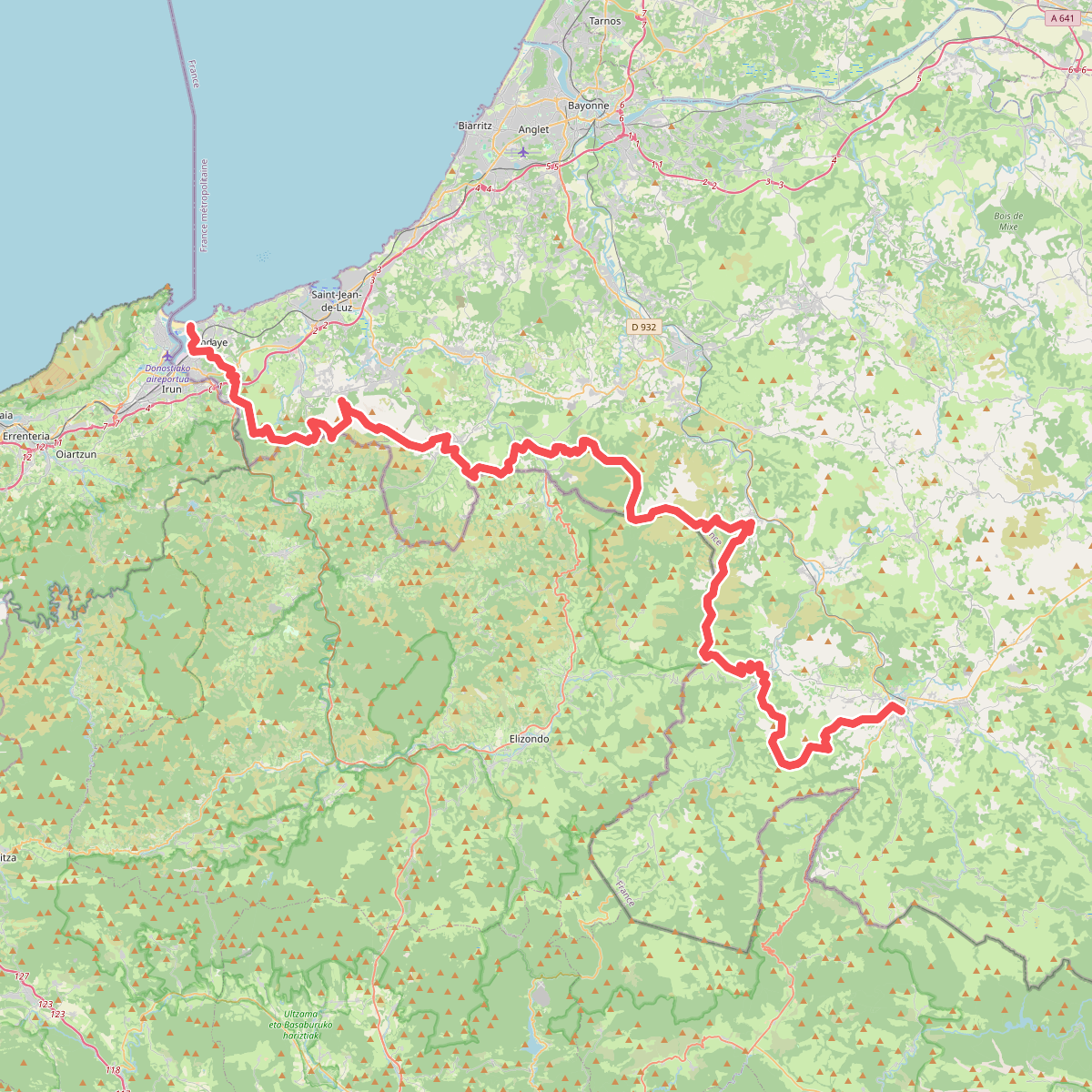
#5. La traversée des Pyrénées - sec.9
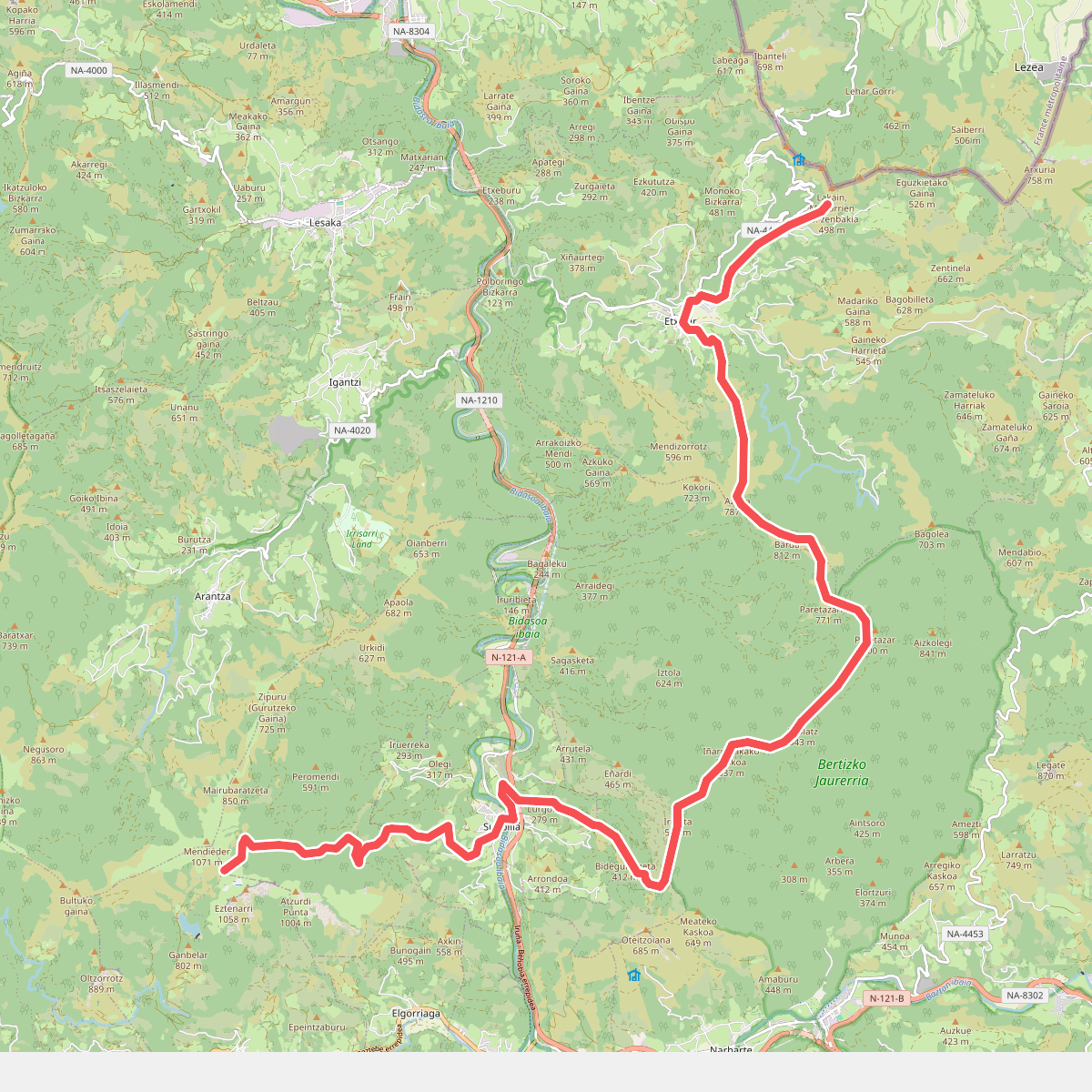
#6. Lakaingo lepoa - Bustitza