
The best hiking routes in Teile des südoststeirischen Hügellandes inkl. Höll und Grabenlandbäche
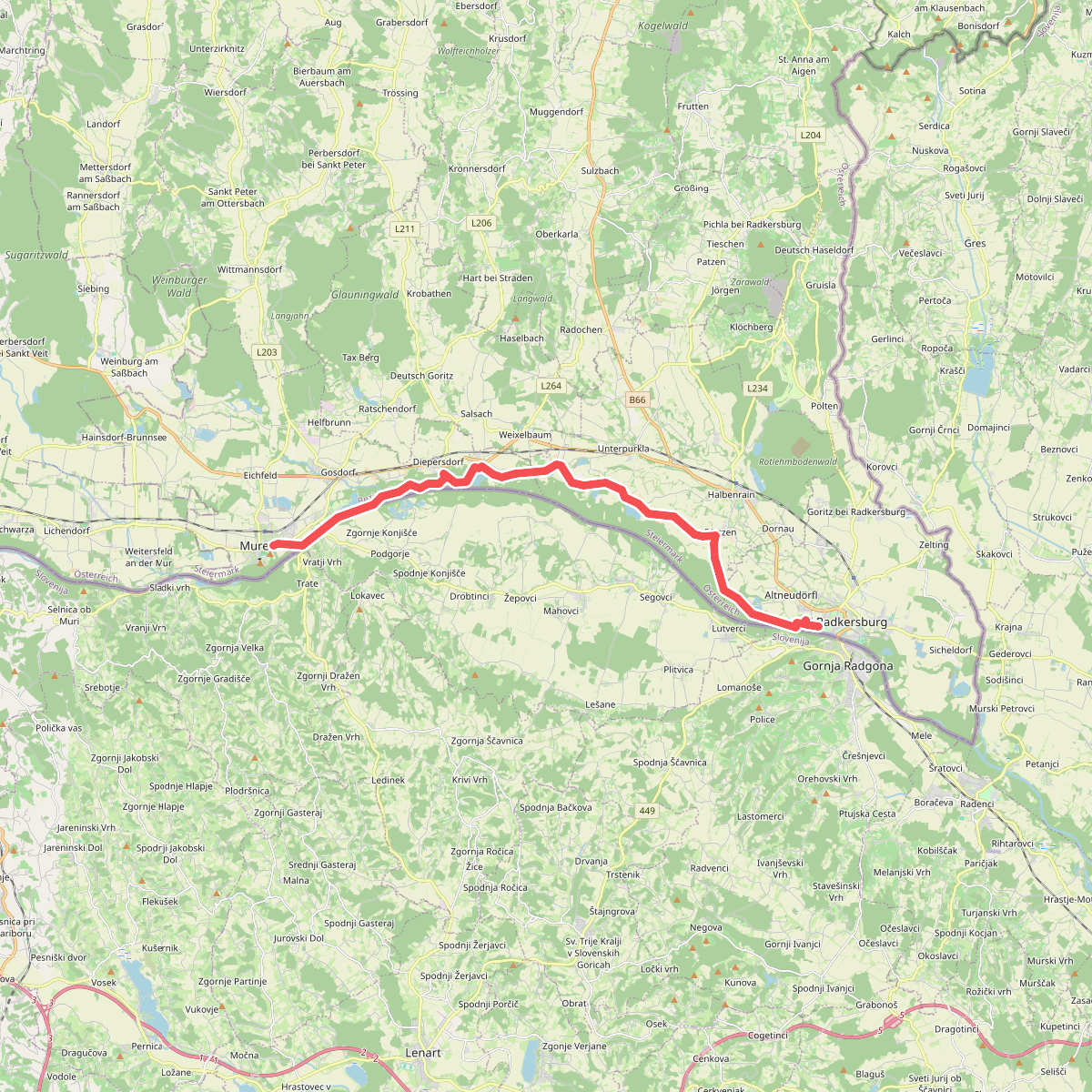
Discover the best walks in Teile des südoststeirischen Hügellandes inkl. Höll und Grabenlandbäche. 1 routes on the map, with descriptions, photos and GPX.
About Teile des südoststeirischen Hügellandes inkl. Höll und Grabenlandbäche
Teile des südoststeirischen Hügellandes inkl. Höll und Grabenlandbäche offers a landscape of low, rolling ridges and damp valley floors rather than dramatic mountain peaks. Walking here means navigating a mix of agricultural edges, small deciduous woodlots, and the shallow ravines carved by the Grabenlandbäche streams. The terrain is defined by its clay-heavy soils, which shape the wide, flat-bottomed valleys and the gentle slopes rising between them.
Read more
About Teile des südoststeirischen Hügellandes inkl. Höll und Grabenlandbäche
Teile des südoststeirischen Hügellandes inkl. Höll und Grabenlandbäche offers a landscape of low, rolling ridges and damp valley floors rather than dramatic mountain peaks. Walking here means navigating a mix of agricultural edges, small deciduous woodlots, and the shallow ravines carved by the Grabenlandbäche streams. The terrain is defined by its clay-heavy soils, which shape the wide, flat-bottomed valleys and the gentle slopes rising between them.
Read moreTeile des südoststeirischen Hügellandes inkl. Höll und Grabenlandbäche offers a landscape of low, rolling ridges and damp valley floors rather than dramatic mountain peaks. Walking here means navigating a mix of agricultural edges, small deciduous woodlots, and the shallow ravines carved by the Grabenlandbäche streams. The terrain is defined by its clay-heavy soils, which shape the wide, flat-bottomed valleys and the gentle slopes rising between them.
Underfoot, you will mostly encounter dirt tracks, farm lanes, and grassy paths along the stream banks. The character of the walk changes noticeably between the drier, sun-exposed ridges where orchards and vineyards line the path, and the shaded, cooler ravines like the Höll. In these lower sections, the air feels damp, and the vegetation shifts to moisture-loving trees and ferns that thrive along the slow-moving watercourses.
This area is best suited for those who prefer quiet, rural exploration over rugged wilderness. You will notice how human cultivation has integrated with the natural drainage patterns, leaving pockets of dense woodland in the steeper, harder-to-farm gullies. It is a working countryside where quiet paths connect small hamlets, offering a close-up look at the traditional land use of the southeastern Styrian hills.