
The best hiking routes in Parco Nazionale delle Foreste Casentinesi, Monte Falterona e Campigna
Discover the best walks in Parco Nazionale delle Foreste Casentinesi, Monte Falterona e Campigna. 99 routes on the map, with descriptions, photos and GPX.
About Parco Nazionale delle Foreste Casentinesi, Monte Falterona e Campigna
Parco Nazionale delle Foreste Casentinesi, Monte Falterona e Campigna is defined by its deep, ancient woodland cover, which distinguishes it from the more open, rocky ridges of the wider Apennines. Walkers here spend most of their time under a dense canopy of beech and silver fir, particularly in the historic forest of Camaldoli and the reserve of Sasso Fratino. The terrain consists of steep, forested slopes cut by deep ravines, where the paths are often damp, covered in leaf litter, and crossed by exposed tree roots and sandstone slabs.
Read more
About Parco Nazionale delle Foreste Casentinesi, Monte Falterona e Campigna
Parco Nazionale delle Foreste Casentinesi, Monte Falterona e Campigna is defined by its deep, ancient woodland cover, which distinguishes it from the more open, rocky ridges of the wider Apennines. Walkers here spend most of their time under a dense canopy of beech and silver fir, particularly in the historic forest of Camaldoli and the reserve of Sasso Fratino. The terrain consists of steep, forested slopes cut by deep ravines, where the paths are often damp, covered in leaf litter, and crossed by exposed tree roots and sandstone slabs.
Read moreParco Nazionale delle Foreste Casentinesi, Monte Falterona e Campigna is defined by its deep, ancient woodland cover, which distinguishes it from the more open, rocky ridges of the wider Apennines. Walkers here spend most of their time under a dense canopy of beech and silver fir, particularly in the historic forest of Camaldoli and the reserve of Sasso Fratino. The terrain consists of steep, forested slopes cut by deep ravines, where the paths are often damp, covered in leaf litter, and crossed by exposed tree roots and sandstone slabs.
As you walk, you will notice the transition from mixed deciduous woods on the lower slopes to pure beech forests near the ridges. This dense vegetation is the result of centuries of monastic management, which favored silver firs for timber. The underfoot conditions are typically earthy and can be slick with mud or covered in deep autumn leaves, requiring sturdy footwear. Unlike more open mountain parks, views here are rare and hard-won, usually limited to clearings along the highest ridges like Monte Falterona, where the Arno River has its source.
This is a landscape of shade and silence rather than dramatic, rocky peaks. The well-known spots around the monasteries of Camaldoli and La Verna can be busier with visitors, but the deeper forest trails remain quiet and demanding. Walkers should expect long, steady climbs through uniform forest scenery rather than rapid changes in landscape types.
Hiking routes in Parco Nazionale delle Foreste Casentinesi, Monte Falterona e Campigna (99)
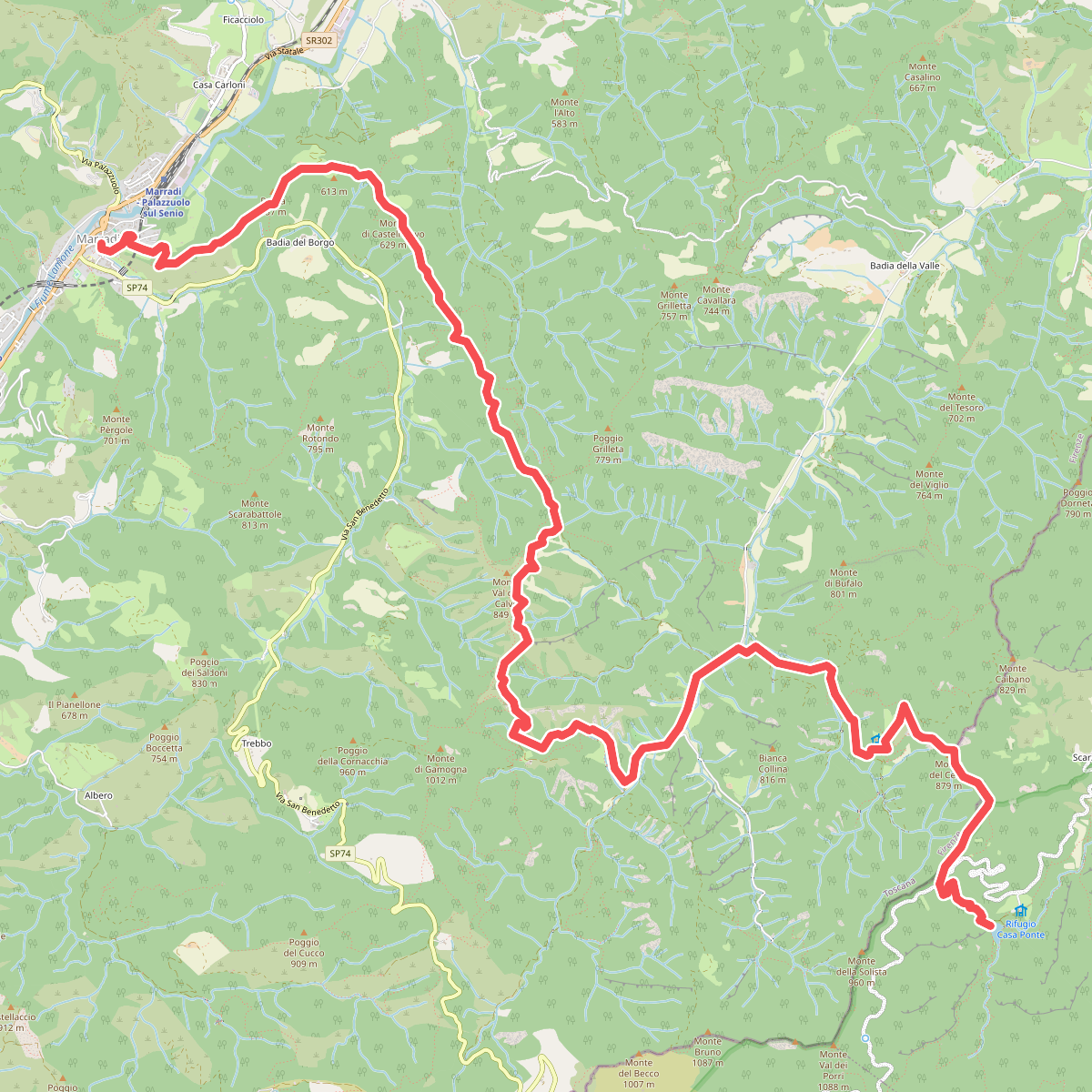
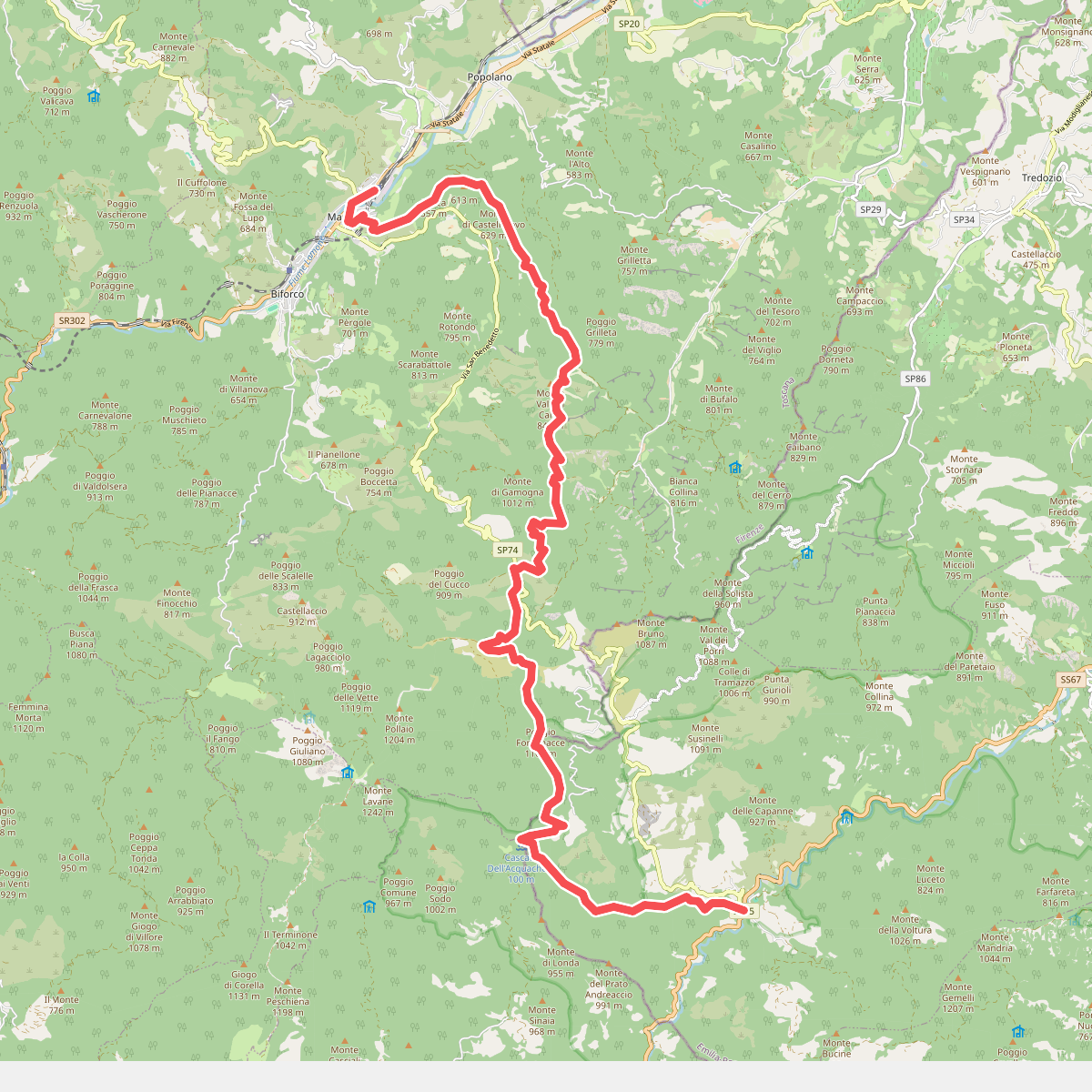
#1. Alta Via dei Parchi: Tappa 18
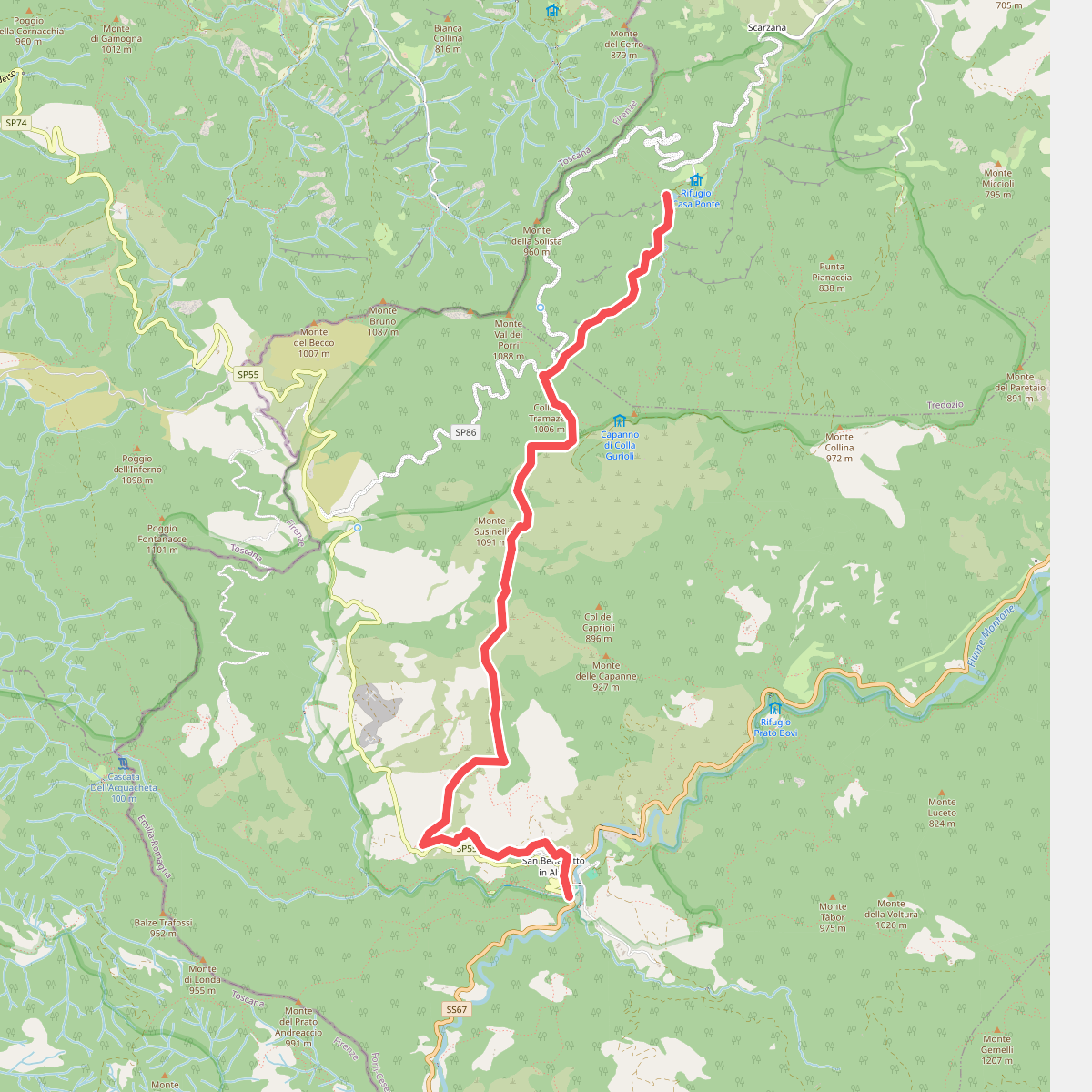
#2. Alta Via dei Parchi: Tappa 19
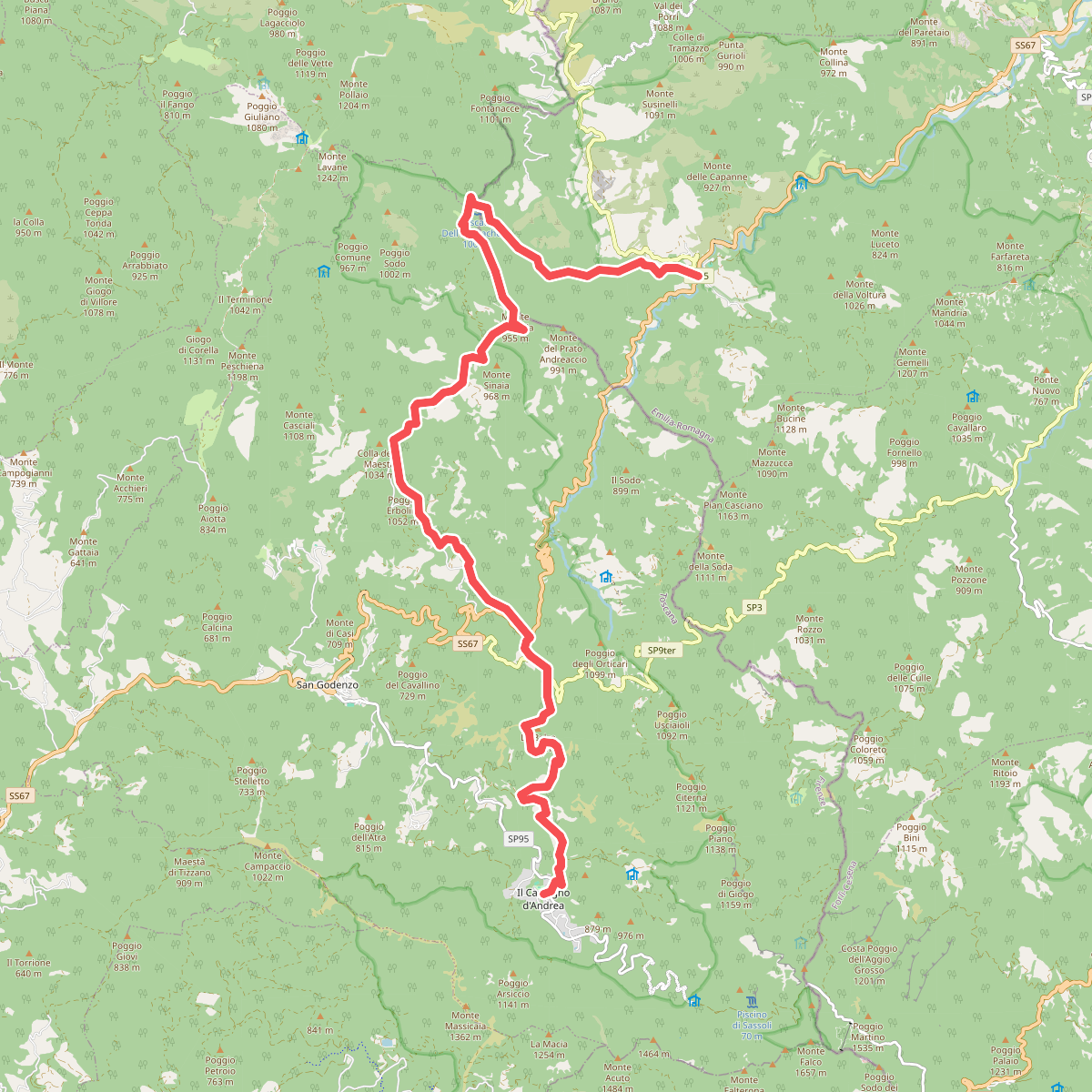
#3. Alta Via dei Parchi: Tappa 20
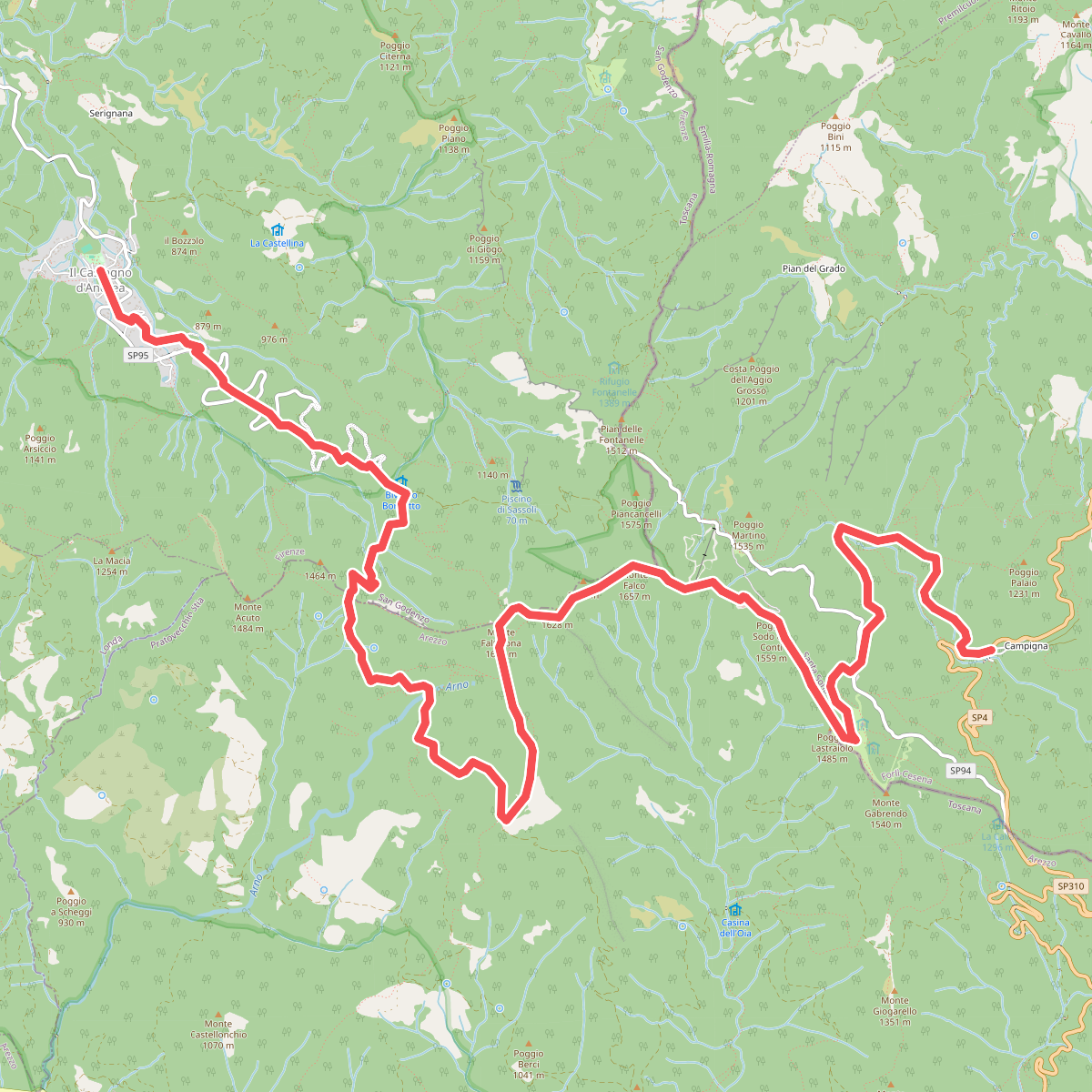
#4. Alta Via dei Parchi: Tappa 21
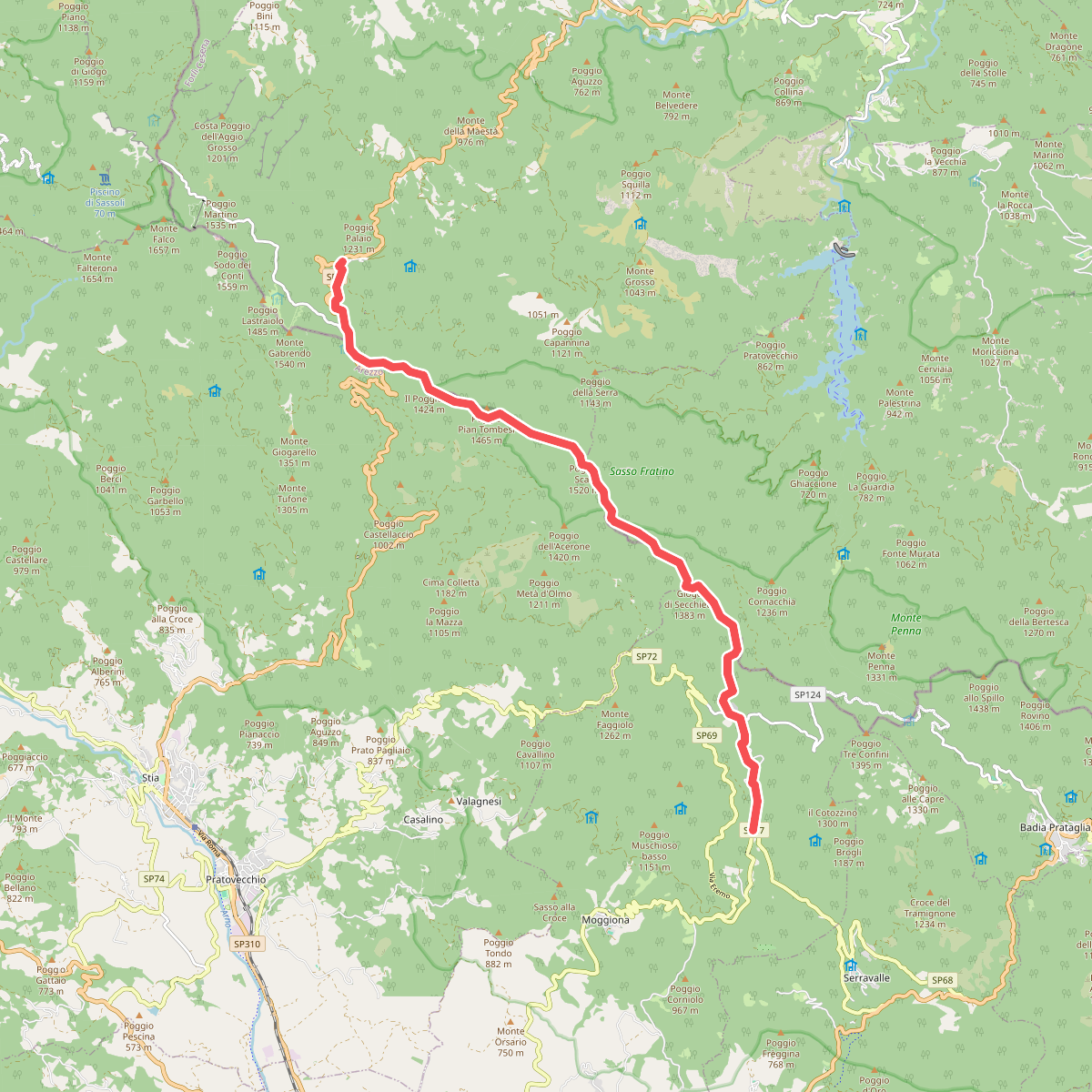
#5. Alta Via dei Parchi: Tappa 22
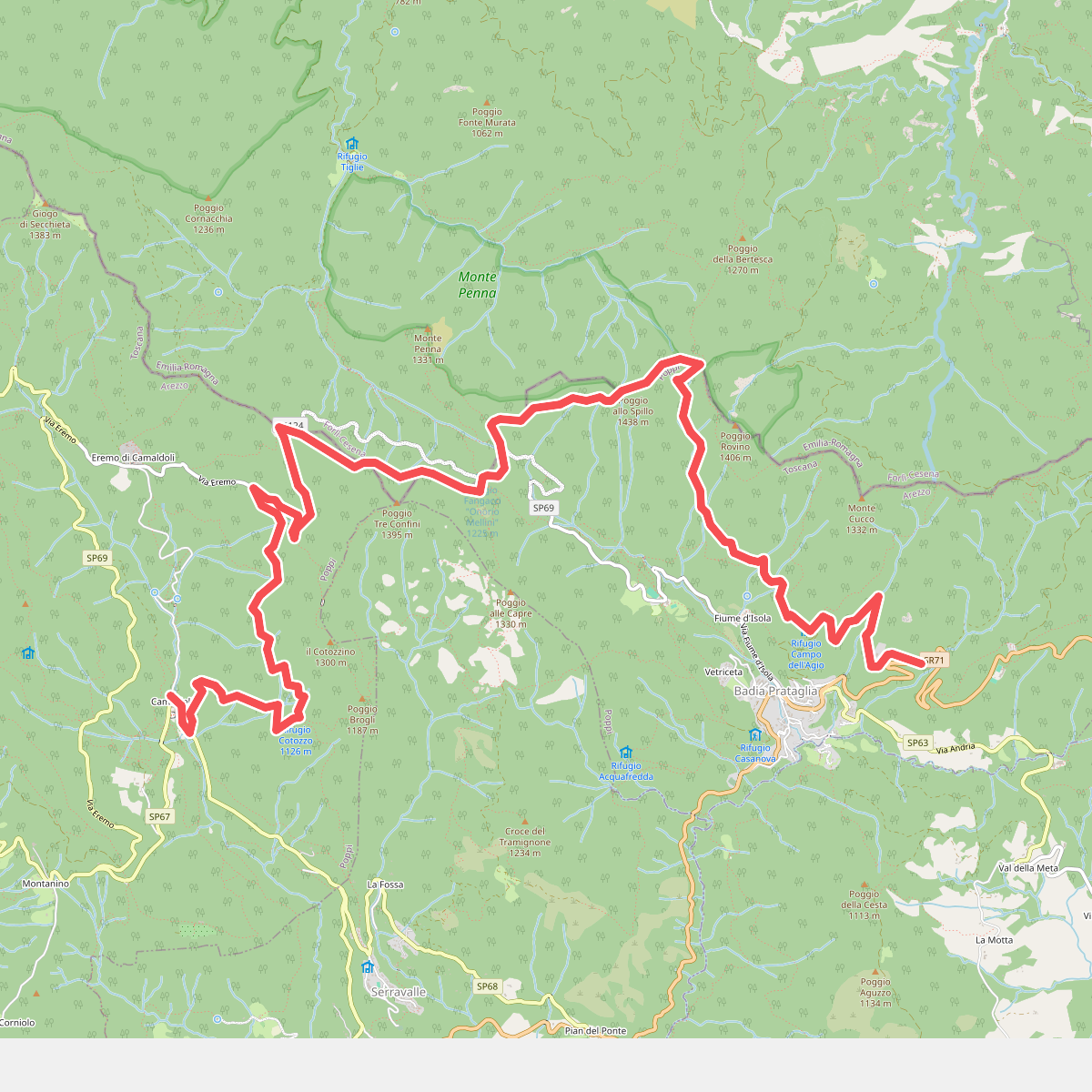
#6. Alta Via dei Parchi: Tappa 23
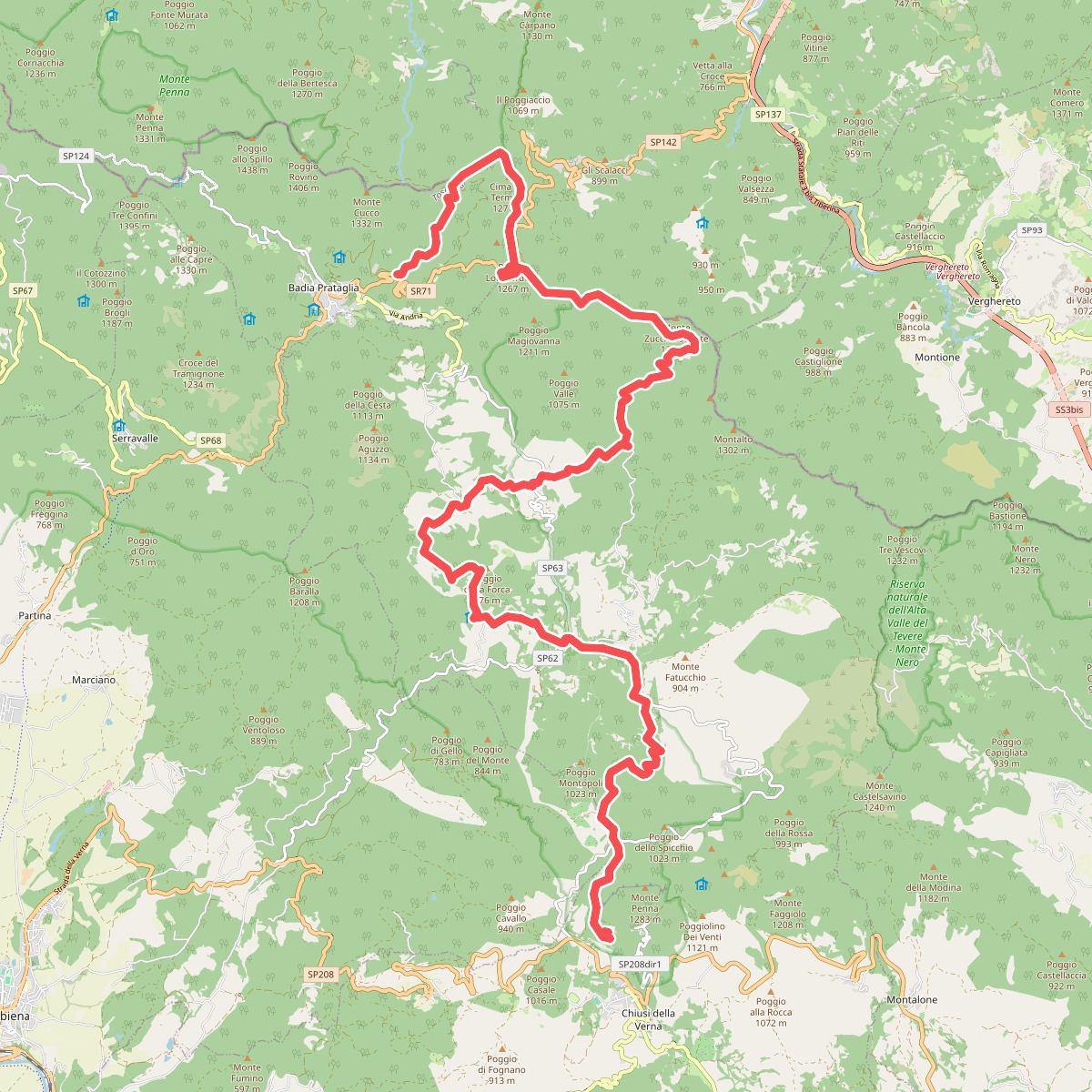
#7. Alta Via dei Parchi: Tappa 24
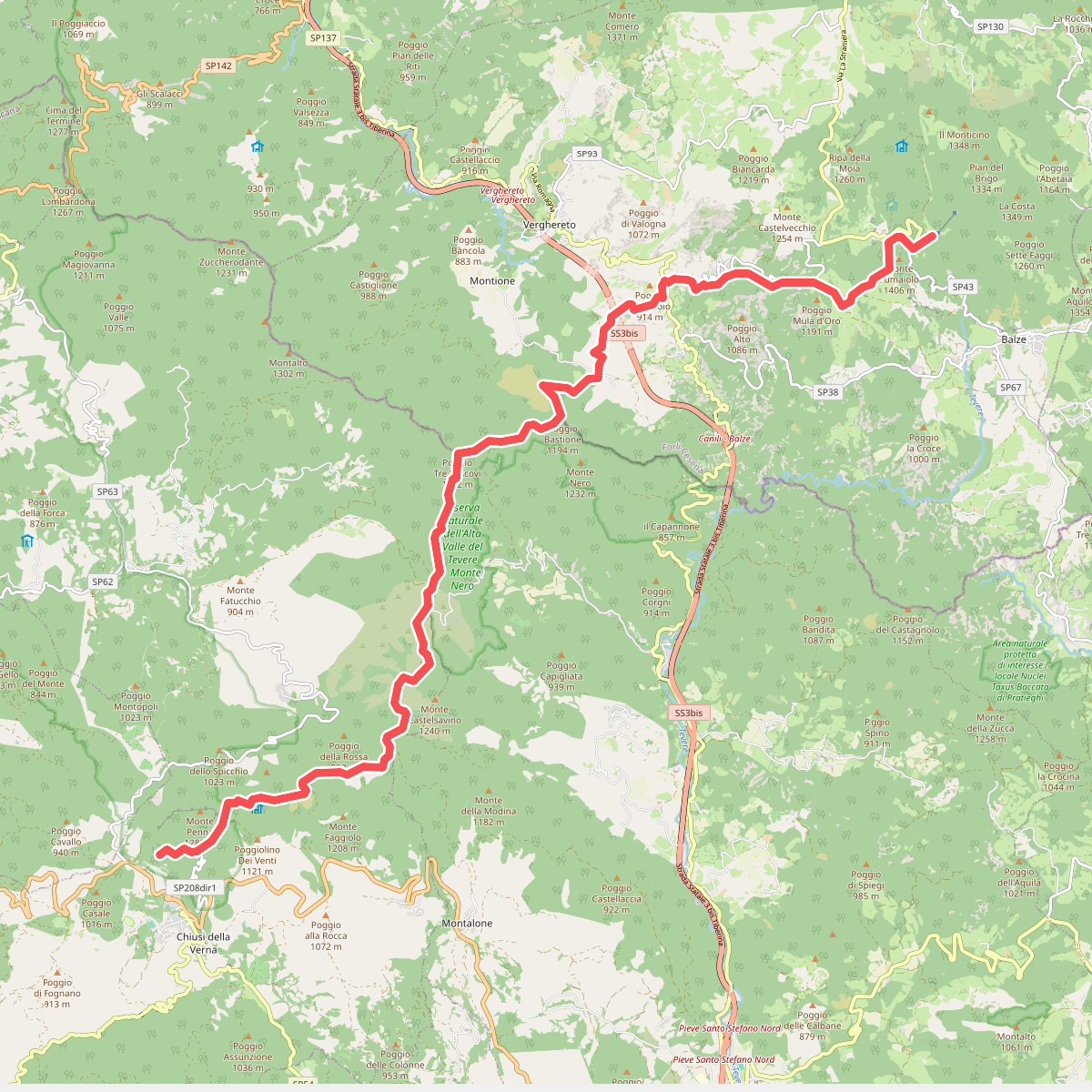
#8. Alta Via dei Parchi: Tappa 25
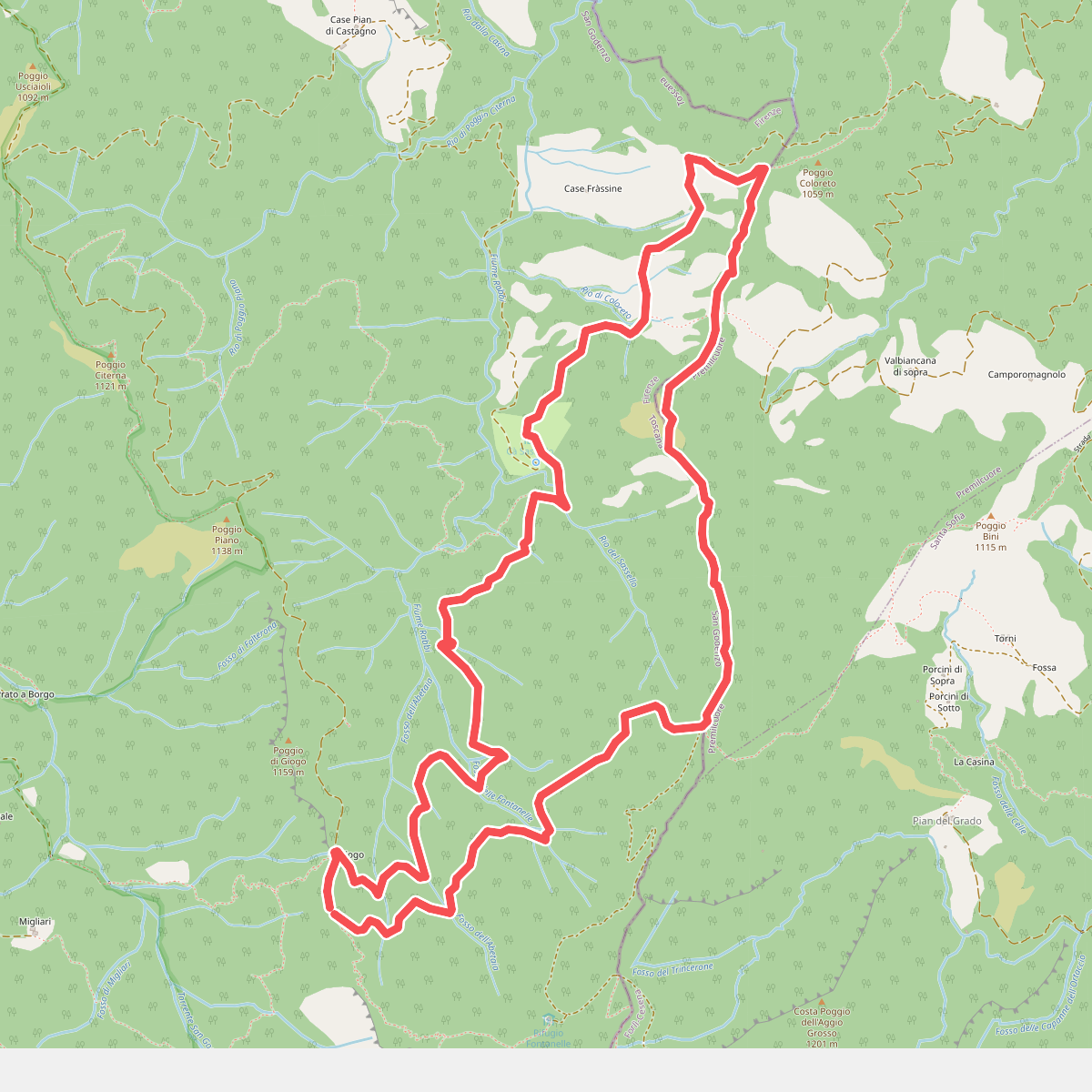
#9. Anello del Sassello
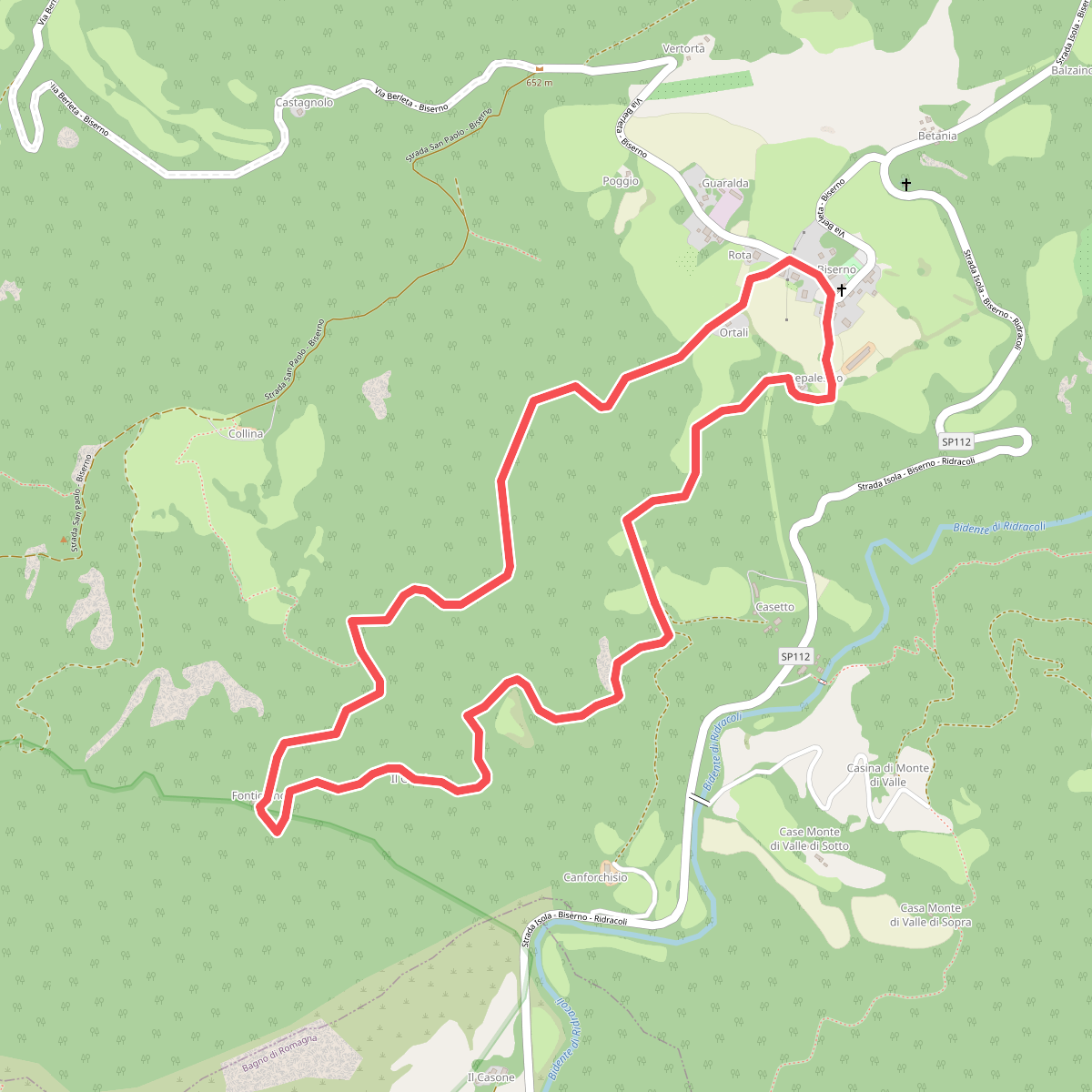
#10. Anello di Biserno
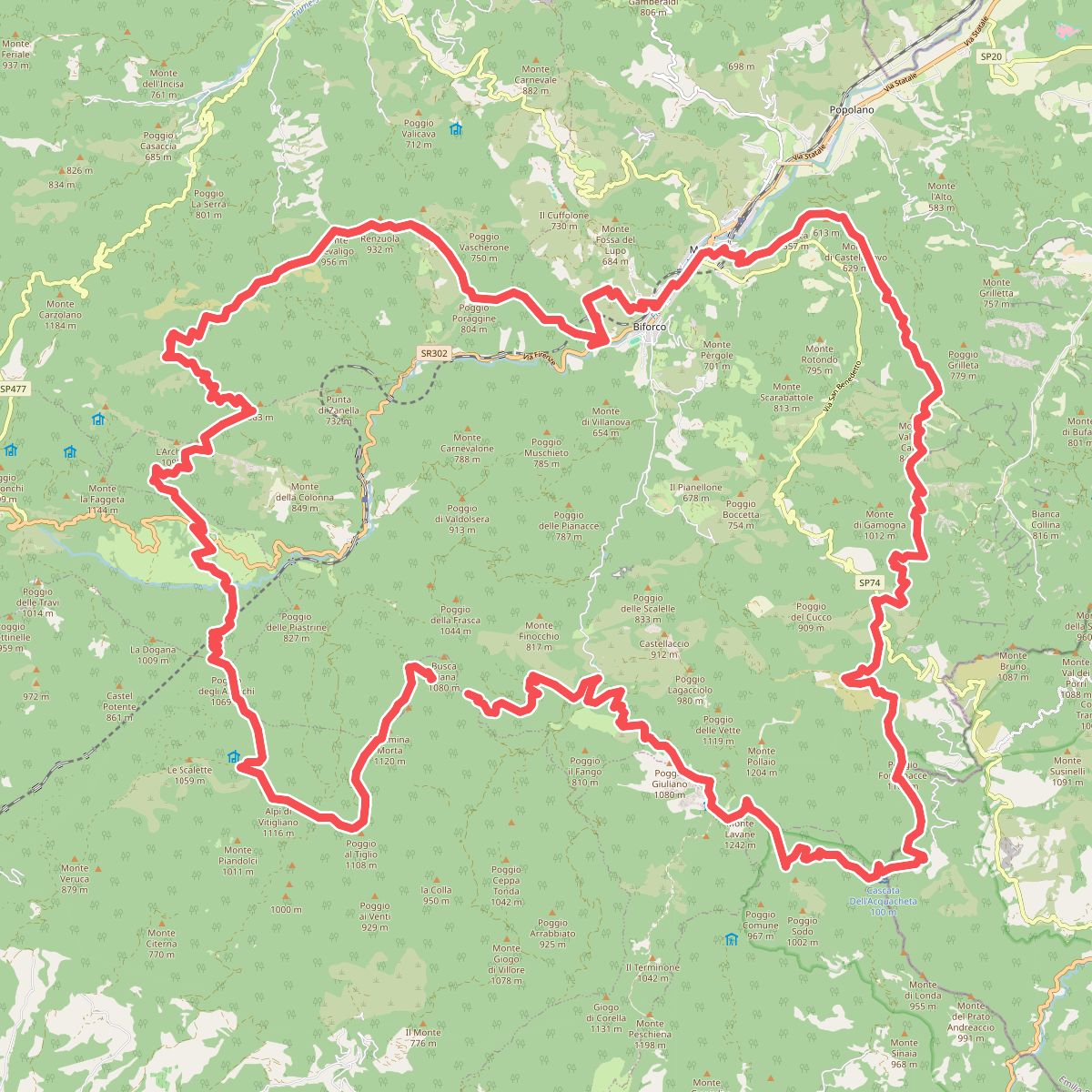
#11. Anello di Marradi