
The best hiking routes in Germanto kraštovaizdžio draustinis
Discover the best walks in Germanto kraštovaizdžio draustinis. 1 routes on the map, with descriptions, photos and GPX.
About Germanto kraštovaizdžio draustinis
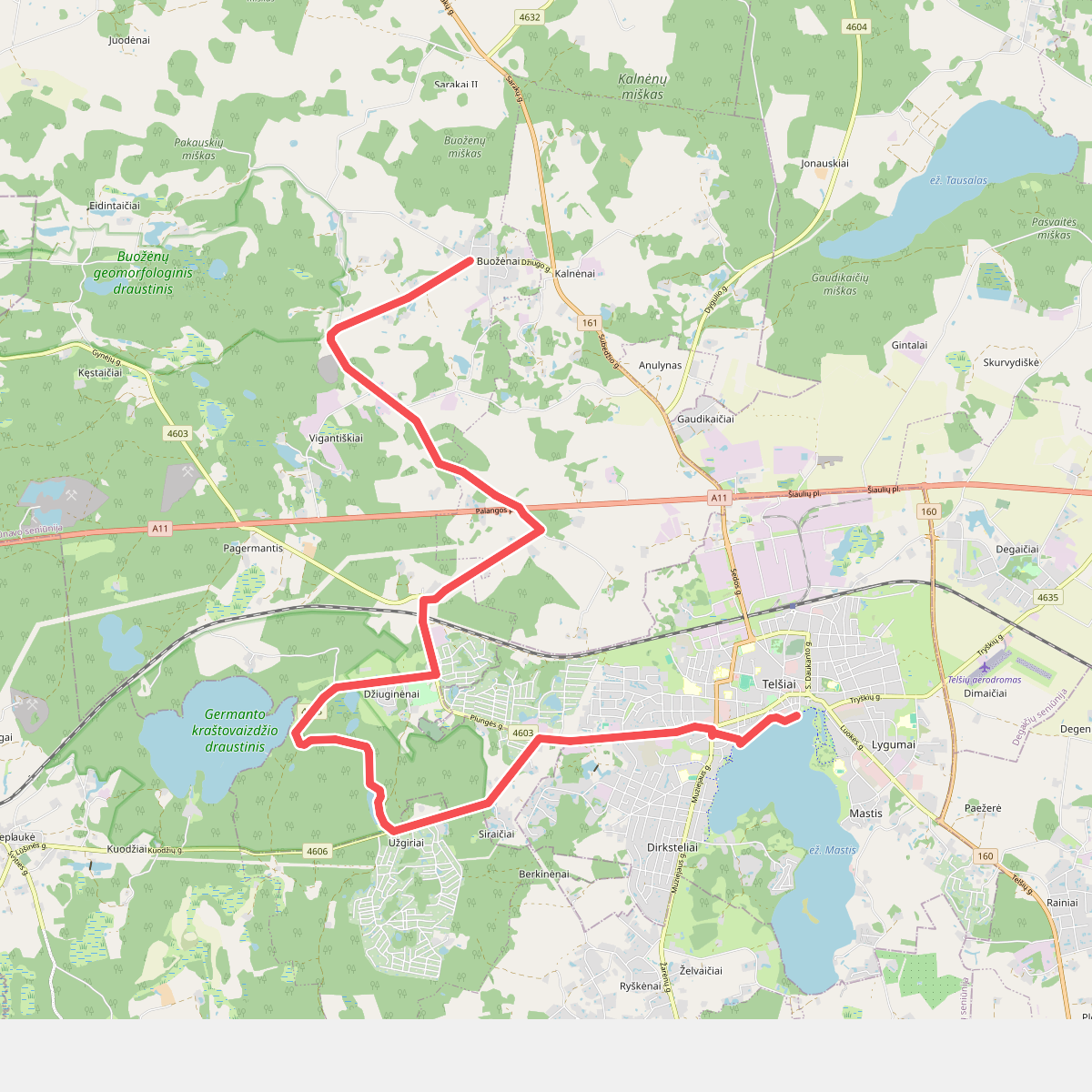
Germanto kraštovaizdųio draustinis is a landscape reserve in western Lithuania dominated by dense spruce and pine forests, peat bogs, and several natural lakes. Unlike the open sand dunes of the coast, this inland area offers a closed canopy with rolling glacial hills and marshy depressions. The terrain is defined by the contrast between the dry, needle-covered forest floors on the ridges and the damp, mossy peatlands that surround the water bodies.
Read more
About Germanto kraštovaizdžio draustinis
Germanto kraštovaizdųio draustinis is a landscape reserve in western Lithuania dominated by dense spruce and pine forests, peat bogs, and several natural lakes. Unlike the open sand dunes of the coast, this inland area offers a closed canopy with rolling glacial hills and marshy depressions. The terrain is defined by the contrast between the dry, needle-covered forest floors on the ridges and the damp, mossy peatlands that surround the water bodies.
Read moreGermanto kraštovaizdųio draustinis is a landscape reserve in western Lithuania dominated by dense spruce and pine forests, peat bogs, and several natural lakes. Unlike the open sand dunes of the coast, this inland area offers a closed canopy with rolling glacial hills and marshy depressions. The terrain is defined by the contrast between the dry, needle-covered forest floors on the ridges and the damp, mossy peatlands that surround the water bodies.
Walkers can choose between two distinct underfoot experiences. The main trail around Lake Germantas features wide, flat gravel paths and wooden boardwalks that cross the wettest sections of the bog, making it accessible for a straightforward walk. In contrast, the deeper forest tracks around Lake Ilgis are narrower, uneven, and dominated by exposed tree roots and sandy soil, requiring more careful footing.
Throughout the reserve, the landscape shows clear signs of its glacial origin, with steep ridges dropping directly into dark, still lake waters. In late summer, particularly in August, the damp forest margins are thick with wild blueberries and heather, while the wetter bog sections remain green with sphagnum moss year-round.