The best hiking routes in Børgefjell nasjonalpark
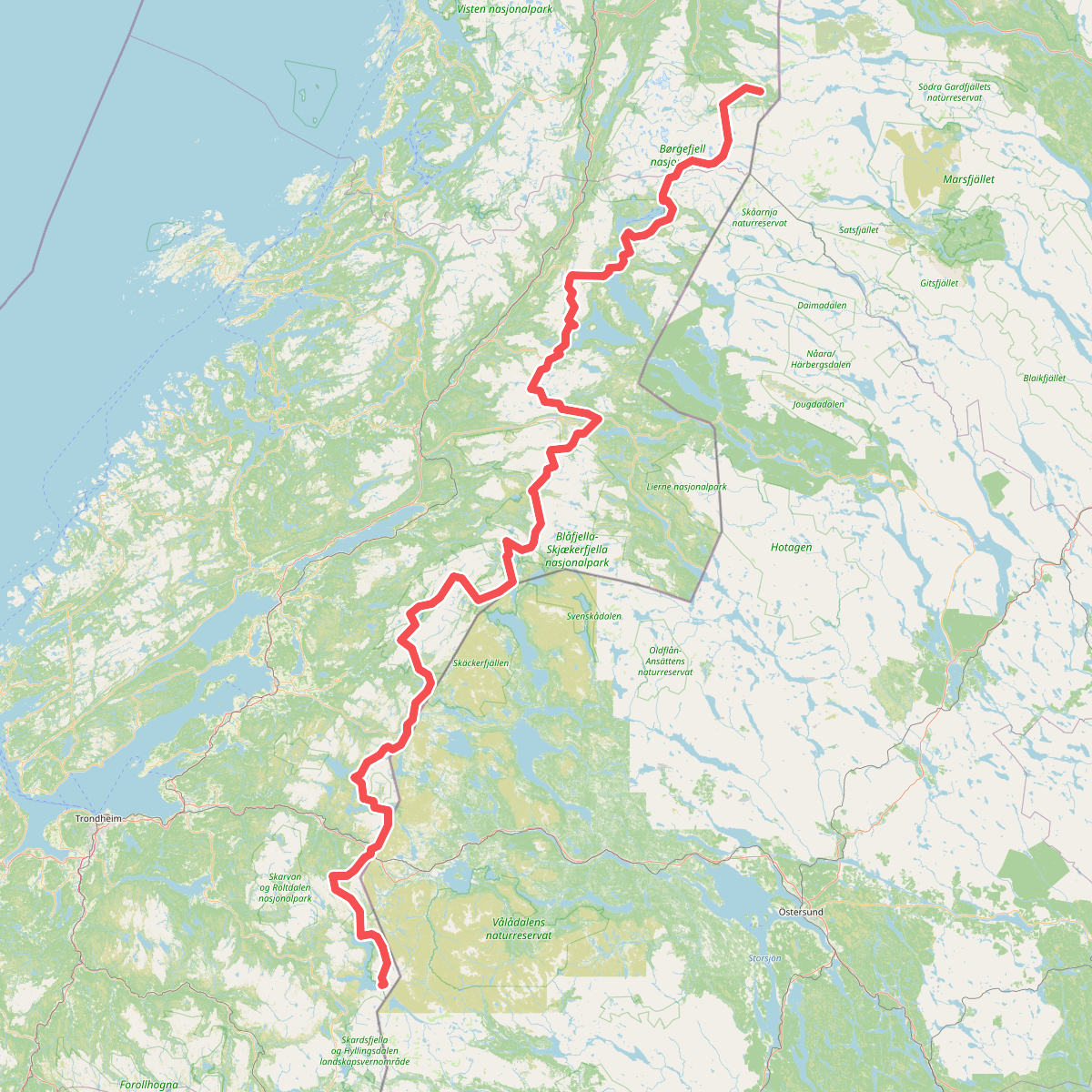
Discover the best walks in Børgefjell nasjonalpark. 1 routes on the map, with descriptions, photos and GPX.
Managed by Byrkijen nasjovnaalpaarhkeståvroe/Børgefjell nasjonalparkstyre
About Børgefjell nasjonalpark
Børgefjell nasjonalpark is a vast, trail-free wilderness where you must navigate without the aid of marked paths, signposts, or bridges. The landscape is divided into distinct zones, with the western section dominated by high, dark granite peaks, deep valleys, and large glaciers. In contrast, the eastern part features gentler, rounded hills, wide valleys, and large lakes like Simskardvatnet and Namsvatnet. Walkers should expect to cross rivers on foot, which requires careful route planning and map-reading skills.
Read more
About Børgefjell nasjonalpark
Børgefjell nasjonalpark is a vast, trail-free wilderness where you must navigate without the aid of marked paths, signposts, or bridges. The landscape is divided into distinct zones, with the western section dominated by high, dark granite peaks, deep valleys, and large glaciers. In contrast, the eastern part features gentler, rounded hills, wide valleys, and large lakes like Simskardvatnet and Namsvatnet. Walkers should expect to cross rivers on foot, which requires careful route planning and map-reading skills.
Read moreBørgefjell nasjonalpark is a vast, trail-free wilderness where you must navigate without the aid of marked paths, signposts, or bridges. The landscape is divided into distinct zones, with the western section dominated by high, dark granite peaks, deep valleys, and large glaciers. In contrast, the eastern part features gentler, rounded hills, wide valleys, and large lakes like Simskardvatnet and Namsvatnet. Walkers should expect to cross rivers on foot, which requires careful route planning and map-reading skills.
Underfoot, the terrain consists of wet peat bogs, thick willow scrub, and rough boulder fields rather than prepared gravel tracks or boardwalks. The low-lying areas are heavily forested with birch, which gradually thins out into alpine tundra as you ascend. Because there are very few open cabins, most visitors must carry a tent and be fully self-sufficient.
By late August, the summer greenery begins to turn to autumn gold, and the boggy ground starts to freeze overnight in the higher passes. This park is not suitable for those seeking casual afternoon strolls or well-maintained tourist infrastructure, but it offers a genuine wilderness experience for self-reliant backpackers.