The best hiking routes in Triglavski narodni park
Discover the best walks in Triglavski narodni park. 185 routes on the map, with descriptions, photos and GPX.
About Triglavski narodni park
Triglavski narodni park covers the high limestone mountains of the Julian Alps in northwestern Slovenia. This is a rugged, vertical landscape where deep glacial valleys cut through towering grey limestone walls. Unlike softer mountain ranges, the terrain here is defined by sharp karst features, including deep sinkholes, bare limestone pavements, and scree slopes. Walkers should expect steep climbs, narrow paths, and exposed sections, rather than gentle rolling hills or soft forest tracks. Water is a key feature of the landscape, appearing as rushing emerald rivers like the Soāda in the deep valleys, or as still alpine lakes high up in the Triglav Lakes Valley.
Read more
About Triglavski narodni park
Triglavski narodni park covers the high limestone mountains of the Julian Alps in northwestern Slovenia. This is a rugged, vertical landscape where deep glacial valleys cut through towering grey limestone walls. Unlike softer mountain ranges, the terrain here is defined by sharp karst features, including deep sinkholes, bare limestone pavements, and scree slopes. Walkers should expect steep climbs, narrow paths, and exposed sections, rather than gentle rolling hills or soft forest tracks. Water is a key feature of the landscape, appearing as rushing emerald rivers like the Soāda in the deep valleys, or as still alpine lakes high up in the Triglav Lakes Valley.
Read moreTriglavski narodni park covers the high limestone mountains of the Julian Alps in northwestern Slovenia. This is a rugged, vertical landscape where deep glacial valleys cut through towering grey limestone walls. Unlike softer mountain ranges, the terrain here is defined by sharp karst features, including deep sinkholes, bare limestone pavements, and scree slopes. Walkers should expect steep climbs, narrow paths, and exposed sections, rather than gentle rolling hills or soft forest tracks. Water is a key feature of the landscape, appearing as rushing emerald rivers like the Soāda in the deep valleys, or as still alpine lakes high up in the Triglav Lakes Valley.
Underfoot, the trails are predominantly rocky and uneven. Lower down, paths wind through dense beech and spruce forests where tree roots and damp soil require careful footing. As you ascend above the tree line, the terrain transitions to loose limestone gravel, jagged rocks, and sections of exposed bedrock where steel cables and pegs are often installed for security. The limestone geology means that surface water disappears quickly into the porous rock, leaving the high ridges dry and barren, while the valleys below remain lush and green.
While the highest peaks like Mount Triglav attract many climbers, the lower valleys and alpine pastures offer quieter alternatives. In June and July, the high meadows are filled with alpine wildflowers, which are a distinct feature of the limestone soils. The park is not a place for casual strolls; even the shorter valley walks require sturdy footwear due to the stony ground. The contrast between the dark green forests of the valleys and the stark, white limestone peaks above is the defining visual character of this protected mountain area.
Hiking routes in Triglavski narodni park (185)
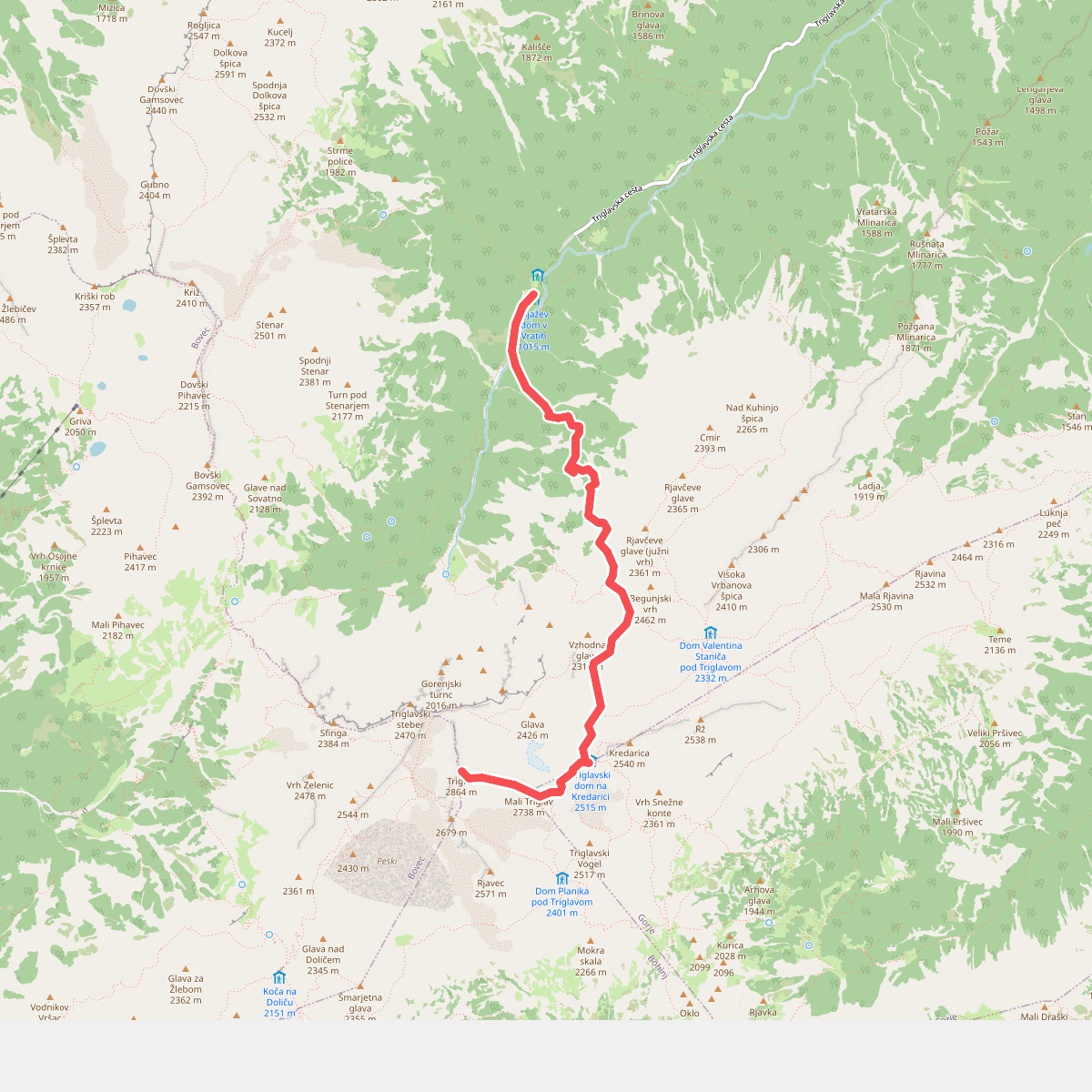
#1. Aljažev dom - Kredarica - Triglav
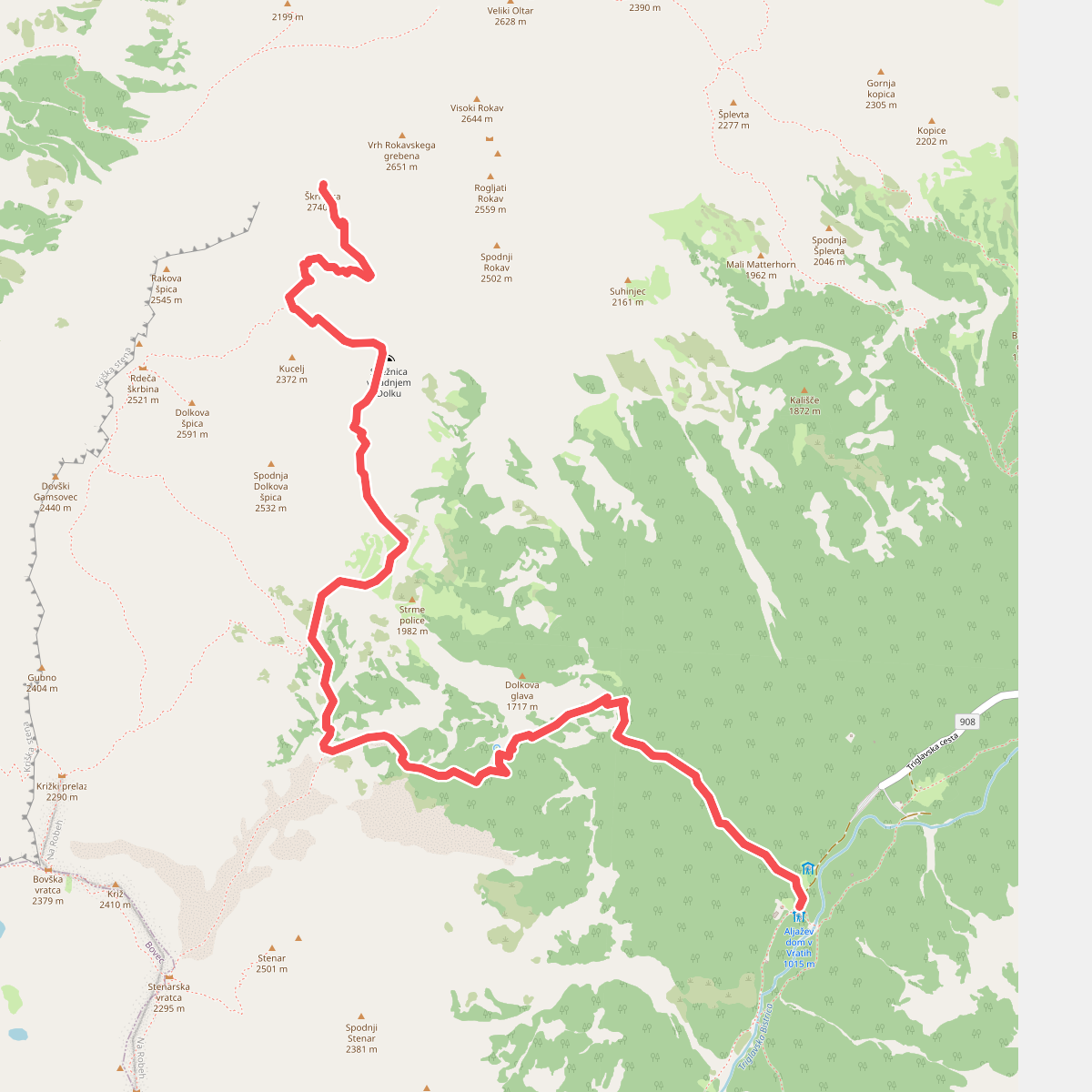
#2. Aljažev dom - Škrlatica
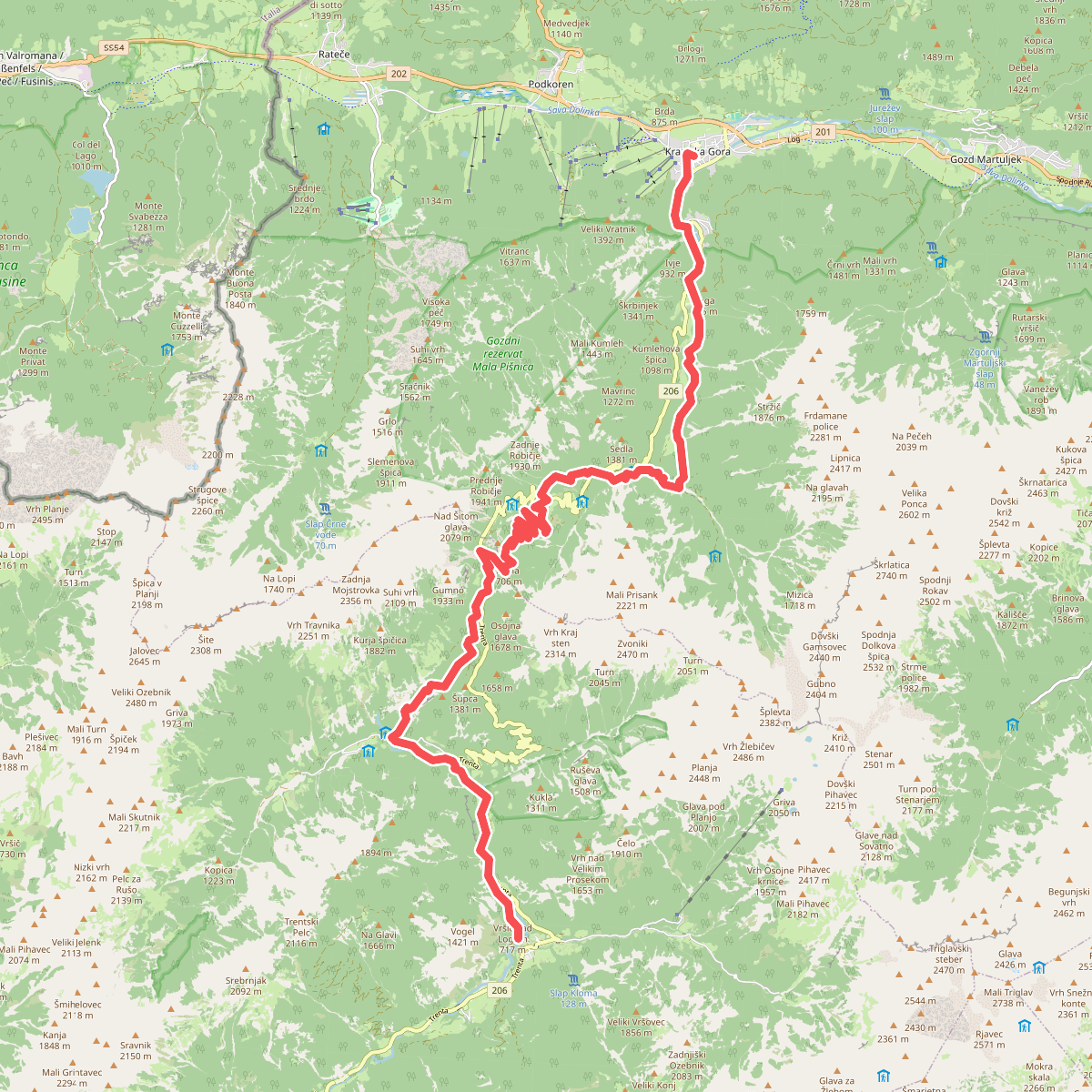
#3. Alpe Adria Trail E23
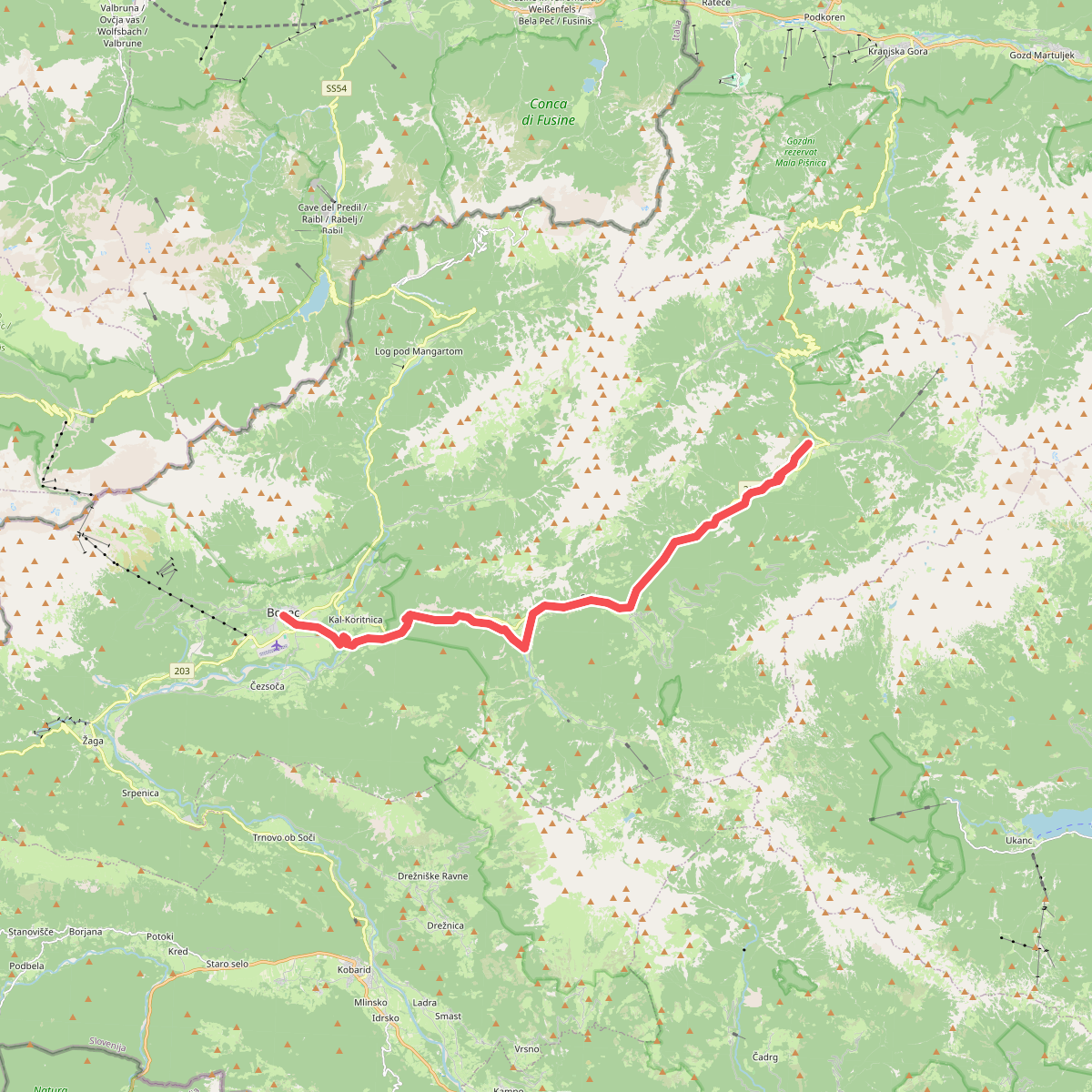
#4. Alpe Adria Trail E24
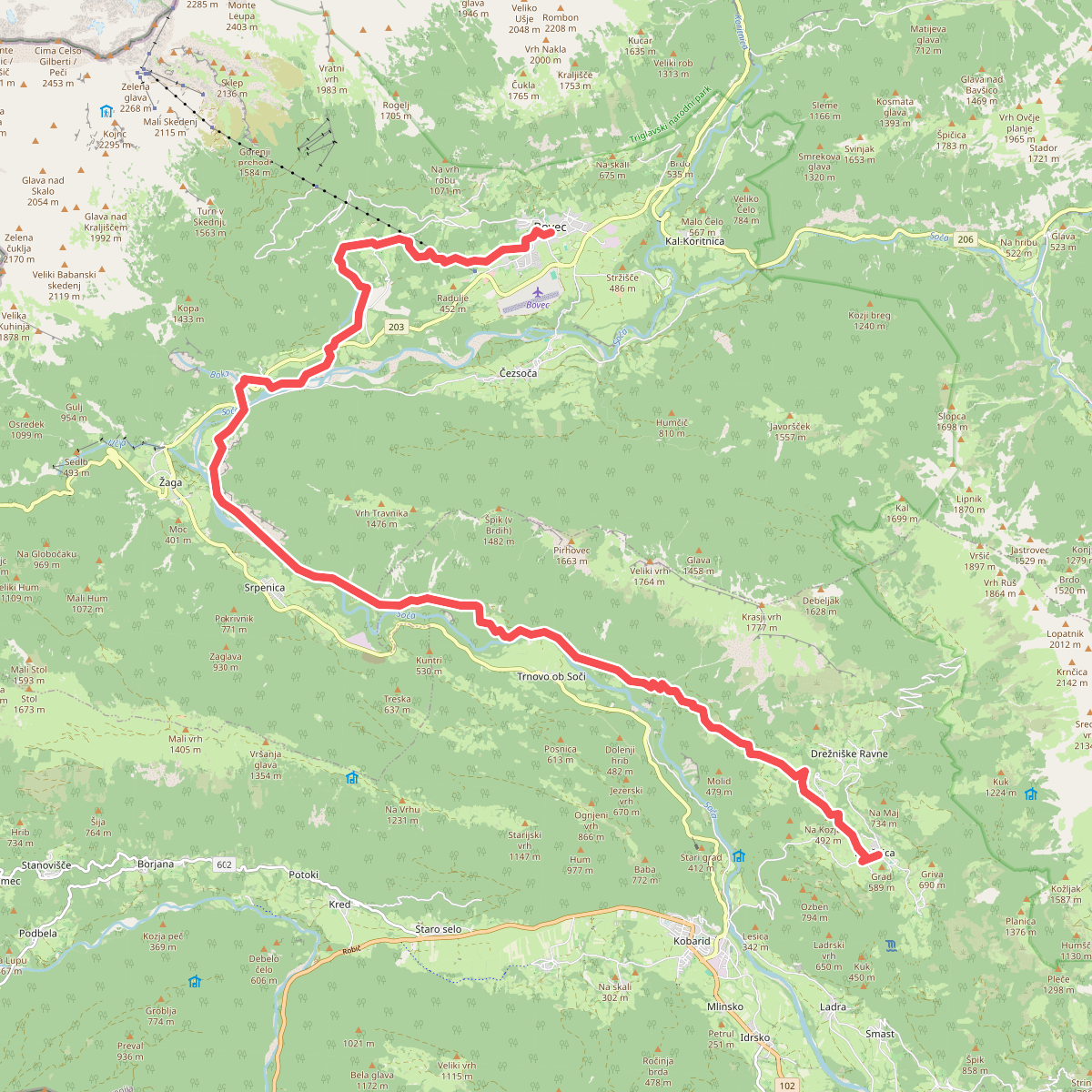
#5. Alpe Adria Trail E25
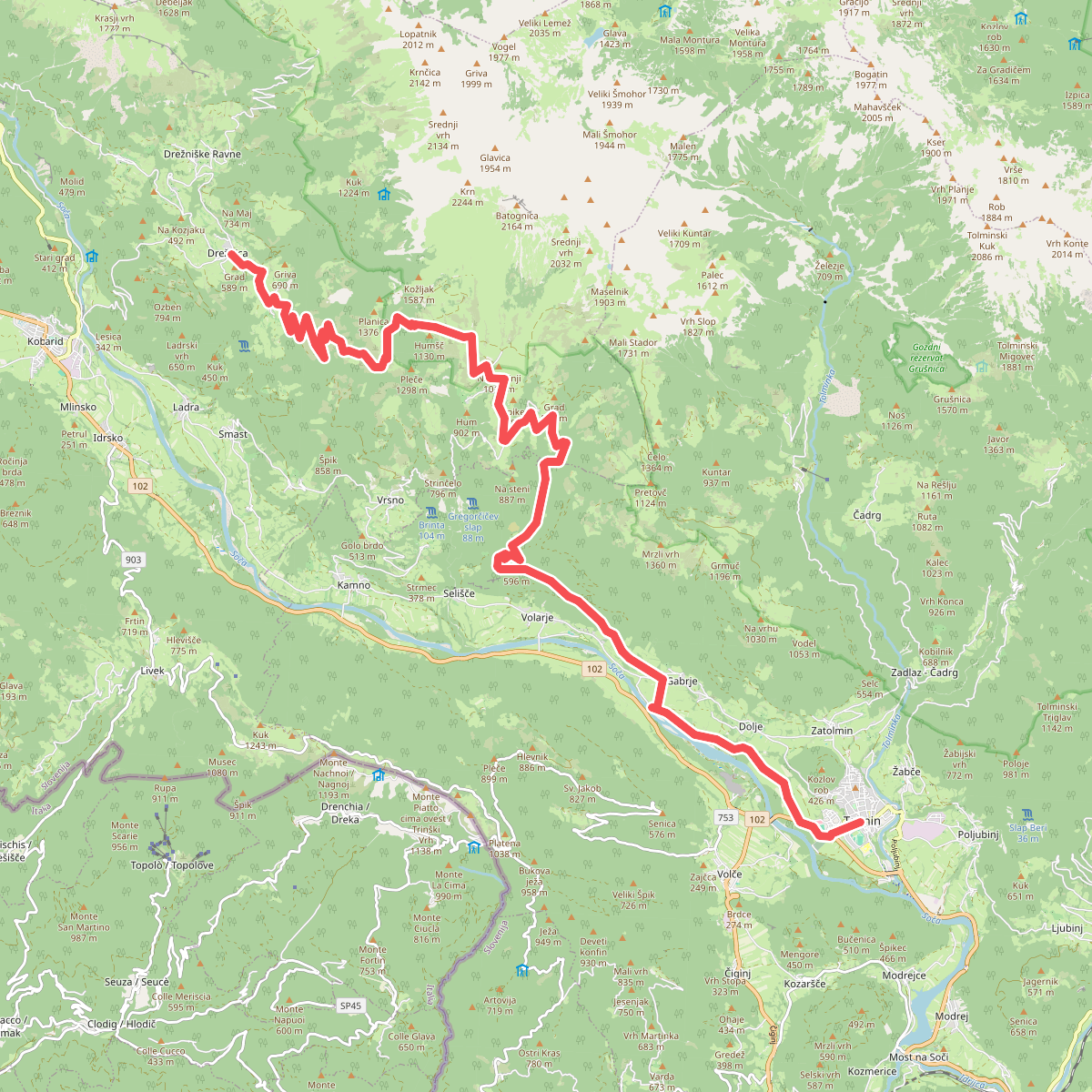
#6. Alpe Adria Trail E26
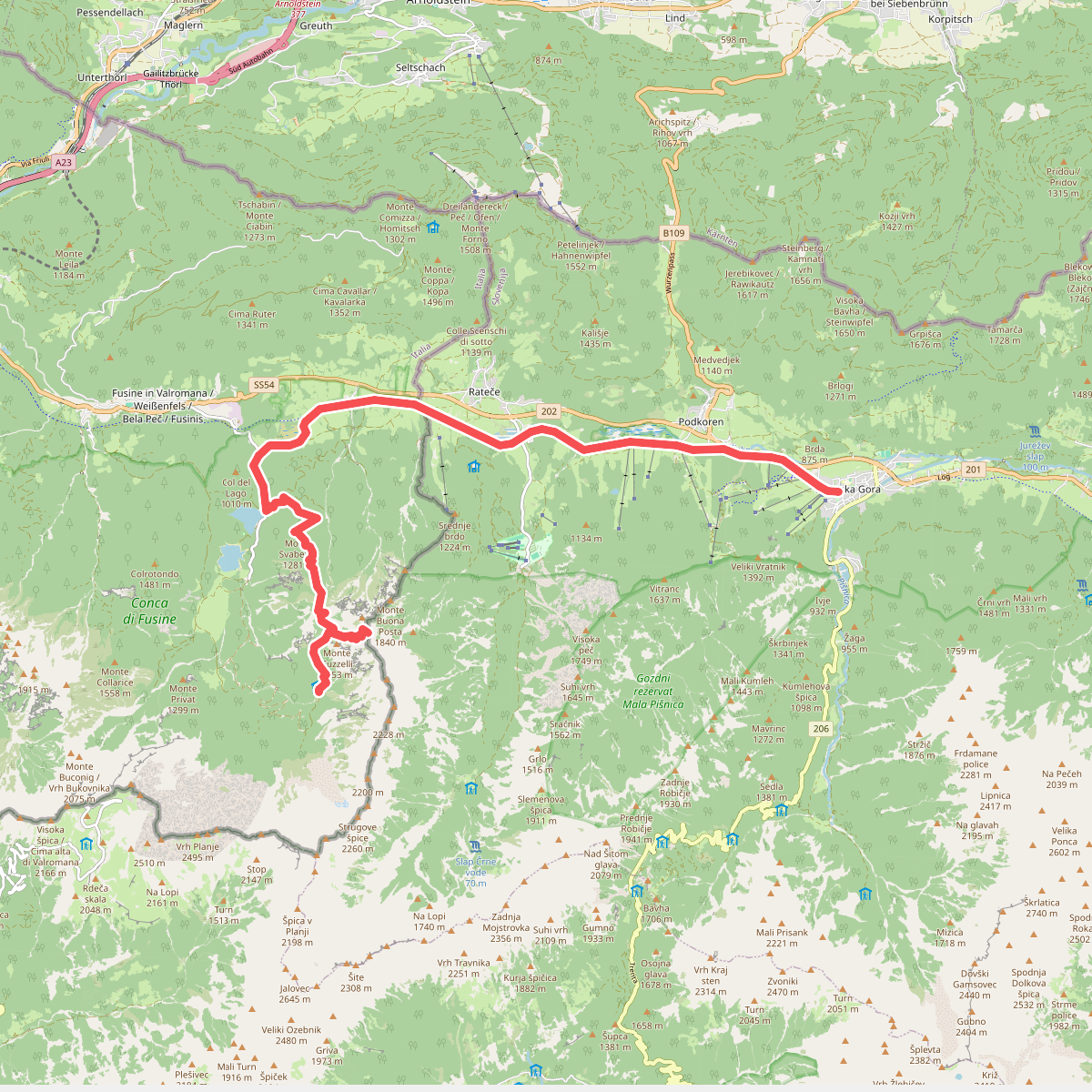
#7. Alpe Adria Trail R6
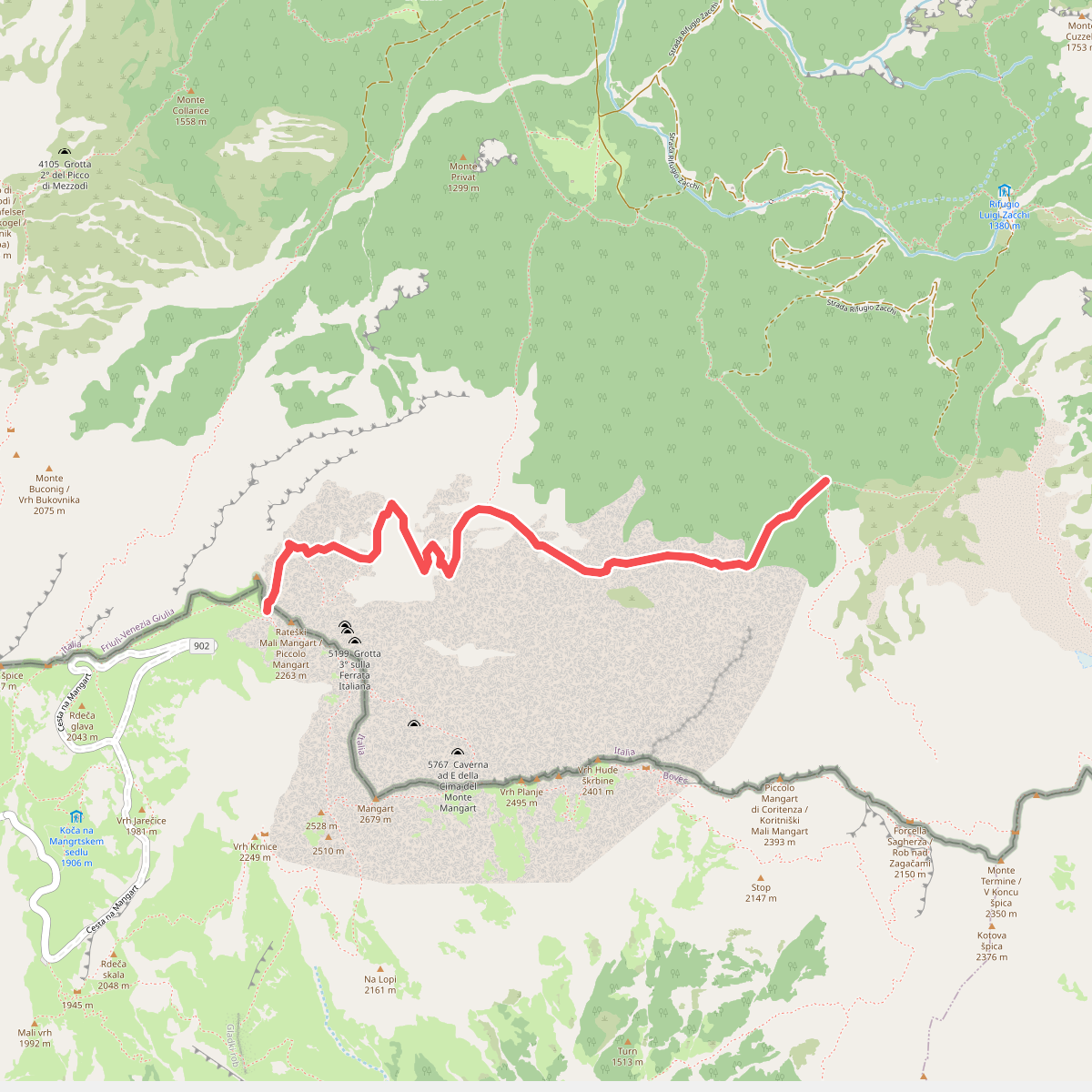
#8. Alpe Vecchia - Forcella Mangart
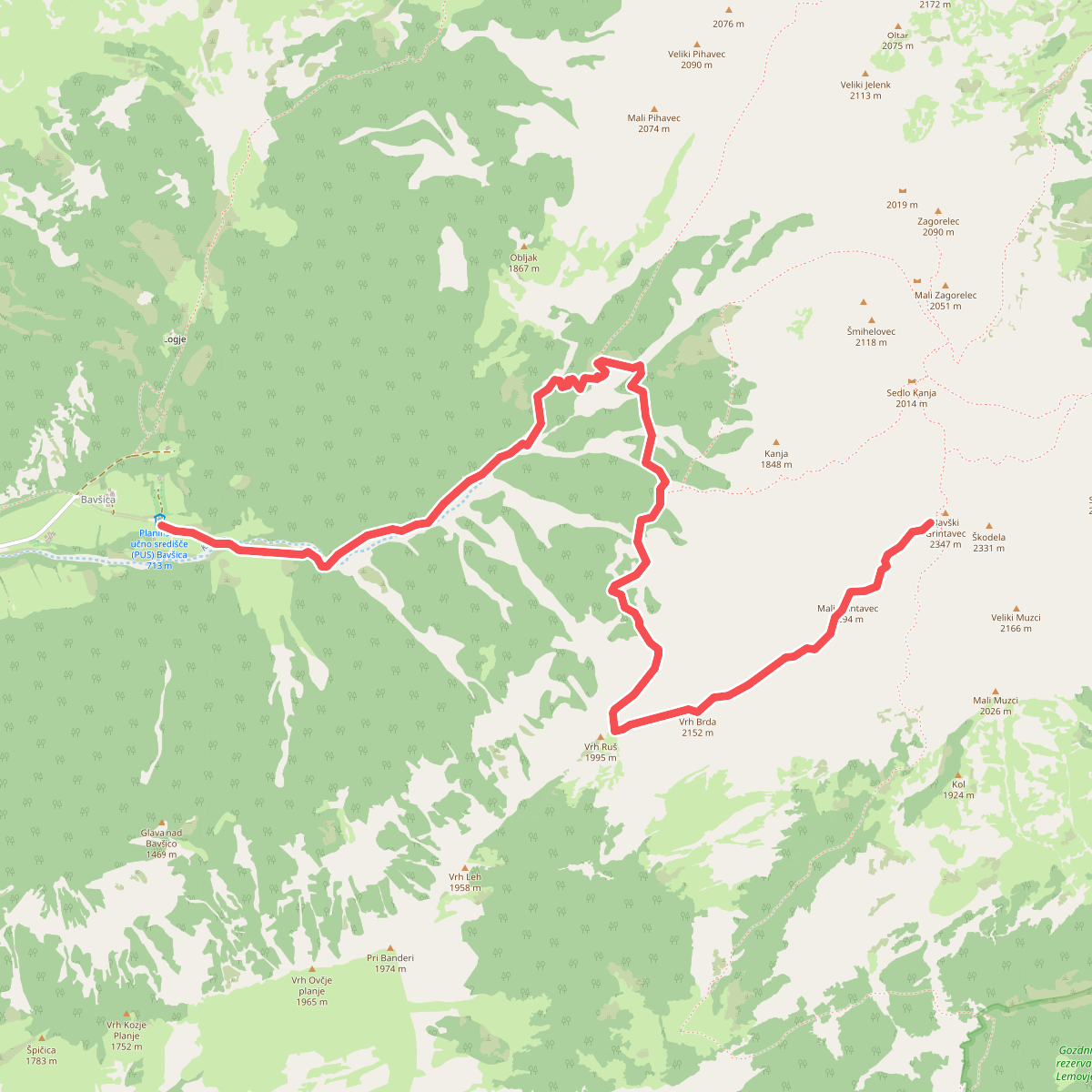
#9. Bavšica - Bavški Grintavec
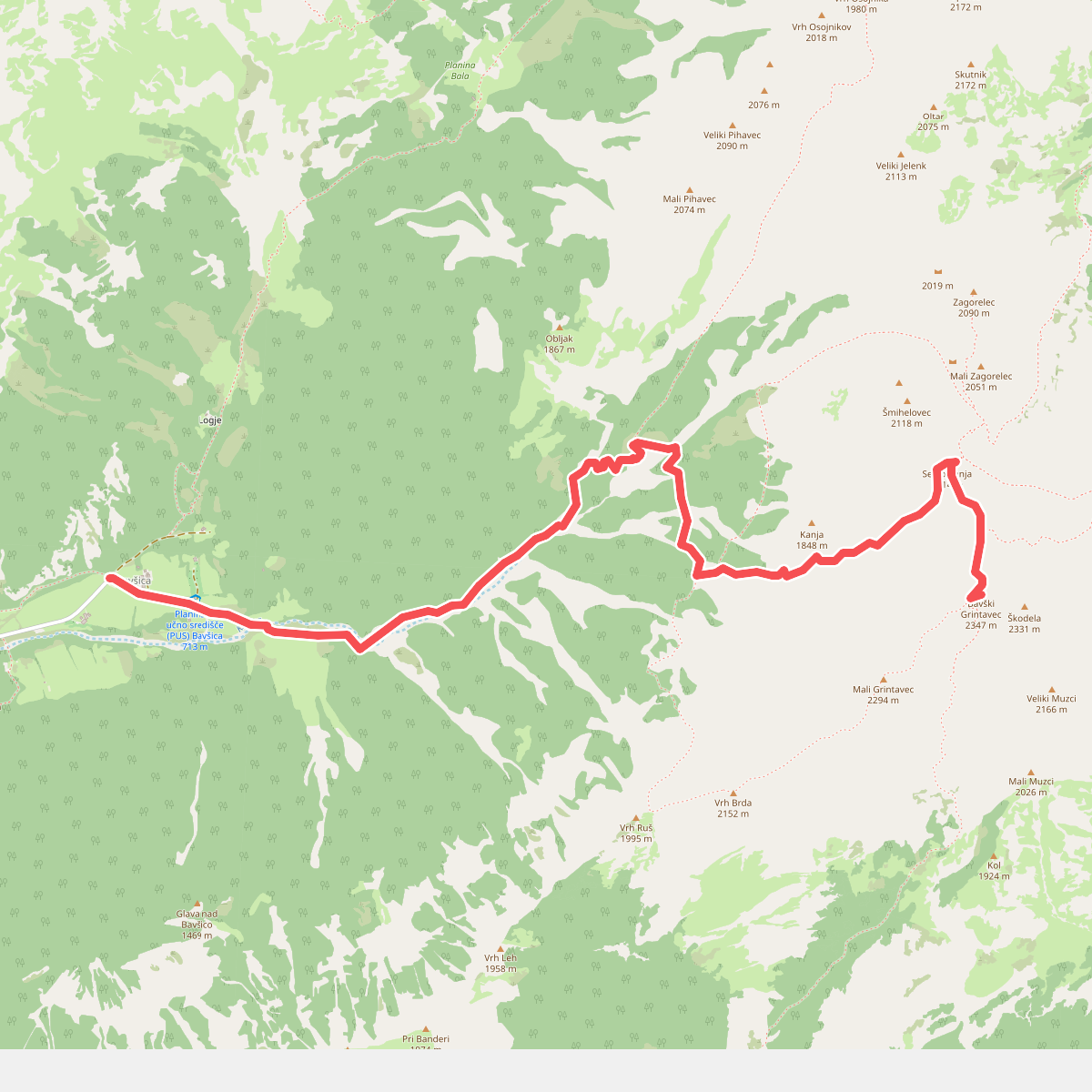
#10. Bavšica - Kanja - Bavški Grintavec
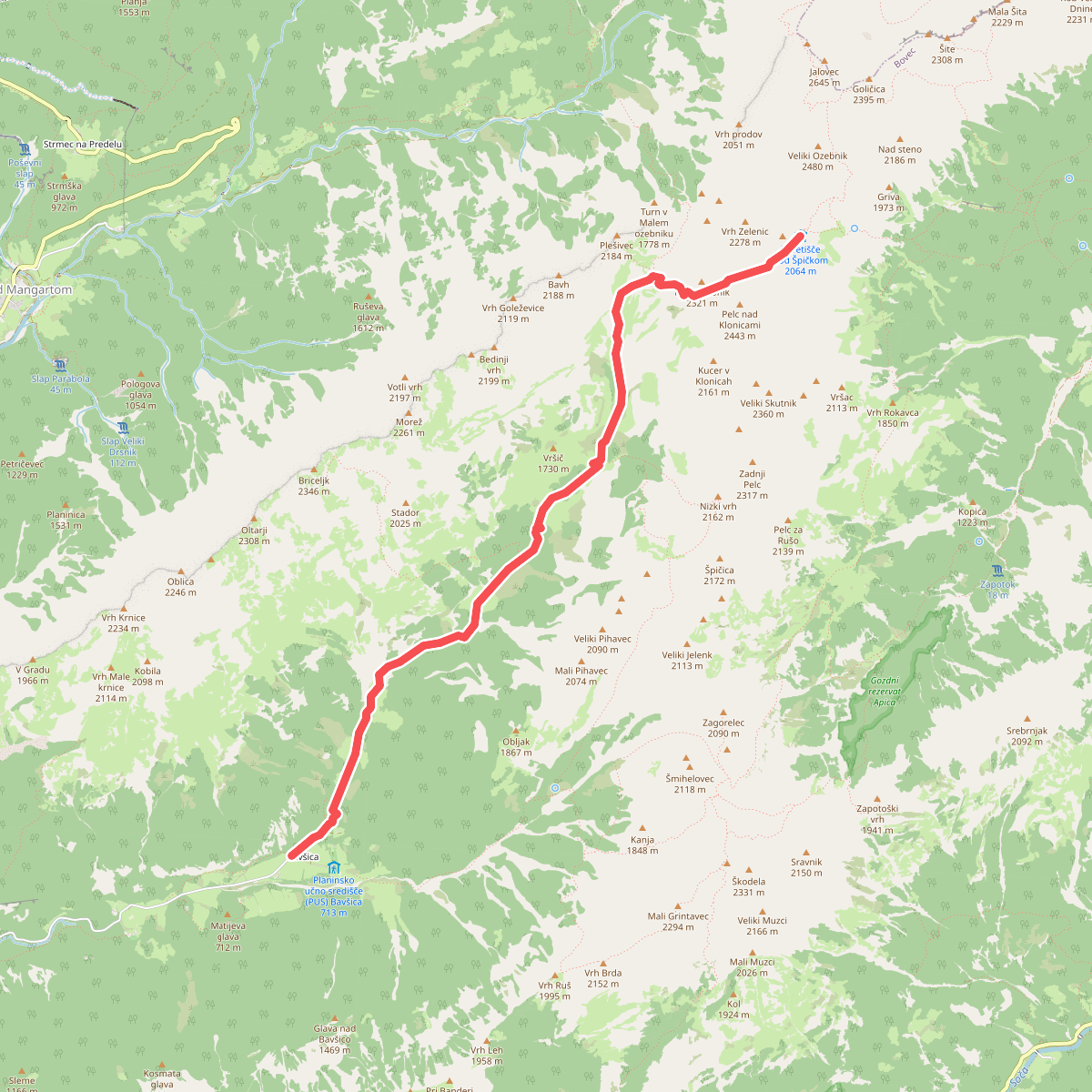
#11. Bavšica - Pl. Bala - Zav. pod Špičkom