
The best hiking routes in SIC Monte Romano
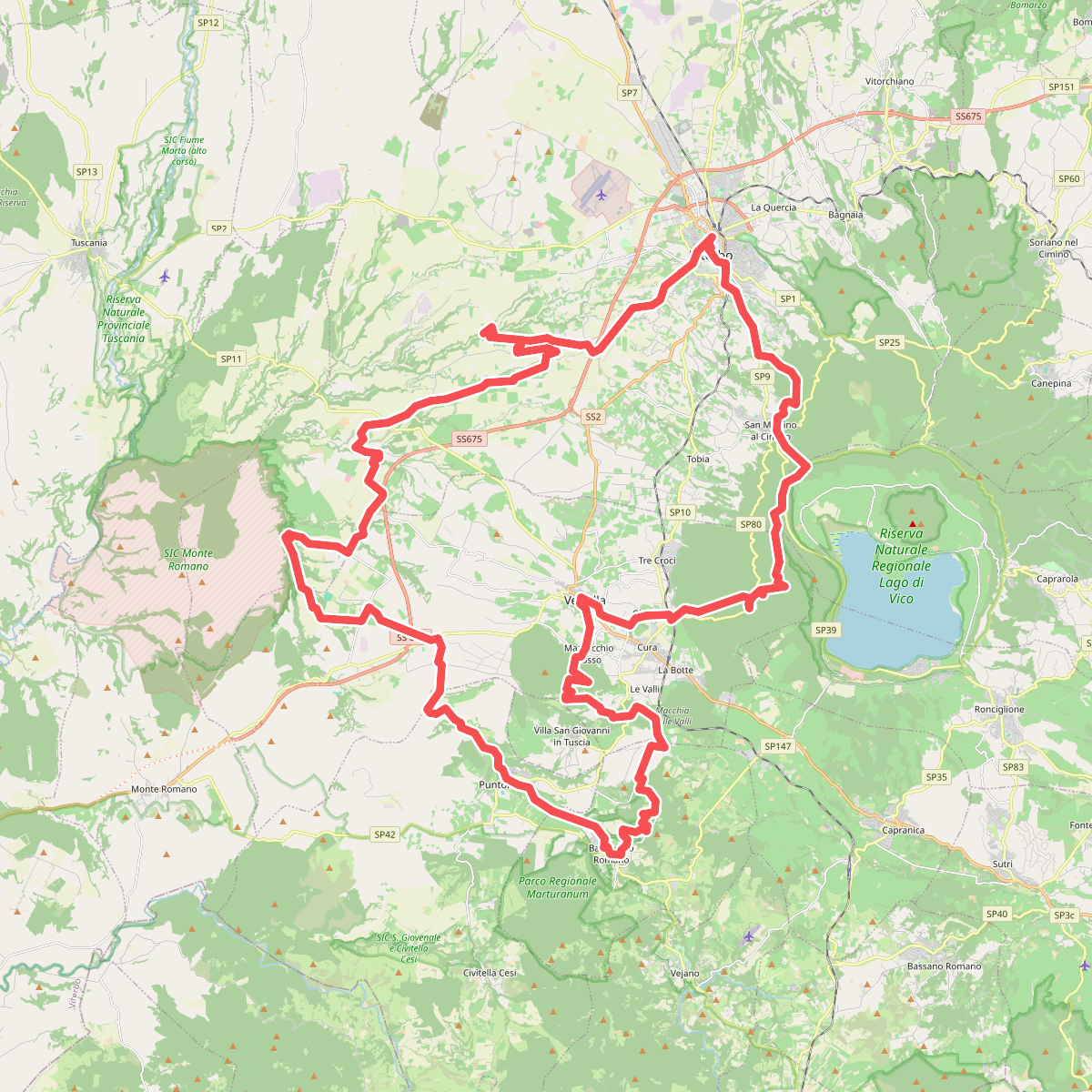
Discover the best walks in SIC Monte Romano. 1 routes on the map, with descriptions, photos and GPX.
About SIC Monte Romano
SIC Monte Romano is dominated by a rugged, Mediterranean clay and limestone landscape, shaped by centuries of traditional livestock grazing. Walkers will find a terrain of rolling clay hills, deep gullies, and open pastures interspersed with dense Mediterranean scrub. The area lacks the dramatic high peaks of the central Apennines, offering instead a low, undulating topography where the impact of soil erosion is clearly visible in the clay formations along the paths.
Read more
About SIC Monte Romano
SIC Monte Romano is dominated by a rugged, Mediterranean clay and limestone landscape, shaped by centuries of traditional livestock grazing. Walkers will find a terrain of rolling clay hills, deep gullies, and open pastures interspersed with dense Mediterranean scrub. The area lacks the dramatic high peaks of the central Apennines, offering instead a low, undulating topography where the impact of soil erosion is clearly visible in the clay formations along the paths.
Read moreSIC Monte Romano is dominated by a rugged, Mediterranean clay and limestone landscape, shaped by centuries of traditional livestock grazing. Walkers will find a terrain of rolling clay hills, deep gullies, and open pastures interspersed with dense Mediterranean scrub. The area lacks the dramatic high peaks of the central Apennines, offering instead a low, undulating topography where the impact of soil erosion is clearly visible in the clay formations along the paths.
Underfoot, the tracks are primarily unpaved dirt and clay, which can become sticky and heavy after rain or bake into hard, cracked ruts during the summer months. There are no boardwalks or manicured gravel paths here; the walking routes follow rough farm tracks and firebreaks. The vegetation shifts from open, grassy clearings to thickets of oak and thorny shrubs, requiring sturdy footwear to navigate the uneven ground.
This reserve is generally quiet, frequented more by local shepherds than tourists. It is not a place for manicured parklands or signposted family strolls, but rather for those who prefer raw, working countryside. In May, the clay pastures are briefly green and filled with wildflowers before the summer heat dries the landscape into a uniform dusty brown.