
The best hiking routes in Seehamer See mit Wattersdorfer Moor
Discover the best walks in Seehamer See mit Wattersdorfer Moor. 3 routes on the map, with descriptions, photos and GPX.
About Seehamer See mit Wattersdorfer Moor
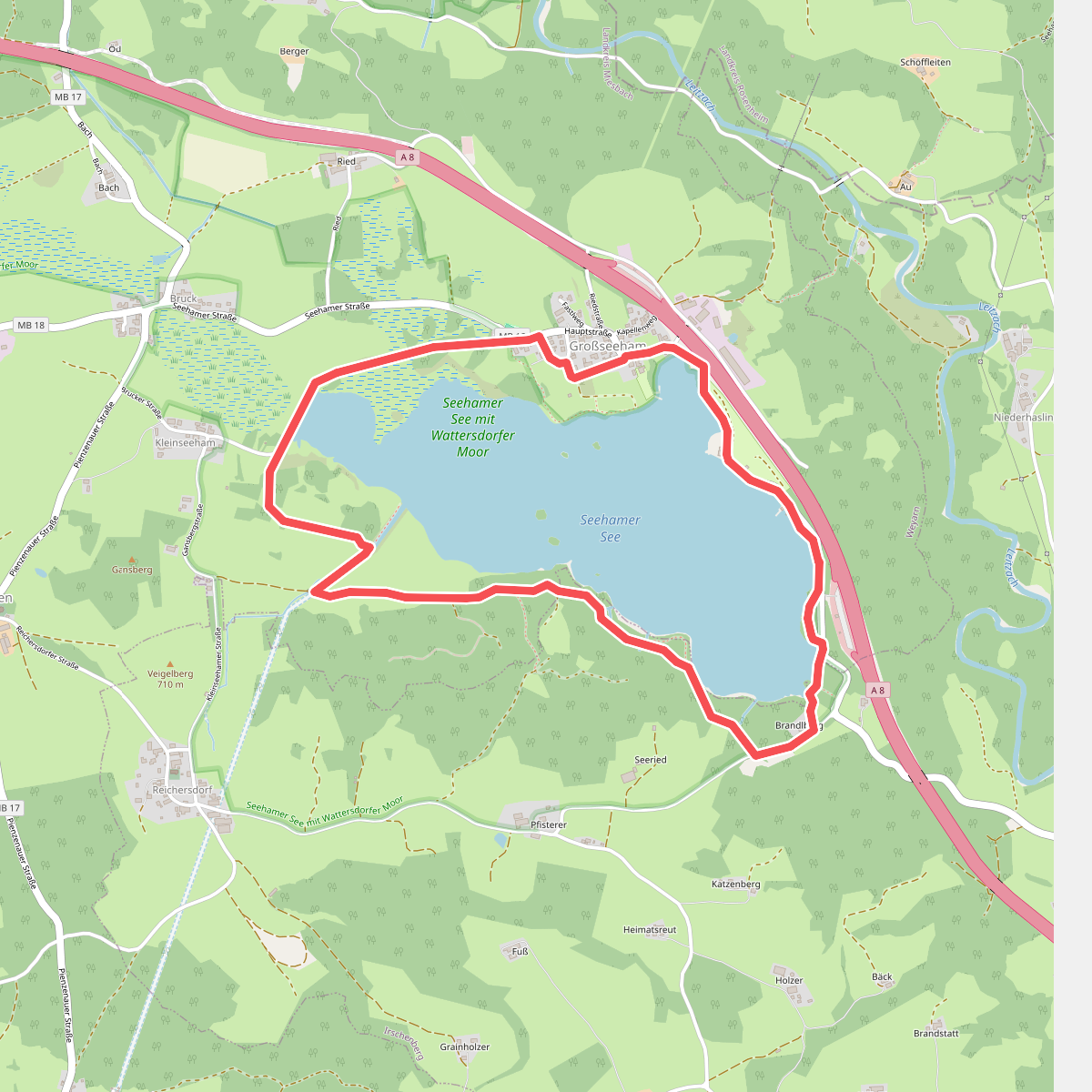
The Seehamer See mit Wattersdorfer Moor offers a distinct contrast between open water and dense, acidic wetland. This protected area is defined by a shallow post-glacial lake and the surrounding silted-up peatlands. Walkers will find a landscape shaped by historical peat cutting, which has left behind a mosaic of water-filled trenches, birch forests, and wet meadows. It is a flat, low-lying basin rather than a place of sweeping vistas or rolling hills, focusing the attention instead on the immediate, rich wetland vegetation.
Read more
About Seehamer See mit Wattersdorfer Moor
The Seehamer See mit Wattersdorfer Moor offers a distinct contrast between open water and dense, acidic wetland. This protected area is defined by a shallow post-glacial lake and the surrounding silted-up peatlands. Walkers will find a landscape shaped by historical peat cutting, which has left behind a mosaic of water-filled trenches, birch forests, and wet meadows. It is a flat, low-lying basin rather than a place of sweeping vistas or rolling hills, focusing the attention instead on the immediate, rich wetland vegetation.
Read moreThe Seehamer See mit Wattersdorfer Moor offers a distinct contrast between open water and dense, acidic wetland. This protected area is defined by a shallow post-glacial lake and the surrounding silted-up peatlands. Walkers will find a landscape shaped by historical peat cutting, which has left behind a mosaic of water-filled trenches, birch forests, and wet meadows. It is a flat, low-lying basin rather than a place of sweeping vistas or rolling hills, focusing the attention instead on the immediate, rich wetland vegetation.
Underfoot, the terrain dictates your route choice. The paths closest to the lake shore and the core bog areas consist of damp earth, soft peat tracks, and occasional wooden boardwalks designed to keep boots out of the standing water. Further back, the trails transition into firmer, gravelled forestry tracks that wind through pine and birch woodland. You should expect damp, soft ground on the lower paths, which requires sturdy footwear, while the wider perimeter tracks offer a more stable, level surface.
In late summer, particularly around August, the purple heather blooms on the drier hummocks of the bog, contrasting with the dark peat water. The area is generally quiet, though the sections nearest the main parking spots can see more local visitors on weekends. It is a place for observing specialized bog plants and quiet woodland edges, rather than seeking dramatic viewpoints or long-distance hiking challenges.